Plantain, Cooking banana, Edible banana, Banana, French plantain, Plátano, Musa sapientum, Musa paradisiaca, Musa champa, Musa dacca, Common banana, Prata banana.


Summary: Cooking bananas prized for their starchy, potato-like flesh when green and their caramel-sweet richness when fully ripe. A staple across West Africa, the Caribbean, Latin America, and South Asia.
Taste: Savory and mild when green; nutty-sweet when yellow; dessert-level caramel when black-ripe.
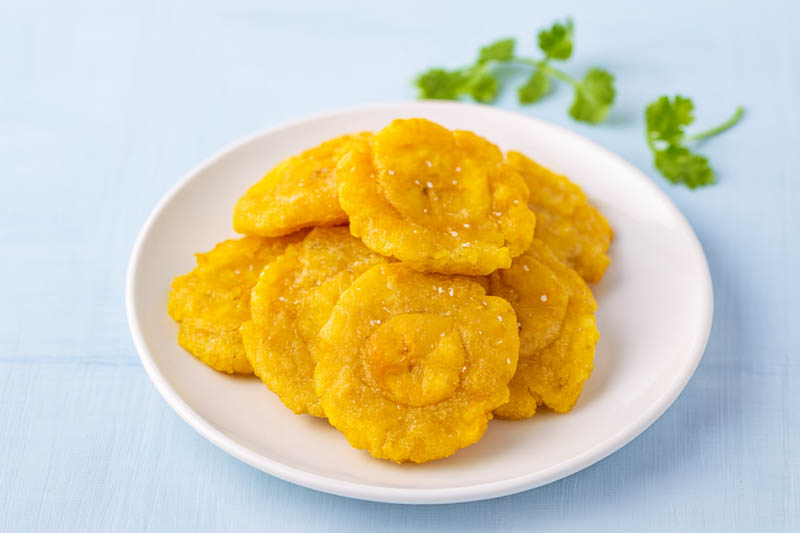
Use: Tostones/patacones, chips, mofongo, fufu, roasted “canoas,” tajadas, kelewele, curries, stews, and baked sweets.
Growing Note: Giant herb (not a woody tree). Thrives in heat, moisture, and fertile, well-drained soil. Most plantains are AAB or ABB genome groups.
| Botanical Name | Musa × paradisiaca (traditional umbrella for many plantain/cooking-banana cultivars; commonly AAB ‘plantains’ and ABB cooking bananas) |
|---|---|
| Family | Musaceae |
| Common Names | Plantain, Cooking Banana, Cooking-type Banana, Green Banana (regional) |
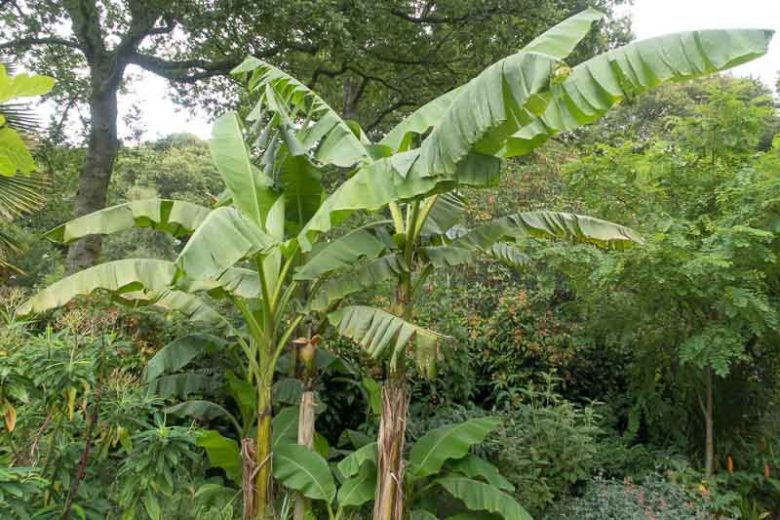
| Plant Type & Habit | Herbaceous perennial with pseudostem; clumping via rhizome (“mat”) |
| Hardiness (USDA) | Fruits reliably outdoors in USDA 10–11; robust ABB types occasionally succeed in protected 9b with extra heat and a long season. |
| Size | 7–25 ft (2.1–7.5 m) tall; 6-10 ft (1.8-3 m) wide |
| Sun & Exposure | Full sun (6–8+ hrs). Shelter from strong wind to reduce leaf tatter. |
| Soil | Rich, moisture-retentive, well-drained; pH ~5.5–7.0. Heavy feeders—love organic matter. |
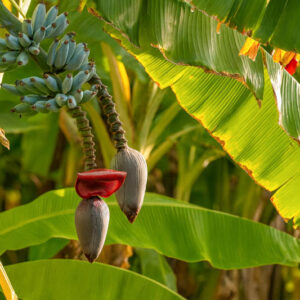
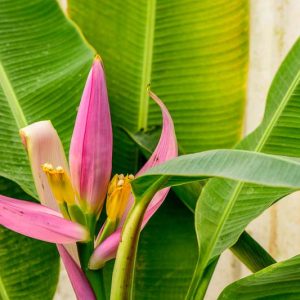
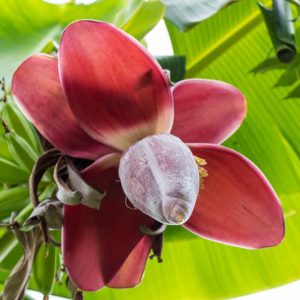
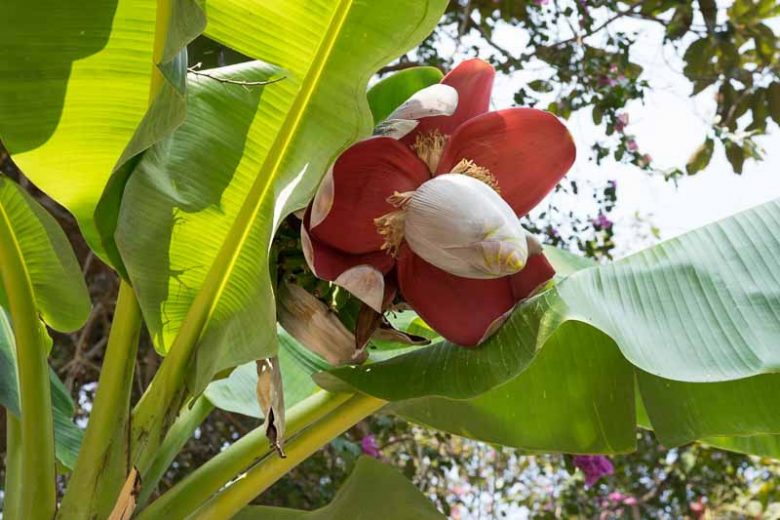
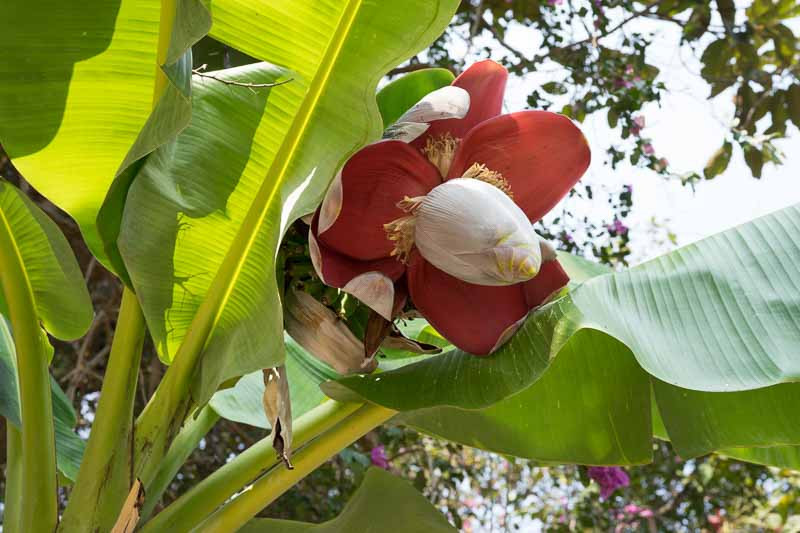
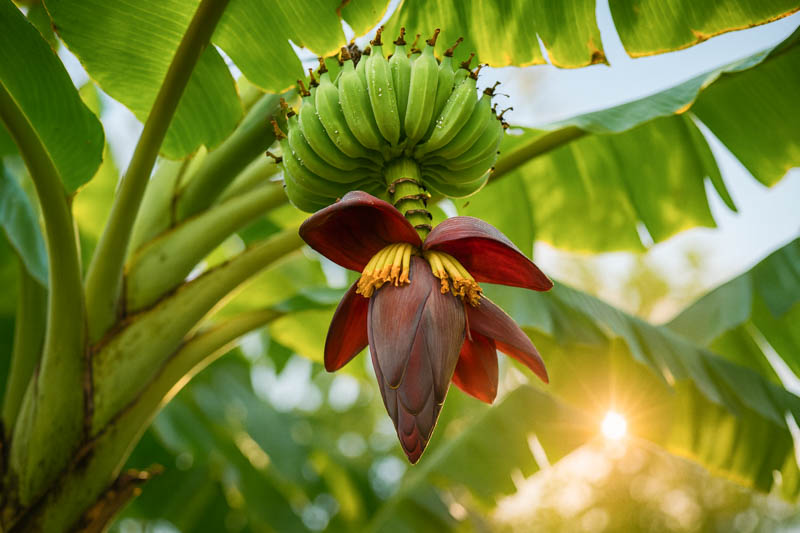
| Bloom & Fruit | Showy bracts reveal female → male flowers; fingers enlarge into starchy fruit used green to black-ripe across cuisines. |
| Pruning | Remove ragged leaves; after harvest, cut the spent pseudostem; maintain 1 fruiting stem + 1–2 pups per mat. |
| Primary Uses | Savory starch (boiled, fried, roasted), chips, mash, stews, sweet treats when very ripe; bold tropical effect in landscapes |
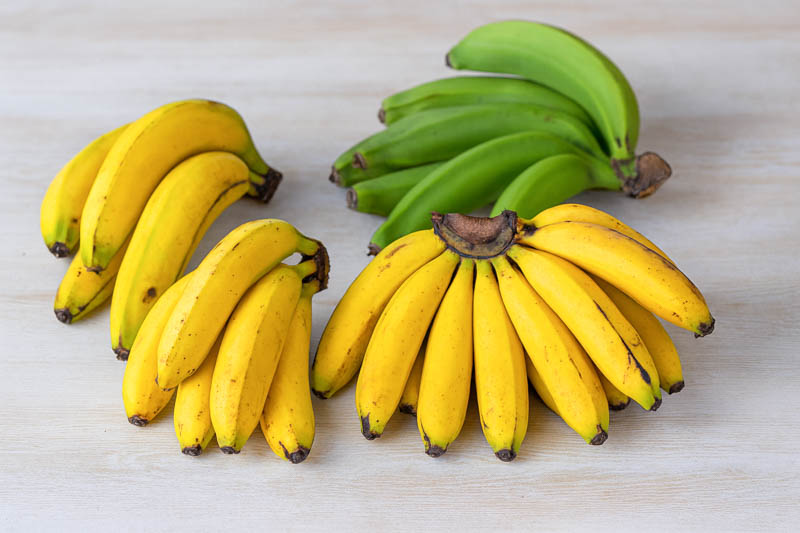
Plantains are the culinary shapeshifters of the banana world. Green, they behave like potatoes—fry them crispy, smash them into tostones, simmer them into soups, or pound them into mofongo and fufu. Let them ripen, and they turn golden-sweet: think maduros (fried ripe slices), oven-roasted “canoes,” and caramelized sides for rice bowls. In the garden, the plant is every bit as dramatic as dessert bananas—towering leaves, swirling purple bracts, and bunches that transform from jade to yellow to nearly black as sugars build.
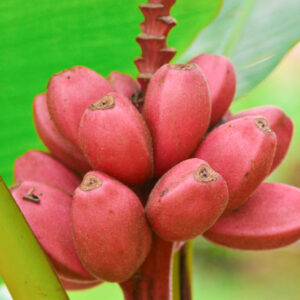
Botanically, plantains are bananas but with a starchy personality. The “trunk” is a pseudostem formed by layer upon layer of leaf bases. Inside, a true stem rises and eventually emerges as a pendant flower spike. Female flowers at the top of the spike form the fruit (“fingers”), while later-opening male flowers finish the show. Many plantain and cooking-banana clones are seedless or have tiny sterile seeds thanks to their hybrid ancestry and polyploid genetics, which gives you usable, seedless flesh for cooking.
Bananas belong to the genus Musa in the family Musaceae. Most sweet “dessert” bananas trace primarily to Musa acuminata (A genome), most commonly as AAA triploid or AA diploid clones. Plantains and many starchier cooking types carry Musa balbisiana (B genome) ancestry; their triploid hybrids are historically grouped under Musa × paradisiaca (AAB/ABB). Several other species are important for ornament, local use, or breeding—among them M. basjoo (cold-hardy Japanese fiber banana; chiefly ornamental), M. ornata (showy flowering ornamental), M. velutina (pink banana; ornamental), M. coccinea (scarlet banana; ornamental), and regionally significant wild relatives such as M. sikkimensis, M. itinerans, and M. schizocarpa.
Bananas originated in Southeast Asia and the western Pacific. Cooking types spread early with people and trade into South Asia and, crucially, across the Indian Ocean to East and West Africa, becoming bedrock staples. From there plantains traveled through the Atlantic world into the Caribbean and Latin America, where they’re now culinary icons. Plantains (AAB) likely arose in Southeast Asia and spread early to Africa, where they became staples before moving to the Caribbean and Latin America.
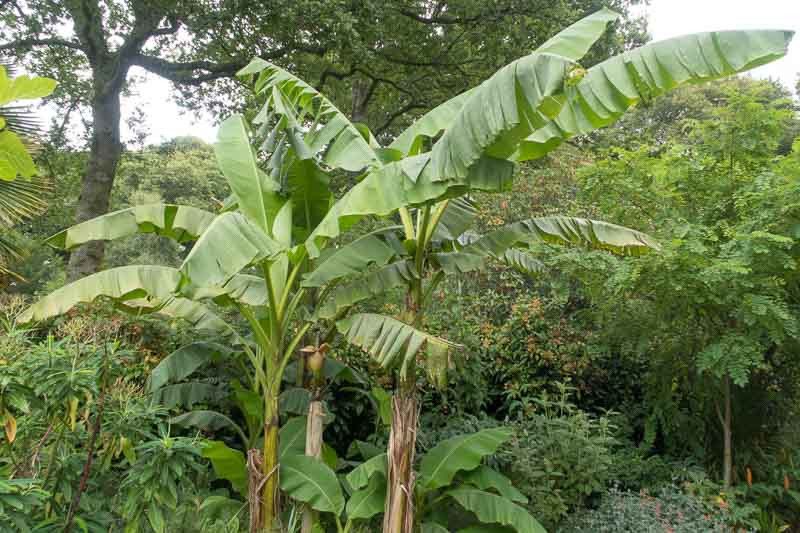
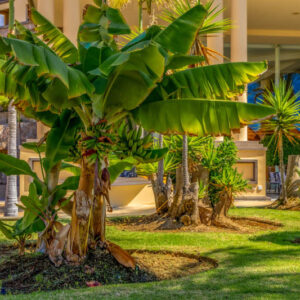
A vigorous pseudostem can hit full height in one warm season. Expect 7–15 ft (2.1-4.5 m) for many garden plantains, with 15–20+ ft (4.5-6 m) on robust selections in tropical heat. Each pseudostem fruits once, then retires. The clump (rhizome “mat”) keeps the party going by sending up new pups.
In heat and ample moisture, a new leaf can unfurl weekly. After a strong start (pup or tissue-cultured plant), many selections flower in 9–15 months and need a few more months to mature fruit.
Plantain fingers scale up after bloom, with starch content gradually converting to sugars. Your kitchen uses change with color:
| Flower → harvest (warm tropics) | ~3–6 months (faster in consistent heat/humidity) |
| First harvest after planting | ~12–20 months from a robust pup; then staggered stems can yield year-round in Zone 10–11 |
| Group / Example cultivar | Genome | Typical height | Best use | Highlights |
|---|---|---|---|---|
| French Plantains (e.g., Obino l’Ewai, Dominico) | AAB | 10–15 ft | Boil, fry, roast; all-purpose | Classic West African/Caribbean types; generous bunches |
| False-Horn Plantains (e.g., Agbagba, Orishele) | AAB | 10–15 ft | Frying (tostones, chips), pounded dishes | Fewer hands, larger fruits; sturdy plants |
| Horn Plantains | AAB | 12–16 ft | Boiled/roasted; large slices | Very large, angular fruits; impressive bunches |
| Nendran (South India) | AAB | 8–12 ft | Chips, sweets, curries | Kerala’s famed chips banana; firm, starchy texture |
| Bluggoe group | ABB | 10–15 ft | Boiled/fried savory dishes | Very starchy, robust plants; great for curries |
| Saba / Cardaba (Philippines) | ABB | 12–18 ft | Stews, barbecue, turon; desserts when ripe | Short, thick fruits; excellent cooked; widely used |
Notes: This table focuses on AAB “true plantains” and ABB cooking bananas—groups historically included under the umbrella name Musa × paradisiaca. All-acuminata cooking bananas (e.g., East African Highland, AAA) are important staples but fall outside M. × paradisiaca and are not listed here.
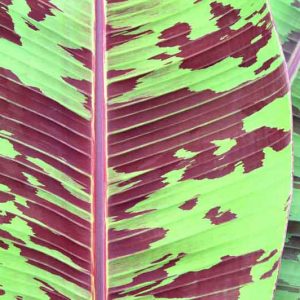
Plantain leaves are huge—often 2–8 ft long—casting luscious shade. They shred in wind (normal and mostly cosmetic). In the kitchen, banana leaves are nature’s nonstick wrap: line steamers, parcel fish with aromatics, or use as beautiful serving platters.
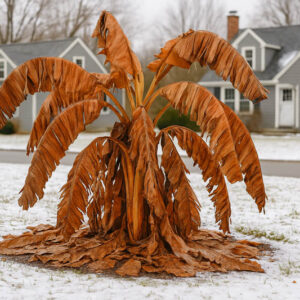
Plantains need heat to fruit well and are best outdoors in USDA 10–11. In 9b, robust ABB types can produce with an extra-long summer, warm microclimates, and protection from cool winds. Any frost will damage leaves and slow the clock.
Opening bracts can draw bees and other visitors where they occur; birds may explore bunches as they size up. Since fruit forms without pollination in many clones, wildlife drama is usually minimal.
Plantain fruits and leaves are widely used. As with other bananas, sap can irritate sensitive skin in people with latex–fruit syndrome. Wear gloves if you’re reactive.
Clumps expand via pups. Keep 1–2 strong suckers plus the main stem; spade out extras. In home gardens they’re easy to manage and not considered invasive.
Grower Story We planted three AAB plantains on a south-facing wall and mulched like crazy. By midsummer the leaves were taller than the fence; by fall we had a green bunch destined for tostones night. Tip: harvest mature-green before cool weather and let a hand ripen on the counter for sweet experiments.
Compared with dessert bananas, plantains are starchier and higher in calories when raw—more like a potato you can peel. Values vary by cultivar and ripeness; here’s a practical snapshot per 100 g.
| Nutrient (raw) | Approx. amount |
|---|---|
| Calories | ~120–125 kcal |
| Carbohydrates | ~31–32 g (mostly starch, sugars rise with ripening) |
| Fiber | ~2.3–2.5 g |
| Protein | ~1.2–1.4 g |
| Fat | ~0.3–0.4 g |
| Potassium | ~480–500 mg |
| Vitamin C | ~17–20 mg |
| Vitamin B6 | ~0.3 mg |
Portion note: One medium plantain (peeled) is ~160–180 g raw flesh.
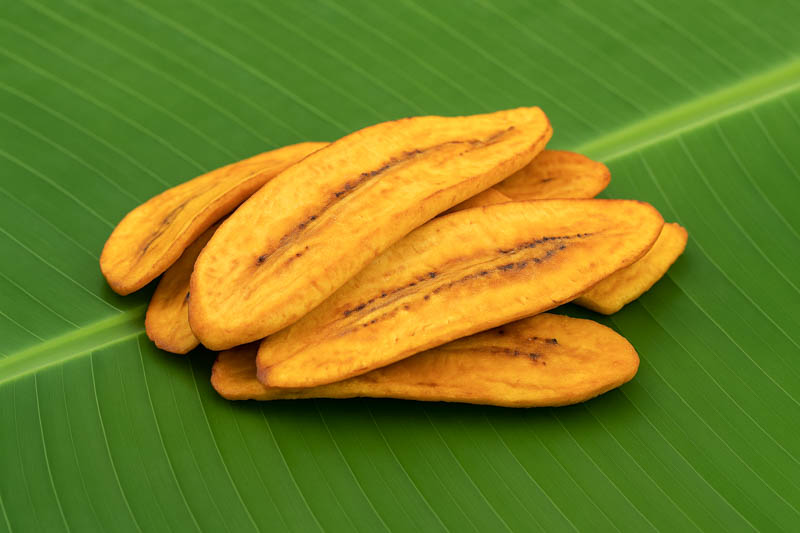
The ripeness spectrum unlocks different menus—here’s your cheat sheet:
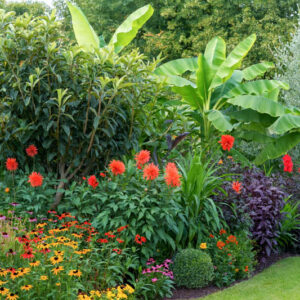
Best in sun-bathed, wind-sheltered sites: south and west walls, heat-holding courtyards, and warm patios. Perfect for tropical-style borders with ginger lilies, elephant ears, and hardy palms. Near water features they look fabulous—just ensure well-drained soil, especially heading into the cool season.
Yes, you can grow plantains in big pots—especially compact AAB types.
| Task | Notes |
|---|---|
| Choose a warm, wind-sheltered full-sun spot. | South/west walls store heat; hedges tame gusts. |
| Amend with lots of compost; mound in clay soils. | Drainage is crucial heading into the cool season. |
| Plant crown at soil level; water to settle. | Eliminate air pockets; don’t bury leaf bases. |
| Mulch 3–4 in wide around the mat. | Top up yearly to keep soil cool and moist. |
| Feed little-and-often in warm months. | Avoid heavy salt spikes that scorch leaves. |
| Limit the clump to 1–2 pups + main stem. | Focus energy on the current bunch and next crop. |
Divide pups with their own roots from a healthy mat and plant promptly into warm, moist, well-prepared soil or large containers. Commercial growers often use tissue-cultured plants for uniformity and clean disease status.
Most home clumps thrive with cleanliness and airflow. Know the usual suspects:
In the tropics, staggered mats can deliver plantains nearly year-round. Subtropics tend to harvest late summer into fall. If you’re far from commercial groves, a home-grown hand—cut mature-green and ripened on the counter—tastes like sunshine and effort in the best way.
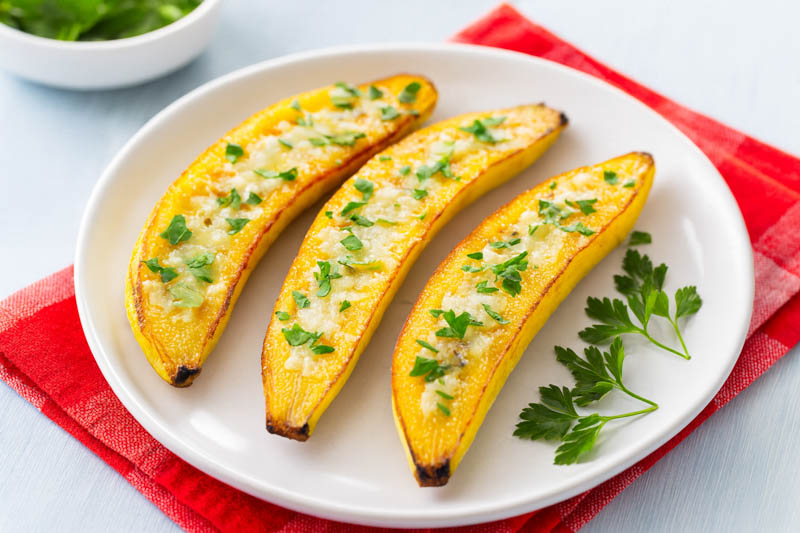
Yes. Plantains are cooking-type bananas—usually AAB or ABB genome groups—with starchier flesh than dessert bananas. They’re eaten green to very ripe, but typically cooked.
You can, but green plantain is very starchy and not pleasant raw. Most recipes cook them. Black-ripe plantains are sweet and can be nibbled raw, but they’re still better fried or roasted.
Per 100 g raw, plantain has ~120–125 kcal and ~31–32 g carbs (starchy), while dessert banana has ~89 kcal and ~23 g carbs. Ripening raises sugars in both; frying adds fat.
Use a neutral, high-smoke-point oil (peanut, canola, refined avocado). Fry tostones twice (first to cook, second to crisp) and drain on paper; season while hot.
Trim ends; score the peel lengthwise in 3–4 places; pry off sections with a butter knife. A quick soak in warm salty water can loosen stubborn peels.
Updated: September 19, 2025 • Reviewed by Gardenia Editors
| Hardiness |
9 - 11 |
|---|---|
| Climate Zones | 9, 12, 13, 14, 15, 16, 19, 20, 21, 22, 23, 24, H1, H2 |
| Plant Type | Fruits, Perennials |
| Plant Family | Musaceae |
| Genus | Musa |
| Common names | Banana |
| Exposure | Full Sun |
| Season of Interest | Spring (Early, Mid, Late), Summer (Early, Mid, Late), Fall, Winter |
| Height | 7' - 25' (210cm - 7.6m) |
| Spread | 6' - 10' (180cm - 3m) |
| Spacing | 84" - 132" (210cm - 3.4m) |
| Maintenance | High |
| Water Needs | Average |
| Soil Type | Chalk, Clay, Loam, Sand |
| Soil pH | Acid, Alkaline, Neutral |
| Soil Drainage | Moist but Well-Drained, Well-Drained |
| Characteristics | Showy, Evergreen, Fruit & Berries |
| Garden Uses | Patio And Containers |
| Garden Styles | Mediterranean Garden |
| Toxic to Humans | No known toxicity |
| Toxic to Cats | No known toxicity |
| Toxic to Dogs | No known toxicity |
| Toxic to Horses | No known toxicity |


| Hardiness |
9 - 11 |
|---|---|
| Climate Zones | 9, 12, 13, 14, 15, 16, 19, 20, 21, 22, 23, 24, H1, H2 |
| Plant Type | Fruits, Perennials |
| Plant Family | Musaceae |
| Genus | Musa |
| Common names | Banana |
| Exposure | Full Sun |
| Season of Interest | Spring (Early, Mid, Late), Summer (Early, Mid, Late), Fall, Winter |
| Height | 7' - 25' (210cm - 7.6m) |
| Spread | 6' - 10' (180cm - 3m) |
| Spacing | 84" - 132" (210cm - 3.4m) |
| Maintenance | High |
| Water Needs | Average |
| Soil Type | Chalk, Clay, Loam, Sand |
| Soil pH | Acid, Alkaline, Neutral |
| Soil Drainage | Moist but Well-Drained, Well-Drained |
| Characteristics | Showy, Evergreen, Fruit & Berries |
| Garden Uses | Patio And Containers |
| Garden Styles | Mediterranean Garden |
| Toxic to Humans | No known toxicity |
| Toxic to Cats | No known toxicity |
| Toxic to Dogs | No known toxicity |
| Toxic to Horses | No known toxicity |
How many Musa x paradisiaca (Plantain) do I need for my garden?
| Plant | Quantity | |
|---|---|---|
| Musa x paradisiaca (Plantain) | N/A | Buy Plants |
Create a membership account to save your garden designs and to view them on any device.
Becoming a contributing member of Gardenia is easy and can be done in just a few minutes. If you provide us with your name, email address and the payment of a modest $25 annual membership fee, you will become a full member, enabling you to design and save up to 25 of your garden design ideas.
Join now and start creating your dream garden!
Create a membership account to save your garden designs and to view them on any device.
Becoming a contributing member of Gardenia is easy and can be done in just a few minutes. If you provide us with your name, email address and the payment of a modest $25 annual membership fee, you will become a full member, enabling you to design and save up to 25 of your garden design ideas.
Join now and start creating your dream garden!