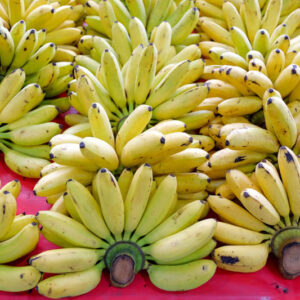
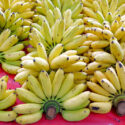
Bananas ripen on their own, but you can take control. Want sweet, spotty fruit tomorrow? Try the paper bag with an apple trick. Need them to last? Use the fridge once yellow.
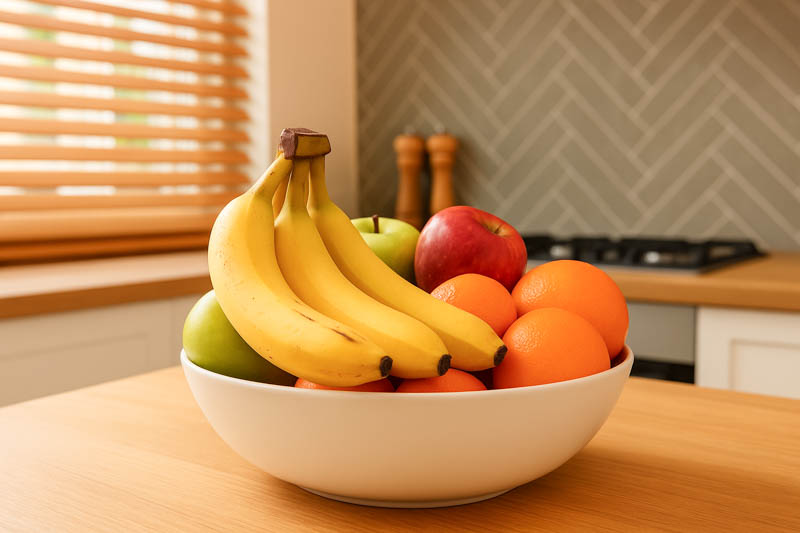


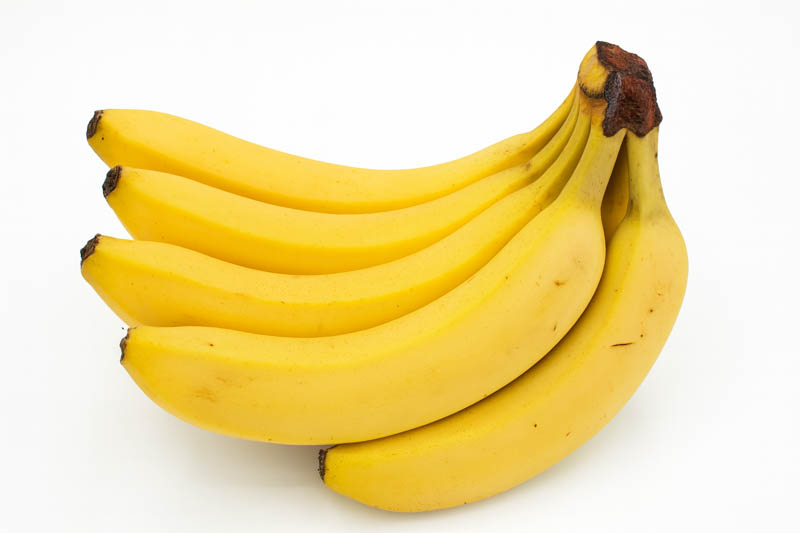
Summary: You can ripen bananas faster by trapping ethylene in a paper bag, keeping them warm, or adding apples. To slow ripening, refrigerate once yellow, wrap stems, or keep them away from other fruit.
Tip: Oven-softened bananas are great for bread but are not “truly” ripe.
Storage: Freeze peeled bananas to pause ripening and save for smoothies or baking.
| Speed It Up | Paper bag + apple/pear, warm counter (70–75°F / 21–24°C) |
|---|---|
| Slow It Down | Refrigerate yellow fruit, wrap stems, hang for airflow, keep away from apples |
| Oven Hack | Bake unpeeled bananas at 300°F (150°C) until skins blacken — good for baking only |
| Freezer Pause | Peel and freeze bananas to stop ripening and save for later use |
Want sweet, spotty bananas for bread by tomorrow, or firm fruit that stays yellow all week You can nudge ripening in either direction with a few simple tricks. Here is a friendly, no-nonsense guide to take control of the banana timeline in your kitchen.
Bananas ripen thanks to ethylene, a natural plant hormone that triggers starch to convert into sugars. Warmer temps within a comfortable range help the enzymes work. Trap more ethylene and you speed things up. Vent it away and cool things a bit and you slow them down.
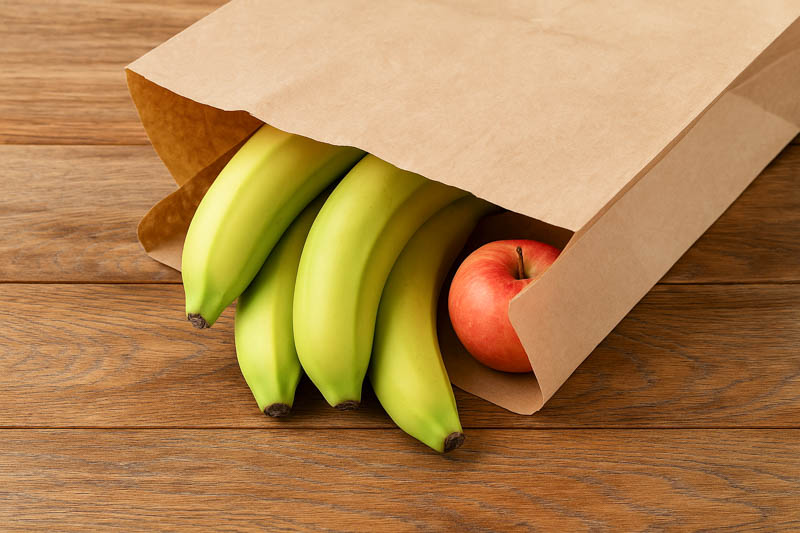
Expect light green to yellow in a day or two, and yellow to freckled in another day depending on starting ripeness and room warmth.
Bananas ripen happily around the low to mid seventies Fahrenheit. A warm counter, a cabinet above the refrigerator, or any gently warm corner can shave off time. Avoid hot windowsills that can heat one side and cause mushy patches.
Skip sealed plastic bags for ripening. Moisture builds up, the fruit sweats, and you invite mold or off flavors. Paper is best because it breathes while still concentrating ethylene.
Separating bananas marginally increases exposed surface area and can speed things a touch. It is subtle. If you want uniform results, leave the bunch intact in the bag so all fingers ripen at a similar pace.
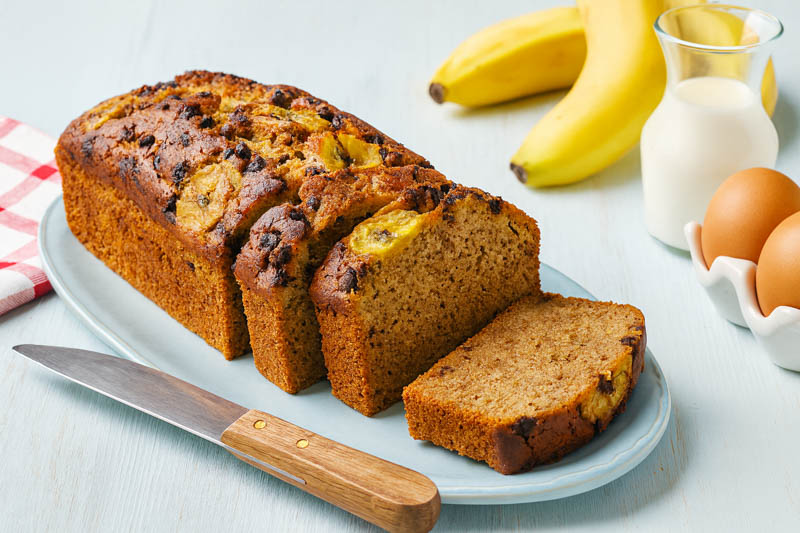
This is a flavor and texture shortcut rather than true ripening, but it works for baking. Place whole unpeeled yellow bananas on a parchment lined tray and bake around three hundred degrees Fahrenheit until the skins turn black and the fruit softens, usually fifteen to thirty minutes. Let them cool, then scoop the sweet pulp. Great for bread or muffins, not great for fresh eating because the aroma and bite differ from naturally ripened fruit.
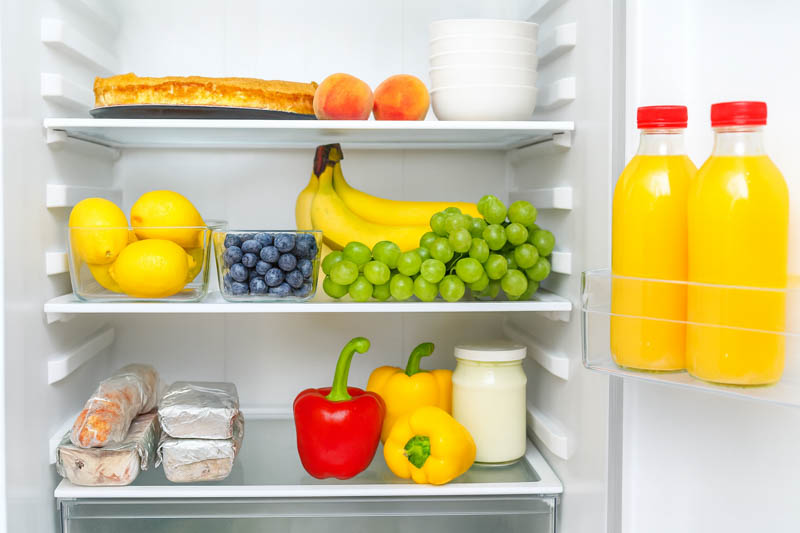
The refrigerator slows enzyme activity and ethylene effects. Once your bananas hit the shade of yellow you like, move them into the fridge. The peel may darken, but the flesh stays firm and tasty for several more days. This is the single easiest way to stall ripening without sacrificing flavor.
Wrap the crown where the stems join with a small piece of reusable wrap or foil. This can reduce ethylene diffusion from the cut ends. The effect is modest, but every little bit helps if you want to stretch yellow fruit through the week.
Store bananas away from other high ethylene fruits like apples and pears. Separate storage means less ethylene stacking and slower ripening.
A hanging hook prevents pressure bruises and improves airflow around the fruit. Less bruising means fewer brown spots and slower softening.
If you are about to lose the ripeness race, peel the bananas, place the pieces in a freezer bag, and freeze. Frozen bananas are perfect for smoothies, nice cream, and baking. Thawing will not restore fresh banana texture, but it preserves sweetness and aroma for later use.
These are averages. Temperature, initial maturity, and variety all shift the timeline a little.
Microwaving softens and sweetens the surface by heating, but it does not replicate the enzyme driven change of natural ripening. The fruit can taste cooked and may turn watery. Use this only if you need soft bananas for a recipe in a pinch.
Direct sun can overheat the peel and create hot spots. You may end up with brown, mushy patches while the rest stays firm. Choose gentle warmth over direct sun.
Completely sealing green bananas in plastic traps humidity as well as ethylene. That moisture invites mold and odd flavors. If you must use plastic, leave it vented. Paper is safer.
Refrigerating very green bananas can lead to a dull color and a stalled, uneven ripening later. Keep them at room temperature until they are mostly yellow, then move them cold if you need to slow things down.
If a recipe calls for very ripe bananas and you only have yellow ones, combine two tricks. First, bag with an apple overnight to nudge sweetness. Second, use the oven method right before mixing the batter to boost softness and sugar availability. The result will not be identical to naturally spotty bananas, but it will bake beautifully.
Yes, as long as it is not hot. A dark, room temperature cupboard functions like a large paper bag and gently concentrates ethylene. Check daily for spots.
Cold drafts, pressure points, and mixed maturity within the bunch can cause streaky ripening. Keep the bunch off the counter with a hook and choose hands that look uniform when you buy them.
Not in a meaningful way. Ripening behavior is driven by variety, maturity at harvest, storage history, and your home conditions more than organic status.
Bananas are easy to manage once you know what drives ripening. Warmth and ethylene move the process along. Cool air and distance from other fruit slow it down. Paper bags for speed, refrigerators for pause, and the oven only when you are baking. With these simple moves, you decide when breakfast gets a perfectly speckled banana and when that loaf of banana bread hits the oven.
| Hardiness |
9 - 11 |
|---|---|
| Plant Type | Fruits, Perennials |
| Plant Family | Musaceae |
| Genus | Musa |
| Common names | Banana |
| Exposure | Full Sun |
| Season of Interest | Spring (Early, Mid, Late), Summer (Early, Mid, Late), Fall, Winter |
| Height | 6' - 25' (180cm - 7.6m) |
| Spread | 5' - 15' (150cm - 4.6m) |
| Maintenance | Average |
| Water Needs | Average |
| Soil Type | Chalk, Clay, Loam, Sand |
| Soil pH | Acid, Alkaline, Neutral |
| Soil Drainage | Moist but Well-Drained, Well-Drained |
| Characteristics | Showy, Evergreen, Fruit & Berries |
| Toxic to Humans | No known toxicity |
| Toxic to Cats | No known toxicity |
| Toxic to Dogs | No known toxicity |
| Toxic to Horses | No known toxicity |
| Hardiness |
9 - 11 |
|---|---|
| Plant Type | Fruits, Perennials |
| Plant Family | Musaceae |
| Genus | Musa |
| Common names | Banana |
| Exposure | Full Sun |
| Season of Interest | Spring (Early, Mid, Late), Summer (Early, Mid, Late), Fall, Winter |
| Height | 6' - 25' (180cm - 7.6m) |
| Spread | 5' - 15' (150cm - 4.6m) |
| Maintenance | Average |
| Water Needs | Average |
| Soil Type | Chalk, Clay, Loam, Sand |
| Soil pH | Acid, Alkaline, Neutral |
| Soil Drainage | Moist but Well-Drained, Well-Drained |
| Characteristics | Showy, Evergreen, Fruit & Berries |
| Toxic to Humans | No known toxicity |
| Toxic to Cats | No known toxicity |
| Toxic to Dogs | No known toxicity |
| Toxic to Horses | No known toxicity |
Create a membership account to save your garden designs and to view them on any device.
Becoming a contributing member of Gardenia is easy and can be done in just a few minutes. If you provide us with your name, email address and the payment of a modest $25 annual membership fee, you will become a full member, enabling you to design and save up to 25 of your garden design ideas.
Join now and start creating your dream garden!
Create a membership account to save your garden designs and to view them on any device.
Becoming a contributing member of Gardenia is easy and can be done in just a few minutes. If you provide us with your name, email address and the payment of a modest $25 annual membership fee, you will become a full member, enabling you to design and save up to 25 of your garden design ideas.
Join now and start creating your dream garden!