Bananas really are berries—and the science is delicious. We break down ovaries, pericarps, seeds, and parthenocarpy, compare kitchen language with botany, and explain why strawberries miss the berry boat while tomatoes qualify.
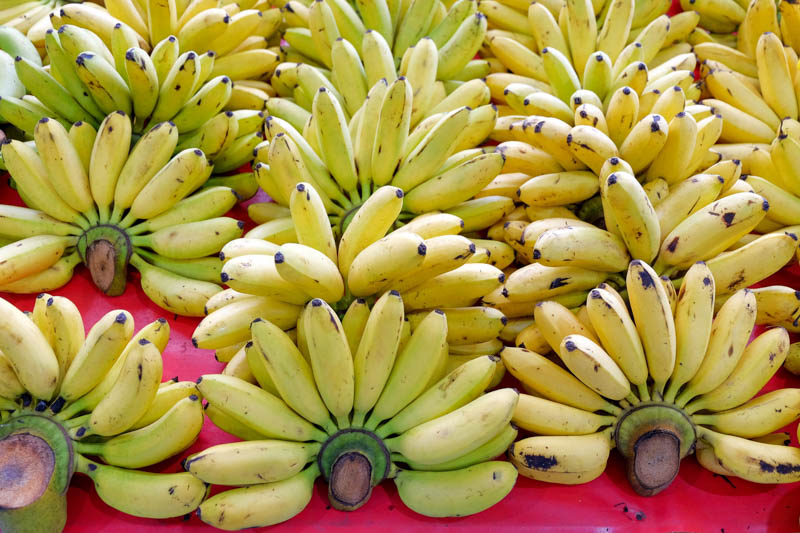


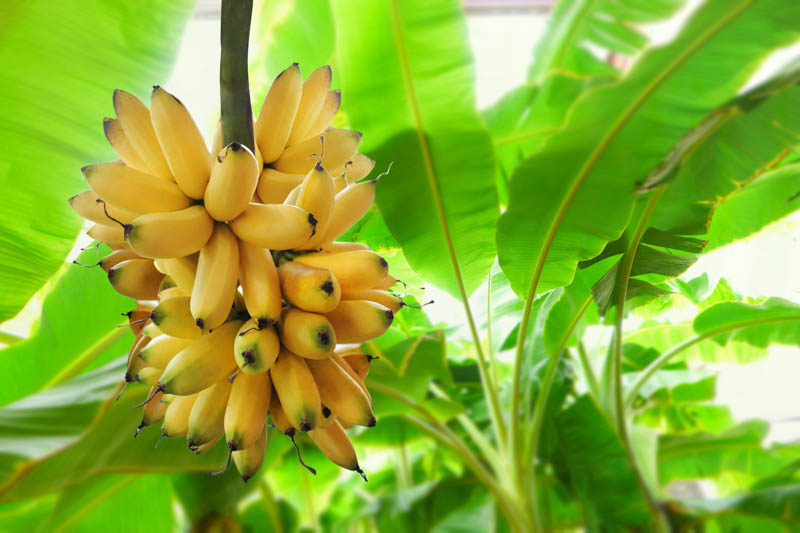
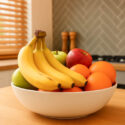
Botanically, a berry is a fleshy fruit formed from a single ovary that typically contains multiple seeds. Bananas develop from a single inferior ovary, their pulp is the fruit’s flesh, and in wild bananas there are lots of hard seeds. Cultivated bananas are usually seedless because the plants set fruit without pollination, a quirk called parthenocarpy. Put it all together and you get a textbook berry, even though your grocery brain says dessert fruit.
In everyday speech, berry means small, sweet, colorful, and snackable. In botany, berry has a precise build sheet. A berry is a simple fruit. Simple means it forms from one ovary of one flower, not from many ovaries or many flowers fused together. The wall of that ovary matures into the pericarp, which has three layers. The thin skin is the exocarp, the juicy or pulpy interior is the mesocarp, and the layer right around the seeds is the endocarp. If that whole unit ripens as soft, edible tissue and stays closed at maturity, you are holding a berry.
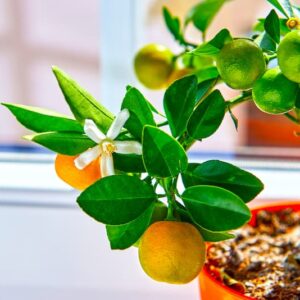
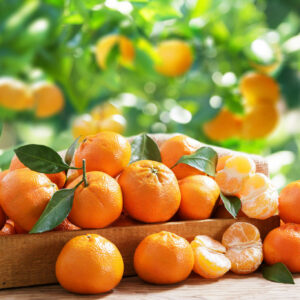
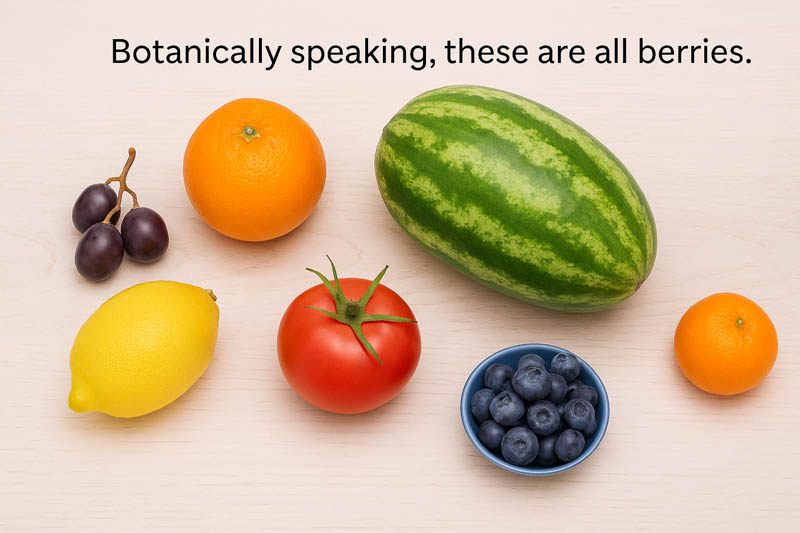
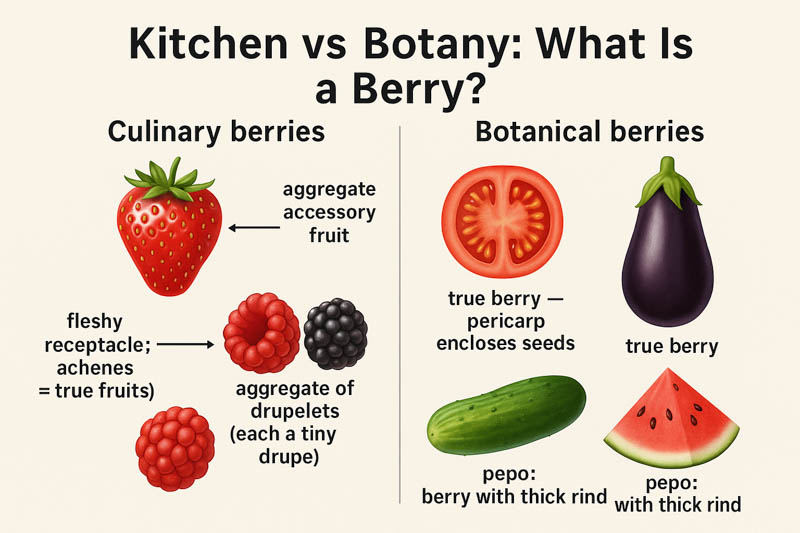
Think about grapes and tomatoes. Both are classic examples. You can bite through the skin, there is soft flesh, and the seeds are embedded inside. Citrus is a specialized berry called a hesperidium, and the melon family makes pepos, which are berries with a tougher rind. The shapes and flavors vary wildly, but the shared blueprint is consistent.
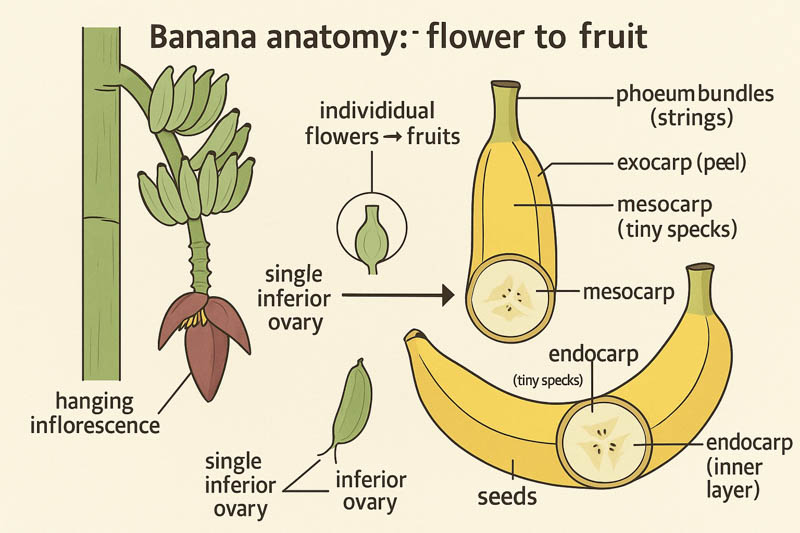
The banana plant throws a large hanging inflorescence. Each hand of bananas is a cluster of individual flowers that become fruits. Focus on a single banana. That fruit began as a single inferior ovary. Inferior means the ovary sits below the other flower parts. Inside that ovary are three chambers, a clue you can see when you slice a banana crosswise and notice a faint three pointed star. In wild Musa species the chambers contain rows of ovules that develop into many hard seeds. In cultivated bananas those seeds are mostly absent or reduced to tiny specks, but the internal architecture remains.
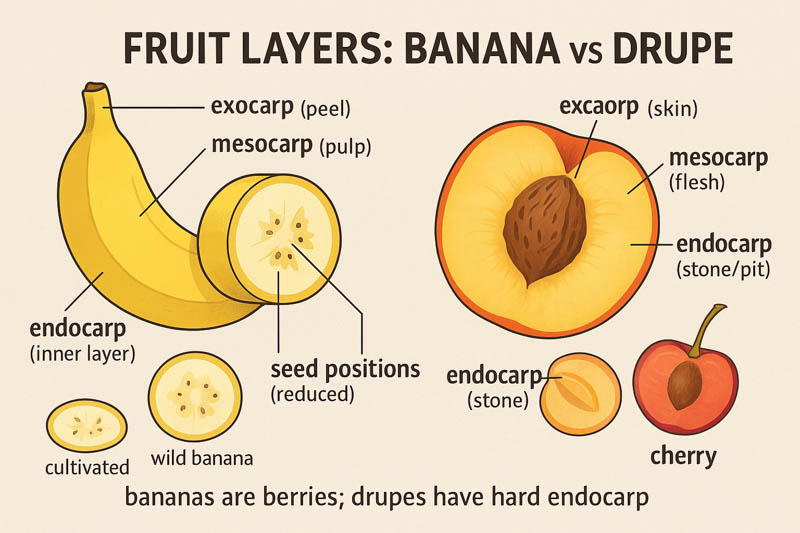
As the ovary matures, the pericarp becomes banana peel and flesh. The exocarp is the peel you take off. The mesocarp is the soft creamy pulp. The endocarp is the innermost layer closest to where seeds would be. Those stringy bits you sometimes pull off are phloem bundles, the plant’s little highways that supplied the growing fruit. None of this has anything to do with pies or smoothies, but all of it matters for naming the fruit.
Seedlessness can be confusing because we often assume fruit exists to carry seeds. That is true in nature, and it is still true in wild bananas. Cultivated bananas are typically triploid hybrids that set fruit without pollination and without viable seeds. Parthenocarpy is the technical term. The ovary swells, the pericarp ripens, but the seeds fail to develop. Even so, the way the fruit formed, from one ovary into a fleshy, indehiscent structure, checks every box for berry. Seedlessness changes how the plant reproduces. Gardeners propagate mats by pups from the rhizome or by tissue culture. It does not change the fruit category.
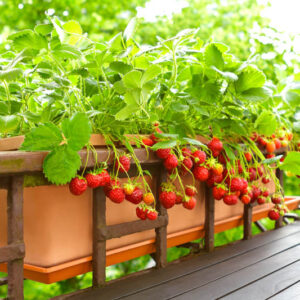
Kitchen language heads one way, botany strolls a different path. Strawberries are delicious, but they are not berries in the botanical sense. A strawberry is an aggregate accessory fruit. The fleshy part is enlarged receptacle tissue, basically the platform that held the flower. The actual fruits are the tiny dry achene specks on the outside, each formed from its own little ovary. Raspberries and blackberries are also not berries. They are aggregates of many small units called drupelets. Each drupelet is a tiny drupe, a fruit with a stony endocarp around a seed. When you pick a raspberry, you remove a cluster of those miniature drupes that easily detach from the cone inside.
Meanwhile the much maligned tomato is a model berry. One flower. One ovary. A soft, fleshy pericarp that remains closed and holds seeds. It is a berry through and through. Eggplants follow the same logic. Cucumbers and watermelons are pepos, also in the berry family tree, just adapted for a tougher rind because gourds do gourd things. Once you get the definition straight, your shopping cart becomes a taxonomy quiz.
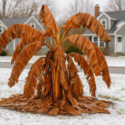
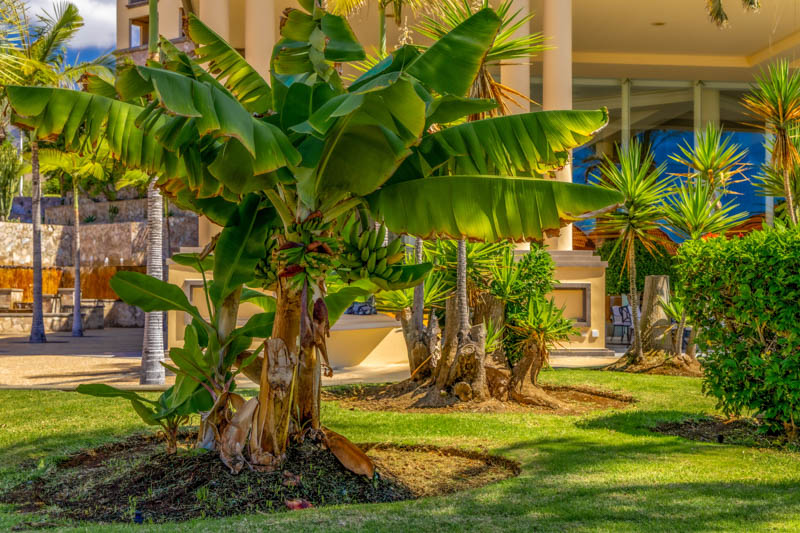
Banana fruits develop on a giant herb, not a woody tree. What looks like a trunk is a pseudostem formed by tightly wrapped leaf bases. A true stem rises through the center and eventually produces the flowering structure that becomes the bunch. Each pseudostem fruits once. Then you cut it down and let the next pup take over. None of that changes berry status, but it explains why bananas can grow quickly, why leaves tatter in wind, and why people call them trees even though the plant is, botanically speaking, a giant herbaceous monocot in the order Zingiberales with dramatic ambitions.
| Statement | Botany says | Why |
|---|---|---|
| Bananas are not berries because they are big and seedless | False | Size and seedlessness do not define berry. Formation from a single ovary with fleshy pericarp does |
| Strawberries are berries | False | They are accessory fruits; the true fruits are the small achenes on the outside |
| Tomatoes are vegetables | Culinary vegetable, botanical berry | One ovary, fleshy pericarp, multiple seeds |
| Melons are something else entirely | They are pepos | A pepo is a berry with a firm rind, typical of the gourd family |
When you peel a banana, you are stripping away the exocarp. The pliable layer you sometimes shave with a knife when a peel is green is still exocarp plus a bit of outer mesocarp. The soft edible pulp is mesocarp. That is the engine room for flavor and texture. The endocarp is the thin inner layer around where seeds would sit. In cultivated bananas, the seed positions are there in blueprint only. In wild bananas, those positions can fill with pebble hard seeds that make the fruit tough to eat. The plant never read your brunch plans.
Why mention layers at all? It is helpful for recognizing fruit types. Drupes such as peaches and cherries put a lot of material into a hard endocarp. Break open a cherry pit and you are cracking the endocarp shell. Berries invest in soft tissue, not stone. The way a fruit allocates tissue is part of how botanists name it.
Bananas sit in a big, diverse genus. Many dessert types are rich in Musa acuminata genes, while plantains and cooking bananas combine acuminata with Musa balbisiana, which contributes firmness and starch. Whether dessert sweet or starchy and savory when green, the underlying fruit type is still a berry. That is true for small ornamental species as well. Their fruit may be full of seeds and not particularly edible, but the build follows the same rules.
If you look closely at a banana bunch as it fills, you will also notice that fruits form in rows along each hand. Each fruit began as its own flower with an ovary that swelled after bloom. The bunch is a collection of many berries produced by a single inflorescence. This is different from an aggregate fruit, where one flower with many ovaries becomes a cluster of small units. In bananas the fruiting units were separate flowers to begin with.
We shop and cook by flavor and texture, not flower anatomy. In a kitchen, berries are finger sized, often eaten whole, and sprinkled on oatmeal. Bananas serve as snack bars you unwrap. Tomatoes go in sauces. Cucumbers go in salads. That is perfectly fine. Culinary categories evolved for taste and utility. Scientific categories evolved to describe how plants build and disperse offspring. Each system serves its purpose.
Try this mental model. Culinary fruit equals sweet plant parts you eat for dessert or with breakfast. Culinary vegetables equals savory plant parts for dinner. Botanical fruit equals ripened ovary tissue that encloses seeds. Under that botanical umbrella, there are subtypes such as berry, drupe, pome, pepo, hesperidium, aggregate fruit, and multiple fruit. Pineapples are multiple fruits formed from many flowers fused together. Figs are syconia, an entirely different structural party. Your salad bowl is a botany textbook wearing an apron.
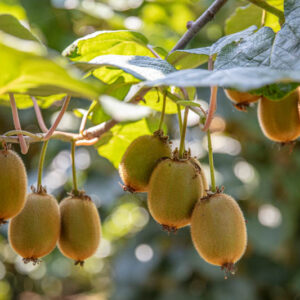
Blueberries, cranberries, tomatoes, grapes, peppers, eggplants, and kiwifruit. Citrus are modified berries (hesperidia). Cucumbers, squash, and watermelons are pepos (another berry type).
Edible bananas usually have tiny, undeveloped seeds. Wild bananas often have large, hard seeds. Most cultivated bananas are seedless due to parthenocarpy and triploid genetics.
Yes. Plantains are bananas; their fruits develop from a single ovary and qualify as berries, even though they’re used green as starchy cooking bananas.
Kitchen language follows tradition; botany follows flower anatomy. That’s why raspberries/blackberries (aggregate drupes) aren’t true berries, while tomatoes are.
Both are true berries from inferior ovaries. Blueberries keep a little ‘crown’ from floral parts; bananas lack that crown.
Avocado is commonly classified as a one-seeded berry (a fleshy pericarp around a single large seed), though you may see “drupe-like” in some texts.
No. They’re drupes (stone fruits) with a single seed inside a hard pit (endocarp).
Yes. Bananas release ethylene gas, which speeds ripening in climacteric fruits like avocados, peaches, tomatoes, and kiwifruit.
Genetics, ripeness, and growing conditions. Cavendish types skew mild and sweet; some ABB types (e.g., ‘Blue Java’/Namwa) can taste richer or more vanilla-like when fully ripe.
Green bananas are higher in resistant starch (acts like fiber). As bananas ripen, starch converts to sugars, making them sweeter and often easier to digest.
Keep them cool (not cold) and away from other fruit. Ventilation slows ethylene buildup; bagging speeds ripening. Refrigerate when ripe to extend the window a bit.
Genome balance (A vs. B) influences starch and firmness. AAB/ABB types are starchier (great green for cooking); AAA types are sweeter when yellow and best for fresh eating.
If it’s fleshy and comes from one flower’s single ovary (tomato, grape, banana), it’s usually a berry. If it has a stone (cherry) or lots of tiny fruits together (strawberry/raspberry), it’s not.
Say this out loud the next time someone claims strawberries are berries and bananas are not. A berry forms from one ovary, keeps its seeds inside, and matures as fleshy tissue. Bananas check every box, even when cultivation removes the seeds from the picture. Strawberries are accessory fruits with the seeds on the surface. Tomatoes, grapes, and blueberries are berries. Citrus is a specialized berry. Cucumbers and melons are pepos. Cue the raised eyebrows and the fun conversation that follows.
If you crack open a formal plant morphology text, you will find consistent language for banana fruit. It is described as a fleshy, indehiscent berry developed from an inferior ovary, usually trilocular. The terms may sound academic, but they match what you can observe. Slice a banana across and look for three faint chambers. Note the continuous, soft flesh that runs from skin toward the center. Notice there is no hard inner stone. Notice that the fruit does not split open on its own to release seeds. Those observations line up with the definition of a berry.
Once you see bananas through this lens, the produce aisle turns into a quiet science museum. Grapes and tomatoes are berries. Strawberries are not. Bananas are absolutely berries. The next time you unwrap that yellow peel, you can enjoy the snack and the science in one satisfying bite.
Updated: September 21, 2025 • Reviewed by Gardenia Editors
| Hardiness |
9 - 11 |
|---|---|
| Plant Type | Fruits, Perennials |
| Plant Family | Musaceae |
| Genus | Musa |
| Common names | Banana |
| Exposure | Full Sun |
| Season of Interest | Spring (Early, Mid, Late), Summer (Early, Mid, Late), Fall, Winter |
| Height | 6' - 25' (180cm - 7.6m) |
| Spread | 5' - 15' (150cm - 4.6m) |
| Maintenance | Average |
| Water Needs | Average |
| Soil Type | Chalk, Clay, Loam, Sand |
| Soil pH | Acid, Alkaline, Neutral |
| Soil Drainage | Moist but Well-Drained, Well-Drained |
| Characteristics | Showy, Evergreen, Fruit & Berries |
| Toxic to Humans | No known toxicity |
| Toxic to Cats | No known toxicity |
| Toxic to Dogs | No known toxicity |
| Toxic to Horses | No known toxicity |
| Hardiness |
9 - 11 |
|---|---|
| Plant Type | Fruits, Perennials |
| Plant Family | Musaceae |
| Genus | Musa |
| Common names | Banana |
| Exposure | Full Sun |
| Season of Interest | Spring (Early, Mid, Late), Summer (Early, Mid, Late), Fall, Winter |
| Height | 6' - 25' (180cm - 7.6m) |
| Spread | 5' - 15' (150cm - 4.6m) |
| Maintenance | Average |
| Water Needs | Average |
| Soil Type | Chalk, Clay, Loam, Sand |
| Soil pH | Acid, Alkaline, Neutral |
| Soil Drainage | Moist but Well-Drained, Well-Drained |
| Characteristics | Showy, Evergreen, Fruit & Berries |
| Toxic to Humans | No known toxicity |
| Toxic to Cats | No known toxicity |
| Toxic to Dogs | No known toxicity |
| Toxic to Horses | No known toxicity |
Create a membership account to save your garden designs and to view them on any device.
Becoming a contributing member of Gardenia is easy and can be done in just a few minutes. If you provide us with your name, email address and the payment of a modest $25 annual membership fee, you will become a full member, enabling you to design and save up to 25 of your garden design ideas.
Join now and start creating your dream garden!
Create a membership account to save your garden designs and to view them on any device.
Becoming a contributing member of Gardenia is easy and can be done in just a few minutes. If you provide us with your name, email address and the payment of a modest $25 annual membership fee, you will become a full member, enabling you to design and save up to 25 of your garden design ideas.
Join now and start creating your dream garden!