Banana peels get big promises on social media—but do they really feed your plants? We cut through the hype with simple, science-backed advice. Learn when peels help (compost, worm bins), when they don’t (soaks, raw burial), and how to boost blooms without pests, smells, or guesswork.
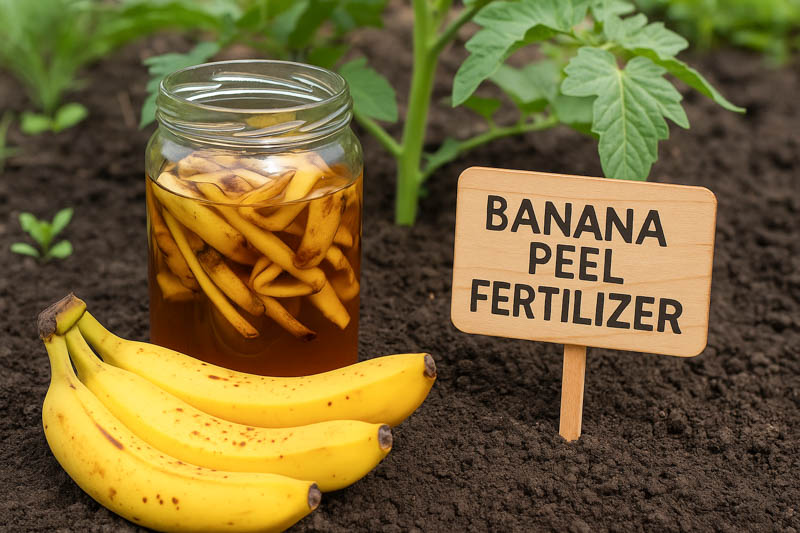


Summary: Banana peels aren’t miracle fertilizer—but they’re useful when composted or vermicomposted. “Peel tea” and burying raw peels are mostly hype: low nutrient release, odor, and pest risk.
Best Use: Chop peels and send them through compost or a worm bin; then apply finished compost/castings.
Houseplants: Skip raw peels/tea. Use thin top-dress of compost or worm castings instead.
| Works Best | Hot composting or vermicomposting (chop peels first) → use finished compost/castings |
|---|---|
| Mostly Hype | “Banana peel tea,” burying whole peels near roots, DIY foliar soaks |
| Risks | Fungus gnats, fruit flies, odors, rodents; uneven decomposition; very low immediate K release |
| Safer Alternatives | Finished compost, worm castings, labeled organic fertilizers; seaweed for K (if needed) |
| Quick Recipe | Chop peels → mix 1 part peels : 2 parts dry browns → compost to dark, earthy finish → top-dress beds |
| Houseplant Note | No raw peels/tea in pots; ¼–½ inch compost or a thin layer of worm castings only |
Banana peels have a great origin story. You eat the fruit, you are left with a golden wrapper, and every garden forum swears that this humble peel is a secret plant superfood. Toss it in a jar of water, sprinkle some peel powder, bury a strip next to your roses, and boom, instant bloom power. But does it actually work the way social media promises, and what is the smartest way to use peels so they help rather than harm your plants.
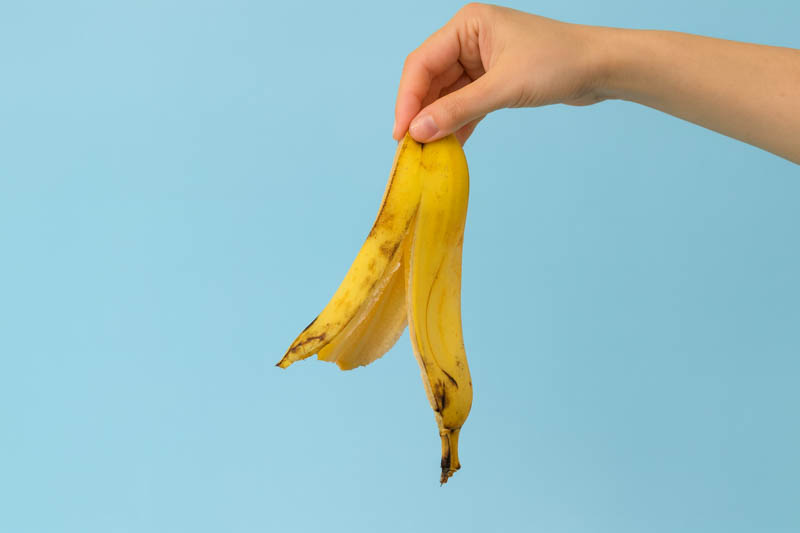
Peels hold a modest mix of nutrients. The headline nutrient is potassium, followed by small amounts of phosphorus and calcium. There is some magnesium and trace elements. Nitrogen is lower than you might expect for something classed as fertilizer. None of this is bad news. It simply means banana peels are a slow, gentle source of a few nutrients rather than a complete, fast fertilizer. Think of peels as a supporting actor in the soil health story, not the entire cast.
Plants do not sip minerals directly from an intact banana peel. Soil life has to decompose the peel first. Microbes, fungi, and critters like worms break down the tissue and release nutrients at a pace that depends on temperature, moisture, and how you process the peel. In a compost pile or worm bin that process is robust. In a jar of water or buried in a pot, it can be slow, smelly, and uneven.
This is the gold standard. Cut peels into strips for faster breakdown and add them to an active compost pile with plenty of leaves or shredded paper to balance moisture. Finished compost delivers stable organic matter, a buffet of nutrients, and beneficial microbes. Spread compost around perennials or mix into vegetable beds before planting. That is the most reliable way to turn peels into plant food.
Vermicomposting shines for kitchen scraps. Small pieces are best. Bury peels under bedding to avoid fruit flies. The resulting worm castings are dense with plant available nutrients and microbial life. Top dress containers or brew a simple non aerated steep of castings for a gentle soil drench. Worm bins transform banana peels from sticky waste to a premium soil amendment.
If you want a do it yourself approach beyond compost, dry peels in a low oven or dehydrator until crisp, then grind to a coarse meal. Mix the powder into a broader pantry blend that includes sources of nitrogen and calcium, for example coffee grounds that have been composted and finely crushed eggshell that has been heat treated and ground. Use lightly in outdoor beds only. For houseplants, stick to finished compost or worm castings to avoid pests.
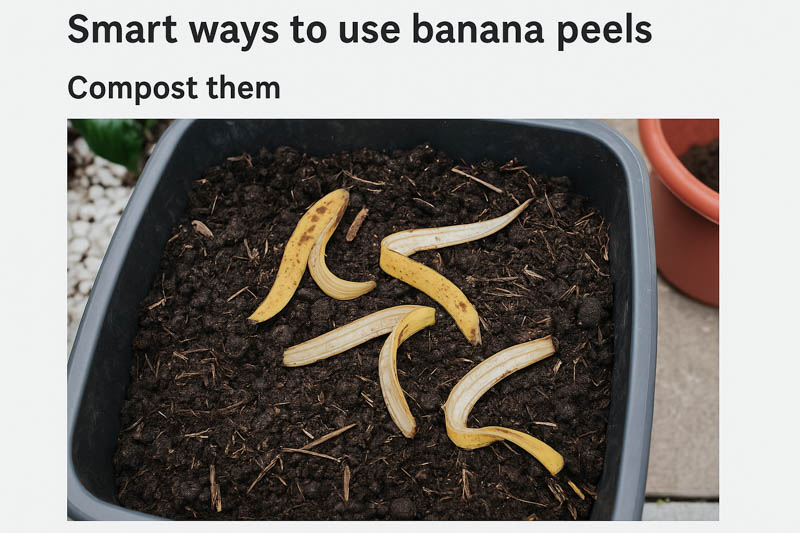
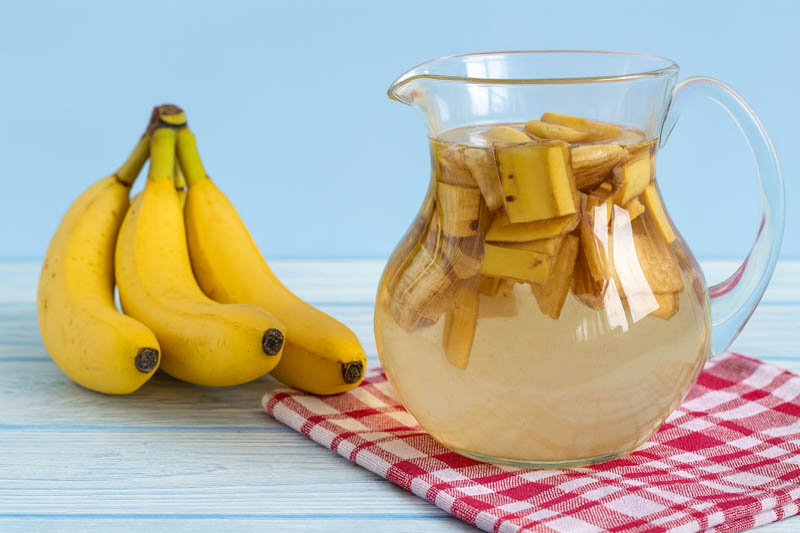
Soaking peels in water for a day or three looks convincing, but most nutrients remain in the peel. Worse, a long soak can breed microbes you do not want to spray on leaves. If you love the ritual, keep it short and pour it on your outdoor soil, never on edible leaves. Know that the benefit is marginal compared with compost.
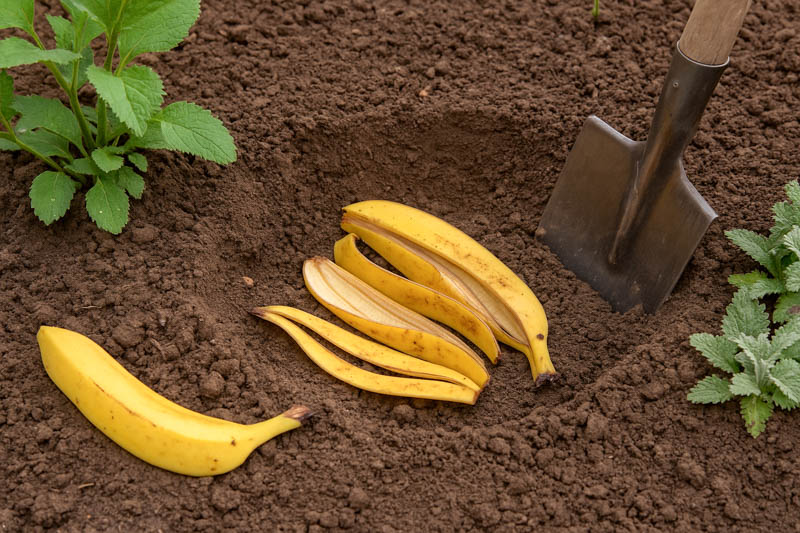
In outdoor beds you will sometimes get away with it, but there are catches. Whole peels decompose slowly, can attract rodents or raccoons, and may become a slimy pocket that repels roots. If you insist, chop finely and bury at least eight inches deep, well away from stems. Even then, composting first is the better move.
Leaves take up certain nutrients through stomata, but that does not make every kitchen brew a good foliar spray. Peel soaks can carry opportunistic microbes and residues. If you want a foliar boost, use a tested seaweed extract or a labeled horticultural product rather than a peel infusion.
Houseplants live in a small, closed environment and share your living room air. Anything that molds or ferments in a pot is a problem. Raw peels on soil surfaces invite fungus gnats and white fuzz. Banana peel tea in a watering can can sour potting mix. If your goal is lush leaves and fewer pests, keep it simple. Top dress with a thin layer of high quality compost or worm castings and water normally. Save raw peels for the compost bucket.
Banana peels have folk fame around roses. The kernel of truth is that roses appreciate potassium, which supports flower quality and general vigor. Compost already provides that, along with better drainage and nutrient holding. Tomatoes have their own version of the myth. In both cases, balanced soil nutrition is the driver of success. Compost, mulch, and a sensible fertilizer program beat a single ingredient trick every time.
Peels from conventionally grown bananas can carry small residues on the surface. This is one more reason to compost peels rather than steep or bury them near edibles. Composting and vermicomposting reduce residue concerns as microbes, time, and heat do their work. If you want to be extra careful with input sources, choose organic bananas, though composting remains the main safety net.
| Method | Pros | Cons | Best Use |
|---|---|---|---|
| Hot compost | Stable nutrients, fewer pests, improved soil structure | Needs a working pile and some space | Vegetable beds, perennials, shrubs |
| Vermicompost | Fast breakdown, rich castings, great for pots | Bin management and pest control required | Houseplants, containers, seed starting blends |
| Peel tea soak | Easy, low effort ritual | Low nutrient yield, risk of odors and microbes | Outdoors only if used at all |
| Dry peel powder | Higher surface area, easy to sprinkle | Still needs decomposition, can invite gnats in pots | Mix into outdoor beds, avoid houseplants |
| Bury raw peels | No equipment needed | Pests, rot pockets, slow release | Only if chopped fine and buried deep outdoors |
No. Peels are not a complete fertilizer. Garden vegetables and flowering annuals use significant nitrogen, phosphorus, and potassium, plus secondary and trace elements. You will get the best results with a layered approach. Build soil with compost and mulch. Use a balanced organic fertilizer according to the needs of your crop and your soil test. Let peels ride along inside the compost stream rather than trying to make them carry the whole crop.
Healthy soil holds and releases nutrients, drains well yet stays evenly moist, and teems with life. That ecosystem turns kitchen scraps into plant fuel over time. When you add finished compost, you do not just feed plants for a week. You improve the long term resilience of the bed, the soil’s tilth, the way roots explore. Banana peels can certainly be a small piece of that grander puzzle when you route them through compost first.
Fermented methods can speed up decomposition and preserve nutrients, but they require some know how and careful handling to avoid odors and messy outcomes. If you already use bokashi, peels are fine in the mix. Just remember that bokashi is a pre compost step. You still need to finish the material in a compost bin or a worm bin or a well managed soil trench to make nutrients plant available without attracting pests.
They shine when they are not the star. They shine as one ingredient inside a living compost system. They shine when you scatter finished compost around roses in spring and those canes put on glossy growth without a hint of burn. They shine when your tomato bed gets a wheelbarrow of mature compost rather than a single buried peel. In other words, peels are great as part of the chorus that makes your soil sing.
Chop peels. Mix one part peels with at least two parts dry browns. Keep the pile as moist as a wrung sponge. Turn as you can. Use when dark, crumbly, and earthy smelling.
Freeze and thaw chopped peels. Bury in a corner of the bin and cover with bedding. Harvest castings when the bin looks like fine coffee grounds with few visible scraps.
Top dress with finished compost. Water it in. Mulch with shredded leaves or straw. Your peels were part of that compost, and your plants will thank you without drama.
You can, but it is not ideal. Direct peels can rot, heat up slightly, and invite pests. Compost them first or use a balanced fertilizer at planting.
No. There is no solid evidence that peels repel common garden pests. Healthy plants in healthy soil are the best defense.
Better to avoid. These plants prefer precise watering and low organic debris on the media surface. Use a labeled orchid or cactus food at low rates instead.
Heat can soften tissue, but it does not replace biological decomposition. You gain little and you risk odors. Compost remains the reliable path.
Help and hype both live inside the banana peel story. The help shows up when peels join a compost or worm system that turns scraps into steady, soil building goodness. The hype shows up when a jar of peel water gets painted as a miracle tonic or a raw strip is pitched as a bloom secret. Treat peels as a small, useful ingredient and send them through the biological routes that truly work. Your plants will reward you, your soil will get richer year after year, and your kitchen waste will become part of a beautiful loop instead of a hopeful myth.
Updated: September 12, 2025 • Reviewed by Gardenia Editors
| Hardiness |
9 - 11 |
|---|---|
| Plant Type | Fruits, Perennials |
| Plant Family | Musaceae |
| Genus | Musa |
| Common names | Banana |
| Exposure | Full Sun |
| Season of Interest | Spring (Early, Mid, Late), Summer (Early, Mid, Late), Fall, Winter |
| Height | 6' - 25' (180cm - 7.6m) |
| Spread | 5' - 15' (150cm - 4.6m) |
| Maintenance | Average |
| Water Needs | Average |
| Soil Type | Chalk, Clay, Loam, Sand |
| Soil pH | Acid, Alkaline, Neutral |
| Soil Drainage | Moist but Well-Drained, Well-Drained |
| Characteristics | Showy, Evergreen, Fruit & Berries |
| Toxic to Humans | No known toxicity |
| Toxic to Cats | No known toxicity |
| Toxic to Dogs | No known toxicity |
| Toxic to Horses | No known toxicity |
| Hardiness |
9 - 11 |
|---|---|
| Plant Type | Fruits, Perennials |
| Plant Family | Musaceae |
| Genus | Musa |
| Common names | Banana |
| Exposure | Full Sun |
| Season of Interest | Spring (Early, Mid, Late), Summer (Early, Mid, Late), Fall, Winter |
| Height | 6' - 25' (180cm - 7.6m) |
| Spread | 5' - 15' (150cm - 4.6m) |
| Maintenance | Average |
| Water Needs | Average |
| Soil Type | Chalk, Clay, Loam, Sand |
| Soil pH | Acid, Alkaline, Neutral |
| Soil Drainage | Moist but Well-Drained, Well-Drained |
| Characteristics | Showy, Evergreen, Fruit & Berries |
| Toxic to Humans | No known toxicity |
| Toxic to Cats | No known toxicity |
| Toxic to Dogs | No known toxicity |
| Toxic to Horses | No known toxicity |
Create a membership account to save your garden designs and to view them on any device.
Becoming a contributing member of Gardenia is easy and can be done in just a few minutes. If you provide us with your name, email address and the payment of a modest $25 annual membership fee, you will become a full member, enabling you to design and save up to 25 of your garden design ideas.
Join now and start creating your dream garden!
Create a membership account to save your garden designs and to view them on any device.
Becoming a contributing member of Gardenia is easy and can be done in just a few minutes. If you provide us with your name, email address and the payment of a modest $25 annual membership fee, you will become a full member, enabling you to design and save up to 25 of your garden design ideas.
Join now and start creating your dream garden!