Tall Verbena, Purple Top Vervain, Brazilian Verbena, Upright Verbena, Argentinian Vervain, South American Vervain, Verbena bonariensis 'Buenos Aires', Verbena brasiliensis

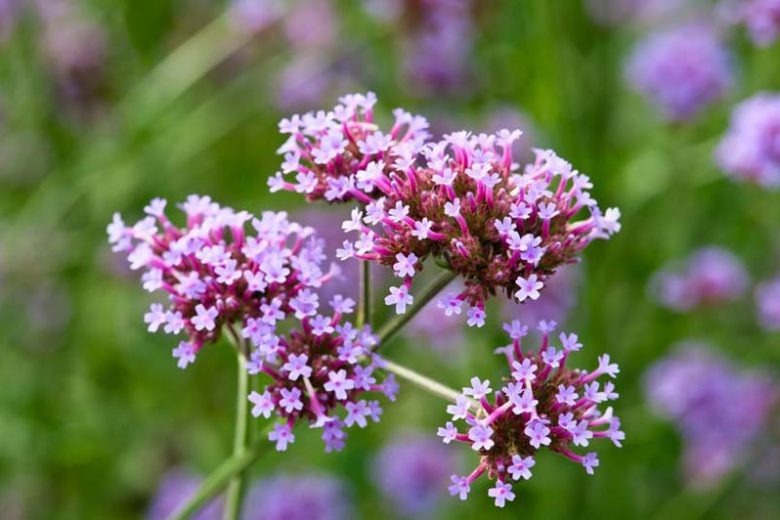
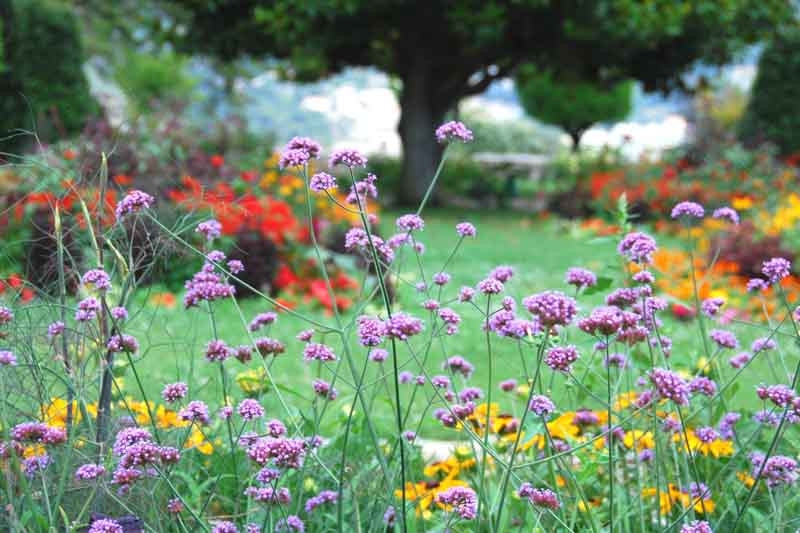
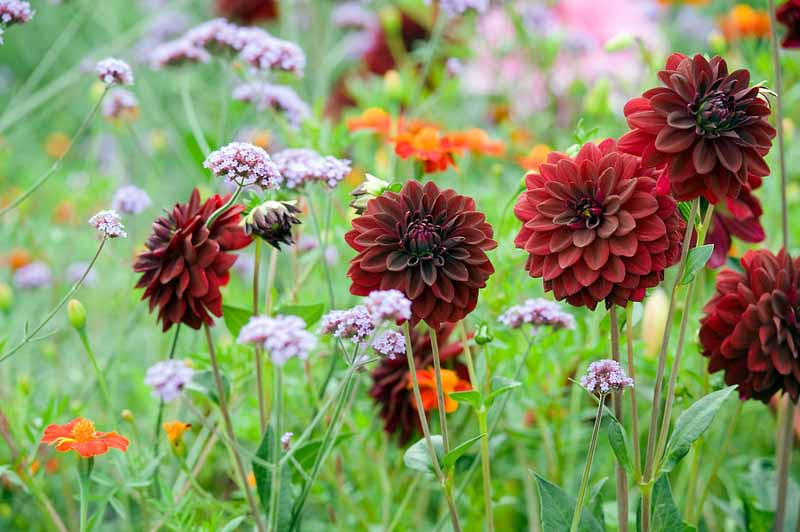
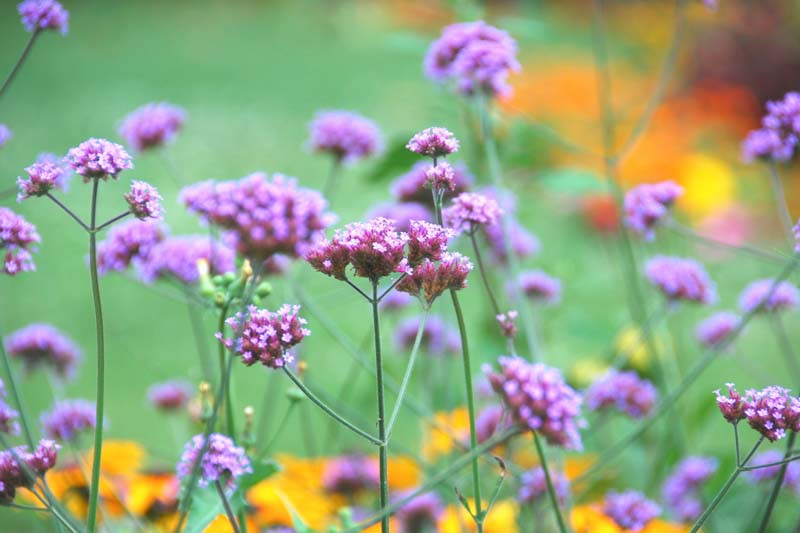
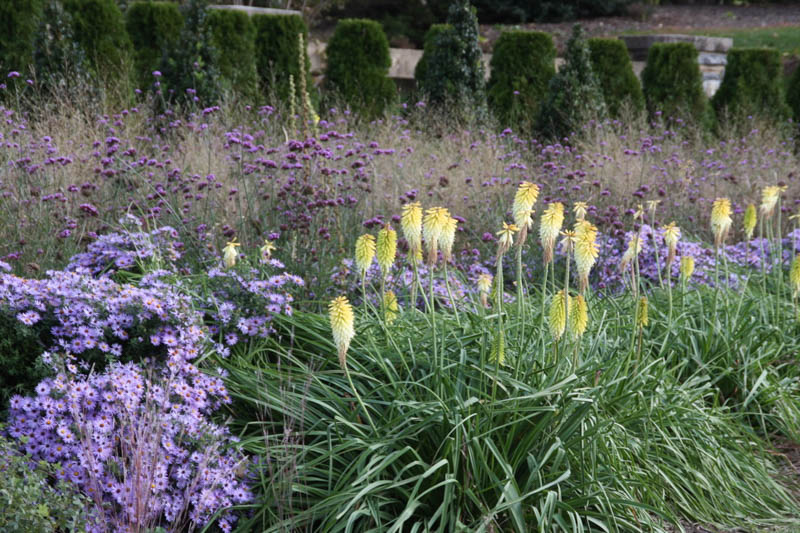
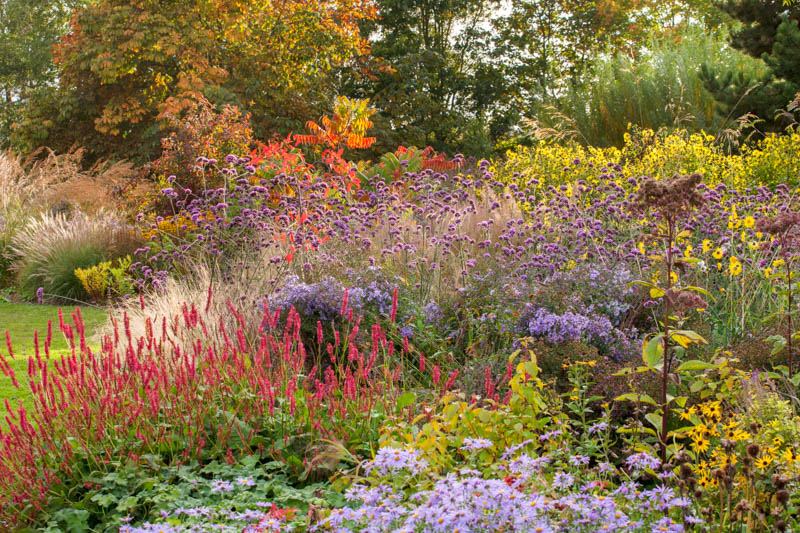
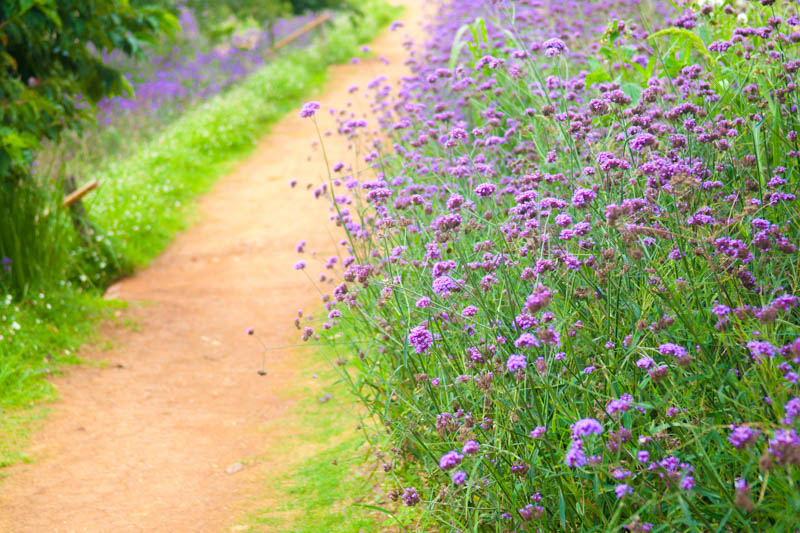
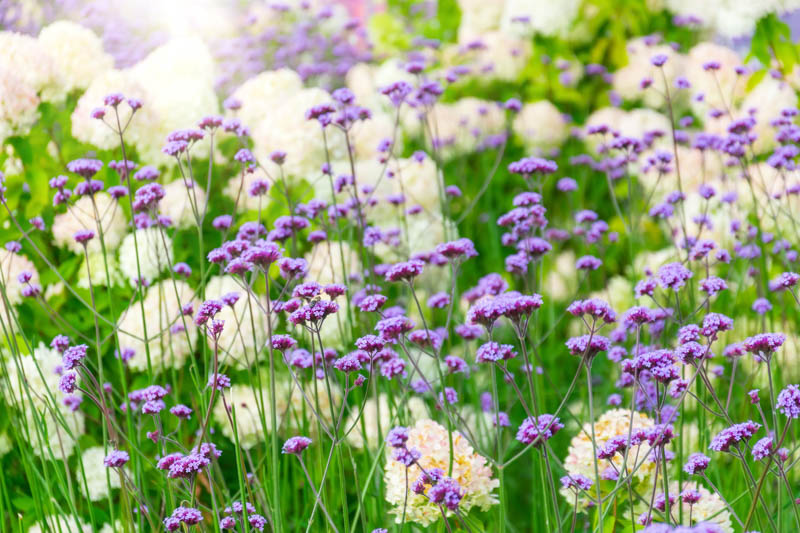
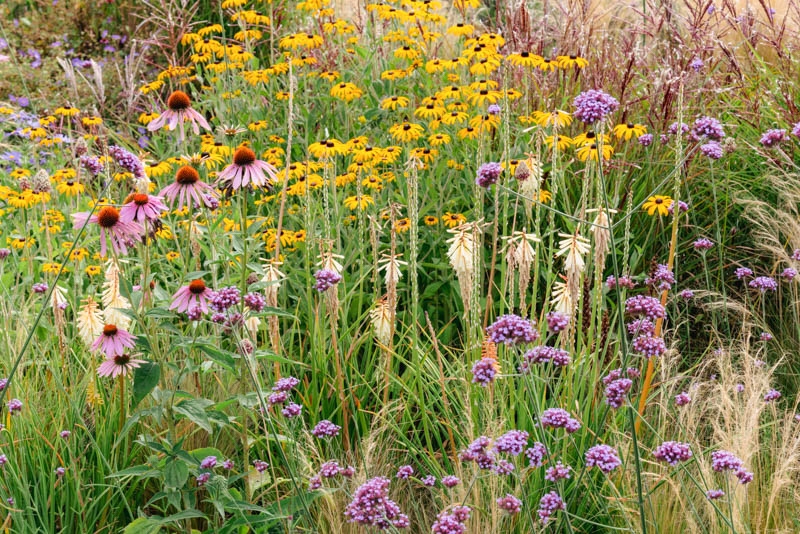
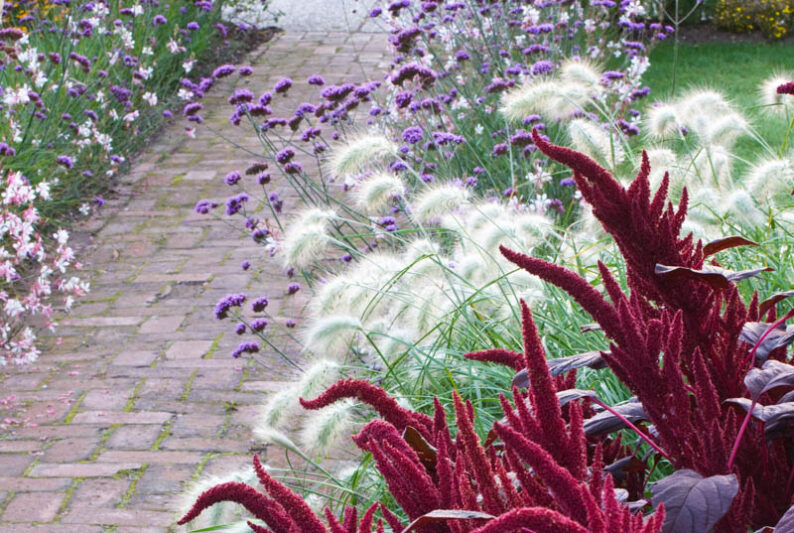


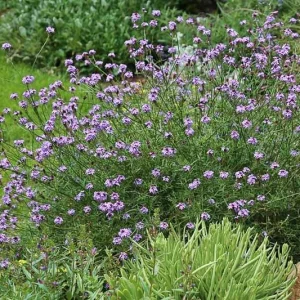
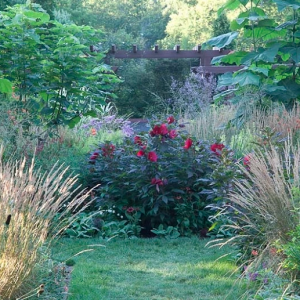
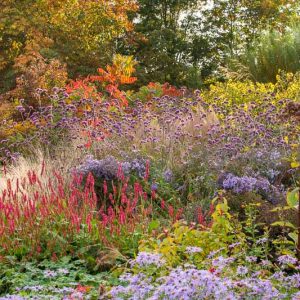
If you want a low maintenance, long blooming, wildlife-friendly perennial that threads effortlessly through your borders, Verbena bonariensis, commonly known as Purpletop vervain or Argentinian vervain, is hard to beat. Winner of the Award of Garden Merit from the Royal Horticultural Society, this tall, slender stemmed perennial carries rich lilac-purple flowers in tight clusters that float above the garden and sway gracefully in the summer breeze.
The wiry, see through stems rise well above rosettes of narrow, lance shaped, dark green leaves that stay close to the ground. From early summer right through to frost, those airy flower clusters act like magnets for butterflies, bees, and hummingbirds. A superior nectar plant, it fits perfectly into Wildlife Friendly Gardens that Attract Bees, Butterflies & Birds and any border where you want height without heaviness.

Summary: Tall, airy tender perennial or short-lived perennial with slender, branching stems topped by tight clusters of lilac purple flowers floating above low rosettes of dark green leaves.
Use: Perfect for mixed borders, cottage gardens, prairie and meadow style plantings, Mediterranean inspired gardens, wildlife and pollinator gardens, and cut flower beds.
Highlight: Exceptionally long flowering season from early summer until frost, combined with outstanding value for butterflies, bees, and hummingbirds. Light, see through habit lets you tuck it almost anywhere without blocking views.
Note: A prolific self seeder in many regions. In some areas it has escaped cultivation and become naturalized or invasive – always check local guidance. It is also a recognized drought tolerant plant once established.
| Botanical Name | Verbena bonariensis |
|---|---|
| Family | Verbena family (Verbenaceae) |
| Common Names | Purpletop vervain, Tall verbena, Argentinian vervain, Purpletop |
| Native Range | Native to South America, especially Brazil, Argentina, and surrounding regions. It has escaped cultivation and become naturalized in disturbed areas across the southeastern United States and California. |
| Plant Type and Habit | Tender perennial, short-lived perennial, or annual depending on climate. Forms a low rosette of leaves with tall, slender, branched stems and a distinctive airy, see through habit. |
| Hardiness (approx. USDA) | Generally hardy in about USDA Zones 7 to 11. In colder regions it is often grown as an annual but readily self seeds and returns year after year. |
| Size | Fast grower to about 3 to 6 ft. tall (90 to 180 cm) and 1 to 3 ft. wide (30 to 90 cm), depending on site and cultivar. |
| Sun and Exposure | Full sun to very light shade. Full sun gives the sturdiest stems and heaviest flowering. |
| Soil | Thrives in average, moist but well drained soils. Tolerates poor, sandy, or gravelly soils and becomes drought-tolerant once established. |
| Seasonal Interest | Flowers from early summer until frost. The tiny tubular blooms are held in tight clusters at the top of stems, creating a cloud of purple above the border and providing months of color and nectar. |
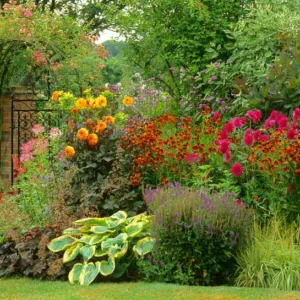
| Primary Uses | Pollinator gardens, cottage gardens, prairie and meadow style plantings, mixed borders, Mediterranean gardens, mass plantings, and cut flower arrangements. Its airy habit lets you weave it among roses, grasses, and perennials without crowding them. |
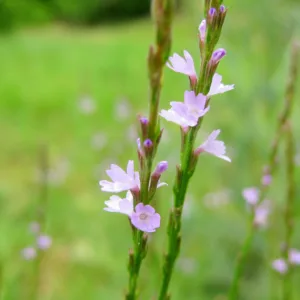
Verbena bonariensis is a tall, architectural perennial with a distinctly airy look. Plants form a low clump or rosette of narrow, lance shaped, dark green leaves at the base. From this base, multiple slender, branching stems shoot upward and outward, often reaching 3 to 6 ft. tall.
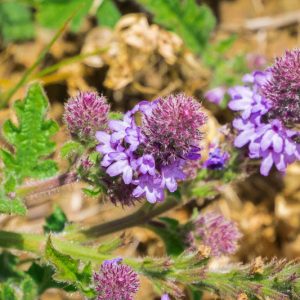
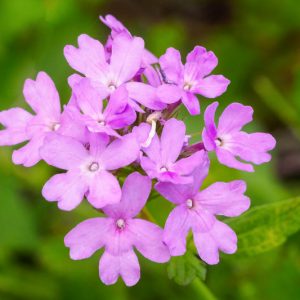
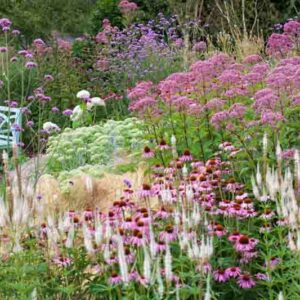
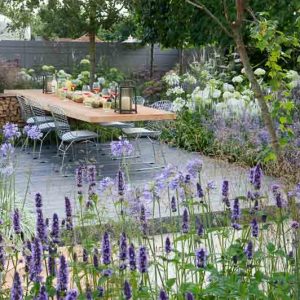
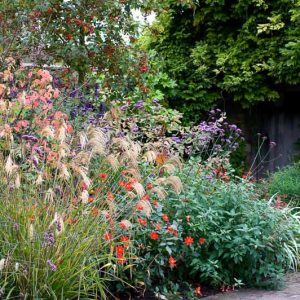
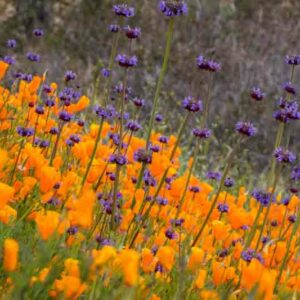
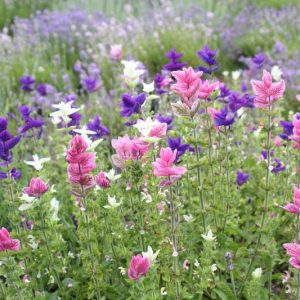
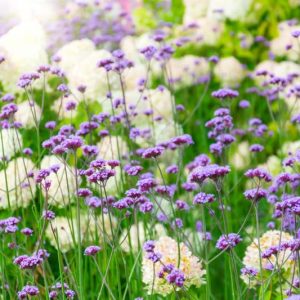
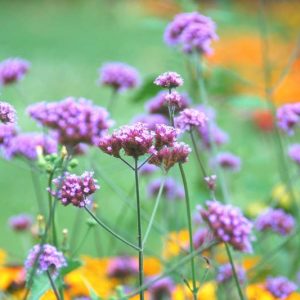
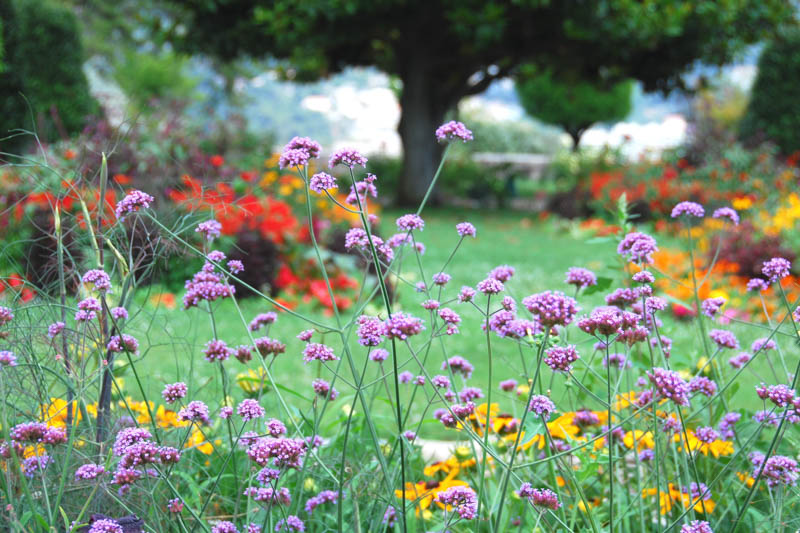
At the ends of these wiry stems sit tight clusters of tiny, tubular, lilac purple flowers. Each individual flower is small, but together they create a haze of color that floats above the rest of the planting. Because the stems are thin and almost transparent, you can see other plants through them, making Purpletop vervain one of the best “weaving” plants for modern borders and Mediterranean garden ideas.
Verbena bonariensis is native to South America, particularly Argentina, Brazil, and neighboring countries. It naturally grows in open, sunny, disturbed areas where the soil is often dry and not especially rich.
Through cultivation, it has been widely introduced to gardens around the world. In many places, especially across the southeastern United States and California, it has escaped cultivation and become naturalized along roadsides, in abandoned fields, and other disturbed sites.
This is a fast growing perennial that quickly reaches its mature height in a single season. The base remains relatively narrow, while the branched flower stems spread out lightly at the top, giving the plant a narrow V shape.
Because it is short-lived in many climates, Purpletop vervain often persists by self seeding. Once you have it, you will often find new seedlings popping up near the original plant. These are easy to weed out or transplant, so you can control how many you keep.
The main show comes from the long-lasting clusters of purple flowers. Blooming typically begins in early summer and continues without pause until frost, especially if the plant has adequate sun and is not overly fertilized.
The small tubular flowers are held in tight, flattened clusters and are rich in nectar. After flowering, the clusters form tiny seeds that readily drop and germinate. Gardeners who enjoy a natural, slightly informal look often let a few of these seed heads ripen to encourage new plants the following year.
The foliage is not the star of the show, but it plays an important role. The dark green leaves at the base ground the plant, while the nearly leafless stems above keep the look light and transparent. This makes Purpletop vervain ideal for adding height and movement without creating a dense visual block.
Combined with ornamental grasses, salvias, and other sun loving perennials, it contributes to late season and autumn interest, staying in flower until frost turns the stems a soft, tawny brown.
Hardiness: Verbena bonariensis is generally hardy in about USDA Zones 7 to 11. In these milder regions it behaves as a perennial, coming back from the crown each spring.
In colder climates, it is often grown as an annual. Even where the original plants are killed by winter cold, it frequently self seeds generously, giving the impression of a perennial presence as new seedlings take over.
You can use Purpletop vervain in many different garden styles:
Pollinators: Purpletop vervain is famous as a butterfly magnet. Swallowtails, monarchs, and many other species visit the blooms repeatedly. Bees and other beneficial insects also flock to its nectar rich flowers, creating a lively buzz of activity all summer.
Hummingbirds: The tubular flowers are a natural fit for hummingbirds, which appreciate the long flowering season and open structure that allows easy access to nectar.
Verbena bonariensis is often listed as deer and rabbit resistant. While no plant is completely safe in every situation, the coarse foliage and wiry stems are usually ignored by deer and less appealing to rabbits than many other perennials.
Once established, Purpletop vervain is reliably drought tolerant. Its deep rooting habit and ability to thrive in relatively poor soil make it an excellent candidate for low water gardens filled with long lasting color and drought tolerant mixes of shrubs, perennials, and grasses.
Verbena bonariensis is generally considered non toxic to humans and pets when grown as an ornamental, though it is not intended for consumption. As with any garden plant, discourage pets and children from eating it.
Because Purpletop vervain self seeds freely and tolerates a wide range of conditions, it can become an unwanted spreader or invasive species in some areas. Always check local recommendations and regulations.
To understand where this species is considered invasive in the United States, consult this resource on invasive status. If you garden in a region where it is problematic, explore beautiful U.S. native plant alternatives that offer similar height, movement, and wildlife value without the risk.
Purpletop vervain offers an appealing mix of height, lightness, extended bloom, and wildlife value. It brings color, movement, and pollinators into sunny borders and meadows, yet it asks for very little in return. It is especially useful in designs that emphasize drought tolerance, sustainability, and naturalistic planting.
Purpletop vervain is known for coping with average to poor soils as long as drainage is good.
In heavy clay or poorly drained sites, improve structure with organic matter and consider slightly raised beds to keep roots healthy.
Purpletop vervain is generally easy to maintain and requires only light touch pruning.
You can propagate Verbena bonariensis in several simple ways:
Purpletop vervain is generally a tough, low maintenance plant, but it can occasionally encounter pests, diseases, or cultural issues.
Aphids: These small sap sucking insects may cluster on new shoots or flower stems. Rinse them off with water or use insecticidal soap if needed.
Spider mites: In hot, dry conditions, spider mites can appear, causing stippling on leaves. Increase humidity, rinse foliage, and treat with horticultural oil if populations build.
Whiteflies and other sap suckers: Occasionally present on stressed plants, especially in containers. Healthy, well sited plants rarely suffer serious damage.
Powdery mildew: In crowded, shaded, or humid sites, a white coating can develop on leaves. Improve air circulation, avoid overhead watering, and refer to powdery mildew management tips if needed.
Root rot: The main threat comes from poor drainage and chronic overwatering. Yellowing, wilting plants in wet soil may be suffering from root problems. Plant in well drained sites and avoid waterlogged conditions.
Leaf spot: Humid weather and wet foliage can lead to leaf spot diseases. Remove affected leaves and improve growing conditions to reduce recurrence.
Flopping or leaning stems: Too much shade, high fertility, or very rich soil can cause tall stems to lean. Provide more sun, avoid over fertilizing, or let the plant lean gently into neighboring perennials and grasses for support.
Too many seedlings: In ideal conditions, self seeding can be enthusiastic. Thin unwanted seedlings in spring, or deadhead more aggressively if you want fewer volunteers.
Poor flowering: Plants in too much shade, overly rich soil, or heavy, wet ground may bloom sparsely. Move to a sunnier, better drained site for best performance.
Purpletop vervain has inspired a number of compact, tall, and more free flowering selections. Choosing the right mix of varieties lets you scale its airy purple clouds to fit small beds, large meadows, and everything in between.
| Variety | Approx. Size & Habit | Flower Color & Display | Notes & Uses | Special Considerations |
|---|---|---|---|---|
| Verbena bonariensis ‘Lollipop’ | Dwarf selection, usually 24 in. tall and 18 to 24 in. wide; compact, rounded habit with sturdy stems. | Rich lilac purple flower clusters held above the foliage, forming a lower, denser haze of color. | Excellent for smaller gardens, the front of borders, containers, and mass plantings where the species would be too tall. | Less likely to flop in windy sites thanks to its shorter stature. |
| Verbena bonariensis ‘Meteor Shower’ | Medium height, typically 30 to 36 in. tall; well branched, bushy habit. | Abundant clusters of vivid purple flowers produced over an extended season. | Bred for heavy flowering and strong stems; ideal for containers, mixed borders, and pollinator plantings where dependable bloom is a priority. | Often grown as an annual in cooler climates but flowers reliably in a single season. |
| Verbena bonariensis ‘Buenos Aires’ | Tall, often 4 to 5 ft. or more; upright, well branched habit similar to the species. | Classic lilac purple flower heads, slightly larger and often more numerous than the species. | Outstanding in large borders, prairie plantings, and behind shorter perennials where height and drama are desired. | Self seeds similarly to the species in suitable climates. |
| Verbena bonariensis ‘Purple Emperor’ | Medium tall selection, roughly 3 to 4 ft. tall; strong, upright stems. | Deep purple flower clusters that stand out strongly against the foliage and surrounding plants. | Ideal for mid to back of border placements and for boosting color intensity in mixed plantings. | Combine with warm toned perennials for striking color contrast. |
Verbena bonariensis is a tender or short-lived perennial that behaves differently depending on climate. In mild regions (roughly USDA Zones 7–11), it often overwinters and returns from the base. In colder climates, it is typically grown as an annual. Even where winter kills the original plant, it commonly self-seeds so that new seedlings appear the following year, giving the impression of a perennial presence.
Verbena bonariensis usually reaches about 3 to 6 feet (90 to 180 cm) tall and 1 to 3 feet (30 to 90 cm) wide. It forms a low clump of foliage at the base and sends up tall, slender, branching stems that carry clusters of small purple flowers. The stems are thin and see-through, so the plant adds height and movement without creating a visual wall in the border.
Yes. Verbena bonariensis is widely regarded as an excellent pollinator plant. Its long-lasting clusters of nectar-rich, tubular purple flowers are highly attractive to butterflies, bees, and hoverflies, and they are also visited by hummingbirds where these birds are present. Because it blooms from early summer until frost, it provides a continuous food source during a long portion of the growing season.
Verbena bonariensis prefers full sun and well-drained soil. It grows best in average, moderately moist soil but tolerates poor, sandy, or gravelly ground once established. It is generally hardy in USDA Zones 7–11 and is often grown as an annual elsewhere. Plants in too much shade or in heavy, waterlogged soil tend to flop, grow weakly, or flower poorly.
Once established, Verbena bonariensis is considered drought tolerant. It evolved in sunny, open habitats and copes well with periods of dry weather if its roots are allowed to grow deep. Regular water is important in the first growing season to help plants establish, but after that, they usually only need supplemental water during extended dry spells.
Verbena bonariensis spreads primarily by seed. In many gardens it self-seeds freely, so you may see numerous seedlings each spring. These are easy to thin or transplant. In some regions, especially in parts of the southeastern United States and California, it has escaped cultivation and become naturalized, and in certain areas it is considered invasive. Gardeners should check local guidance and, where necessary, control seed production by deadheading or choosing alternative plants.
Verbena bonariensis is generally considered deer and rabbit resistant. The texture of the foliage and stems makes it less appealing to browsing animals compared with many other garden plants. However, no plant is completely deer proof, and very hungry deer may sample almost anything, especially young growth.
Verbena bonariensis has a notably long bloom period. In suitable conditions it usually begins flowering in early summer and continues to bloom until the first frost. This extended season of purple flower clusters makes it valuable for sustaining pollinators and providing color late into the year when many other perennials are fading.
Yes, Verbena bonariensis can be grown in containers provided the pot has good drainage and is large enough to support its height. Use a high-quality, well-draining potting mix and place the container in full sun. Regular watering and occasional feeding help maintain strong growth. Dwarf or compact cultivars are especially well suited to container use because they are less prone to top-heaviness and wind damage.
To limit self-seeding, remove spent flower clusters before they set and drop seed. Regular deadheading throughout the season greatly reduces the number of volunteer seedlings. If seedlings still appear, they can be easily pulled or transplanted when small. Growing the plant in more contained beds and borders rather than in wild areas also makes it easier to control.
In regions where Verbena bonariensis is hardy, you can leave it in place and cut back dead stems in late winter or early spring. A light mulch around the crown can help moderate soil temperatures. In colder climates, you can treat it as an annual and rely on self-seeding, or take cuttings or collect seed to start new plants under cover for the following season.
Updated: December 2025 • Reviewed by Gardenia Editors
| Hardiness |
7 - 11 |
|---|---|
| Heat Zones |
7 - 12 |
| Climate Zones | 8, 9, 10, 11, 12, 13, 14, 15, 16, 17, 18, 19, 20, 21, 22, 23, 24 |
| Plant Type | Annuals, Perennials |
| Plant Family | Verbenaceae |
| Genus | Verbena |
| Common names | Verbena |
| Exposure | Full Sun |
| Season of Interest | Summer (Early, Mid, Late), Fall |
| Height | 3' - 6' (90cm - 180cm) |
| Spread | 1' - 3' (30cm - 90cm) |
| Spacing | 12" - 18" (30cm - 50cm) |
| Maintenance | Low |
| Water Needs | Average |
| Soil Type | Chalk, Clay, Loam, Sand |
| Soil pH | Acid, Alkaline, Neutral |
| Soil Drainage | Moist but Well-Drained, Well-Drained |
| Characteristics | Cut Flowers, Plant of Merit, Showy |
| Tolerances | Drought, Deer, Rabbit, Heat, Poor Soil |
| Attracts | Bees, Butterflies, Hummingbirds |
| Garden Uses | Beds And Borders |
| Garden Styles | Gravel and Rock Garden, Informal and Cottage, Prairie and Meadow |
| Toxic to Humans | No known toxicity |
| Toxic to Cats | No known toxicity |
| Toxic to Dogs | No known toxicity |
| Toxic to Horses | No known toxicity |


| Hardiness |
7 - 11 |
|---|---|
| Heat Zones |
7 - 12 |
| Climate Zones | 8, 9, 10, 11, 12, 13, 14, 15, 16, 17, 18, 19, 20, 21, 22, 23, 24 |
| Plant Type | Annuals, Perennials |
| Plant Family | Verbenaceae |
| Genus | Verbena |
| Common names | Verbena |
| Exposure | Full Sun |
| Season of Interest | Summer (Early, Mid, Late), Fall |
| Height | 3' - 6' (90cm - 180cm) |
| Spread | 1' - 3' (30cm - 90cm) |
| Spacing | 12" - 18" (30cm - 50cm) |
| Maintenance | Low |
| Water Needs | Average |
| Soil Type | Chalk, Clay, Loam, Sand |
| Soil pH | Acid, Alkaline, Neutral |
| Soil Drainage | Moist but Well-Drained, Well-Drained |
| Characteristics | Cut Flowers, Plant of Merit, Showy |
| Tolerances | Drought, Deer, Rabbit, Heat, Poor Soil |
| Attracts | Bees, Butterflies, Hummingbirds |
| Garden Uses | Beds And Borders |
| Garden Styles | Gravel and Rock Garden, Informal and Cottage, Prairie and Meadow |
| Toxic to Humans | No known toxicity |
| Toxic to Cats | No known toxicity |
| Toxic to Dogs | No known toxicity |
| Toxic to Horses | No known toxicity |
How many Verbena bonariensis (Purpletop Vervain) do I need for my garden?
| Plant | Quantity | |
|---|---|---|
| Verbena bonariensis (Purpletop Vervain) | N/A | Buy Plants |
Create a membership account to save your garden designs and to view them on any device.
Becoming a contributing member of Gardenia is easy and can be done in just a few minutes. If you provide us with your name, email address and the payment of a modest $25 annual membership fee, you will become a full member, enabling you to design and save up to 25 of your garden design ideas.
Join now and start creating your dream garden!
Create a membership account to save your garden designs and to view them on any device.
Becoming a contributing member of Gardenia is easy and can be done in just a few minutes. If you provide us with your name, email address and the payment of a modest $25 annual membership fee, you will become a full member, enabling you to design and save up to 25 of your garden design ideas.
Join now and start creating your dream garden!