Sweet Bay Magnolia, Sweetbay, Sweetbay Magnolia, Southern Sweetbay, Swampbay, Swamp Magnolia, Sweet Magnolia, Small Magnolia, Laurel Magnolia, White Bay, White Laurel, Swamp Laurel, Beaver Tree


Summary: Sweetbay Magnolia is a semi-evergreen magnolia tree native to the U.S. Southeast. Known for its lemon-scented, creamy-white magnolia flowers and silvery-backed leaves, it thrives in moist soils and attracts pollinators and birds.
Uses: Landscape focal tree, rain gardens, pollinator support, wildlife value.
Notable: Non-toxic, long-lived, and deer-resistant with year-round beauty.
| Botanical Name | Magnolia virginiana |
|---|---|
| Family | Magnoliaceae |
| Common Names | Sweetbay, Swamp Magnolia, Beaver Tree, Laurel Magnolia, White Bay |
| Native Range | Eastern & Southeastern U.S. (NY–FL, west to TX) |
| Type & Habit | Semi-evergreen small tree or large shrub; upright, open crown |
| Hardiness (USDA) | Zones 5–10. Often evergreen to semi-evergreen in Zones 7–10, deciduous in Zones 5–6 with possible tip dieback in severe winters. |
| Size | 10–35 ft (to 60 ft South); moderate growth rate |
| Bloom | Fragrant creamy-white magnolia flowers (late spring–summer) |
| Wildlife | Seeds for birds, larval host for swallowtails, cover for wildlife |
| Toxicity | Non-toxic to humans and pets |
| Invasiveness | Not invasive |
| Primary Uses | Ornamental tree, rain gardens, wildlife and pollinator gardens |
Sweetbay Magnolia (Magnolia virginiana) is a graceful, flowering, semi-evergreen small tree or multi-stemmed shrub prized for its fragrant, creamy-white flowers and glossy, dark green leaves with silvery undersides. Native to the southeastern United States, this versatile plant thrives in wet soils and adds beauty to residential landscapes, parks, and naturalized settings.
Magnolia belongs to the Magnoliaceae family, which includes several popular species such as the Southern Magnolia (Magnolia grandiflora), Star Magnolia (Magnolia stellata), Saucer Magnolia (Magnolia × soulangeana), and Sweetbay Magnolia (Magnolia virginiana).
Sweetbay Magnolia is native to the eastern and southeastern United States, from New York to Florida and west to Texas. It is commonly found in wetland areas, swamps, and along stream banks, demonstrating excellent adaptability to moist conditions.
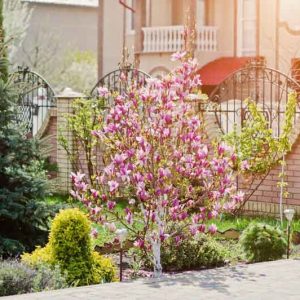
Sweetbay Magnolia can grow as a large, multi-stemmed shrub or a small to medium-sized tree with an upright, open crown. In colder climates, it remains deciduous, while in warmer regions, it retains its leaves year-round.
At maturity, Sweetbay Magnolia typically reaches 10 to 35 feet (3-10 m) in height and width. In the southern U.S., it can grow taller, sometimes exceeding 60 feet (18 m). It has a moderately fast growth rate, adding 2 feet per year under good conditions. Discover 35 Fast Growing Trees for Small Yards and Large Gardens
Sweetbay Magnolia is a long-lived tree, capable of thriving for 50 to 130 years under optimal growing conditions.
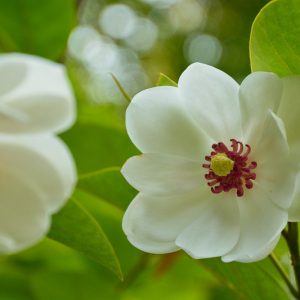
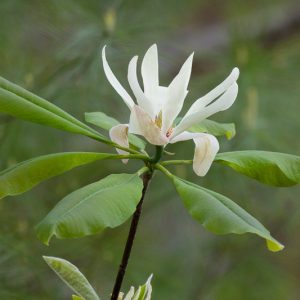
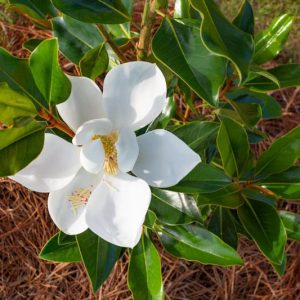
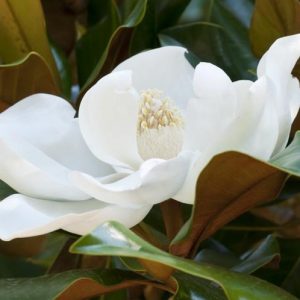
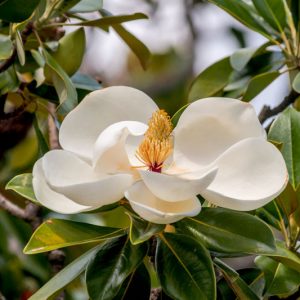
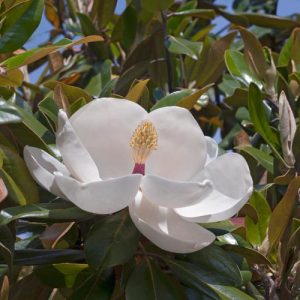
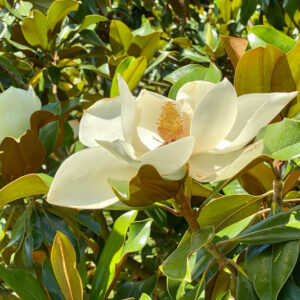
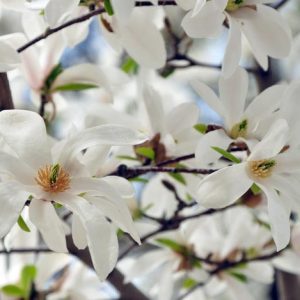
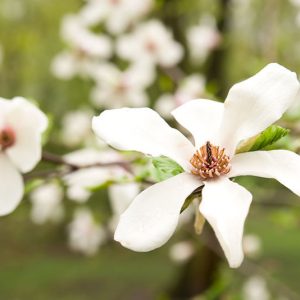
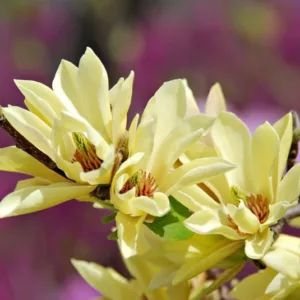
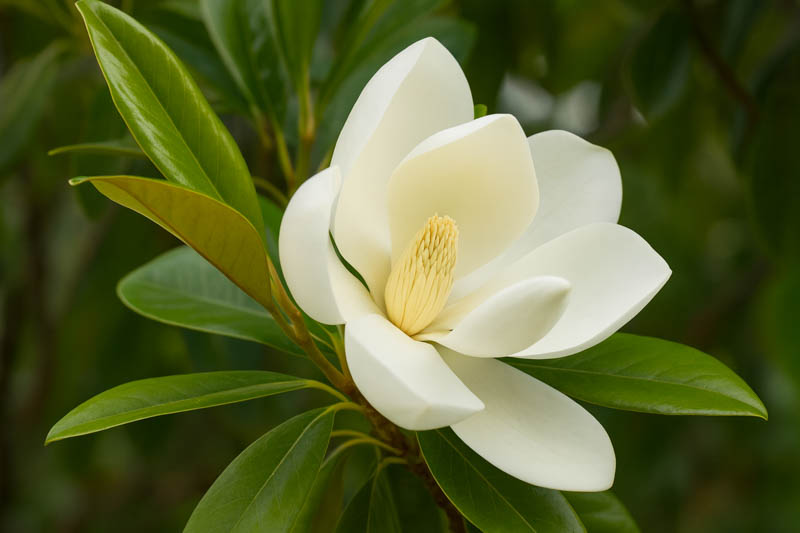
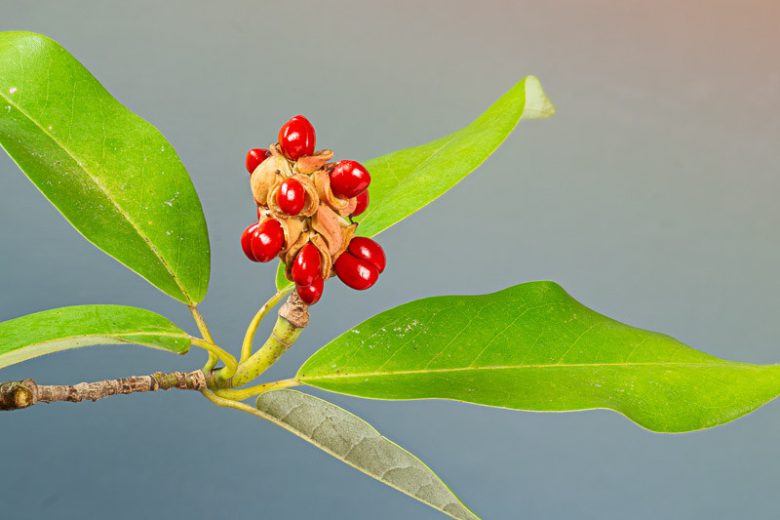
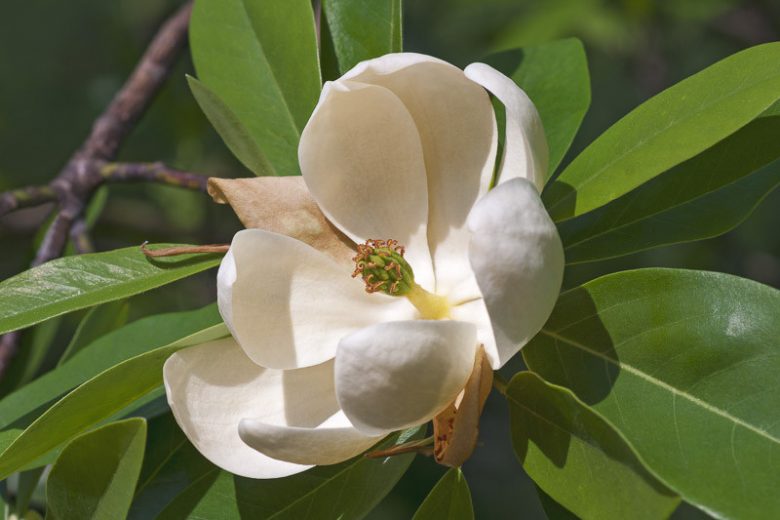
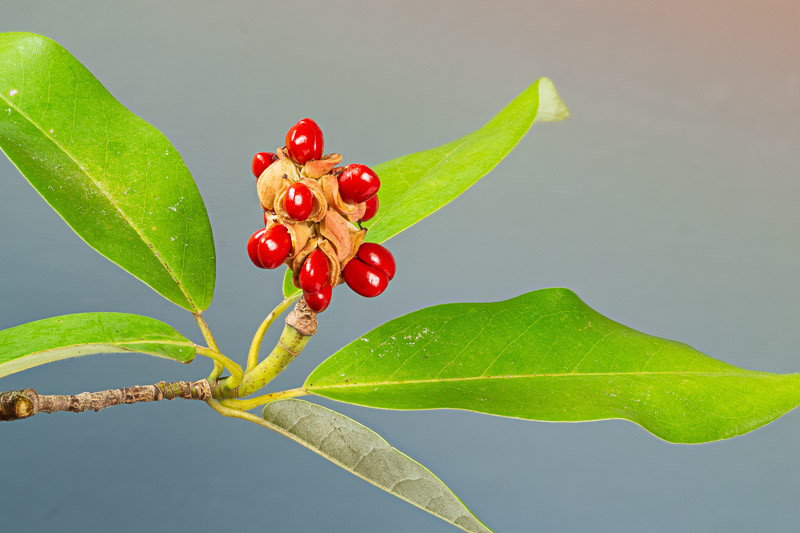
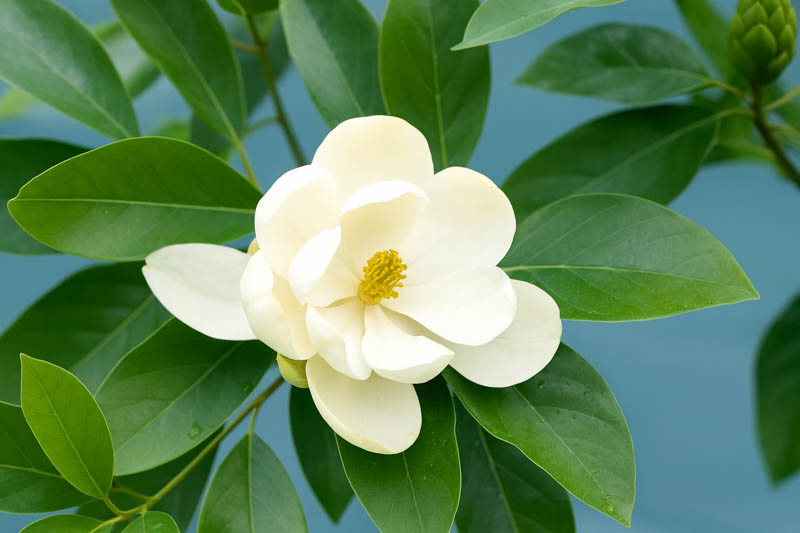
This tree produces creamy-white, cup-shaped flowers measuring 2-3 inches (5-7.5 cm) in diameter. The blooms emit a sweet, lemony fragrance and appear sporadically from late spring through summer. Flowers often open by day and become most fragrant toward evening. After flowering, showy cone-like fruits, 1–2 in (2.5–5 cm), mature in late summer, releasing bright red seeds that attract birds.
The semi-evergreen leaves are simple, alternate, and elliptical, with a glossy dark green upper surface and a silvery-white underside. This distinctive two-tone foliage creates a shimmering effect in the wind, adding year-round visual interest.
The bark is smooth, light gray to reddish-brown, and develops a slightly mottled texture with age.
Sweetbay Magnolia is hardy in USDA zones 5-10. It is more cold-hardy than the Southern Magnolia (Magnolia grandiflora) and can tolerate mild winters in northern regions. In Zones 7–10 it’s often evergreen to semi-evergreen; in Zones 5–6 it’s typically deciduous and may experience tip dieback in severe winters.
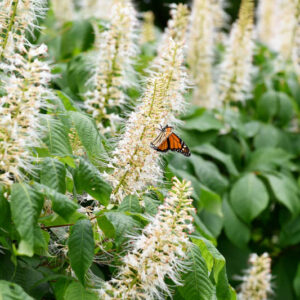
Sweetbay Magnolia plays a vital role in supporting wildlife year-round. It provides winter and extreme weather cover for birds and small mammals. The tree serves as a larval host plant for the Spicebush Swallowtail (Papilio troilus) and Eastern Tiger Swallowtail (Papilio glaucus), whose caterpillars rely on its foliage for sustenance. White-tailed deer browse the leaves and twigs in winter, while birds such as sapsuckers, robins, and cardinals feast on the bright red seeds. The adult Eastern Tiger Swallowtail butterflies feed on nearby nectar-rich plants like milkweed, Joe Pye weed, and lilac, making this tree an excellent choice for pollinator and wildlife gardens.
Sweetbay Magnolia is somewhat resistant to deer browsing, though young plants may be vulnerable.
Sweetbay Magnolia is non-toxic to humans and pets, making it a safe addition to family gardens.
This species is not considered invasive and integrates well into native plant communities.
Prefers full sun to partial shade.
Thrives in moist, well-drained, slightly acidic (pH 5.0–6.5), fertile soils. Unlike most other Magnolias, it tolerates periodic flooding and clay if oxygen isn’t chronically limited. Shows light salt tolerance, especially inland of direct spray.
Apply a balanced, slow-release fertilizer in early spring to encourage healthy growth and flowering.
Prune Sweetbay Magnolia immediately after its flowering period, typically in late spring or early summer, to promote healing and preserve next season’s blooms. Remove dead, diseased, or damaged branches to maintain tree health. To enhance its natural form, thin crowded branches, improving light penetration and air circulation. If training to a single trunk, prune weaker stems early. Avoid excessive pruning in one season, as regrowth is slow. Always use sterilized tools to prevent the spread of disease.
Limit removal to ≤20% of live canopy in a season; avoid late summer/fall pruning to reduce winter injury.
Sweetbay Magnolia is generally resistant to major pests and diseases, but like all plants, it can occasionally encounter certain issues.
Overall, Sweetbay Magnolia has no serious insect or disease issues, but maintaining proper soil conditions and monitoring for pests can help keep it healthy.
Sweetbay Magnolia may be evergreen, semi-evergreen, or deciduous depending on climate. In colder zones (north), it is typically deciduous or semi-evergreen; in warmer regions (south), it is often evergreen.
In the southern U.S., it can reach 40–60 ft (12–18 m) tall, but is usually 10–35 ft (3–11 m) in most gardens. Northern plants are shorter and shrubbier, often 10–20 ft (3–6 m).
Prefers full sun to part shade, with more blooms in brighter conditions. Thrives in moist to wet, acidic soils, but tolerates a range as long as it doesn’t dry out. It naturally grows in swamps and along streams.
Yes, Sweetbay Magnolia is known for its small, creamy white, cup-shaped flowers with a noticeable lemony fragrance, especially in the evening.
Flowers typically appear from late spring to mid-summer and sometimes sporadically through summer in milder climates.
Absolutely. Its fruit is eaten by birds and small mammals. It is tolerant of occasional flooding and provides valuable cover and nesting for wildlife.
Generally, Sweetbay Magnolia needs little pruning beyond removing dead or damaged wood or training for a central leader. Multistemmed forms can be maintained as large shrubs.
This can be normal, especially in the fall or in colder climates, or may reflect drought stress, iron deficiency, or root disturbance. Leaf drop is typical if the tree is deciduous in your area.
Updated: September 2025 • Reviewed by Gardenia Editors
| Hardiness |
5 - 10 |
|---|---|
| Heat Zones |
6 - 9 |
| Climate Zones | 4, 5, 6, 7, 8, 9, 14, 15, 16, 17, 18, 19, 20, 21, 22, 23, 24 |
| Plant Type | Shrubs, Trees |
| Plant Family | Magnoliaceae |
| Genus | Magnolia |
| Common names | Magnolia, SweetBay Magnolia |
| Exposure | Full Sun, Partial Sun |
| Season of Interest | Spring (Mid, Late), Summer (Early, Mid, Late) |
| Height | 10' - 35' (3m - 10.7m) |
| Spread | 10' - 35' (3m - 10.7m) |
| Maintenance | Low |
| Water Needs | Average |
| Soil Type | Clay, Loam, Sand |
| Soil pH | Acid, Neutral |
| Soil Drainage | Moist but Well-Drained, Moisture Retentive |
| Characteristics | Fragrant, Showy, Evergreen, Semi-Evergreen, Fruit & Berries |
| Native Plants | United States, Northeast, Pennsylvania, Delaware, Massachusetts, Maryland, New Jersey, New York, Southeast, Louisiana, Mississippi, North Carolina, South Carolina, Tennessee, Virginia, Alabama, Arkansas, Florida, Georgia, Southwest, Texas |
| Tolerances | Clay Soil, Wet Soil, Heat, Fire |
| Attracts | Birds |
| Garden Uses | Beds And Borders, Bog Gardens, Ponds And Streams, Rain Gardens |
| Garden Styles | City and Courtyard, Informal and Cottage, Mediterranean Garden, Traditional Garden |
| Toxic to Humans | No known toxicity |
| Toxic to Cats | No known toxicity |
| Toxic to Dogs | No known toxicity |
| Toxic to Horses | No known toxicity |


| Hardiness |
5 - 10 |
|---|---|
| Heat Zones |
6 - 9 |
| Climate Zones | 4, 5, 6, 7, 8, 9, 14, 15, 16, 17, 18, 19, 20, 21, 22, 23, 24 |
| Plant Type | Shrubs, Trees |
| Plant Family | Magnoliaceae |
| Genus | Magnolia |
| Common names | Magnolia, SweetBay Magnolia |
| Exposure | Full Sun, Partial Sun |
| Season of Interest | Spring (Mid, Late), Summer (Early, Mid, Late) |
| Height | 10' - 35' (3m - 10.7m) |
| Spread | 10' - 35' (3m - 10.7m) |
| Maintenance | Low |
| Water Needs | Average |
| Soil Type | Clay, Loam, Sand |
| Soil pH | Acid, Neutral |
| Soil Drainage | Moist but Well-Drained, Moisture Retentive |
| Characteristics | Fragrant, Showy, Evergreen, Semi-Evergreen, Fruit & Berries |
| Native Plants | United States, Northeast, Pennsylvania, Delaware, Massachusetts, Maryland, New Jersey, New York, Southeast, Louisiana, Mississippi, North Carolina, South Carolina, Tennessee, Virginia, Alabama, Arkansas, Florida, Georgia, Southwest, Texas |
| Tolerances | Clay Soil, Wet Soil, Heat, Fire |
| Attracts | Birds |
| Garden Uses | Beds And Borders, Bog Gardens, Ponds And Streams, Rain Gardens |
| Garden Styles | City and Courtyard, Informal and Cottage, Mediterranean Garden, Traditional Garden |
| Toxic to Humans | No known toxicity |
| Toxic to Cats | No known toxicity |
| Toxic to Dogs | No known toxicity |
| Toxic to Horses | No known toxicity |
How many Magnolia virginiana (Sweet Bay Magnolia) do I need for my garden?
| Plant | Quantity | |
|---|---|---|
| Magnolia virginiana (Sweet Bay Magnolia) | N/A | Buy Plants |
Create a membership account to save your garden designs and to view them on any device.
Becoming a contributing member of Gardenia is easy and can be done in just a few minutes. If you provide us with your name, email address and the payment of a modest $25 annual membership fee, you will become a full member, enabling you to design and save up to 25 of your garden design ideas.
Join now and start creating your dream garden!
Create a membership account to save your garden designs and to view them on any device.
Becoming a contributing member of Gardenia is easy and can be done in just a few minutes. If you provide us with your name, email address and the payment of a modest $25 annual membership fee, you will become a full member, enabling you to design and save up to 25 of your garden design ideas.
Join now and start creating your dream garden!