Little Gem Magnolia, Little Gem Southern Magnolia, Dwarf Southern Magnolia, Evergreen Magnolia, Bull Bay, Large-flowered Magnolia, Magnolia grandiflora Little Gem, Compact Southern Magnolia.
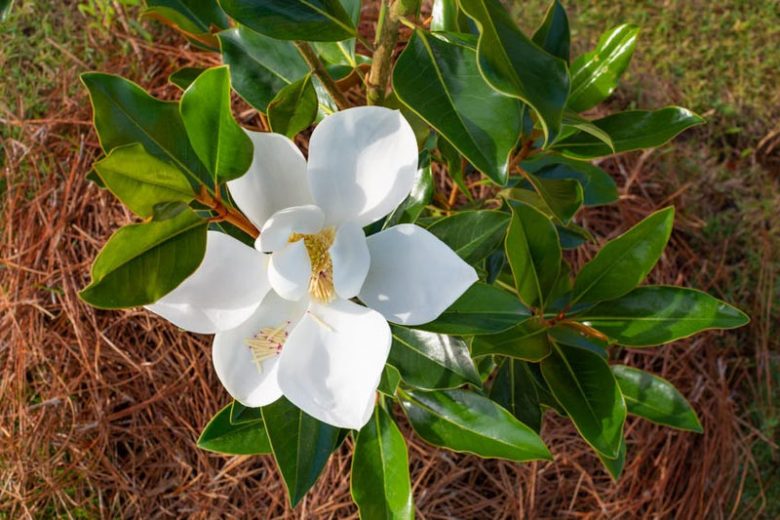
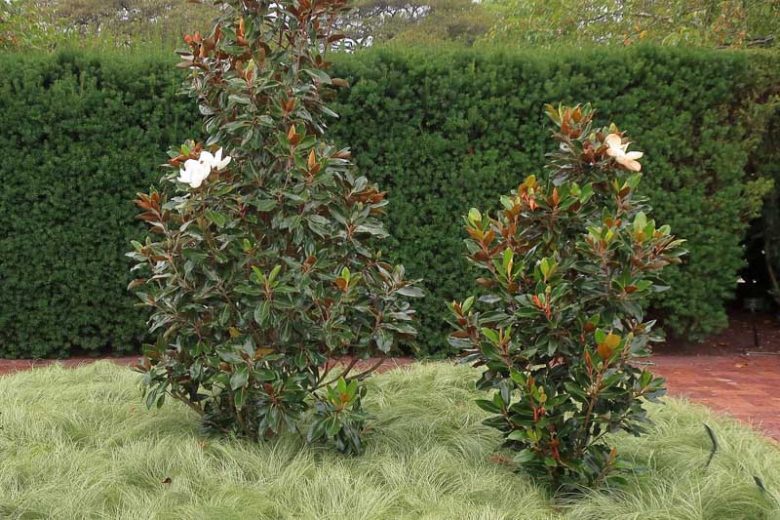


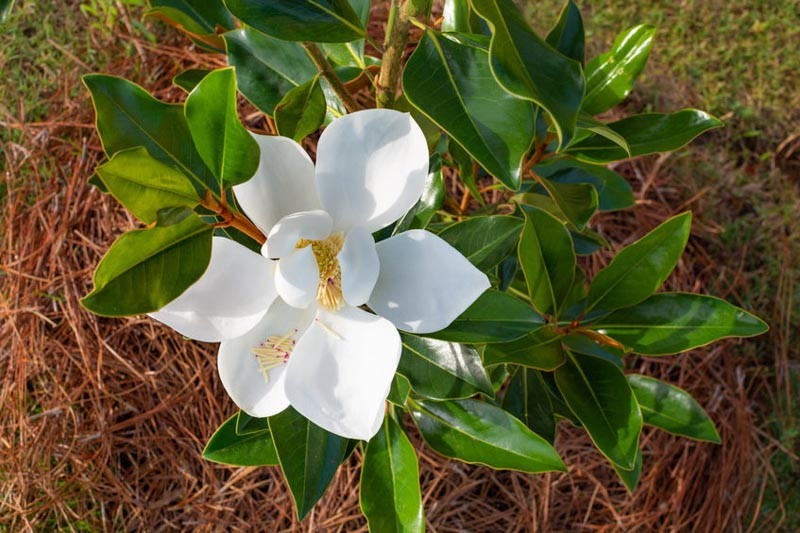
Summary: A compact, floriferous selection of Southern Magnolia, ‘Little Gem’ packs classic magnolia charm—creamy white, lemon-scented flowers and glossy evergreen foliage—into a small-space friendly package. Narrow form, early flowering, and great heat tolerance make it a go-to choice for urban gardens and privacy screens.
Fragrance: Sweet, citrusy perfume from late spring into summer.
Uses: Specimen, hedge/screen, courtyard tree, large container (early years).
Safety: Non-toxic to people and pets; generally unpalatable to deer.
| Botanical Name | Magnolia grandiflora ‘Little Gem’ |
|---|---|
| Family | Magnoliaceae |
| Type & Habit | Broadleaf evergreen; naturally narrow, columnar-pyramidal; dense branching |
| Hardiness (USDA) | 7–10 (often successful in warm parts of 6 with shelter) |
| Size | ~15–20 ft (4.5–6 m) tall × 7–10 ft (2–3 m) wide; moderate growth |
| Sun & Exposure | Full sun to light shade; best bloom with ≥6 hours sun |
| Soil | Moist, well-drained, slightly acidic loam; tolerates clay once established |
| Bloom & Fruit | Creamy white, 4–6 in (10–15 cm) flowers late spring–summer; cone-like pods with red seeds in fall |
| Foliage | Small for a magnolia, glossy dark green; bronze-fuzzy undersides; evergreen |
| Wildlife | Beetle-pollinated; seeds feed birds/small mammals; dense nesting cover |
| Toxicity & Invasiveness | Non-toxic; not invasive |
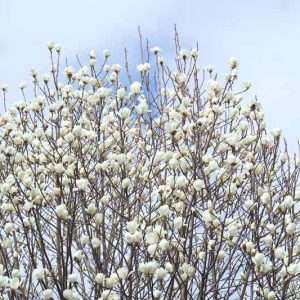
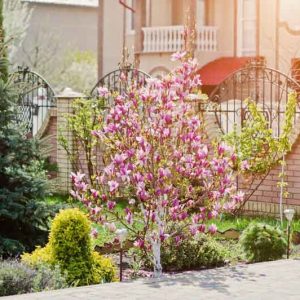
‘Little Gem’ Magnolia is proof that big garden drama doesn’t require a big footprint. This compact selection of the classic Southern Magnolia delivers the same glossy leaves and perfumed, creamy white magnolia flowers—just on a scaled-down, narrower frame that fits beautifully into courtyards, urban front yards, patio borders, and even large containers (in the early years). If you’ve dreamed of the Southern look but don’t have estate-size acreage, this is your ticket.
New to magnolias in general? Explore shapes, sizes, and bloom times in popular types of magnolia trees & shrubs, find space-savvy picks in magnolias for small gardens, and dive into step-by-step culture in how to grow and care for magnolias.
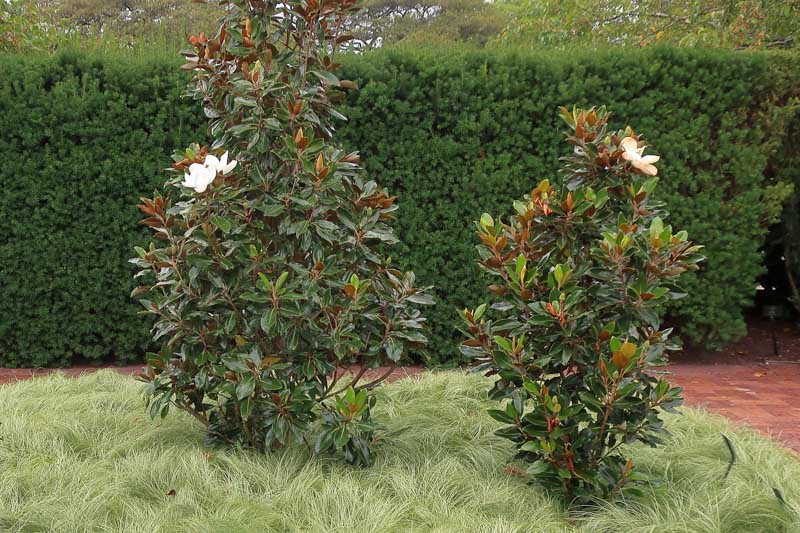
‘Little Gem’ is a cultivar of Magnolia grandiflora, the iconic evergreen magnolia native to the southeastern United States. Selected for its compact, upright habit and precocious flowering, it starts blooming young—often within a few seasons of planting—then keeps the show going through warm months with intermittent waves of magnolia flowers. The foliage is distinctly refined: smaller, neat leaves with a handsome bronzy indumentum (that soft, rusty fuzz) on the undersides.
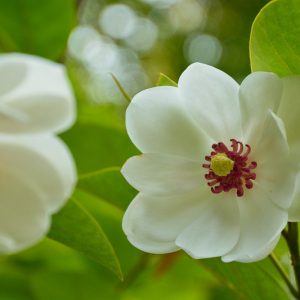
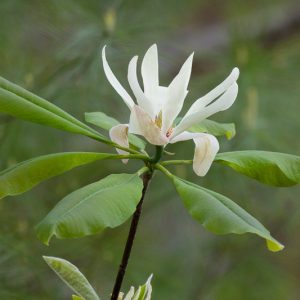
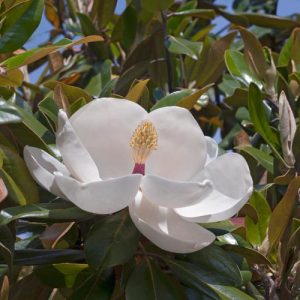
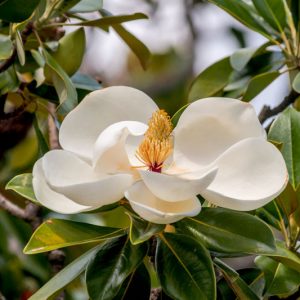
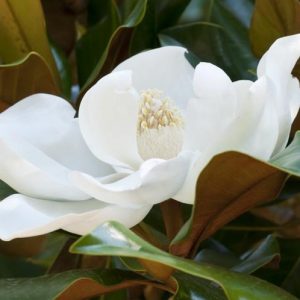
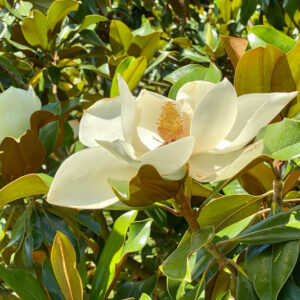
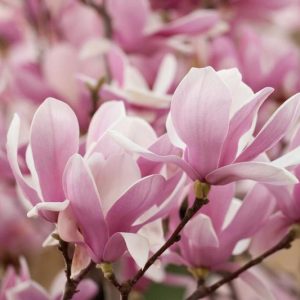
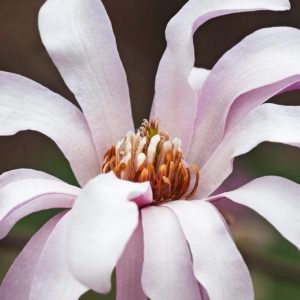
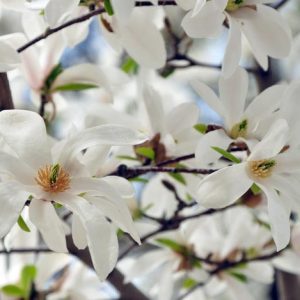
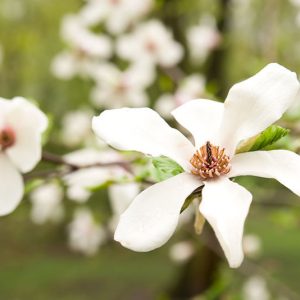
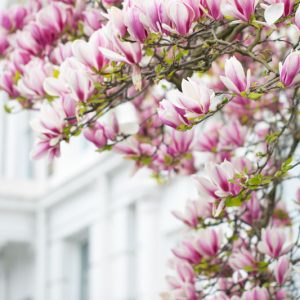
Expect creamy white, cup-to-saucer blossoms roughly 4–6 inches (10–15 cm) across—smaller than the species but plentiful and produced over a much longer window. Each flower carries that signature sweet, lemony perfume. In warm climates, blooming can begin in late spring and continue in flushes well into summer, with the occasional bonus flower in early fall.
Leaves are evergreen, glossy, and richly green above, with those velvety bronze undersides that catch the light. Because ‘Little Gem’ holds foliage densely along its frame, it remains effective as a year-round screen or backdrop, adding structure when nearby perennials go dormant.
Beetles are the primary pollinators of magnolia flowers, visiting the lemony-scented blooms for protein-rich pollen. Later in the season, the decorative seed cones split to reveal red, fleshy seeds that feed songbirds and small mammals. The dense evergreen canopy also provides year-round nesting and shelter.
Saucer Magnolia is generally trouble-free. Keep it watered, mulched, and well-sited, and most problems stay minor.
Ready to choose the perfect magnolia tree for your space? Browse curated picks in Magnolias for Small Gardens, compare forms and bloom times in Popular Types of Magnolia Shrubs & Trees, and get confident with planting, pruning, and problem-solving using How to Grow & Care with Success.
Typically reaches 15–20 ft (4.5–6 m) tall and 7–10 ft (2–3 m) wide at maturity. Some sources claim 20–25 ft (6–7.6 m) tall under ideal conditions.
Hardy in USDA zones 7–10. Some gardeners have success in protected zone 6 sites, but winter damage is possible.
It is considered slow to moderate growing, typically adding 1–2 ft (30–60 cm) per year in early years, slowing as it matures.
Yes, it is known for blooming while still young and small, producing its fragrant white flowers from an early stage.
Some leaf drop is normal, especially in spring or fall, and older leaves are routinely shed. Significant yellowing or browning can reflect drought, iron deficiency, overly alkaline soil, or root stress.
Yes, but needs a large container, consistent moisture, and protection from severe cold; long-term container growth may reduce its full size potential.
Yes, it is evergreen in zones 7 and warmer, retaining its leaves year-round. In colder zones, it may lose some leaves or become semi-evergreen.
Updated: September 2025 • Reviewed by Gardenia Editors
| Hardiness |
7 - 10 |
|---|---|
| Heat Zones |
1 - 9 |
| Climate Zones | 4, 5, 6, 7, 8, 9, 10, 11, 12, 14, 15, 16, 17, 18, 19, 20, 21, 22, 23, 24, H1, H2 |
| Plant Type | Trees |
| Plant Family | Magnoliaceae |
| Genus | Magnolia |
| Common names | Magnolia, Southern Magnolia |
| Exposure | Full Sun, Partial Sun |
| Season of Interest | Spring (Early, Mid, Late), Summer (Early, Mid, Late), Fall, Winter |
| Height | 15' - 20' (4.6m - 6.1m) |
| Spread | 7' - 10' (210cm - 3m) |
| Maintenance | Low |
| Water Needs | Average |
| Soil Type | Chalk, Clay, Loam, Sand |
| Soil pH | Acid, Alkaline, Neutral |
| Soil Drainage | Moist but Well-Drained, Well-Drained |
| Characteristics | Fragrant, Showy, Evergreen, Fruit & Berries |
| Tolerances | Heat, Wind |
| Attracts | Birds |
| Garden Uses | Hedges And Screens, Patio And Containers, Wall-Side Borders |
| Garden Styles | City and Courtyard, Mediterranean Garden, Prairie and Meadow |
| Toxic to Humans | No known toxicity |
| Toxic to Cats | No known toxicity |
| Toxic to Dogs | No known toxicity |
| Toxic to Horses | No known toxicity |


| Hardiness |
7 - 10 |
|---|---|
| Heat Zones |
1 - 9 |
| Climate Zones | 4, 5, 6, 7, 8, 9, 10, 11, 12, 14, 15, 16, 17, 18, 19, 20, 21, 22, 23, 24, H1, H2 |
| Plant Type | Trees |
| Plant Family | Magnoliaceae |
| Genus | Magnolia |
| Common names | Magnolia, Southern Magnolia |
| Exposure | Full Sun, Partial Sun |
| Season of Interest | Spring (Early, Mid, Late), Summer (Early, Mid, Late), Fall, Winter |
| Height | 15' - 20' (4.6m - 6.1m) |
| Spread | 7' - 10' (210cm - 3m) |
| Maintenance | Low |
| Water Needs | Average |
| Soil Type | Chalk, Clay, Loam, Sand |
| Soil pH | Acid, Alkaline, Neutral |
| Soil Drainage | Moist but Well-Drained, Well-Drained |
| Characteristics | Fragrant, Showy, Evergreen, Fruit & Berries |
| Tolerances | Heat, Wind |
| Attracts | Birds |
| Garden Uses | Hedges And Screens, Patio And Containers, Wall-Side Borders |
| Garden Styles | City and Courtyard, Mediterranean Garden, Prairie and Meadow |
| Toxic to Humans | No known toxicity |
| Toxic to Cats | No known toxicity |
| Toxic to Dogs | No known toxicity |
| Toxic to Horses | No known toxicity |
How many Magnolia grandiflora ‘Little Gem’ (Southern Magnolia) do I need for my garden?
| Plant | Quantity | |
|---|---|---|
| Magnolia grandiflora ‘Little Gem’ (Southern Magnolia) | N/A | Buy Plants |
Create a membership account to save your garden designs and to view them on any device.
Becoming a contributing member of Gardenia is easy and can be done in just a few minutes. If you provide us with your name, email address and the payment of a modest $25 annual membership fee, you will become a full member, enabling you to design and save up to 25 of your garden design ideas.
Join now and start creating your dream garden!
Create a membership account to save your garden designs and to view them on any device.
Becoming a contributing member of Gardenia is easy and can be done in just a few minutes. If you provide us with your name, email address and the payment of a modest $25 annual membership fee, you will become a full member, enabling you to design and save up to 25 of your garden design ideas.
Join now and start creating your dream garden!