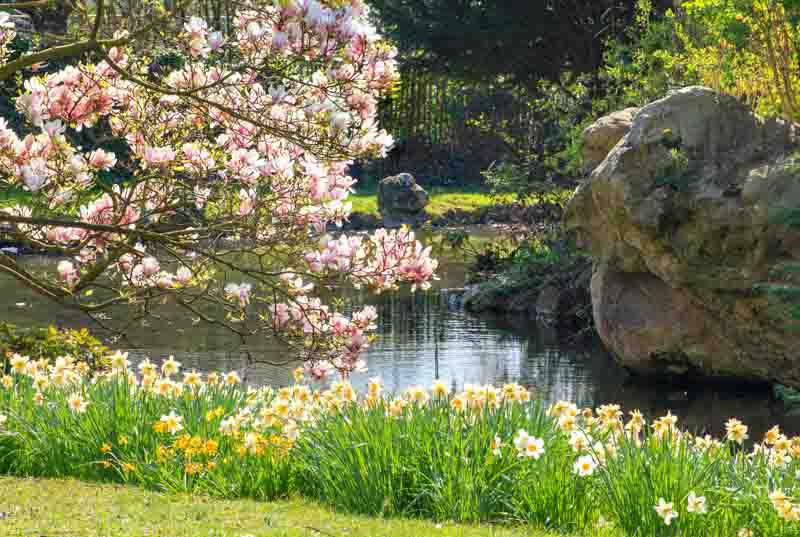
Magnolia
Few garden sights rival the breathtaking display of a magnolia tree in full bloom. With their enormous magnolia flowers and rich history, these plants carry charm, elegance, and a little mystery. Did you know magnolias are among the oldest flowering plants on Earth?
Magnolia belongs to the Magnoliaceae family, which includes several popular species, such as the Southern Magnolia (Magnolia grandiflora), Star Magnolia (Magnolia stellata), Saucer Magnolia (Magnolia × soulangeana), and Sweetbay Magnolia (Magnolia virginiana).
Old souls: Fossil records show magnolia relatives blooming 95 million years ago—before bees even evolved! Beetles remain their main pollinators today.
Fragrance file: Many varieties boast sweet, lemony, or spicy aromas. Japanese Magnolia cultivars are especially prized for their perfume-like scent.
Seasonal charm: Beyond spring’s dramatic flowers, magnolia cones and glossy leaves bring texture and interest through fall and even winter arrangements.
Wildlife win: Magnolias provide nectar for pollinators, seeds for birds, and shelter for small creatures—truly a tree that gives back year-round.
Garden versatility: Whether it’s a towering evergreen Southern Magnolia or compact types suited for small yards, there’s one for every landscape. Check out guides like Pretty Magnolias for Small Gardens or Popular Types of Magnolia Shrubs & Trees.
Care tip: Magnolias love rich, slightly acidic soil and steady moisture. Learn how to keep yours thriving with Magnolia: How to Grow and Care with Success.
Whether you’re planting a majestic magnolia tree or admiring the delicate beauty of Japanese Magnolia blooms, magnolias bring history, fragrance, and timeless beauty to gardens everywhere.