Fast growing trees are ideal for homeowners seeking quick shade, privacy screens, or windbreaks. With growth rates of up to 2-5 feet per year, species like Quaking Aspen, Weeping Willow, and Green Giant Arborvitae rapidly transform landscapes, providing beauty, shelter, and environmental benefits in record time.
When you want to establish a new garden, create privacy, or enhance your landscape, waiting years for trees to mature can feel frustrating. Fast-growing trees provide the perfect solution, offering rapid growth rates without compromising beauty, shade, or ecological benefits.
Fast-growing trees are ideal for homeowners and landscapers looking to:
However, fast growth can sometimes come with trade-offs like weaker wood or a shorter lifespan. Careful species selection ensures long-term success.
| Plant Type | Trees |
|---|---|
| Genus | Acer, Betula, Catalpa, Cercis, Cupressus, Eucalyptus, Ginkgo, Lagerstroemia, Magnolia, Pinus, Populus, Quercus, Salix, Taxodium, Thuja |
| Characteristics | Showy |
Salix babylonica, known as the Weeping Willow, is a graceful, fast-growing tree famous for its long, drooping branches and slender leaves, creating a sweeping canopy. Ideal near water bodies, it’s loved for its dramatic appearance and soothing rustling sound, but requires ample space and regular maintenance.
| Hardiness | 6 - 8 |
|---|---|
| Exposure | Full Sun |
| Height | 30' - 50' (9.1m - 15.2m) |
| Spread | 30' - 50' (9.1m - 15.2m) |
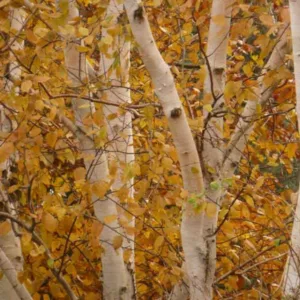
Populus tremuloides, or Quaking Aspen, is a fast-growing deciduous tree with shimmering green leaves that turn brilliant golden-yellow in fall. Its flattened petioles make the leaves tremble in the breeze. With smooth, pale bark and soft rustling sounds, this iconic tree thrives in cool climates and natural woodlands.
| Hardiness | 2 - 7 |
|---|---|
| Exposure | Full Sun |
| Height | 20' - 50' (6.1m - 15.2m) |
| Spread | 10' - 30' (3m - 9.1m) |
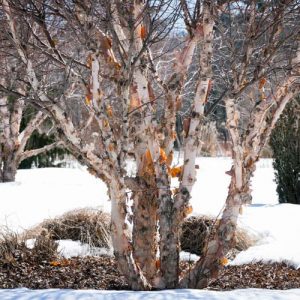
Betula nigra (River Birch) is a fast-growing deciduous tree prized for its striking, peeling bark in shades of salmon-pink to reddish-brown. Adaptable and tolerant of wet soils, it thrives along streambanks and in rain gardens. Its graceful form, wildlife value, and year-round beauty make it a standout in any garden.
| Hardiness | 4 - 9 |
|---|---|
| Exposure | Full Sun, Partial Sun |
| Height | 40' - 70' (12.2m - 21.3m) |
| Spread | 40' - 60' (12.2m - 18.3m) |
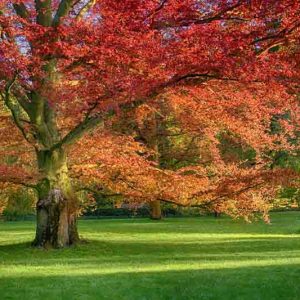
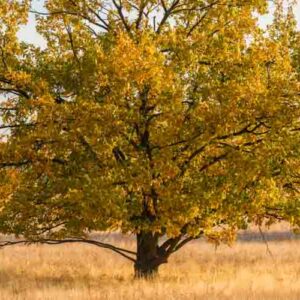
Quercus rubra, the Red Oak, is a fast-growing deciduous tree prized for its stately form, brilliant red fall foliage, and strong, adaptable nature. Native to eastern North America, it thrives in urban and natural landscapes, providing shade, wildlife habitat, and valuable timber for furniture, flooring, and cabinetry.
| Hardiness | 4 - 8 |
|---|---|
| Exposure | Full Sun |
| Height | 50' - 70' (15.2m - 21.3m) |
| Spread | 50' - 70' (15.2m - 21.3m) |
Thuja ‘Green Giant’, or Green Giant Arborvitae, is a fast-growing evergreen prized for its dense, pyramidal form and vibrant green foliage. Ideal for privacy screens and windbreaks, it thrives in various soils and climates. Low-maintenance and deer-resistant, this hardy conifer provides year-round beauty and reliable coverage in landscapes.
| Hardiness | 5 - 8 |
|---|---|
| Exposure | Full Sun, Partial Sun |
| Height | 40' - 60' (12.2m - 18.3m) |
| Spread | 12' - 18' (3.7m - 5.5m) |
Cupressus x leylandii, known as Leyland Cypress, is a fast-growing, evergreen hybrid conifer popular for creating dense privacy hedges. It features a tall, columnar shape with lush green foliage and thrives in a range of soil types, making it a versatile choice for landscaping.
| Hardiness | 6 - 10 |
|---|---|
| Exposure | Full Sun |
| Height | 60' - 70' (18.3m - 21.3m) |
| Spread | 10' - 15' (3m - 4.6m) |
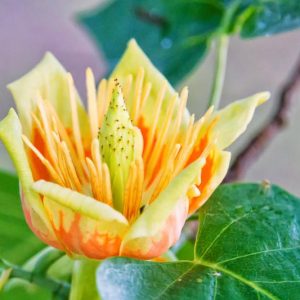
Liriodendron tulipifera, commonly known as the tulip tree or tulip poplar, is a majestic deciduous tree native to the Eastern United States. It’s renowned for its unique tulip-like flowers and large, distinctive leaves. Growing tall and straight, it’s valued for both its ornamental beauty and as a hardwood timber source.
| Hardiness | 4 - 9 |
|---|---|
| Exposure | Full Sun |
| Height | 60' - 80' (18.3m - 24.4m) |
| Spread | 30' - 40' (9.1m - 12.2m) |
Magnificent and awe-inspiring, Metasequoia glyptostroboides (Dawn Redwood) is a breathtaking deciduous conifer. With its upright, slender form, vibrant green leaves, and striking fall colors, it adds beauty to any landscape. The bark’s reddish hue on young trees and deeply fissured texture on mature ones further enhance its appeal. This tree’s presence is truly remarkable.
| Hardiness | 4 - 8 |
|---|---|
| Exposure | Full Sun |
| Height | 70' - 80' (21.3m - 24.4m) |
| Spread | 15' - 25' (4.6m - 7.6m) |
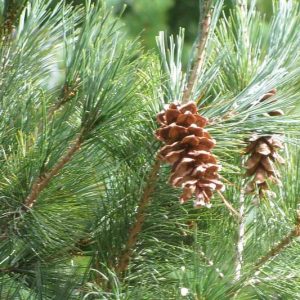
Pinus strobus, or Eastern White Pine, is a fast-growing, majestic evergreen with a youthful pyramidal shape evolving into a broad, tiered crown. Its soft, bluish-green needles form feathery tufts, complemented by long, slender brown cones. Esteemed as Maine’s state tree, it thrives in various conditions, providing shelter and sustenance to wildlife. Notable for its rapid growth and tolerance to environmental stress, it’s an ideal specimen tree.
| Hardiness | 4 - 9 |
|---|---|
| Exposure | Full Sun, Partial Sun |
| Height | 50' - 80' (15.2m - 24.4m) |
| Spread | 20' - 40' (6.1m - 12.2m) |
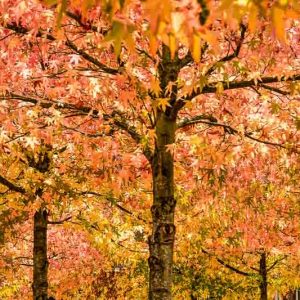
Liquidambar styraciflua, or Sweetgum, is a stately deciduous tree prized for its star-shaped leaves, vibrant fall color, and unique spiky seed balls. Native to eastern North America, it grows tall with a straight trunk and develops corky ridges on its branches, offering year-round visual interest and wildlife value.
| Hardiness | 5 - 9 |
|---|---|
| Exposure | Full Sun |
| Height | 60' - 80' (18.3m - 24.4m) |
| Spread | 40' - 60' (12.2m - 18.3m) |
Acer rubrum, the iconic Red Maple, dazzles with fiery red foliage each fall, earning its place as a landscape favorite. This fast-growing, adaptable tree thrives in wetlands and uplands alike, providing brilliant color, wildlife habitat, and year-round beauty. Its versatility and vibrant presence make it a true garden showstopper.
| Hardiness | 3 - 9 |
|---|---|
| Exposure | Full Sun, Partial Sun |
| Height | 40' - 100' (12.2m - 30.5m) |
| Spread | 30' - 50' (9.1m - 15.2m) |
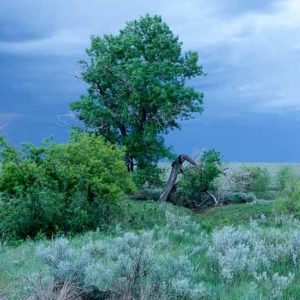
Eastern Cottonwood (Populus deltoides) is a fast-growing deciduous tree native to North America. Known for its triangular leaves, deeply furrowed bark, and rapid growth, it thrives in floodplains and along riverbanks. Its seeds, attached to silky fibers, drift in the wind, giving the tree its “cottonwood” name.
| Hardiness | 3 - 9 |
|---|---|
| Exposure | Full Sun |
| Height | 50' - 80' (15.2m - 24.4m) |
| Spread | 35' - 60' (10.7m - 18.3m) |
Zelkova serrata, the Japanese Zelkova, is celebrated for its elegant vase-shaped crown, serrated green leaves, and distinctive bark. This award-winning deciduous tree turns brilliant shades of gold, red, or cinnamon in fall. Its gray bark peels back to reveal an orange interior. While its spring flowers are subtle, its overall beauty and resistance to Dutch elm disease make it a favored replacement for the American elm, serving both as a magnificent shade and an ornamental tree.
| Hardiness | 5 - 8 |
|---|---|
| Exposure | Full Sun |
| Height | 50' - 80' (15.2m - 24.4m) |
| Spread | 50' - 80' (15.2m - 24.4m) |
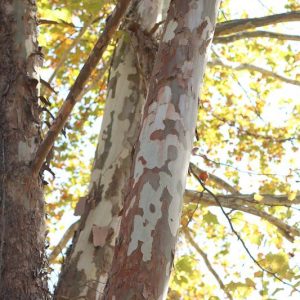
Fast-growing Platanus occidentalis, or American Sycamore, is a massive deciduous tree with a vast trunk and sprawling, horizontal branches. It boasts large, maple-like green leaves turning yellow-brown in fall. Spring sees small flowers, followed by fuzzy, hanging balls persisting into winter. Its flaking gray bark reveals creamy white underneath, making it a majestic choice for streamside plantings, groupings, or as a solitary specimen.
| Hardiness | 4 - 9 |
|---|---|
| Exposure | Full Sun |
| Height | 70' - 100' (21.3m - 30.5m) |
| Spread | 70' - 100' (21.3m - 30.5m) |
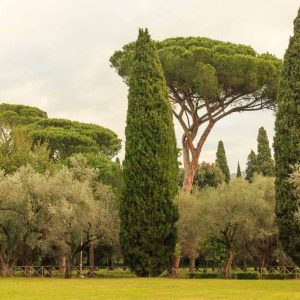
Cupressus sempervirens, or Italian Cypress, is a tall, slender evergreen known for its striking columnar form. Native to the Mediterranean, it thrives in hot, dry climates and well-drained soils. Its dense, dark green foliage, drought tolerance, and resilience make it ideal for formal gardens, privacy screens, and windbreaks.
| Hardiness | 7 - 9 |
|---|---|
| Exposure | Full Sun |
| Height | 40' - 70' (12.2m - 21.3m) |
| Spread | 3' - 6' (90cm - 180cm) |
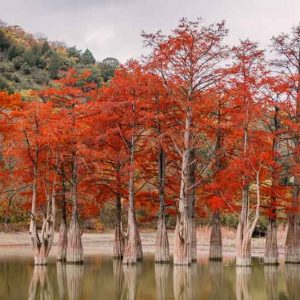
Taxodium distichum, known as the Bald Cypress, is a long-lived, deciduous conifer famous for its feathery foliage, buttressed trunk, and distinctive ‘knees.’ It thrives in wet conditions, often found in southern U.S. swamps, and is valued for its rot-resistant wood and unique, picturesque appearance.
| Hardiness | 5 - 11 |
|---|---|
| Exposure | Full Sun, Partial Sun |
| Height | 50' - 70' (15.2m - 21.3m) |
| Spread | 20' - 30' (6.1m - 9.1m) |
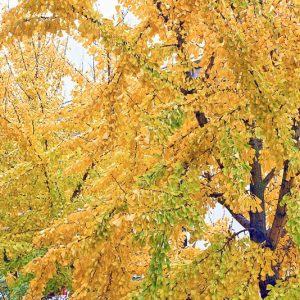
The Ginkgo biloba, revered as the Maidenhair Tree, is an ancient deciduous species known for its distinctive, fan-shaped leaves that blaze brilliantly yellow in the fall. Adaptable and resilient, it thrives in diverse environments, making it an exceptional choice for urban landscapes. Its striking form and seasonal color transitions offer year-round beauty.
| Hardiness | 3 - 9 |
|---|---|
| Exposure | Full Sun |
| Height | 50' - 80' (15.2m - 24.4m) |
| Spread | 30' - 40' (9.1m - 12.2m) |
Betula papyrifera, or Paper Birch, is a fast-growing deciduous tree known for its striking white bark that peels in thin layers. Native to North America, it thrives in cool climates and moist soils, providing habitat for wildlife, stabilizing soil, and adding ornamental value with its brilliant golden fall foliage.
| Hardiness | 2 - 7 |
|---|---|
| Exposure | Full Sun, Partial Sun |
| Height | 50' - 70' (15.2m - 21.3m) |
| Spread | 25' - 50' (7.6m - 15.2m) |
Lombardy Poplar (Populus nigra ‘Italica’) is a fast-growing, columnar tree known for its upright branches and narrow profile. Originally from Italy, it is commonly used as a windbreak or privacy screen. Though striking, it is short-lived, prone to disease, and spreads aggressively through root suckers.
| Hardiness | 3 - 9 |
|---|---|
| Exposure | Full Sun |
| Height | 40' - 70' (12.2m - 21.3m) |
| Spread | 10' - 15' (3m - 4.6m) |
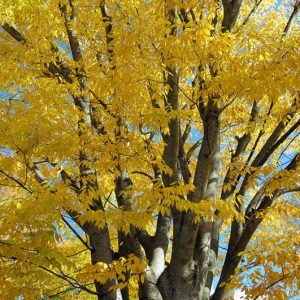
Celtis occidentalis, or Hackberry, is a resilient, fast-growing shade tree perfect for gardens and urban landscapes. Its unique corky bark adds year-round interest, while its lush green foliage turns golden yellow in fall. Birds love its sweet, berry-like fruits, making it a great choice for wildlife-friendly gardens.
| Hardiness | 2 - 9 |
|---|---|
| Exposure | Full Sun, Partial Sun |
| Height | 40' - 60' (12.2m - 18.3m) |
| Spread | 40' - 60' (12.2m - 18.3m) |
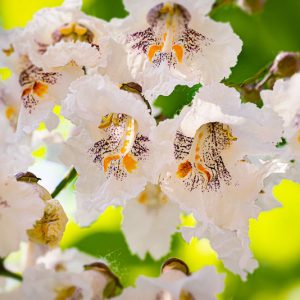
Catalpa bignonioides, or Southern Catalpa, is a fast-growing deciduous tree with large, heart-shaped leaves and striking white, trumpet-shaped flowers adorned with purple and yellow markings. It produces long, slender seed pods and thrives in various soils, offering ornamental appeal, shade, and habitat for pollinators and wildlife.
| Hardiness | 5 - 9 |
|---|---|
| Exposure | Full Sun, Partial Sun |
| Height | 30' - 60' (9.1m - 18.3m) |
| Spread | 20' - 40' (6.1m - 12.2m) |
Catalpa speciosa, or Northern Catalpa, is a fast-growing deciduous tree known for its large heart-shaped leaves, showy white flowers with purple and yellow markings, and long bean-like seed pods. Native to the central U.S., it thrives in various conditions, providing shade, ornamental value, and habitat for pollinators and wildlife.
| Hardiness | 4 - 8 |
|---|---|
| Exposure | Full Sun, Partial Sun |
| Height | 40' - 70' (12.2m - 21.3m) |
| Spread | 20' - 50' (6.1m - 15.2m) |
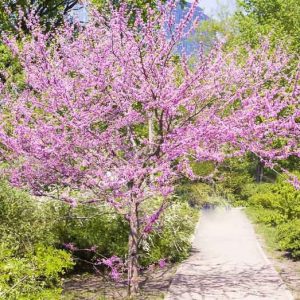
Eastern Redbud (Cercis canadensis) is a small, deciduous tree native to eastern North America. It bursts into vibrant pink to purple blooms in early spring before its heart-shaped leaves emerge. This ornamental tree thrives in well-drained soil, attracts pollinators, and is ideal for landscapes, woodland gardens, and urban plantings.
| Hardiness | 4 - 9 |
|---|---|
| Exposure | Full Sun, Partial Sun |
| Height | 20' - 30' (6.1m - 9.1m) |
| Spread | 25' - 35' (7.6m - 10.7m) |
Fast-growing and very tolerant, Washingtonia robusta (Mexican Fan Palm) is a tall evergreen palm with a columnar trunk topped with a relatively small rounded crown of beautifully shaped, fan-like, rich green leaves. Easy to grow and exotic-looking, Washingtonia robusta is fairly hardy, but may experience significant frond damage if temperatures dip to 20°F (-6°C).
| Hardiness | 9 - 11 |
|---|---|
| Exposure | Full Sun |
| Height | 40' - 80' (12.2m - 24.4m) |
| Spread | 8' - 10' (240cm - 3m) |
Acer saccharinum (Silver Maple) is a fast-growing deciduous tree native to eastern North America. Known for its silvery undersides, deeply lobed leaves, and tolerance for wet soils, it provides quick shade. However, its brittle wood and aggressive roots make it less suitable for urban areas and small residential landscapes.
| Hardiness | 3 - 9 |
|---|---|
| Exposure | Full Sun, Partial Sun |
| Height | 50' - 80' (15.2m - 24.4m) |
| Spread | 40' - 60' (12.2m - 18.3m) |
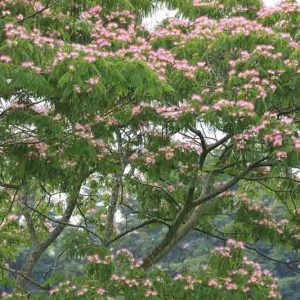
Albizia julibrissin, or Mimosa Tree, is a small to medium-sized deciduous tree known for its unique, feathery, fern-like leaves and showy, fragrant pink flowers. Native to Asia, it’s popular in landscaping for its fast growth and ornamental appeal but is considered invasive in some regions due to its aggressive spreading.
| Hardiness | 6 - 9 |
|---|---|
| Exposure | Full Sun |
| Height | 20' - 40' (6.1m - 12.2m) |
| Spread | 20' - 50' (6.1m - 15.2m) |
Acer x freemanii ‘Autumn Blaze’ is a fast-growing, award-winning hybrid maple with brilliant red-orange fall foliage. Combining the strength of Red Maple and rapid growth of Silver Maple, it thrives in various soils and urban conditions, offering stunning seasonal interest.
| Hardiness | 3 - 8 |
|---|---|
| Exposure | Full Sun, Partial Sun |
| Height | 40' - 50' (12.2m - 15.2m) |
| Spread | 30' - 40' (9.1m - 12.2m) |
Heritage River Birch (Betula nigra ‘Heritage’) is a fast-growing, deciduous tree prized for its striking exfoliating bark, resilience, and adaptability. It thrives in wet soils, offers superior disease resistance, and provides year-round interest. Its golden-yellow fall foliage and wildlife-friendly features make it a popular landscape choice.
| Hardiness | 4 - 9 |
|---|---|
| Exposure | Full Sun, Partial Sun |
| Height | 40' - 70' (12.2m - 21.3m) |
| Spread | 40' - 60' (12.2m - 18.3m) |
Sassafras albidum, a native North American tree, is renowned for its distinctively shaped leaves, aromatic properties, and vibrant fall colors. It offers ecological benefits, attracts wildlife, and historically, its roots were used to flavor beverages like root beer. This deciduous tree adds unique character to natural landscapes.
| Hardiness | 4 - 9 |
|---|---|
| Exposure | Full Sun, Partial Sun |
| Height | 30' - 60' (9.1m - 18.3m) |
| Spread | 25' - 40' (7.6m - 12.2m) |
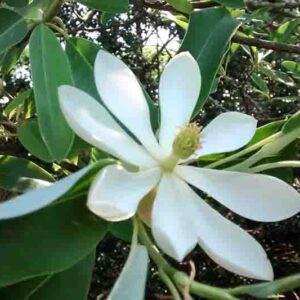
Magnolia virginiana, or Sweet Bay Magnolia, is a highly prized tree known for its attractive foliage, smooth bark, and fragrant flowers. It can be grown as a slender tree or multi-stemmed shrub. The lanceolate green leaves have silvery undersides, while the lemon-scented, cup-shaped flowers bloom from mid-spring to summer. It produces cone-like fruits with vibrant red seeds. Native to the southeastern United States.
| Hardiness | 5 - 10 |
|---|---|
| Exposure | Full Sun, Partial Sun |
| Height | 10' - 35' (3m - 10.7m) |
| Spread | 10' - 35' (3m - 10.7m) |
Thuja occidentalis ‘American Pillar’ is a fast-growing, narrow evergreen perfect for privacy screens and hedges. Its dense, dark green foliage offers year-round interest and excellent wind resistance. Adaptable to various soil types, it thrives in full sun to partial shade, requiring minimal maintenance while providing a lush, uniform appearance.
| Hardiness | 3 - 8 |
|---|---|
| Exposure | Full Sun, Partial Sun |
| Height | 20' - 30' (6.1m - 9.1m) |
| Spread | 3' - 5' (90cm - 150cm) |
Gymnocladus dioica, or Kentucky Coffee Tree, is a hardy, deciduous tree native to North America. It features large bipinnate leaves, fragrant spring flowers, and distinctive seed pods. Adaptable to drought, pollution, and various soils, it thrives in urban settings, offering shade, winter interest, and historical significance as a coffee substitute.
| Hardiness | 3 - 8 |
|---|---|
| Exposure | Full Sun |
| Height | 60' - 80' (18.3m - 24.4m) |
| Spread | 40' - 50' (12.2m - 15.2m) |
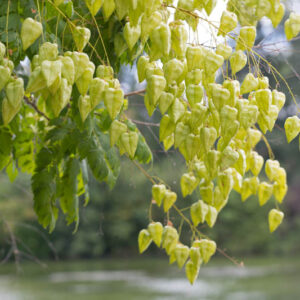
The Golden Rain Tree (Koelreuteria paniculata) is a striking, medium-sized deciduous tree known for its brilliant yellow summer blooms, lantern-like seed pods, and adaptability to urban environments. Drought, heat, and pollution tolerant, it thrives in cityscapes, parks, and gardens, adding year-round ornamental interest with minimal maintenance.
| Hardiness | 5 - 9 |
|---|---|
| Exposure | Full Sun |
| Height | 30' - 40' (9.1m - 12.2m) |
| Spread | 30' - 40' (9.1m - 12.2m) |
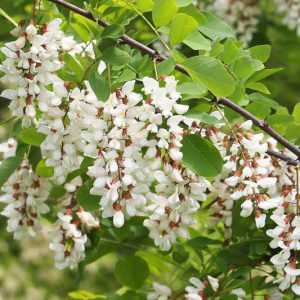
Black Locust (Robinia pseudoacacia) is a fast-growing deciduous tree valued for its fragrant white flowers, drought tolerance, and ability to improve poor soils by fixing nitrogen. While useful in difficult landscapes, it spreads aggressively through root suckers and seeds, making it invasive in gardens. Its brittle wood and toxicity require careful management.
| Hardiness | 3 - 8 |
|---|---|
| Exposure | Full Sun |
| Height | 30' - 50' (9.1m - 15.2m) |
| Spread | 20' - 35' (6.1m - 10.7m) |
Eucalyptus deglupta, commonly known as the Rainbow Eucalyptus, is a fast-growing tropical tree prized for its jaw-dropping multicolored bark. Its smooth trunk peels in patches, revealing vibrant shades of green, blue, orange, and purple. Whether grown for beauty, environmental benefits, or practical uses, this tree is a natural masterpiece and a true conversation starter.starter
| Hardiness | 10 - 11 |
|---|---|
| Exposure | Full Sun |
| Height | 100' (30.5m) |
| Spread | 60' - 100' (18.3m - 30.5m) |
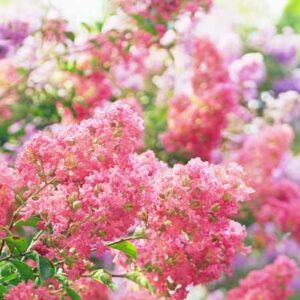
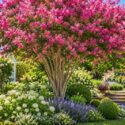
The Crepe Myrtle, renowned for its vibrant, ruffled summer blooms and striking, peeling bark, is a popular ornamental shrub or tree. Thriving in warm climates, it offers spectacular foliage color changes in autumn, making it a year-round focal point in gardens and landscapes with its elegant, multi-stemmed form.
| Hardiness | 6 - 10 |
|---|---|
| Exposure | Full Sun |
| Height | 2' - 30' (60cm - 9.1m) |
| Spread | 2' - 30' (60cm - 9.1m) |
One of the biggest advantages of fast-growing trees is the ability to provide quick shade. Whether you want to cool your home, patio, or garden, these trees grow rapidly to offer relief from the sun. This not only improves comfort but can also lower energy bills by reducing the need for air conditioning.
If you’re looking to create a natural privacy screen or windbreak, fast-growing trees are a perfect solution. They quickly grow tall and wide, forming a dense barrier to block unwanted views of neighboring properties, roads, or unsightly structures.
Choosing the right privacy plants is about more than height – this complete guide covers the best screening plants, privacy hedges, and design strategies for creating a dense, long-lasting living screen.
Whether you’re establishing a new garden or enhancing an existing landscape, fast-growing trees deliver immediate visual impact. Their rapid height and canopy development transform bare spaces into lush, green havens in just a few growing seasons.
One of the trade-offs for rapid growth is weaker wood. Fast-growing trees tend to develop less dense wood, which can make them more susceptible to breakage during storms, heavy winds, or snow and ice accumulation. This can pose safety risks if trees are planted too close to homes, driveways, or power lines. Regular pruning and structural training can help reduce these risks, but the inherent weakness remains a concern.
Certain fast-growing trees, such as Silver Maple and Cottonwood, develop aggressive root systems. These roots can spread widely and interfere with sidewalks, foundations, and underground pipes, causing costly damage. When planting fast-growing trees, it’s important to carefully consider their placement—keeping them away from structures, septic systems, and paved areas.
Fast-growing trees often have shorter lifespans compared to slow-growing species. While some trees, such as oaks, can live for centuries, many fast-growers only survive for 20 to 50 years. They grow quickly and provide benefits in the short term but may need to be removed and replaced sooner than slower-growing, long-lived species. This shorter lifespan means they may not be ideal for homeowners seeking permanent landscape trees.
Due to their rapid growth, these trees require more frequent pruning to maintain good structure and prevent weak or poorly attached branches. They may also shed more leaves, twigs, and seeds, increasing yard cleanup efforts. Some species are prone to pests and diseases that take advantage of their softer wood and rapid tissue development.
In some cases, fast-growing trees can become invasive, spreading aggressively and outcompeting native vegetation. Species like the Princess Tree (Paulownia tomentosa) are notorious for spreading prolifically, crowding out native plants, and disrupting ecosystems. Careful species selection helps avoid this issue.
Some trees are naturally fast growers, but their speed depends a lot on where and how they’re planted. If you want your trees to reach their full potential, it helps to know what factors can boost or slow down their growth.
Fast-growing trees do best when they’re planted in climates similar to their native habitat. Warm-weather trees might struggle in colder regions, while hardy trees from cooler areas may not handle extreme heat. The longer and milder the growing season, the faster a tree can develop.
Good soil is key to fast growth. Trees thrive in nutrient-rich, well-draining soil that holds moisture but doesn’t stay soggy. Heavy clay or super-sandy soil can slow them down, but mixing in compost or organic matter can make a big difference.
Trees love the sun! Most fast-growing trees need at least 6 to 8 hours of direct sunlight every day to develop strong trunks and full canopies. If they’re stuck in the shade or competing for light, their growth will slow.
Young trees need consistent watering to establish strong roots. Too little water can cause drought stress and slow their growth, while too much can drown the roots. Deep, occasional watering is better than frequent light watering.
Giving trees extra nutrients can help them grow faster, but overdoing it—especially with too much nitrogen—can lead to weak, fragile branches. A slow-release, balanced fertilizer applied during the growing season is usually enough.
Regular pruning helps shape young trees and removes weak or overcrowded branches. But go easy in the first year—over-pruning can stress the tree and slow it down.
With the right care, even moderately fast-growing trees can thrive and reach their full potential. A little planning goes a long way in creating a healthy, beautiful landscape.
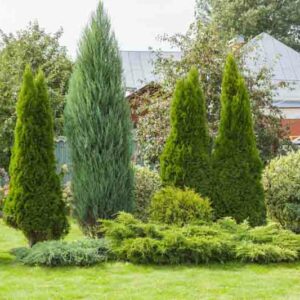
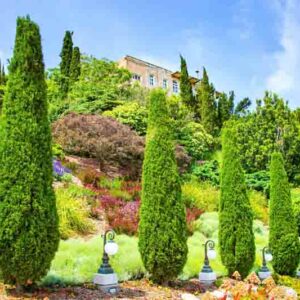
Emerald cedar evergreen trees (Thuja occidentals ‘Smaragd’), provide year round privacy along a driveway.
The Princess Tree (Paulownia tomentosa) is one of the fastest-growing trees in the world, capable of growing up to 15 feet per year in ideal conditions. Other extremely fast growers include the Weeping Willow, Cottonwood, and Silver Maple.
For a fast-growing privacy screen, popular options include the Green Giant Arborvitae, which can grow 3 to 5 feet per year, and the Leyland Cypress, which also grows rapidly. For a more decorative option, the English Laurel provides dense foliage and a lush green barrier.
Bamboo is one of the fastest-growing plants for privacy. Clumping bamboo species like Bambusa textilis ‘Gracilis’ can grow up to 2-3 feet per year, creating a dense, natural screen. For trees, Green Giant Arborvitae and Leyland Cypress are top choices.
The Empress Tree (Paulownia tomentosa) is capable of growing up to 15 feet in a single year. Hybrid Poplar trees are another contender, reaching up to 10 feet per year under optimal conditions.
Colorado Blue Spruce grows at a moderate rate—about 12 to 24 inches per year. Although not the fastest, its dense, evergreen foliage makes it an excellent option for windbreaks and privacy.
When selecting a tree to plant near your home, it’s important to choose species with non-invasive root systems to prevent damage to your foundation. Here are some of the best dwarf trees that offer beauty without the risk:
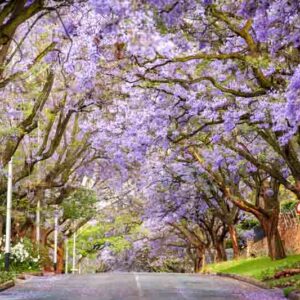
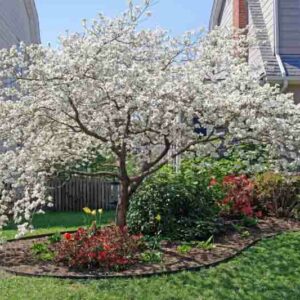
Flowering trees, with their breathtaking blooms, are essential for any garden seeking vibrancy and allure. Choices range from the majestic Magnolia to the graceful Dogwood, vibrant Crepe Myrtle, or stunning Jacaranda, each offering unique colors, scents, and textures. These natural beauties provide not just aesthetic appeal but also support local ecosystems and wildlife.
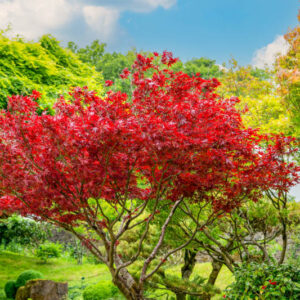
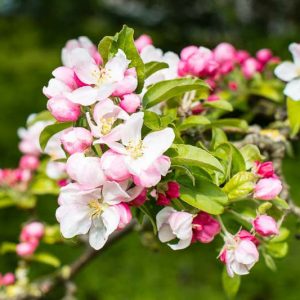
Opt for small trees to transform tiny gardens into lush havens. Choose from varieties like Japanese Maple for fiery fall colors, Crabapple for spring blossoms, or Witch Hazel for winter blooms. These compact trees offer year-round beauty, from vibrant foliage to unique forms, making every small space a botanical delight.
Create a garden that commands attention throughout the year by selecting trees that excite interest month after month and provide a ravishing show throughout all four seasons.
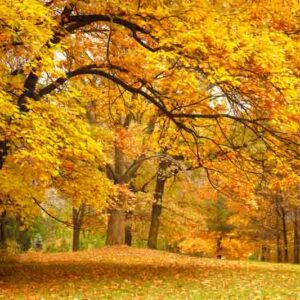
For stunning fall color, consider planting Sugar Maples for vibrant oranges and reds, Birch trees for bright yellows, and Red Oaks for deep red hues. Dogwoods offer a mix of purples and reds, while Ginkgoes light up landscapes with bold yellows, creating a breathtaking autumn display in any garden.
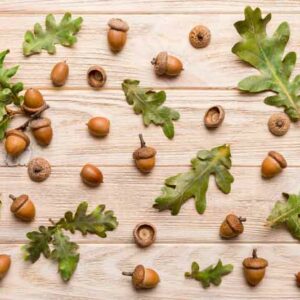
Planting an oak tree offers numerous benefits: it provides a vital habitat and food source for wildlife, significantly sequesters carbon to combat climate change, improves air quality by filtering pollutants, enriches soil health through its leaf litter, and aids in water conservation with its extensive root system.
Crafting an enchanting hedge in your garden is a rewarding endeavor. Hedges serve as living boundaries, offering privacy, beauty, and structure. Explore a world of possibilities with various shrubs, each contributing its unique charm to create the hedge that suits your landscape vision.
Native shrubs for shade offer a natural, low-maintenance solution to beautify shaded garden areas. They thrive with minimal care, support local wildlife, and maintain ecological balance. Ideal for under tree canopies or north-facing gardens, these shrubs add color, texture, and year-round interest while fostering a healthy, biodiverse landscape.
Enhance your garden with flowering shrubs that love the sun! These vibrant, sun-loving plants bring color, fragrance, and life, even in the brightest spots. Ideal for creating dynamic landscapes, they offer varied blooms and sizes, perfect for any garden seeking a burst of color and natural beauty.
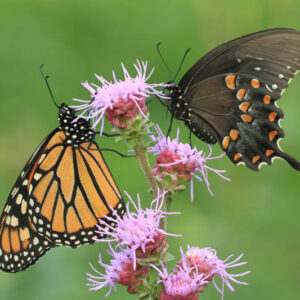
To attract butterflies to your garden, plant a variety of nectar-rich flowers and host plants for caterpillars. Choose colorful, fragrant blooms and include native species. Provide sunny, sheltered spots for basking, along with a water source. Avoid pesticides to ensure a safe habitat for these delicate, pollinating insects.
Begin your journey to growing majestic oaks by following these steps: Select healthy acorns, perform a viability water test, stratify those that need dormancy in a refrigerator, plant in well-draining soil at the correct depth, ensure ample sunlight and water, and protect young saplings from wildlife and environmental stressors.
Native oak trees are the crown jewels of any landscape, offering enduring beauty, wildlife habitat, and ecosystem support. With their majestic stature and vibrant foliage, they stand as living monuments, connecting past and present while enriching your outdoor space with their timeless grace and ecological significance.
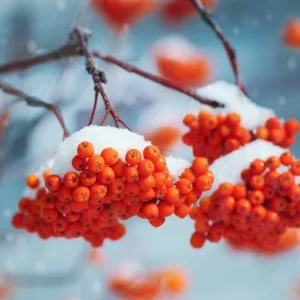
Some trees and shrubs display beautiful fruits in late summer or fall, which persist into winter. In a glorious display of crimson, orange, yellow or even purple, their attractive berries adorn their branches in eye-catching bouquets, which gleam like jewels in the soft sunlight.
Dogwood trees and shrubs offer a diverse array of choices for gardeners. Popular varieties include the flowering dogwood (Cornus florida) with its iconic white or pink blooms, the kousa dogwood (Cornus kousa) known for its late-spring flowering, and the red-twig dogwood (Cornus sericea) prized for its vibrant red branches in winter.
Select a ficus species that suits your indoor lighting; place in bright, indirect light. Water moderately, allowing soil to dry between waterings. Maintain consistent temperature and humidity. Fertilize seasonally. Watch for pests and diseases. Prune occasionally to maintain shape and promote healthy growth. Enjoy your thriving indoor ficus tree!
Most Cypress trees are evergreen conifers in the Cupressaceae family, prized for their needle-like foliage and woody, acorn-shaped cones. They vary in size and shape, thriving in diverse climates. Cypress wood is prized for its durability and rot resistance, making these trees valuable for both ecological and landscaping purposes.
Discover the top palm tree varieties ideal for home gardeners. From towering majesties to compact beauties, these palms offer a range of sizes and styles, perfect for enhancing any garden. Embrace their tropical allure and transform your outdoor space into an exotic paradise with these perfect picks.
Betula, commonly known as birch trees, encompass various species admired for their elegant, peeling bark and delicate leaves. Native to many parts of the world, they thrive in diverse landscapes, offering ornamental value and habitat for wildlife. Notable species include Betula pendula (silver birch) and Betula nigra (river birch).
Despite the myth that orchids are fussy and difficult to grow, many orchids are not as delicate as most people think. They can adapt to the temperatures and light conditions found on the average home windowsill and be rewarding indoor plants. Many orchids are winter bloomers, which makes them even more desirable as houseplants.
From roses to sunflowers and daisies to tulips, learn about the types of flowers and their unique characteristics.
| Plant Type | Trees |
|---|---|
| Genus | Acer, Betula, Catalpa, Cercis, Cupressus, Eucalyptus, Ginkgo, Lagerstroemia, Magnolia, Pinus, Populus, Quercus, Salix, Taxodium, Thuja |
| Characteristics | Showy |
Create a membership account to save your garden designs and to view them on any device.
Becoming a contributing member of Gardenia is easy and can be done in just a few minutes. If you provide us with your name, email address and the payment of a modest $25 annual membership fee, you will become a full member, enabling you to design and save up to 25 of your garden design ideas.
Join now and start creating your dream garden!