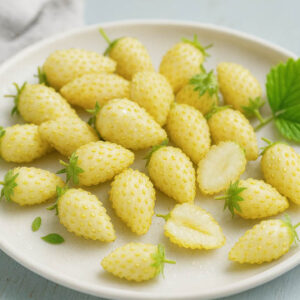
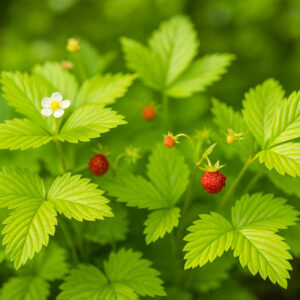
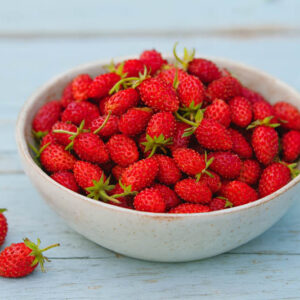
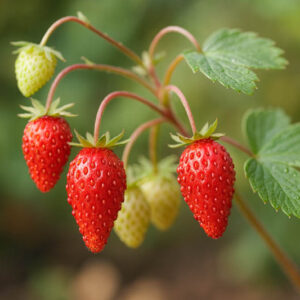
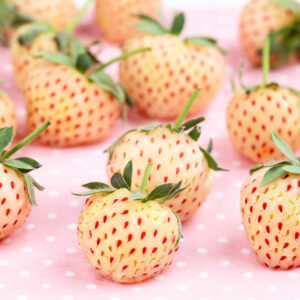
Wild Strawberry 'Purple Wonder', Alpine Strawberry 'Purple Wonder', Fraise Des Bois 'Purple Wonder', Wood Strawberry 'Purple Wonder'
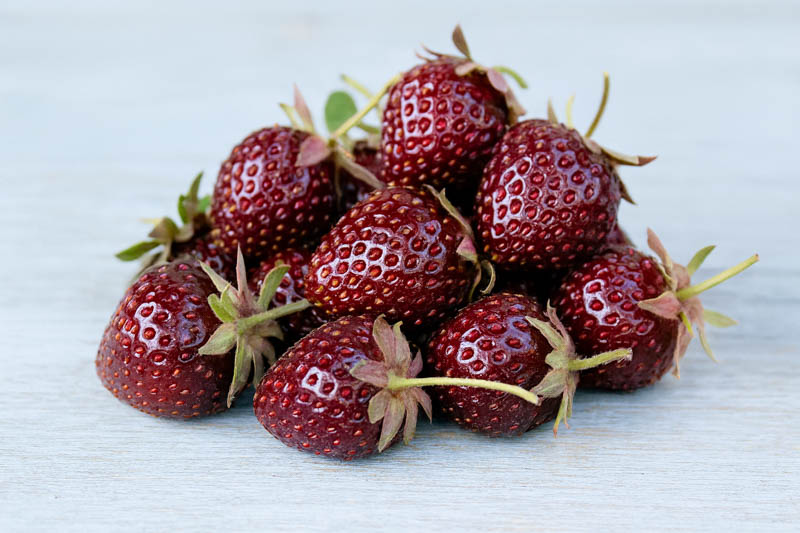


Summary: ‘Purple Wonder’ is a June-bearing strawberry celebrated for its enchanting wine-colored fruit, high sugar and antioxidant content, and a concentrated early-summer harvest. Compact plants make care simple and yields generous.
Taste: Strong strawberry character, extra sweet, low-acid feel.
Use: Fresh eating, preserves, tarts, small-batch wine, and showy desserts.
Safety: Edible; same allergy considerations as other strawberries.
| Botanical Name | Fragaria × ananassa ‘Purple Wonder’ |
|---|---|
| Family | Rosaceae (Rose family) |
| Common Names | Purple Wonder strawberry, wine-colored strawberry |
| Plant Type and Habit | June-bearing garden strawberry; compact crown with few runners (easy to keep tidy) |
| Hardiness (USDA) | Zones 4–8 |
| Size | About 12 in (30 cm) tall × 12 in (30 cm) wide; medium berries |
| Sun and Exposure | Full sun (6–8+ hours) |
| Soil | Well-drained, rich in organic matter; ideal pH 6.5–6.8 |
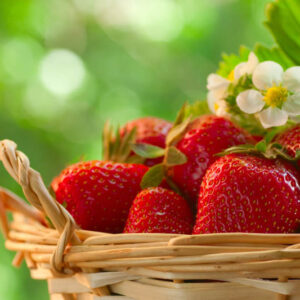
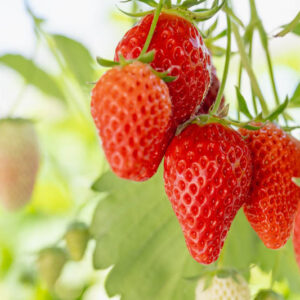
| Bloom and Fruit | White blossoms; flesh and skin color develop to deep burgundy—through the berry |
| Season | June-bearing: a heavy, few-week harvest window in June (timing shifts by climate) |
| From Seed | Sold as plants and seeds; seed starts typically give best crops in the second spring |
| Pollination | Self-fertile; bee activity improves size and uniformity |
| Primary Uses | Rows, small patches, and containers; fresh eating, jam, tarts, and striking preserves |
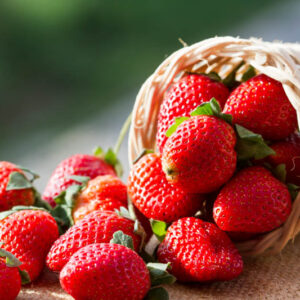
‘Purple Wonder’ turns heads for good reason. Instead of the usual scarlet, the berries ripen to a lush, wine-dark burgundy that runs through the flesh, not just the skin. The payoff isn’t only visual: sugars are high, acidity is gentle, and the result is a classic strawberry flavor that reads as “extra sweet.” If you’ve wanted a berry that’s both novel and reliable, this one’s an obvious choice—heavy early-summer harvests, compact plants, and dessert-grade fruit you’ll want to show off.
‘Purple Wonder’ isn’t a gimmick—it’s the 42nd release from Cornell University’s small-fruits breeding program, introduced in 2012 after years in development. The goal was simple: deliver a distinctive, dark-colored strawberry with high sugar and antioxidant content that performs for home gardeners. The plants stay compact, produce fewer runners than many garden types, and focus energy into a concentrated June harvest. That means easy bed management, a neat look, and bowls of fruit arriving in a glorious, predictable wave.
This variety was bred to adapt across much of the U.S. It’s cold-hardy enough for the Midwest and Northeast and still productive in warmer, drier regions. Official guidance places it in USDA Zones 4–8—mulch crowns in colder zones, and irrigate faithfully where summers run dry.
| Feature | ‘Purple Wonder’ (F. × ananassa) | Wild / Alpine (F. vesca) | Standard Garden (F. × ananassa) |
|---|---|---|---|
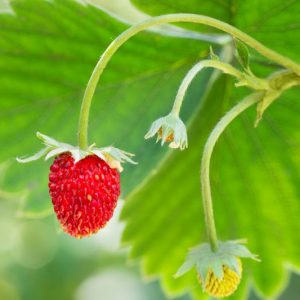
| Fruit color & size | Wine-dark burgundy; medium | Small; red/yellow/white (aromatic) | Red; medium to large |
| Bearing habit | June-bearing (few-week harvest) | Often day-neutral (smaller, repeated flushes) | June-bearing, everbearing, or day-neutral |
| Growth habit | Compact crown; few runners | Compact, usually runnerless | Crown with runners (often vigorous) |
| Best uses | Fresh eating, preserves, wine | Edging, small spaces, garnishes | Bulk harvests, freezing, baking |
The beauty isn’t skin-deep: that dark burgundy tones the whole berry. Expect a bright aroma, classic strawberry flavor, and a notably sweet bite. Use the hue to your advantage—preserves and coulis look gourmet with almost no effort. For instant dessert, macerate sliced fruit with a pinch of sugar and a squeeze of lemon; spoon over shortcake or swirl through yogurt. Adventurous makers even craft a fine strawberry wine thanks to the rich color and elevated sugars.
‘Purple Wonder’ is a June-bearing variety: you’ll enjoy a focused few-week harvest window. Pick when berries are fully colored through to wine-dark burgundy and detach with a gentle tug. Harvest every 1–2 days. Chill promptly and use within 2–3 days for best texture. Besides fresh bowls and shortcake, the berries shine in preserves (that color!), rustic tarts, vivid coulis, and—if you’re curious—small-batch strawberry wine.
Good culture goes a long way: air circulation, mulch, and watering the soil—not the leaves—help prevent issues. Keep an eye out for common strawberry problems:
Wildlife note: the deep color and sweetness appeal to critters as much as to us—use fencing or mesh where browsing or pecking is common.
| Season | Tasks |
|---|---|
| Late winter–early spring | Remove winter mulch gradually; top-dress with compost; set or check drip/soaker lines; apply a light spring feed |
| Spring–June | Mulch beds; maintain even moisture; pick daily/near-daily at full color; remove soft/overripe fruit promptly |
| Midsummer | Post-harvest tidy: clip oldest leaves above crowns; thin any excess daughters; refresh mulch; root a few runners to renew rows |
| Fall | Light feeding; transplant rooted runners; deep-water during dry spells; keep beds weed-free |
| Winter | Mulch crowns after soil cools to protect from frost heave; monitor for vole activity |
No. ‘Purple Wonder’ is a garden strawberry (F. × ananassa), not an alpine (F. vesca). Expect medium-sized fruit and a June-bearing habit.
A concentrated few-week window in June (timing varies with climate). Pick every 1–2 days as berries reach full, wine-dark color.
Plants produce not many runners, which keeps maintenance simple. Root a few after harvest if you want to expand your patch.
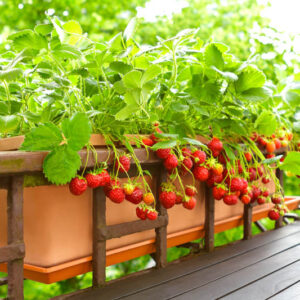
About 12 in tall × 12 in wide—compact enough for small beds and containers.
Plant a short row of ‘Purple Wonder’ where you can keep an eye on it. As those berries darken from red to wine-deep burgundy, you’ll know it’s time—lift one, still warm from the sun, and taste why this distinctive variety earns such loyal fans every June.
| Hardiness |
4 - 8 |
|---|---|
| Heat Zones |
1 - 8 |
| Climate Zones | 2, 2B, 3, 3A, 3B, 4, 5, 6, 7, 8, 9, 14, 15, 16, 17, 18, 19, 20, 21, 22, 23, 24, H2 |
| Plant Type | Fruits |
| Plant Family | Rosaceae |
| Genus | Fragaria |
| Common names | Strawberry |
| Exposure | Full Sun |
| Season of Interest | Spring (Late), Summer (Early) |
| Height | 10" - 1' (25cm - 30cm) |
| Spread | 10" - 1' (25cm - 30cm) |
| Spacing | 10" - 12" (25cm - 30cm) |
| Maintenance | Average |
| Water Needs | Average |
| Soil Type | Clay, Loam, Sand |
| Soil pH | Acid, Neutral |
| Soil Drainage | Moist but Well-Drained |
| Characteristics | Semi-Evergreen, Fruit & Berries |
| Tolerances | Heat |
| Attracts | Bees, Birds |
| Garden Uses | Edging, Ground Covers, Patio And Containers |
| Garden Styles | Informal and Cottage |
| Toxic to Humans | No known toxicity |
| Toxic to Cats | Not toxic |
| Toxic to Dogs | Not toxic |
| Toxic to Horses | Not toxic |


| Hardiness |
4 - 8 |
|---|---|
| Heat Zones |
1 - 8 |
| Climate Zones | 2, 2B, 3, 3A, 3B, 4, 5, 6, 7, 8, 9, 14, 15, 16, 17, 18, 19, 20, 21, 22, 23, 24, H2 |
| Plant Type | Fruits |
| Plant Family | Rosaceae |
| Genus | Fragaria |
| Common names | Strawberry |
| Exposure | Full Sun |
| Season of Interest | Spring (Late), Summer (Early) |
| Height | 10" - 1' (25cm - 30cm) |
| Spread | 10" - 1' (25cm - 30cm) |
| Spacing | 10" - 12" (25cm - 30cm) |
| Maintenance | Average |
| Water Needs | Average |
| Soil Type | Clay, Loam, Sand |
| Soil pH | Acid, Neutral |
| Soil Drainage | Moist but Well-Drained |
| Characteristics | Semi-Evergreen, Fruit & Berries |
| Tolerances | Heat |
| Attracts | Bees, Birds |
| Garden Uses | Edging, Ground Covers, Patio And Containers |
| Garden Styles | Informal and Cottage |
| Toxic to Humans | No known toxicity |
| Toxic to Cats | Not toxic |
| Toxic to Dogs | Not toxic |
| Toxic to Horses | Not toxic |
How many Fragaria x ananassa ‘Purple Wonder’ (Junebearing Strawberry) do I need for my garden?
| Plant | Quantity | |
|---|---|---|
| Fragaria x ananassa ‘Purple Wonder’ (Junebearing Strawberry) | N/A | Buy Plants |
Create a membership account to save your garden designs and to view them on any device.
Becoming a contributing member of Gardenia is easy and can be done in just a few minutes. If you provide us with your name, email address and the payment of a modest $25 annual membership fee, you will become a full member, enabling you to design and save up to 25 of your garden design ideas.
Join now and start creating your dream garden!
Create a membership account to save your garden designs and to view them on any device.
Becoming a contributing member of Gardenia is easy and can be done in just a few minutes. If you provide us with your name, email address and the payment of a modest $25 annual membership fee, you will become a full member, enabling you to design and save up to 25 of your garden design ideas.
Join now and start creating your dream garden!