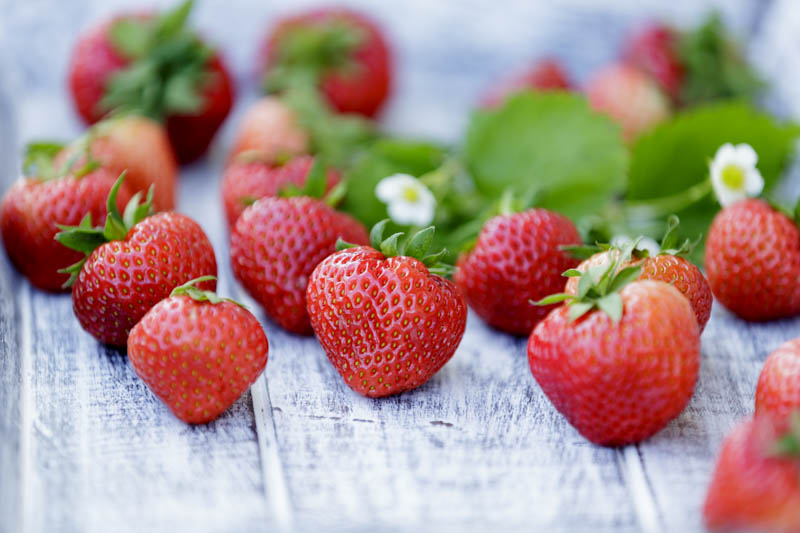
Strawberry
Strawberries are the garden’s sweetest reward—easy to grow, endlessly productive, and full of quirks once you get to know them.
Not a berry at all. The red flesh is an accessory fruit; the tiny “seeds” on the surface are achenes—each a fruit in its own right, housing a single seed.
Family ties. The modern garden strawberry (Fragaria × ananassa) began as an accidental hybrid in Europe, born of two wild parents: the North American Fragaria virginiana and the Pacific-coast Fragaria chiloensis. Its petite cousin, the woodland strawberry Fragaria vesca, is prized for fragrance and flavor that far outpace its size.
Three ways to crop. June-bearing varieties offer one glorious flush, everbearing give two lighter rounds, and day-neutrals drip fruit from late spring to frost. Need inspiration? See Most Popular Strawberry Varieties.
Self-fertile—but bees make them better. Plants can set fruit alone, but pollinators boost size and shape. Border your beds with nectar flowers to roll out the welcome mat for bees.
They run. Strawberries spread via stolons (runners). Let them knit into matted rows for abundant harvests, or clip them back in hill systems to channel energy into bigger berries per plant.
Straw that works. A mulch of clean straw or pine needles keeps fruit off damp soil, wards off rot, and makes harvests tidier.
Good neighbors, bad neighbors. Beans, caraway, lettuce, marigolds, chives, onion, thyme, borage make friendly companions, while brassicas (broccoli, cauliflower, Brussels sprouts, cabbage, kale) hog light and nutrients. See Best & Worst Companion Plants for the full list.
Best at room temp. Pick only fully red fruit, then let them warm slightly before eating. Rinse right before serving to keep them fragrant, not soggy.
No after-ripening. Strawberries don’t sweeten once picked—wait until color and aroma peak on the plant. When in doubt, give them one more sunny day.