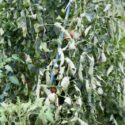
If you’re searching for a tree that practically defines resilience, beauty, and ancient lineage, look no further than Ginkgo biloba. The “maidenhair tree” is a living fossil with a track record stretching back 200 million years!
From city plantings to suburban yards, a well-chosen ginkgo is tough against urban pollution, drought, heat, and neglect. But did you know there are hundreds of cultivars—including dwarfs, columnars, variegated beauties, and even exquisite miniatures for patio pots?
At a Glance:
- Ginkgo trees are incredibly hardy, disease-resistant, and tolerant of city conditions.
- Choose males—female trees produce fruit with a strong odor.
- There’s a perfect ginkgo for every garden style, from tiny courtyard to stately avenue.
Why Choose a Ginkgo?
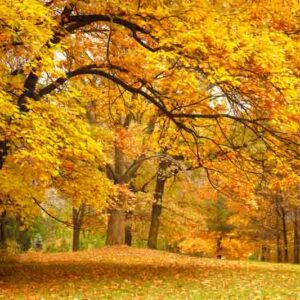
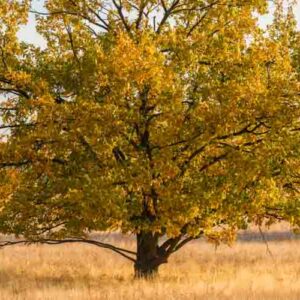
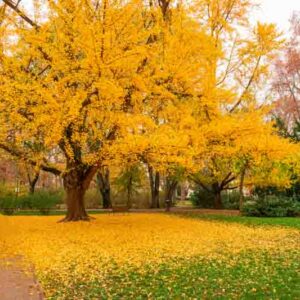
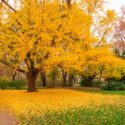
Ginkgoes offer unrivaled autumn gold, distinctive fan-shaped leaves, and a sculptural winter form. They stand up to urban pollution, stormwater, salt, pests, and even compacted soils. Discover Top Pollution-Tolerant Trees That Thrive Where Others Fail.
If you crave a shade tree or something unique for your collection, ginkgo delivers—often thriving where other ornamentals falter.
Types of Ginkgo Cultivars for Home Gardens
There’s so much more to ginkgo than the classic, wide-canopied tree. Modern breeding now offers options for every gardener:
- Columnar (upright, perfect for narrow urban sites)
- Dwarf (great for containers, borders, Asian-inspired gardens)
- Variegated-leaf (striking yellow, white, or pink-edged foliage)
- Weeping (arching branches for graceful, architectural appeal)
- Classic shade (broad, symmetrical trees for lawns, parks, play areas)
Top Ginkgo Cultivars for Every Home Garden
Here are the most admired selections—whether you have a tight space, want something bold and vertical, or simply dream of a glowing autumn canopy.
🏅 Princeton Sentry (Ginkgo biloba ‘Princeton Sentry’)

- Habit: Distinctly columnar; 40–50 ft tall but just 20-30 ft wide—great for streets or narrow yards.
- Foliage: Rich green in summer, turning brilliant gold in fall; leaves drop quickly for an easy cleanup.
- Notable: Male selection, so no messy fruit.
- Why plant it? Classic, award-winning choice; ideal for driveways, foundations, and anywhere upright form is needed.
🏅 Autumn Gold (Ginkgo biloba ‘Autumn Gold’)

- Habit: Broadly conical; 40–50 ft tall x 25-30 ft wide at maturity.
- Foliage: Famous for its supreme golden fall color; uniform, symmetrical branching.
- Notable: Male selection, widely available, grows into a perfect classic shade tree.
- Why plant it? Showiest autumn display; award-winning choice; an outstanding focal point for larger lawns or parks.
🏅 Mariken (Ginkgo biloba ‘Mariken’)

- Habit: Dwarf, slow-growing, forming a dense, rounded shrub—often only 2–3 ft tall and 7-8 ft wide.
- Foliage: Classic ginkgo leaf, small and tight; beautiful golden yellow in autumn.
- Notable: Ideal for small gardens, rockeries, patios, even bonsai.
- Why plant it? Stunning “living fossil” for pots and small spaces—zero fruit mess!
🏅 Fairmont (Ginkgo biloba ‘Fairmont’ or ‘Fairmount’)

- Habit: Slim columnar to upright pyramidal; 30–50 ft tall × 8–15 ft wide (older trees to 70 × 18–25 ft).
- Foliage: Deep green leaves, golden yellow in fall; neat narrow form for tight city gardens.
- Notable: Fruitless male selection; holds shape even with little pruning.
- Why plant it? Top recommendation for narrow parkways and side yards.
🏅 Majestic Butterfly (Ginkgo biloba ‘Majestic Butterfly’)

- Habit: Moderate to small tree; 7-12 ft tall and 3-8 ft wide.
- Foliage: Variegated leaves with stunning green and creamy-white striping; spectacular autumn yellow.
- Notable: Most reliable variegated ginkgo for home gardens; male clone, fruitless.
- Why plant it? Truly unique and eye-catching even when not in bloom—brings year-round curiosity.
🏅 Jade Butterflies (Ginkgo biloba ‘Jade Butterflies’)

- Habit: Compact mid-sized tree; 6-12 ft tall and 3-9 ft wide—makes a superb specimen or hedge.
- Foliage: Small, cupped leaves in tight clusters (hence the “butterflies”); glowing yellow in autumn.
- Notable: Naturally rounded, dense form. Handles a wide range of soils and climates.
- Why plant it? Distinctive texture and shape—great for front gardens and patios.
🏅 Troll (Ginkgo biloba ‘Troll’)

- Habit: True dwarf; globe-shaped or rounded mound—2–3 ft tall and wide for decades (occasionally up to 6 ft after many years).
- Foliage: Classic fan-shaped green leaves, turning bright golden yellow in fall; dense, bushy texture.
- Notable: Male and fruitless—no messy fruit. Perfect for containers, rock gardens, bonsai, or accent plantings.
- Why plant it? The smallest high-impact ginkgo; brings ancient style anywhere, even in tiny spaces. Minimal care, incredible longevity.
How to Choose the Perfect Ginkgo for Your Garden
- Space: Large shade trees like ‘Autumn Gold’ need ~30+ ft each way; choose dwarfs such as ‘Mariken’, ‘Munchkin’, or ‘Chi-Chi’ for pots, tiny borders, or rock gardens.
- Form: Go columnar where space is tight — ‘Princeton Sentry’, ‘Fairmont’, ‘Magyar’, or ‘Menhir’. Prefer a rounded, classic look? Pick ‘Autumn Gold’ or the compact ‘Jade Butterflies’.
- Foliage: For wow-factor variegation, try ‘Majestic Butterfly’, ‘Sunstream’, or ‘Snow Cloud’/‘Variegata’. For distinctive leaf shapes, consider ‘Saratoga’ (strap-like) or ‘Tubifolia’.
- Fruit: Choose male cultivars for home landscapes unless fruit is desired (rarely recommended due to odor).
- Purpose: Want quick, reliable shade? ‘Autumn Gold’ (broad) or ‘Golden Colonnade’ (upright) are solid picks. For especially showy foliage/texture, try ‘Saratoga’, ‘Majestic Butterfly’, ‘Sunstream’, or ‘Jade Butterflies’.

Care Tips for Home Garden Ginkgoes
- Plant in full sun for best leaf color and dense growth.
- Soil can be almost anything—ginkgo tolerates clay, drought, alkalinity, and compaction.
- Water well the first 1–2 seasons; after establishment, ginkgo needs little supplemental water in most regions.
- Ginkgo rarely needs pruning, but you can shape dwarfs as topiary or cloud-prune for added drama!
- Almost insect- and disease-free: plant and enjoy!
Frequently Asked Questions
- Are all ginkgo cultivars male?
- No, but nearly all sold for landscape use are. Always confirm with your nursery—male trees will not produce fruit.
- Are dwarf ginkgoes true miniatures forever?
- Dwarf types like ‘Mariken’, ‘Troll’, ‘Munchkin’, and ‘Chi-Chi’ stay compact for decades, but all ginkgoes are long-lived and can eventually grow larger over many years.
- Can I grow ginkgo in a container?
- Absolutely! Dwarf selections thrive in large pots with good drainage. Repot every few years for best results.
- What makes ginkgo so “urban-tough”?
- Ginkgo tolerates air pollution, de-icing salt, pests, diseases, clay soil, and drought—making it ideal for even the toughest spaces.
Final Thoughts
If you want a tree that offers drama, character, and minimal fuss in any home garden, a ginkgo cultivar is an unbeatable choice. Explore columnar, dwarf, variegated, or classic shade trees for your space—whatever your size or style, Ginkgo biloba always delivers a golden autumn and a story as old as the dinosaurs.
Pro tip: Plant a ginkgo as a living legacy—these trees may outlive you by centuries! Choose your favorite cultivar, and in a few autumns, you’ll be sharing its golden glow with future generations.
While every effort has been made to describe these plants accurately, please keep in mind that height, bloom time, and color may differ in various climates. The description of these plants has been written based on numerous outside resources.