Mystic Spires Blue Salvia, Mystic Spires Sage, Mystic Spires Blue Sage, Mystic Spires Blue Meadow Sage, Mystic Spires Blue Hybrid Sage, Salvia ‘Mystic Spires Blue’, Salvia ‘Balsalmisp’
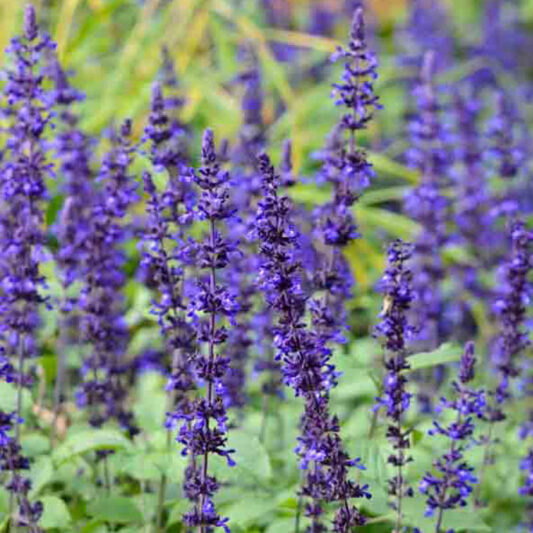
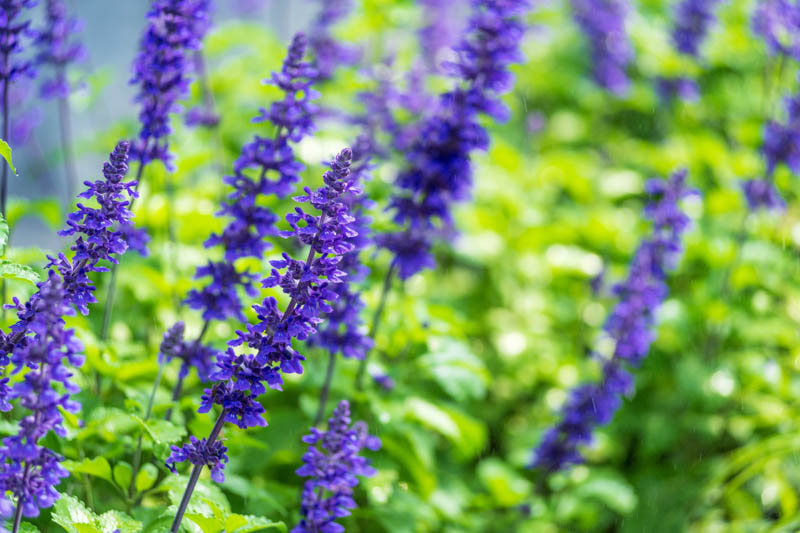
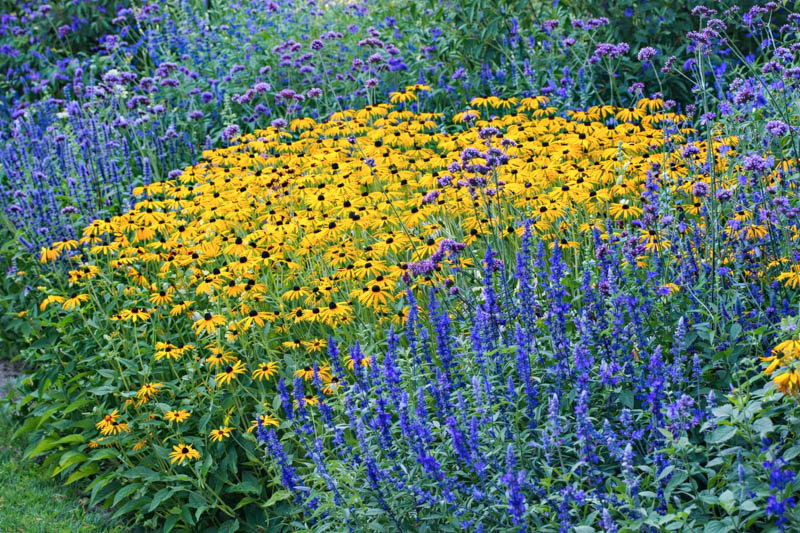


If you want a compact perennial that blooms from early summer to frost and keeps pollinators buzzing around your garden, Salvia ‘Mystic Spires Blue’ is a brilliant choice. This long flowering blue sage produces dense spires of deep violet blue flowers on a bushy, upright plant that fits beautifully into borders, beds, and containers.
Despite its elegant flower spikes, Mystic Spires Blue sage is tough, heat tolerant, and wonderfully low maintenance. Give it full sun, well drained soil, moderate watering, and occasional deadheading, and it will reward you with a haze of blue all season long. A compact descendant of Salvia ‘Indigo Spires’, it delivers big color in a smaller, easier to manage package.
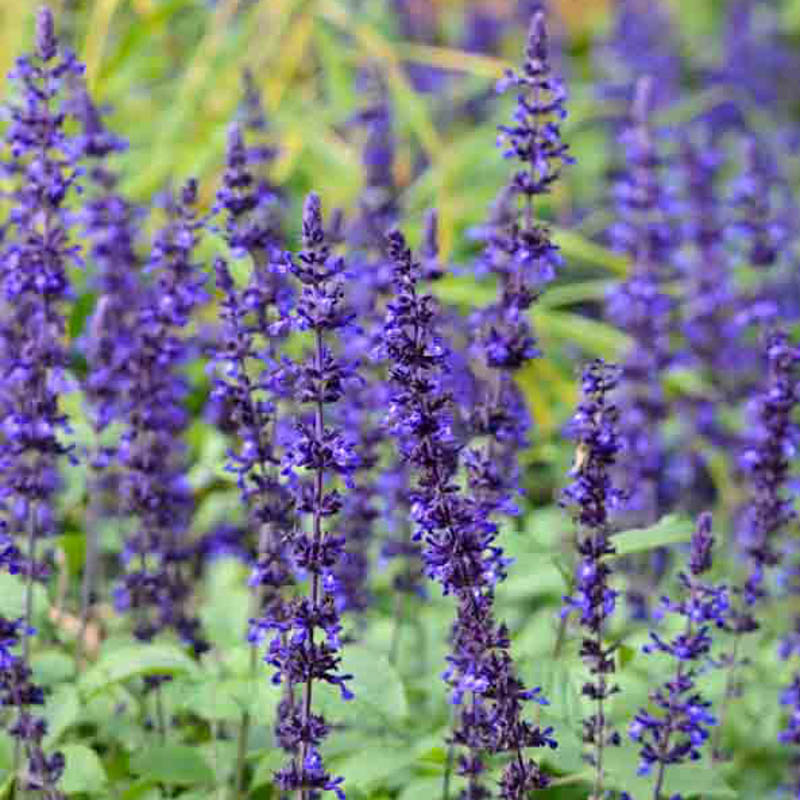
Summary: Compact, bushy herbaceous perennial hybrid sage with upright stems,
aromatic deep green foliage, and dense spires of deep violet-blue flowers from early summer to frost.
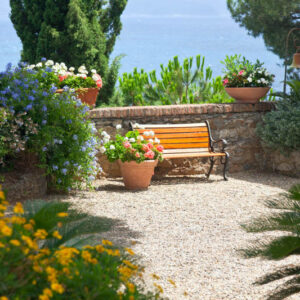
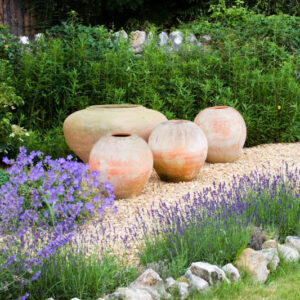
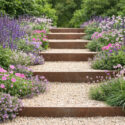
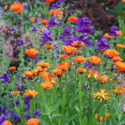
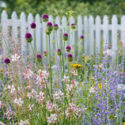
Use: Excellent for borders, beds, and containers—especially pollinator gardens,
cottage-style plantings, Mediterranean/xeric designs, and city gardens.
Highlight: Long blooming season, rich blue color, and strong attraction for bees, butterflies, and hummingbirds.
Note: Heat tolerant and low maintenance—give it full sun, good drainage, moderate watering, and occasional deadheading for best performance.
| Botanical Name | Salvia Mystic Spires Blue, |
|---|---|
| Family | Mint family (Lamiaceae) |
| Common Names | Mystic Spires Blue sage, Mystic Spires salvia, blue sage, blue salvia |
| Native Range | A garden hybrid developed from salvia species native to Mexico and parts of South America; grown worldwide for ornamental use. |
| Parentage | Derived from Salvia longispicata × Salvia farinacea; a compact descendant of Salvia ‘Indigo Spires’. |
| Plant Type and Habit | Semi-evergreen, herbaceous perennial with a bushy, upright habit and multiple well-branched flowering stems. |
| Hardiness (approx. USDA) | Typically hardy in USDA Zones 7–10; tolerates light frosts with well-drained soil and some winter protection. |
| Height | 18–30 in. (45–75 cm) |
| Spread | 12–24 in. (30–60 cm) |
| Spacing | 18–24 in. (45–60 cm) |
| Sun and Exposure | Best in full sun; light/partial shade tolerated in very hot climates (especially afternoon shade). |
| Soil | Prefers well-drained, moderately fertile soil; dry to medium moisture; adaptable, but avoid waterlogged sites. |
| Seasonal Interest | Blooms early summer through fall, often until frost. |
| Flower Color | Deep violet-blue (dark purple-blue) |
| Foliage Color | Shiny, deep green |
| Fragrance | Aromatic foliage (herbal scent when brushed or crushed) |
| Drought Tolerant | Yes (once established; prefers deep, infrequent watering) |
| Heat Tolerant | Yes |
| Humidity Tolerant | Yes |
| Pollution Tolerant | Yes |
| Nectar / Pollen | Yes |
| Attracts | Bees, butterflies, hummingbirds |
| Deer / Rabbit | Often considered deer and rabbit resistant (aromatic foliage) |
| Toxicity | Generally considered non-toxic to people and pets |
| Invasive Status | Not usually considered invasive |
| Primary Uses | Borders, beds, containers; perennial borders, pollinator gardens, cottage gardens, Mediterranean-style plantings, xeriscapes, and city gardens. |
Salvia ‘Mystic Spires Blue’ is a semi evergreen, herbaceous perennial salvia noted for its compact growth and long season of bloom. The plant forms a rounded mound of shiny, deep green leaves less than 12 inches high (about 30 cm), with serrated edges and a pleasant aromatic scent when crushed.
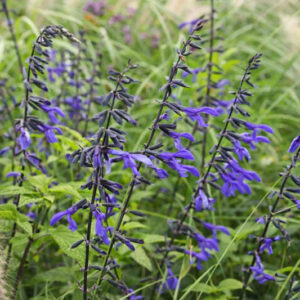
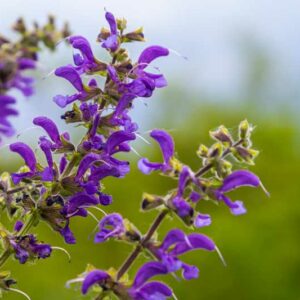
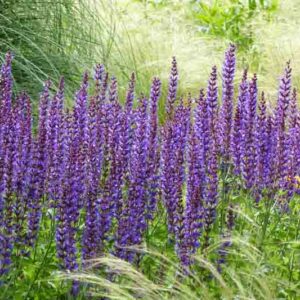
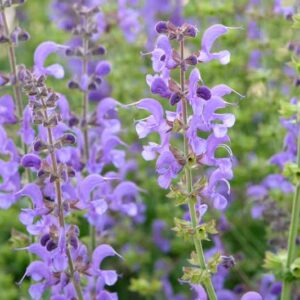
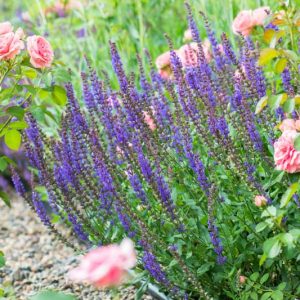
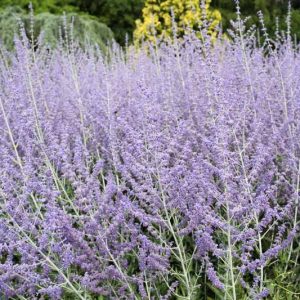
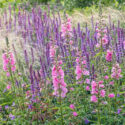
From this foliage mound rise sturdy flower spikes packed with dark purple blue flowers set in violet purple calyces. The effect is a mist of vertical blue spires that bring structure, movement, and cool color to mixed plantings. Well branched and very free flowering, Mystic Spires Blue produces a continuous supply of flower stalks through the warm months.
Mystic Spires Blue is a hybrid, developed from salvia species native to Mexico and parts of South America. In those regions, salvias are adapted to sunny, well drained habitats and warm conditions, which explains this plant’s love of heat and its good drought tolerance once established.
As a cultivated variety, it is grown worldwide for ornamental use. Like many members of the sage, mint, and deadnettle family (Lamiaceae), it features square stems and bilaterally symmetrical flowers.
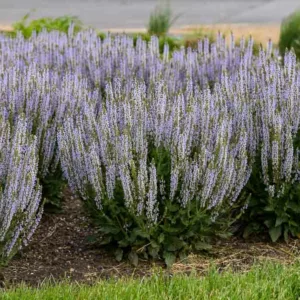
Mystic Spires Blue is a bushy, upright perennial that stays nicely compact. It usually reaches 24 to 30 inches (60 to 75 cm) tall and wide, making it perfect for the front to middle of the border, as well as for larger containers.
Plants are naturally well branched, so they seldom require staking. Regular light pruning or pinching can make them even denser and more floriferous.
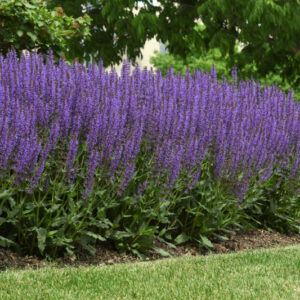
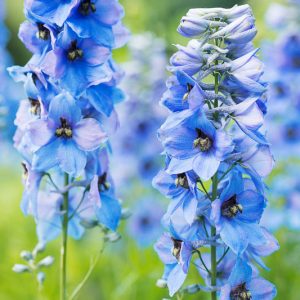
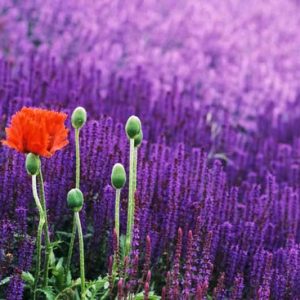
The true allure of Mystic Spires Blue lies in its stunning dark purple blue flowers held in violet purple calyces. The flowers are densely packed along tall spires, creating a strong vertical accent and an eye catching haze of blue.
It blooms prolifically from early summer through fall, often until frost, providing a long season of color and interest. Deadheading spent spikes encourages even more blooms, making this salvia one of the hardest working perennials in the garden.
This salvia forms a mound of shiny, deep green leaves that are aromatic when brushed or crushed. The foliage stays attractive throughout the season, creating a lush base for the flower spikes and adding texture and fragrance to the planting.
Even when not in peak bloom, Mystic Spires Blue contributes structure and greenery to the border. In mild climates, some foliage may linger into winter, giving it a semi evergreen presence.
Mystic Spires Blue is a recognized top performer and has earned the prestigious Award of Garden Merit from the Royal Horticultural Society – a strong clue that it delivers on both beauty and reliability.
Hardiness: Mystic Spires Blue is typically hardy in USDA Zones 7 to 10. It can tolerate light frosts but benefits from mulching and some winter protection in cooler parts of its range.
In colder climates, it is often grown as an annual or in containers that can be moved to a sheltered, frost free location for winter.
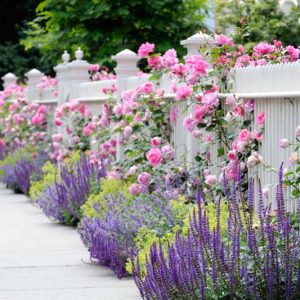
You can use Mystic Spires Blue in many garden settings:
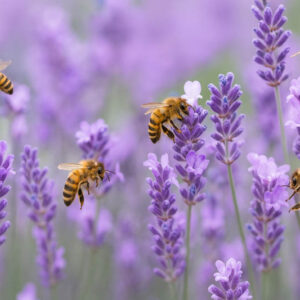
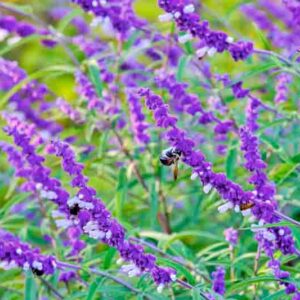
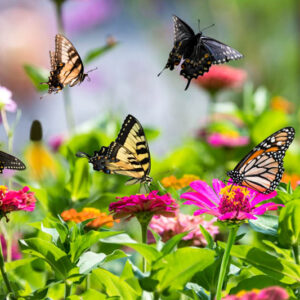
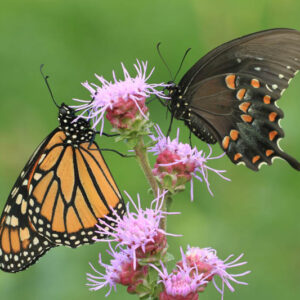
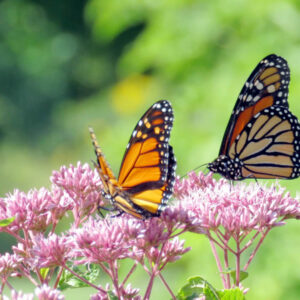
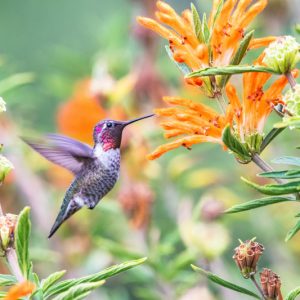
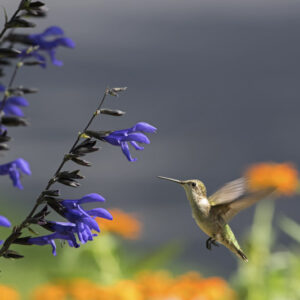
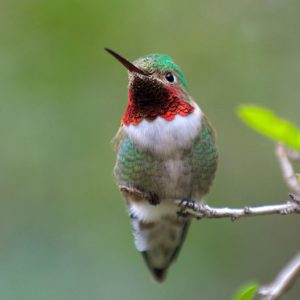
Pollinators: The tubular flowers of Mystic Spires Blue are a magnet for bees, butterflies, and hummingbirds. Plant several together to create a lively pollinator hotspot you can enjoy from a nearby seat or window.
Deer and Rabbits: Mystic Spires Blue is relatively resistant to deer and rabbits, thanks to its strongly aromatic foliage, which tends to be less appealing to these grazers. While no plant is completely deer proof, this salvia is usually bypassed in favor of more palatable plants, making it a smart choice for gardens with browsing pressure.
Drought Tolerance: Once established, this sage is drought tolerant and well suited to low water landscapes and xeriscapes. It thrives with deep, infrequent watering rather than constant moisture, especially in well drained soils.
For more ideas on combining Mystic Spires Blue with other dry garden salvias, see Top Salvia Varieties for a Thriving Xeriscape.
Toxicity: Salvia species are generally considered non-toxic to pets and humans, making Mystic Spires Blue a safe choice for family gardens, play areas, and pet friendly spaces.
Invasiveness: As a non native hybrid, Salvia ‘Mystic Spires Blue’ is not usually considered invasive. It does not typically spread aggressively by seed or rhizomes, and it tends to remain where it is planted. As always, check local guidance and remove any unwanted volunteers if they appear.
Benefits: The primary benefits of growing Mystic Spires Blue include its exceptional visual appeal, long blooming season, low maintenance needs, and high value for pollinators. It offers a lot of flower power for the space it occupies, especially in small gardens and containers.
For a broader look at why sages deserve a place in almost every garden, see Salvia: Discover 10 Key Benefits of Growing Sage in Your Garden.
Mystic Spires Blue prefers:
If you garden on heavy clay, improve drainage with organic matter and grit, or plant in raised beds and mounds.
Salvia ‘Mystic Spires Blue’ is easy to care for and responds very well to light pruning.
Mystic Spires Blue is typically propagated vegetatively to keep the exact traits of the hybrid.
Salvia ‘Mystic Spires Blue’ is generally a robust, low maintenance plant, but like all plants it can encounter some pests, diseases, or cultural issues.
Aphids and whiteflies: These small sap sucking insects may appear on tender new growth or the undersides of leaves, causing distortion and sticky honeydew. A strong stream of water often dislodges them. For persistent problems, use insecticidal soap or neem oil. Severe infestations may require a systemic insecticide.
Spider mites: These tiny pests thrive in hot, dry conditions and cause stippled, pale foliage and fine webbing. Increase humidity, rinse foliage with water, and use miticides or horticultural oils if infestations persist.
Root rot: Overwatering or poorly drained soil can lead to root rot, seen as wilting and decline despite moist soil. Ensure good drainage and reduce watering. If root rot is suspected in a container, remove the plant, trim away black or mushy roots, and replant in fresh, sterile potting mix.
Powdery mildew: In humid conditions with poor air circulation, a white or gray powdery coating may appear on leaves and stems. Improve spacing, avoid overhead watering, and use fungicidal sprays if necessary.
Leggy Growth: Lack of sufficient sunlight or overly rich soil can cause leggy, floppy stems. Move plants to a sunnier spot if possible, ease back on feeding, and pinch or trim to encourage bushier growth.
Leaf Drop: Both overwatering and underwatering can cause yellowing and leaf drop. Aim for a consistent watering routine that allows the soil to dry slightly between waterings but does not stay bone dry for extended periods.
Fading Flower Color: In extremely intense sunlight and heat, flower color may fade slightly. Providing light afternoon shade in very hot climates can help preserve the rich blue tones.
Salvia ‘Mystic Spires Blue’ is a compact, bushy hybrid sage grown as a perennial in warm climates. It produces dense spikes of dark purple-blue flowers from early summer until frost above aromatic green foliage. The plant is derived from Salvia longispicata × S. farinacea and is essentially a dwarf, more compact form of the older cultivar ‘Indigo Spires’.
Botanically it is a herbaceous perennial, but how it behaves depends on climate. In USDA hardiness zones 7 to 10 it usually overwinters and behaves as a true perennial, especially with good drainage and some winter protection. In colder zones, gardeners often treat it as a long-blooming warm-season annual or grow it in containers that can be moved to shelter for winter.
Most references describe Mystic Spires Blue as a compact plant about 18–30 inches (roughly 45–75 cm) tall and 12–24 inches (30–60 cm) wide, depending on site and care. Some nursery listings lean toward the shorter end (around 18–24 inches), while landscape suppliers may report up to about 3 feet in ideal conditions, so it is safest to describe it as roughly 1.5–2.5 feet tall and wide.
Salvia ‘Mystic Spires Blue’ is generally rated hardy in USDA zones 7–10. It can tolerate brief light freezes if the soil is well drained but may be damaged or killed by prolonged hard frost, especially in containers. In colder climates it is best treated as an annual or overwintered indoors.
Mystic Spires Blue performs best in full sun, meaning at least 6 hours of direct sunlight per day. It can tolerate light or partial shade, particularly in very hot regions, but plants grown in too much shade tend to become leggy and flower less.
Yes. Once established in the ground, Mystic Spires Blue is considered moderately to highly drought tolerant and is frequently recommended for low-water or xeriscape plantings. It still blooms best with occasional deep watering during extended dry spells, but it copes far better with drought than with waterlogged soil
Mystic Spires Blue is highly attractive to pollinators. Its tubular blue flowers are rich in nectar and draw bees, butterflies, and other beneficial insects throughout the flowering season, and many growers also note regular visits from hummingbirds where they occur. For this reason, it is often recommended specifically for pollinator and wildlife-friendly gardens.
Salvia – sages for borders, beds, and containers
Top Salvia Varieties for a Thriving Xeriscape
Salvia – key benefits of growing sage in your garden
Updated: December 2025
| Hardiness |
7 - 10 |
|---|---|
| Heat Zones |
7 - 12 |
| Climate Zones | 8, 9, 14, 15, 16, 17, 18, 19, 20, 21, 22, 23, 24 |
| Plant Type | Annuals, Perennials |
| Plant Family | Lamiaceae |
| Genus | Salvia |
| Common names | Sage |
| Exposure | Full Sun |
| Season of Interest | Summer (Early, Mid, Late), Fall |
| Height | 2' - 3' (60cm - 90cm) |
| Spread | 2' - 3' (60cm - 90cm) |
| Spacing | 24" - 30" (60cm - 80cm) |
| Maintenance | Low |
| Water Needs | Average |
| Soil Type | Chalk, Loam, Sand |
| Soil pH | Acid, Alkaline, Neutral |
| Soil Drainage | Well-Drained |
| Characteristics | Cut Flowers, Fragrant, Showy, Semi-Evergreen, Plant of Merit |
| Tolerances | Deer, Drought, Rocky Soil, Heat, Humidity |
| Attracts | Bees, Birds, Butterflies, Hummingbirds |
| Garden Uses | Beds And Borders, Patio And Containers |
| Garden Styles | City and Courtyard, Informal and Cottage, Mediterranean Garden |
| Toxic to Humans | No known toxicity |
| Toxic to Cats | No known toxicity |
| Toxic to Dogs | No known toxicity |
| Toxic to Horses | No known toxicity |


| Hardiness |
7 - 10 |
|---|---|
| Heat Zones |
7 - 12 |
| Climate Zones | 8, 9, 14, 15, 16, 17, 18, 19, 20, 21, 22, 23, 24 |
| Plant Type | Annuals, Perennials |
| Plant Family | Lamiaceae |
| Genus | Salvia |
| Common names | Sage |
| Exposure | Full Sun |
| Season of Interest | Summer (Early, Mid, Late), Fall |
| Height | 2' - 3' (60cm - 90cm) |
| Spread | 2' - 3' (60cm - 90cm) |
| Spacing | 24" - 30" (60cm - 80cm) |
| Maintenance | Low |
| Water Needs | Average |
| Soil Type | Chalk, Loam, Sand |
| Soil pH | Acid, Alkaline, Neutral |
| Soil Drainage | Well-Drained |
| Characteristics | Cut Flowers, Fragrant, Showy, Semi-Evergreen, Plant of Merit |
| Tolerances | Deer, Drought, Rocky Soil, Heat, Humidity |
| Attracts | Bees, Birds, Butterflies, Hummingbirds |
| Garden Uses | Beds And Borders, Patio And Containers |
| Garden Styles | City and Courtyard, Informal and Cottage, Mediterranean Garden |
| Toxic to Humans | No known toxicity |
| Toxic to Cats | No known toxicity |
| Toxic to Dogs | No known toxicity |
| Toxic to Horses | No known toxicity |
How many Salvia Mystic Spires Blue (Sage) do I need for my garden?
| Plant | Quantity | |
|---|---|---|
| Salvia Mystic Spires Blue (Sage) | N/A | Buy Plants |
Create a membership account to save your garden designs and to view them on any device.
Becoming a contributing member of Gardenia is easy and can be done in just a few minutes. If you provide us with your name, email address and the payment of a modest $25 annual membership fee, you will become a full member, enabling you to design and save up to 25 of your garden design ideas.
Join now and start creating your dream garden!
Create a membership account to save your garden designs and to view them on any device.
Becoming a contributing member of Gardenia is easy and can be done in just a few minutes. If you provide us with your name, email address and the payment of a modest $25 annual membership fee, you will become a full member, enabling you to design and save up to 25 of your garden design ideas.
Join now and start creating your dream garden!