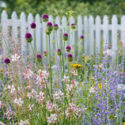
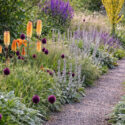
This planting plan shows how to combine ornamental grasses and perennials into a romantic, meadow-style border using repetition, contrast, and restraint.
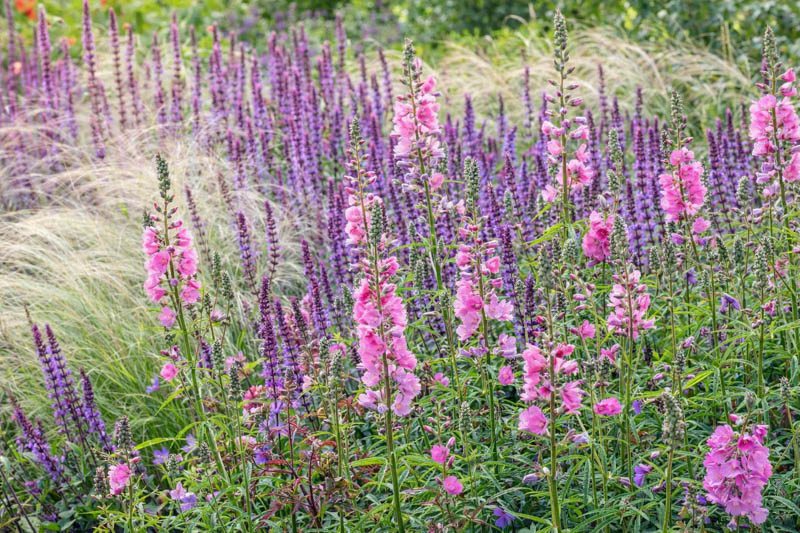


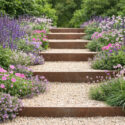
This romantic, naturalistic border pairs movement, structure, and pastel color to create a planting that feels both effortless and alive. Designed around just three complementary plants, it proves that restraint can be the secret to richness.
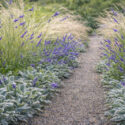
At first glance, the border reads like a summer breeze made visible—gentle waves of texture, light, and bloom flowing across the bed. The interplay of Stipa tenuissima, Salvia nemorosa ‘Caradonna’, and Sidalcea ‘Elsie Heugh’ creates a scene that is airy yet grounded, delicate yet full of energy.
Use this planting scheme when you want a low-maintenance, pollinator-friendly border with movement from early summer into fall.
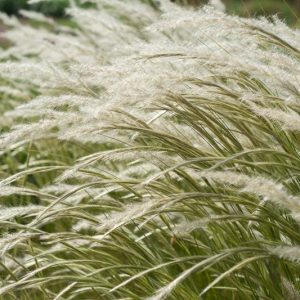
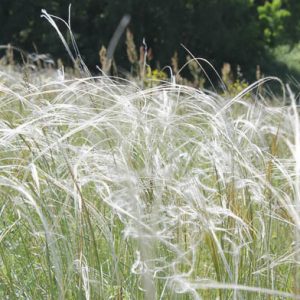
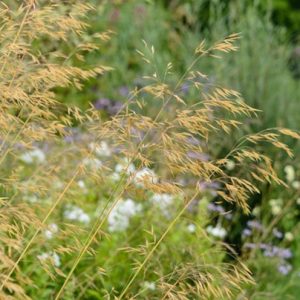
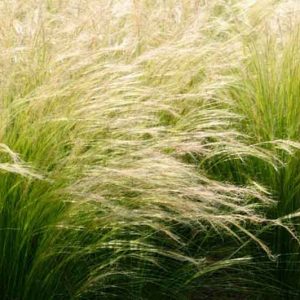
Stipa tenuissima is the movement-maker.
Its fine, hair-like blades form a luminous backdrop that shimmers with every breath of wind. More than a filler, this ornamental grass softens edges, connects neighboring plants, and turns sunlight into a design element of its own.
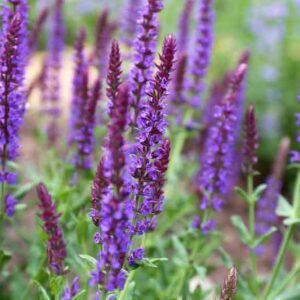
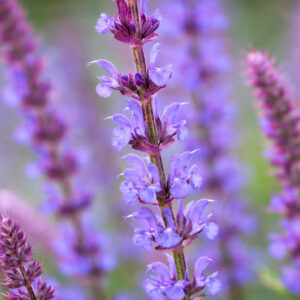
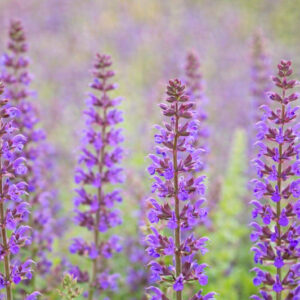
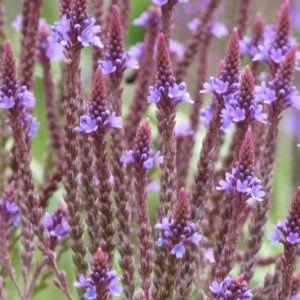
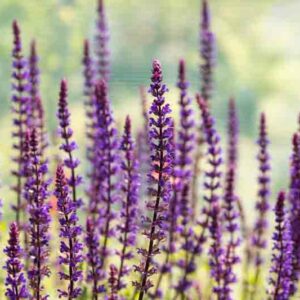
Salvia ‘Caradonna’ provides structure without stiffness.
Rising through the stipa, its deep violet flower spikes and dark stems introduce strong vertical lines that anchor the composition. The contrast between rigid spires and flowing grass creates rhythm, while nectar-rich blooms draw bees and butterflies, adding a lively, fluttering layer of motion.
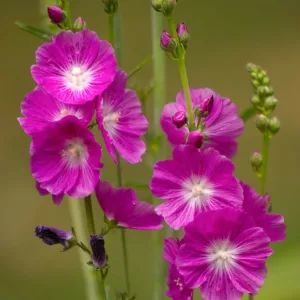
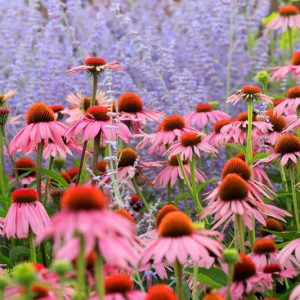
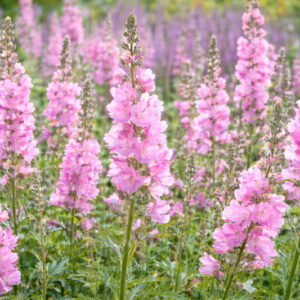
Sidalcea ‘Elsie Heugh’ brings the blush of summer.
It lifts tall wands of soft pink, hollyhock-like blossoms above slender foliage. The pastel tones balance the cool purples of the salvia, while the upright stems echo its verticality for a calm, cohesive look.
The result is a border that feels romantic and relaxed, filled with movement, color, and seasonal joy. It’s the kind of planting that invites you to slow down, breathe deep, and enjoy how the light and blooms shift from morning to evening.
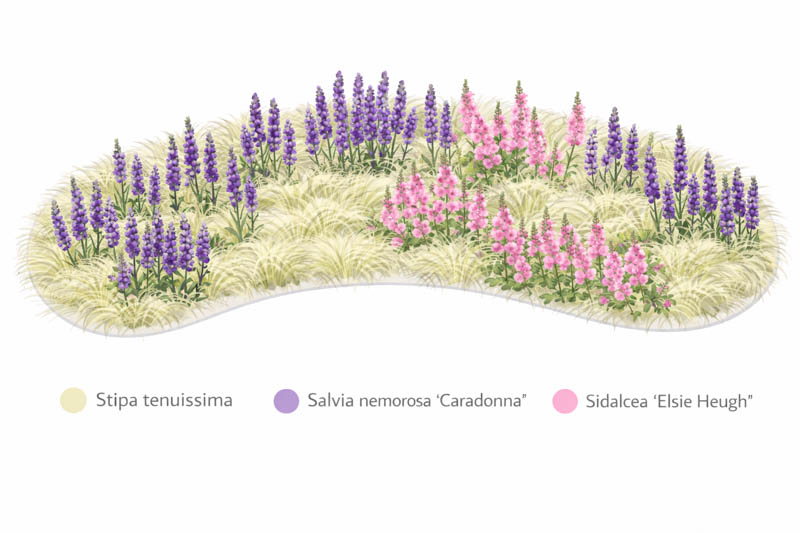
Create a flowing, naturalistic border that feels light and romantic, with constant movement from ornamental grasses, clear vertical rhythm from salvia, and soft pink highlights that glow through summer.
Think in layers, not individuals:
(Allow plants to gently touch at maturity)
The secret to a true meadow feel
Avoid planting salvias in a straight line. Weave them gently through the stipa so their violet spires rise and reappear from different angles, creating depth, rhythm, and visual movement.
Quick maintenance checklist
Do these few steps and the border stays airy, blooming, and beautifully “meadow-like.”
Cutback timing
In late winter to early spring, comb or shear stipa to remove old blades;
cut salvia back to fresh basal growth; tidy sidalcea stems as needed.
Watering (Weeks 1–4)
Then switch to deep, weather-based watering (less often, more thoroughly).
Deadheading / shearing
After the first flush, shear salvia to encourage rebloom and keep the planting tidy.
Staking
Usually unnecessary. In windy sites, tuck sidalcea into the stipa for natural support.
Division
Divide sidalcea (and salvia if needed) every few years when clumps crowd or bloom declines.
| Hardiness |
7 - 9 |
|---|---|
| Climate Zones | 2B, 3, 3A, 3B, 4, 5, 6, 7, 8, 9, 14, 15, 16, 17, 18, 19, 20, 21, 22, 23, 24 |
| Exposure | Full Sun |
| Season of Interest | Summer (Early, Mid) |
| Maintenance | Low |
| Water Needs | Average |
| Soil Type | Chalk, Loam, Sand |
| Soil pH | Acid, Neutral, Alkaline |
| Soil Drainage | Moist but Well-Drained |
| Characteristics | Cut Flowers, Showy |
| Attracts | Bees, Butterflies, Hummingbirds |
| Landscaping Ideas | Beds And Borders |
| Garden Styles | Informal and Cottage, Prairie and Meadow |
| Toxic to Humans | No known toxicity |
| Toxic to Cats | No known toxicity |
| Toxic to Dogs | No known toxicity |
| Toxic to Horses | No known toxicity |

| Hardiness |
7 - 9 |
|---|---|
| Climate Zones | 2B, 3, 3A, 3B, 4, 5, 6, 7, 8, 9, 14, 15, 16, 17, 18, 19, 20, 21, 22, 23, 24 |
| Exposure | Full Sun |
| Season of Interest | Summer (Early, Mid) |
| Maintenance | Low |
| Water Needs | Average |
| Soil Type | Chalk, Loam, Sand |
| Soil pH | Acid, Neutral, Alkaline |
| Soil Drainage | Moist but Well-Drained |
| Characteristics | Cut Flowers, Showy |
| Attracts | Bees, Butterflies, Hummingbirds |
| Landscaping Ideas | Beds And Borders |
| Garden Styles | Informal and Cottage, Prairie and Meadow |
| Toxic to Humans | No known toxicity |
| Toxic to Cats | No known toxicity |
| Toxic to Dogs | No known toxicity |
| Toxic to Horses | No known toxicity |
Recreate this garden. Specify the percentages you would like to have of each plant and input the dimensions of your garden space.We'll give you a shopping list so you know how many plants you need.
| Plant | Quantity | |
|---|---|---|
| Sidalcea 'Elsie Heugh' (Checker Bloom) | N/A | Buy Plants |
| Salvia nemorosa 'Caradonna' (Woodland Sage) | N/A | Buy Plants |
| Stipa tenuissima (Mexican Feather Grass) | N/A | Buy Plants |
Create a membership account to save your garden designs and to view them on any device.
Becoming a contributing member of Gardenia is easy and can be done in just a few minutes. If you provide us with your name, email address and the payment of a modest $25 annual membership fee, you will become a full member, enabling you to design and save up to 25 of your garden design ideas.
Join now and start creating your dream garden!
Create a membership account to save your garden designs and to view them on any device.
Becoming a contributing member of Gardenia is easy and can be done in just a few minutes. If you provide us with your name, email address and the payment of a modest $25 annual membership fee, you will become a full member, enabling you to design and save up to 25 of your garden design ideas.
Join now and start creating your dream garden!