Create a pollinator garden that actually feeds wildlife—not just looks pretty. This hub shows you the best native plants, proven design combos, state-by-state picks, and no-spray care so bees, butterflies, and hummingbirds thrive from spring through fall.
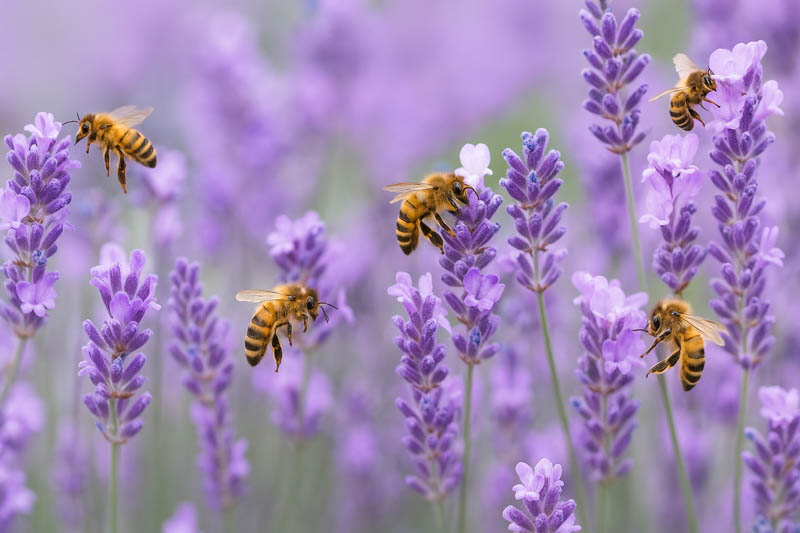


Create a pollinator garden that actually feeds wildlife—not just looks pretty. This hub shows you the best native plants, proven design combos, state-by-state picks, and no-spray care so bees, butterflies, and hummingbirds thrive from spring through fall.
Pollinators are animals that move pollen from one flower to another so plants can make seeds and fruit. In home gardens the most common pollinators are native bees (bumble bees, mason bees, leafcutter bees, sweat bees), honeybees, butterflies, moths, hoverflies and other beneficial flies, beetles, and hummingbirds. A successful pollinator garden provides four things where possible year-round: nectar and pollen, larval host plants, safe nesting and overwintering habitat, and clean shallow water.
Think of your pollinator garden like a layered community. The goal is simple: combine plants that attract bees, butterfly garden plants, and hummingbird magnets into a stable, easy care mix. Always filter by your climate and hardiness zone before you choose exact varieties.
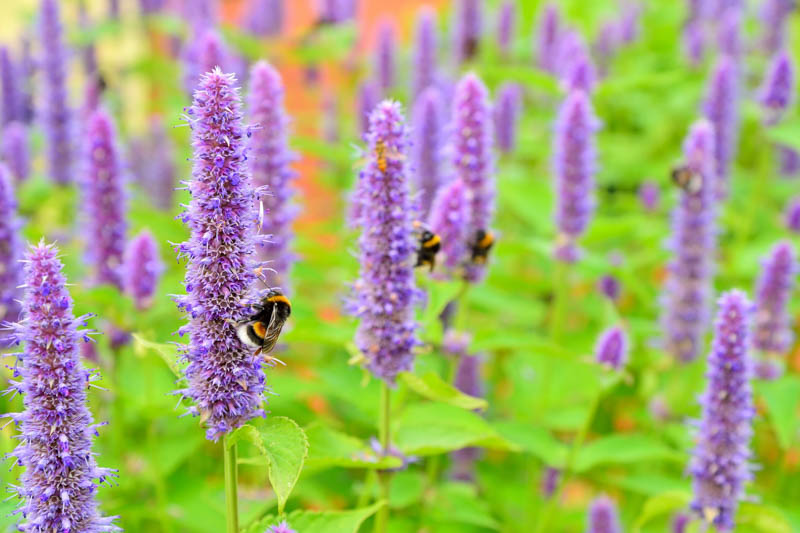
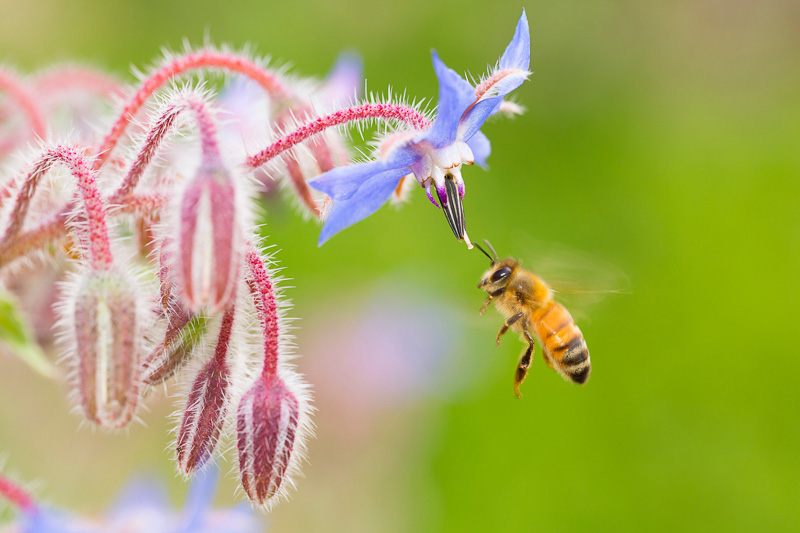
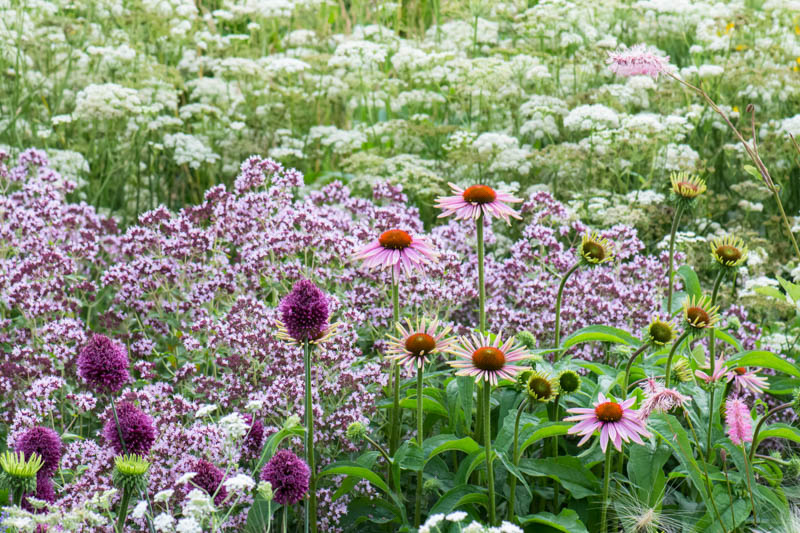
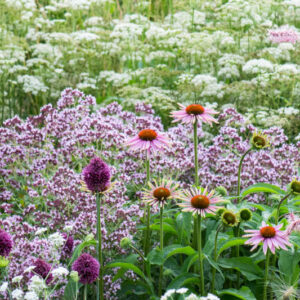
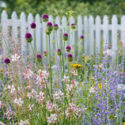
Think of this border as your effortlessly cool garden friend – laid-back, gorgeous, and always buzzing with life. Rich purple coneflowers (Echinacea purpurea) mingle with the quirky pops of drumstick alliums (Allium sphaerocephalon), while anise (Pimpinella anisum) and oregano (Origanum vulgare) weave in soft texture and scent. The overall feel is dreamy and naturalistic, not stiff or overplanned – just a long, rolling season of color and movement.
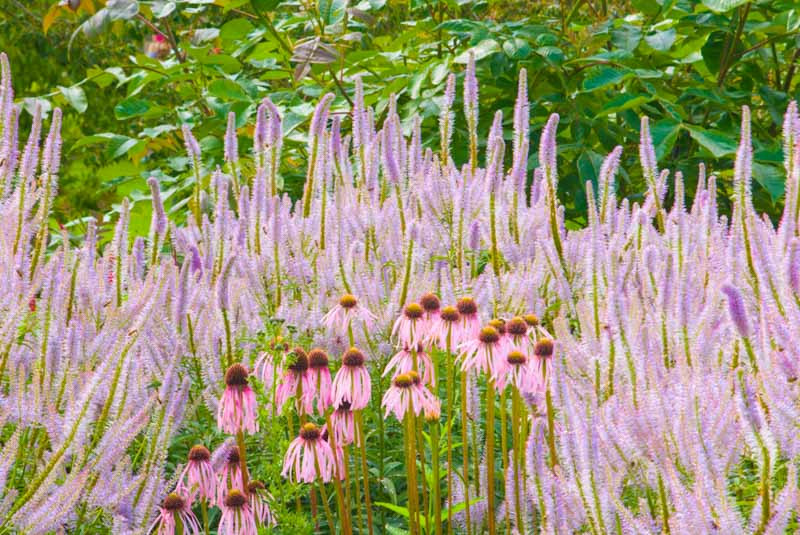
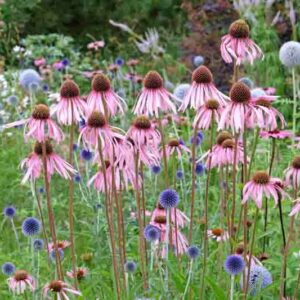
Think of this border as your elegantly effortless meadow – airy, graceful, and always alive with motion. Soft pink pale purple coneflowers (Echinacea pallida) float at the front while the tall spires of culver’s root (Veronicastrum virginicum) lift the eye and frame the scene. The look is light, naturalistic, and quietly dramatic – a long, rolling wave of color from mid to late summer.
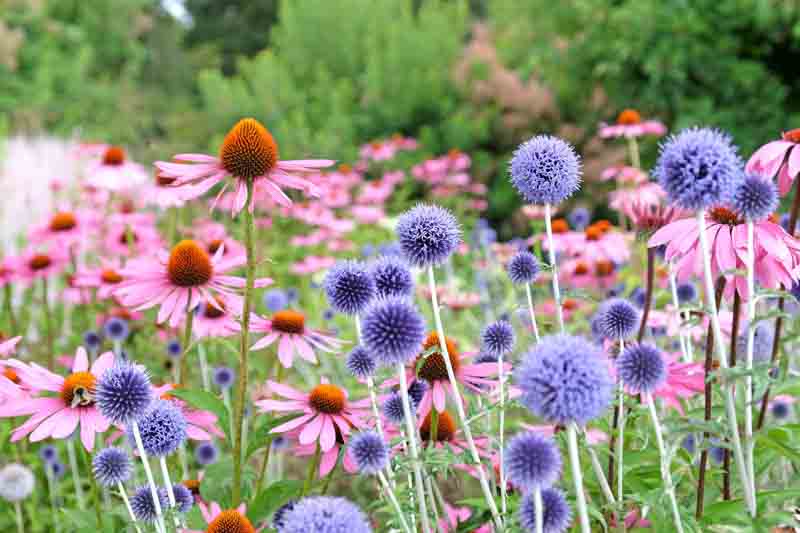
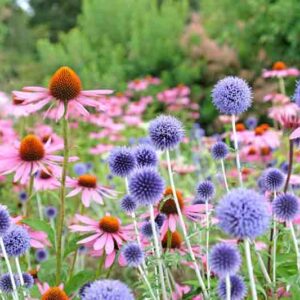
Think of this border as your sculptural color show – bold, sun-soaked, and effortless. Rich, daisy-like purple coneflowers (Echinacea purpurea) play against the cool spheres of globe thistle (Echinops ritro), creating a clean contrast of shapes and tones. It reads designed without feeling fussy – just strong summer drama that practically runs itself.
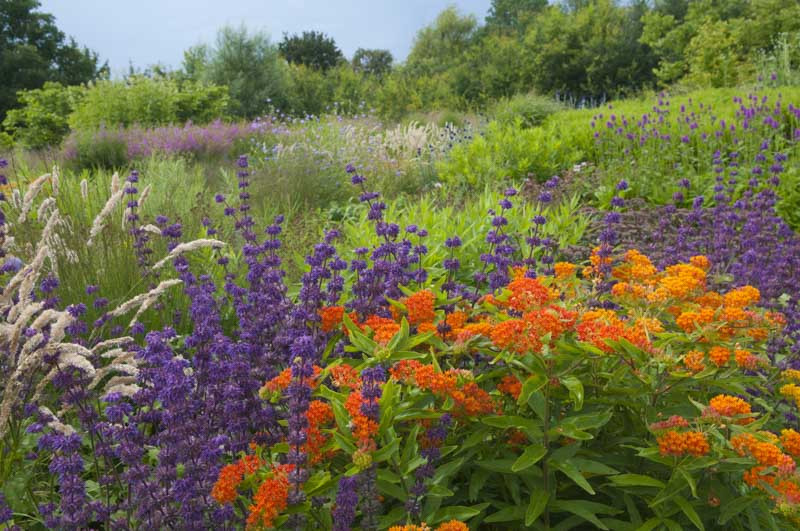
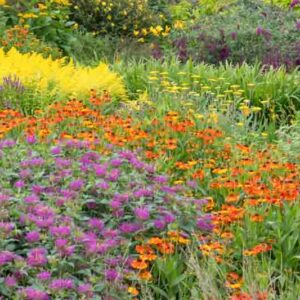
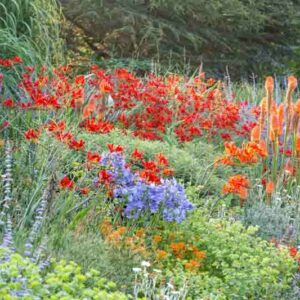
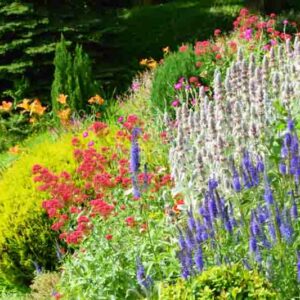
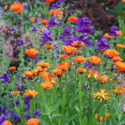
Think of this border as your vivid, low-fuss spotlight – saturated color with zero drama. Electric purple spikes of whorled sage (Salvia verticillata) hum with life while butterfly weed (Asclepias tuberosa) lights the scene with glowing orange. It is repeatable, resilient, and tailor-made for any sunny space.
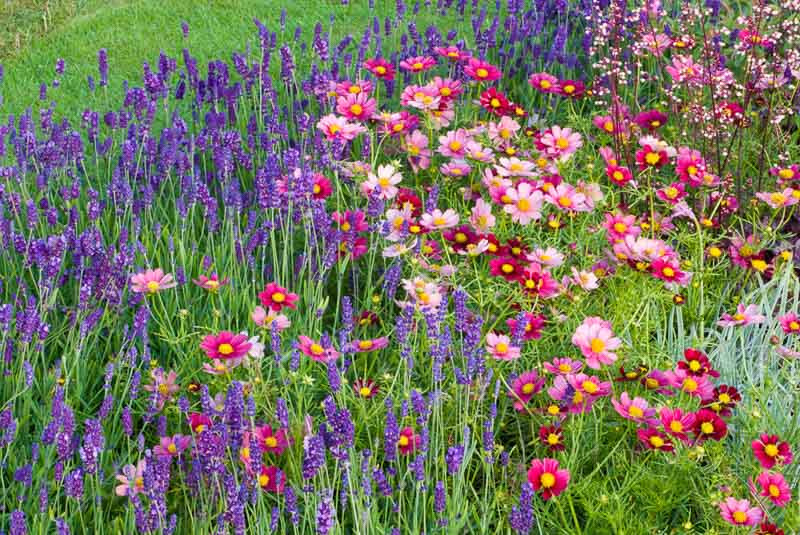
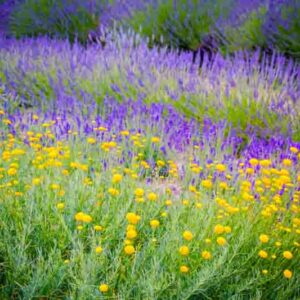
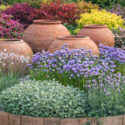
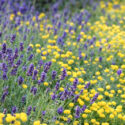
Think of this border as your breezy summer postcard – fragrant, floaty, and impossibly charming. Neat mounds of English lavender (Lavandula angustifolia) anchor the design while airy cosmos (Cosmos bipinnatus) dance overhead, creating a sun-washed look that feels both wild and refined.
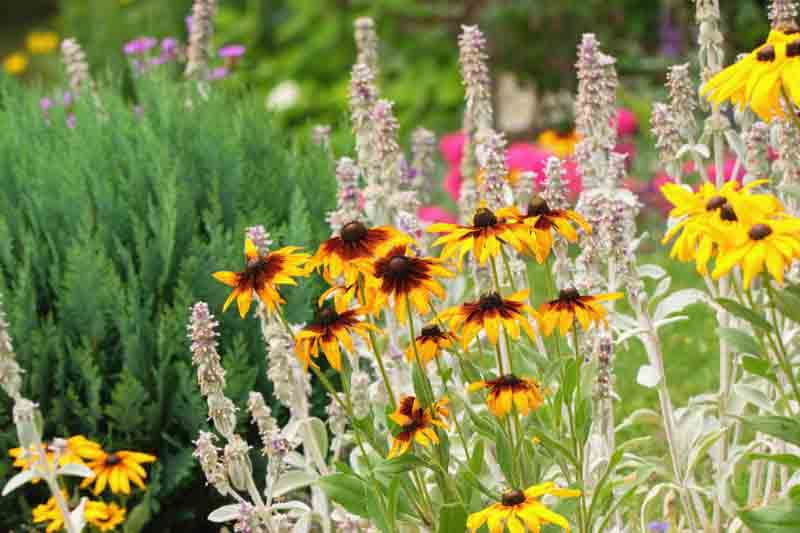
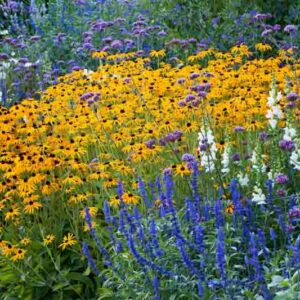
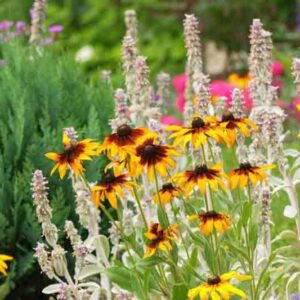
Think of this border as your high-contrast crowd-pleaser – plush silver against golden glow. Velvety lamb’s ear (Stachys byzantina) carpets the front while black-eyed susan (Rudbeckia hirta) fires up the backdrop. It looks designer-made but practically cares for itself.
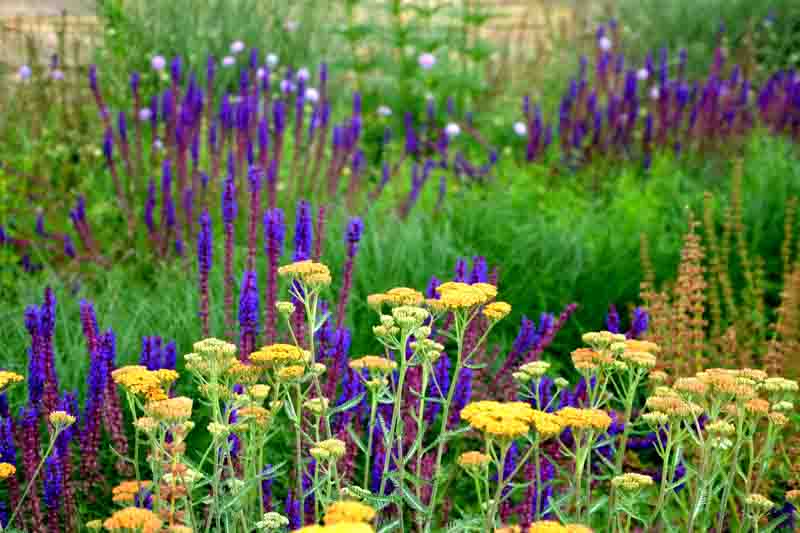
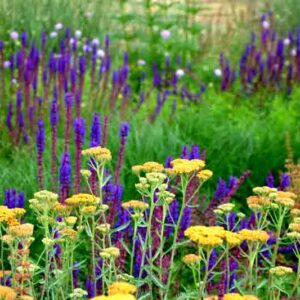
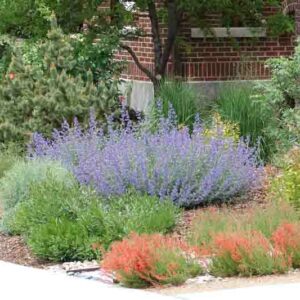
Think of this border as your modern meadow – crisp lines and saturated hues with almost no upkeep. Warm yarrow (Achillea millefolium) spread flat umbels over fine foliage while woodland sage (Salvia nemorosa) shoots inky purple spires for contrast and height.
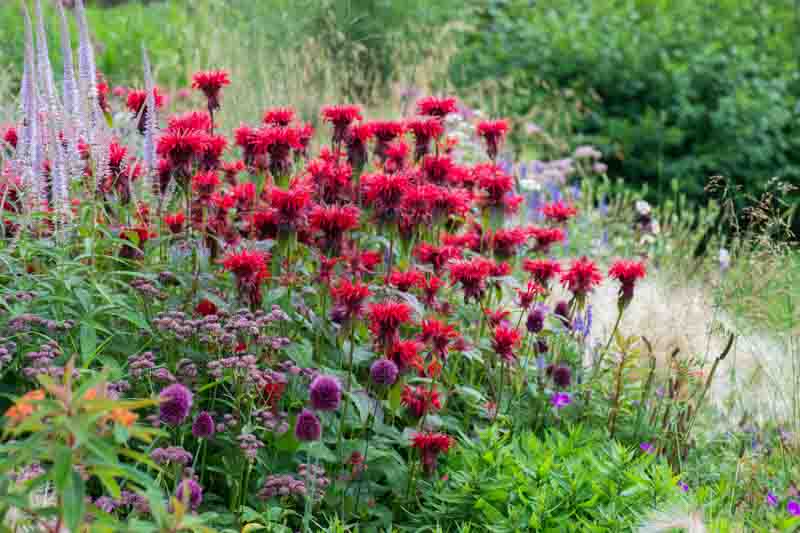
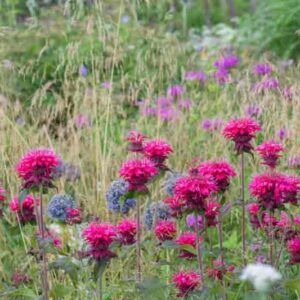
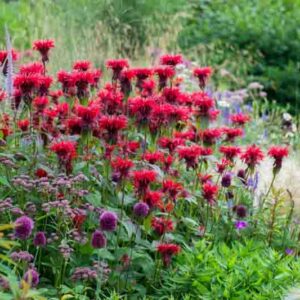
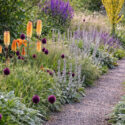
Think of this border as your layered festival – tall candles, airy dots, and swaying grass. Fiery bee balm (Monarda) and culver’s root (Veronicastrum) set the verticals while Alliums and Verbena float like confetti over tufted hair grass (Deschampsia cespitosa). Naturalistic yet intentional, it glows from late spring into fall.
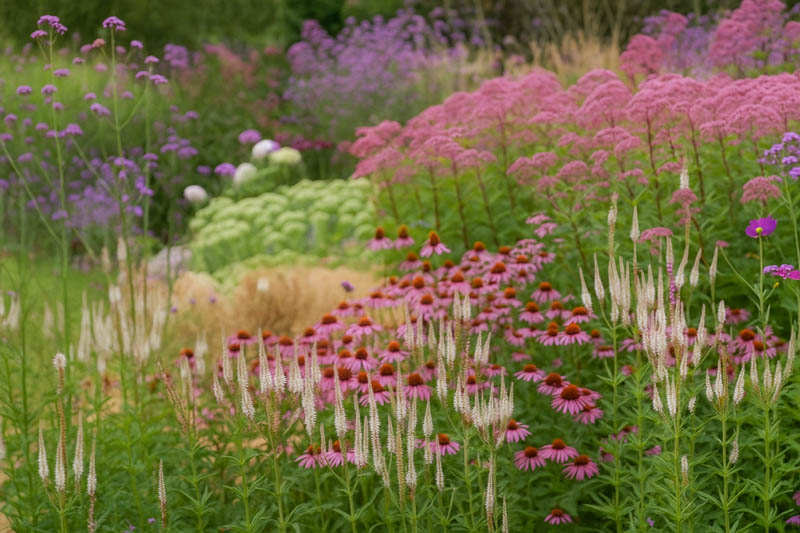
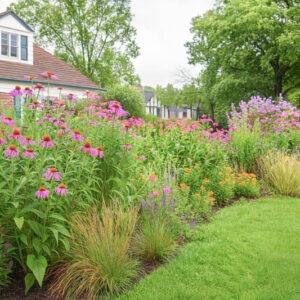
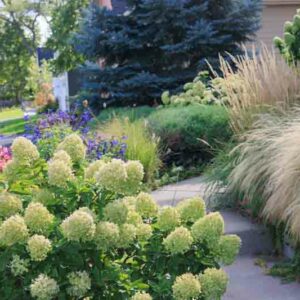
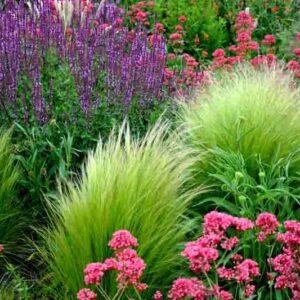
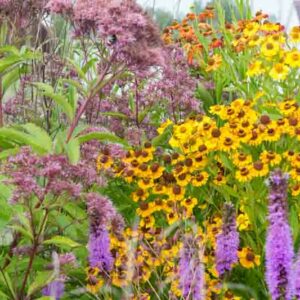
Think of this border as your relaxed meadow party – color drifting, grasses whispering, seedheads standing tall. Drifts of coneflower (Echinacea purpurea) set the rhythm while culver’s root (Veronicastrum) and spotted Joe-Pye weed (Eupatorium) add height. Sedum and cranesbill (Geranium) carry the show into fall, with verbena (Verbena bonariensis), Mexican feather grass (Stipa tenuissima), and smooth hydrangea (Hydrangea arborescens) bringing movement and softness.
Browse all our garden ideas or jump straight into planning:
Input your hardiness zone, light, water, bloom season and other filters to find the perfect garden idea for your yard.
Lavender, catmint, woodland sage, echinacea, yarrow, coreopsis, thyme, allium, borage, cosmos. For a full nectar roadmap, see how to cultivate a bee-friendly garden.
Butterfly bush*, tall verbena, echinacea, black-eyed Susan, hyssop, zinnia, cosmos, bee balm, aster, marigold. Build your plan with butterfly-garden tips and learn which host plants butterflies need.
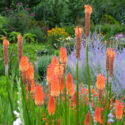
Salvia (scarlet sage/ blue anise sage), bee balm, penstemon, trumpet vine, flowering currant, hyssop, honeysuckle, coral bells, red hot poker, foxglove. For even more nectar options, explore the best flowers to attract hummingbirds.
🔎 Find more with our Plant Finder
Match plants to place using USDA hardiness zones, light (full sun, part shade, bright shade), and soil (well-drained, clay, sandy, loam). Favor drought tolerant and heat tolerant species where needed, and note deer resistant and rabbit resistant options.
Garden types: rain garden, meadow garden, prairie style border, container garden, balcony garden, patio garden, front yard border, foundation planting, and xeriscape designs for water-wise sites.
A pollinator garden is a habitat planting designed to supply nectar, pollen, larval host plants, water, and safe nesting/overwintering sites. It typically layers shrubs, perennials, annuals, and grasses to provide continuous bloom from spring through fall. The goal is to support bees, butterflies, hummingbirds, moths, and beneficial flies and beetles.
Pollinators enable fruit and seed production for many crops and wild plants, driving biodiversity and food webs. In home landscapes, they increase yields of berries, vegetables, and fruit trees while boosting overall garden health.
Strongly recommended. Regionally native plants support more specialist bees and butterfly larvae, and they usually need less water and fertilizer once established. Non-native ornamentals can complement the display, but natives should be the backbone.
Yes. Use large pots with quality mix, choose sun-loving nectar plants (e.g., salvia, bee balm, dwarf sunflower), and group containers to create a “micro-meadow.” Add a trailing plant (alyssum) and one structural grass or small shrub for height and habitat.
Select at least three species for each season—early, mid, late. Combine early shrubs (Ribes, Viburnum), summer perennials (Echinacea, Monarda, Salvia), and fall stars (Aster, Solidago, Sedum) so nectar never runs out.
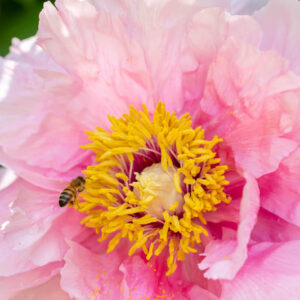
Catmint (Nepeta), lavender, salvia, bee balm, yarrow, coneflower, thyme, allium, borage, and coreopsis are reliable bee magnets. Plant in drifts of 3–7 and leave a few bare-soil patches for ground-nesting bees.
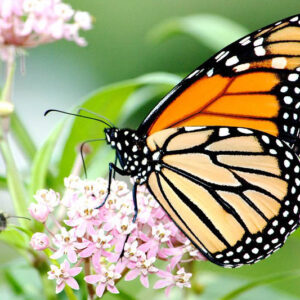
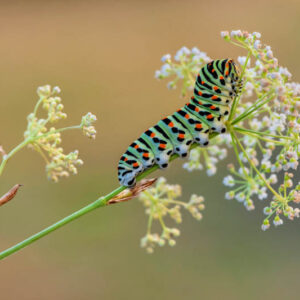
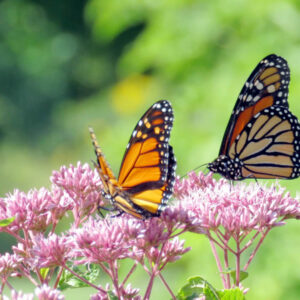
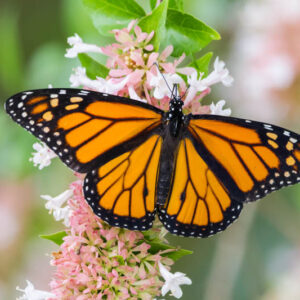
Pair nectar plants—Echinacea, Liatris, Verbena bonariensis, Aster, Zinnia, Solidago—with host plants: milkweed for monarchs, dill/fennel for swallowtails, violets for fritillaries. Provide sunny, wind-sheltered spots and flat stones for basking.
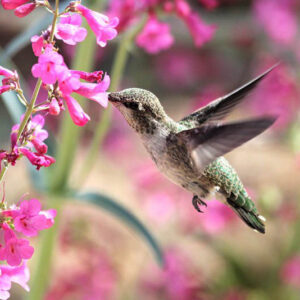
Salvias (scarlet sage, blue anise sage), penstemon, agastache, native columbine, honeysuckle, trumpet vine (where non-invasive), and red hot poker. Cluster tubular red/orange blooms and keep any feeders spotless—plants should do the heavy lifting.
Host plants are the specific plants caterpillars eat; without them, butterflies can’t complete their life cycle. Example: monarchs require Asclepias (milkweeds); adding hosts turns “pretty flowers” into a functioning habitat.
Often not. Double blooms can hide or reduce accessible nectar and pollen; choose single, open forms so insects can feed efficiently.
Yes. Keep gardens pesticide-free whenever possible; if treatment is unavoidable, use targeted, least-toxic options at dusk and avoid systemic insecticides (neonics) on flowering plants, as they can contaminate nectar and pollen.
You’ll see beneficial wasps that control pests—most are non-aggressive when undisturbed. Avoid placing high-traffic seating directly over heavy nectar patches if you’re concerned.
Use sterile or regionally non-invasive cultivars and pair with natives that provide larval host value. Always check your state invasive list before planting.
Deadhead to extend bloom, then leave some seedheads in late season for birds and winter structure. In spring, delay clean-up until consistent temperatures rise so overwintering insects can emerge.
Keep some leaf litter, retain 12–18 inch hollow stems, and maintain small bare-soil patches. Simple bee hotels can help if cleaned or replaced annually to prevent disease.
Often within weeks of first bloom. Activity ramps up as plant diversity grows and continuous flowering is established.
Use this hub as your starting map, then dive into curated combinations, native plant lists, and regional guides across Gardenia to build a pollinator garden that is beautiful, climate smart, and full of life.
Updated: November 2025 • Reviewed by Gardenia Editors
| Plant Type | Annuals, Ornamental Grasses, Perennials, Shrubs |
|---|---|
| Genus | Achillea, Agastache, Allium, Asclepias, Aster, Buddleia, Calendula, Ceanothus, Cosmos, Echinacea, Echinops, Eupatorium, Helianthus, Lavandula, Lobularia, Monarda, Nepeta, Penstemon, Ribes, Rudbeckia, Salvia, Sedum, Solidago, Spiraea, Viburnum, Weigela, Zinnia |
| Attracts | Bees, Butterflies, Hummingbirds |
| Toxic to Humans | No known toxicity |
| Toxic to Cats | No known toxicity |
| Toxic to Dogs | No known toxicity |
| Toxic to Horses | No known toxicity |
| Plant Type | Annuals, Ornamental Grasses, Perennials, Shrubs |
|---|---|
| Genus | Achillea, Agastache, Allium, Asclepias, Aster, Buddleia, Calendula, Ceanothus, Cosmos, Echinacea, Echinops, Eupatorium, Helianthus, Lavandula, Lobularia, Monarda, Nepeta, Penstemon, Ribes, Rudbeckia, Salvia, Sedum, Solidago, Spiraea, Viburnum, Weigela, Zinnia |
| Attracts | Bees, Butterflies, Hummingbirds |
| Toxic to Humans | No known toxicity |
| Toxic to Cats | No known toxicity |
| Toxic to Dogs | No known toxicity |
| Toxic to Horses | No known toxicity |
Create a membership account to save your garden designs and to view them on any device.
Becoming a contributing member of Gardenia is easy and can be done in just a few minutes. If you provide us with your name, email address and the payment of a modest $25 annual membership fee, you will become a full member, enabling you to design and save up to 25 of your garden design ideas.
Join now and start creating your dream garden!
Create a membership account to save your garden designs and to view them on any device.
Becoming a contributing member of Gardenia is easy and can be done in just a few minutes. If you provide us with your name, email address and the payment of a modest $25 annual membership fee, you will become a full member, enabling you to design and save up to 25 of your garden design ideas.
Join now and start creating your dream garden!