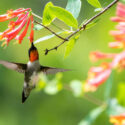
Ruby-throated Hummingbird, Anna's Hummingbird, Black-chinned Hummingbird, Rufous-tailed Hummingbird, Violet-crowned Hummingbird, Long-tailed Sylph, Sword-billed Hummingbird, Bee Hummingbird, Giant Hummingbird


A hummingbird is a small bird belonging to the family Trochilidae, known for its unique and remarkable characteristics. There are over 300 species of hummingbirds that are native to the Americas, with the highest species diversity found in South and Central America. These birds are known for their iridescent plumage, rapid wing-flapping, and extraordinary agility in flight.
The word “hummingbird” is derived from the humming sound created by the rapid movement of their wings as they fly. The fast wing beats cause the air to vibrate, producing a characteristic humming sound that can be easily associated with these birds. The wing beat frequency can range from 40 to 80 beats per second, depending on the species.
There are over 300 species of hummingbirds, each with its unique characteristics. Here is a list of some of the main and well-known hummingbird species:
 |
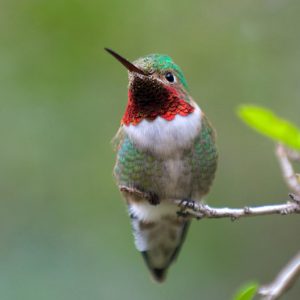
Ruby-throated Hummingbird (Archilochus colubris)
The only species of hummingbird that breeds in eastern North America, the Ruby-throated Hummingbird is known for its bright red throat patch on the males and its remarkable migratory ability. |
 |
Anna’s Hummingbird (Calypte anna)
A year-round resident of the western United States, Anna’s Hummingbird is easily recognized by the iridescent pink throat patch on the males and its territorial behavior. |
 |
Black-chinned Hummingbird (Archilochus alexandri)
This species breeds in the southwestern United States and northern Mexico. Males have a black throat with a purple iridescent band at the bottom. |
 |
Rufous-tailed Hummingbird (Amazilia tzacatl)
Found in Central America, from southern Mexico to western Panama, this species is known for its rufous-colored tail feathers and its aggressive behavior around feeding areas. |
 |
Violet-crowned Hummingbird (Amazilia violiceps)
With a range from the southwestern United States to central Mexico, this species has a distinct violet-colored crown and a white throat. |
 |
Long-tailed Sylph (Aglaiocercus kingii)
Native to the Andean cloud forests of Colombia, this species is characterized by its striking elongated tail feathers and iridescent green plumage. |
 |
Sword-billed Hummingbird (Ensifera ensifera)
Found in the high Andes from Venezuela to Bolivia, this unique species is known for its long, straight bill that is longer than its body, and adapted to feed on long-tubed flowers. |
 |
Bee Hummingbird (Mellisuga helenae)
Native to Cuba and the Isla de la Juventud, the Bee Hummingbird is the smallest bird in the world, measuring just 2.2 inches long. |
 |
Giant Hummingbird (Patagona gigas)
As the largest hummingbird species, the Giant Hummingbird is found in the Andes, ranging from Colombia to Tierra del Fuego in South America. |
Hummingbirds are renowned for their unique flight abilities, speed, and agility, which set them apart from other bird species. Some of the key aspects of their flight capabilities include:
Hummingbirds have a unique diet and an incredibly high metabolism, which is essential for supporting their energy-intensive lifestyle and flight abilities. Here are some key aspects of hummingbird food and metabolism:
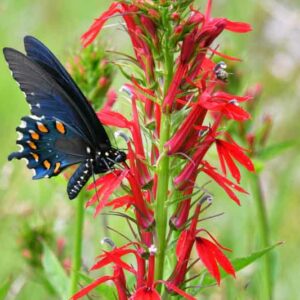
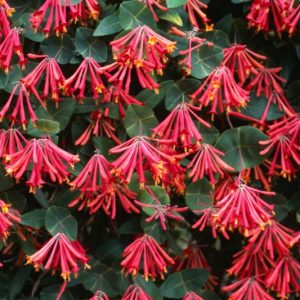
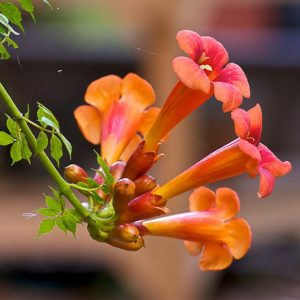
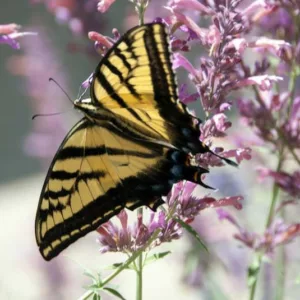
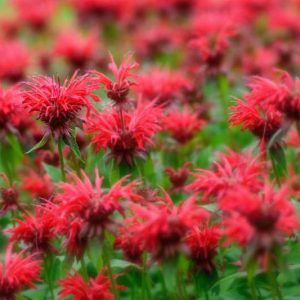
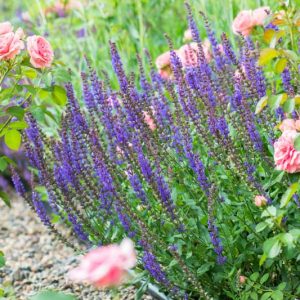
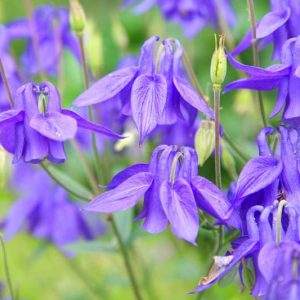
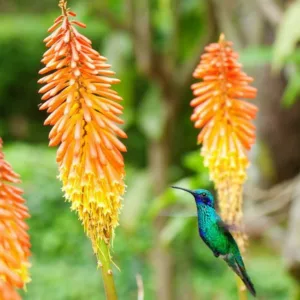
| Genus | Agastache, Aquilegia, Campsis, Fuchsia, Kniphofia, Monarda, Salvia |
|---|---|
| Attracts | Hummingbirds |
Hummingbird reproduction involves several stages, from courtship and mating to nest-building, egg-laying, and chick-rearing. Here is an overview of the reproduction process in hummingbirds:
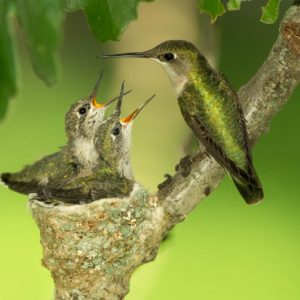
The female is solely responsible for building the nest. A hummingbird nest is a small, cup-shaped structure built by the female hummingbird to lay eggs and raise her young. The nests are typically constructed in the branches of trees or shrubs, sometimes even on wires or other man-made structures. Nests are usually built at varying heights, depending on the species and local habitat. Some may be close to the ground, while others can be found as high as 90 feet above ground level.

The materials used for building the nest can vary by species but often include soft plant materials such as moss, lichen, and plant fibers. Some hummingbirds may also use spider silk, which helps bind the nest together and provide flexibility. The exterior of the nest is often camouflaged with small pieces of bark, leaves, or other debris to blend in with the surroundings and provide protection from predators.
The interior of the nest is lined with soft materials like downy plant fibers or feathers to provide insulation and comfort for the eggs and nestlings. The size of the nest is usually quite small, often just large enough to hold the one or two eggs that the female lays.
While hummingbird nests can be difficult to find due to their small size and camouflaged appearance, they are a marvel of engineering and an essential part of the hummingbird’s life cycle.
Not all hummingbird species migrate, but those that do undertake impressive journeys, given their small size. Here is an overview of hummingbird migration:
Conservation efforts, such as preserving habitats and providing food resources along migratory routes, are essential to supporting these incredible birds during their journeys.
Hummingbirds, despite their small size and incredible agility, face various predators and threats in their natural habitats. Some of the common predators and threats to hummingbirds include:
The life expectancy of hummingbirds can vary greatly depending on the species, environmental factors, and predation. On average, hummingbirds have a relatively short lifespan compared to other birds.
Many hummingbird chicks do not survive to adulthood due to factors such as predation, harsh weather conditions, and lack of food. It is estimated that about 70% to 80% of young hummingbirds may not make it past their first year. For those that do survive their first year, the average life expectancy is around 3 to 5 years. However, some hummingbirds have been known to live longer, with the record being a banded Ruby-throated Hummingbird that reached the age of 9 years.
Some species are considered endangered or vulnerable due to habitat loss, climate change, or other factors. The International Union for Conservation of Nature (IUCN) maintains the Red List, which classifies species based on their risk of extinction. To get the most accurate and up-to-date information on the conservation status of specific hummingbird species, you should refer to the IUCN Red List website.
Gareth Bogdanoff, Shutterstock
| Genus | Agastache, Aquilegia, Campsis, Fuchsia, Kniphofia, Monarda, Salvia |
|---|---|
| Attracts | Hummingbirds |
Create a membership account to save your garden designs and to view them on any device.
Becoming a contributing member of Gardenia is easy and can be done in just a few minutes. If you provide us with your name, email address and the payment of a modest $25 annual membership fee, you will become a full member, enabling you to design and save up to 25 of your garden design ideas.
Join now and start creating your dream garden!