Baby Sage 'Red Velvet', Mountain Sage 'Red Velvet', Salvia x jamensis 'Red Velvet', Salvia microphylla x greggii 'Red Velvet' Baby Sage, Mountain Sage, Littleleaf Sage, Cherry Sage, Salvia microphylla × greggii ‘Red Velvet’, Salvia × jamensis ‘Red Velvet’
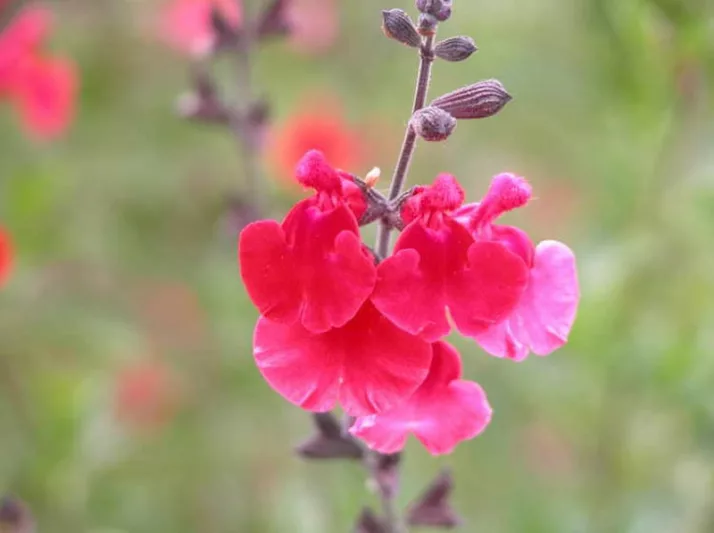


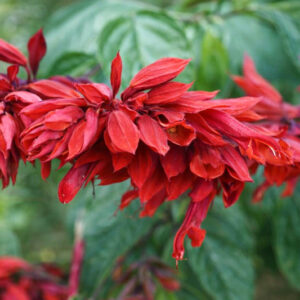
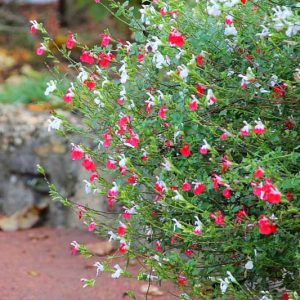
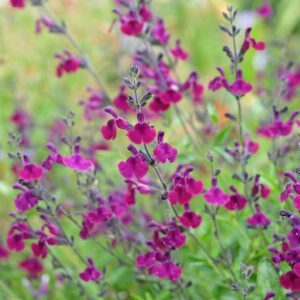
Salvia microphylla ‘Red Velvet’ is the kind of plant that makes people stop mid-walk and say, “What is that?” The flowers are an intense, brilliant red with a plush, velvety look, and they pop even harder against the plant’s dark chocolate stems and calyxes. Add in glossy green foliage and a bloom season that can run from early summer to frost, and you have a salvia that behaves like a season-long color engine.
This is a tender perennial salvia (often treated as a warm-climate perennial and a cool-climate cut-back shrub/perennial), and it’s famously generous with flowers when you give it what it likes: sun, well-drained soil, and sensible watering while it settles in. Once established, it’s often considered drought tolerant, and it’s a magnet for butterflies, hummingbirds, and a whole cast of beneficial insects.
Salvia belongs to the Lamiaceae family – the same aromatic, pollinator-friendly group that includes rosemary, basil, and lavender. If you like plants that smell good, bloom long, and make your garden feel alive, salvias are a smart place to invest your sunny space. What is Salvia? Understanding its role in gardening and beyond
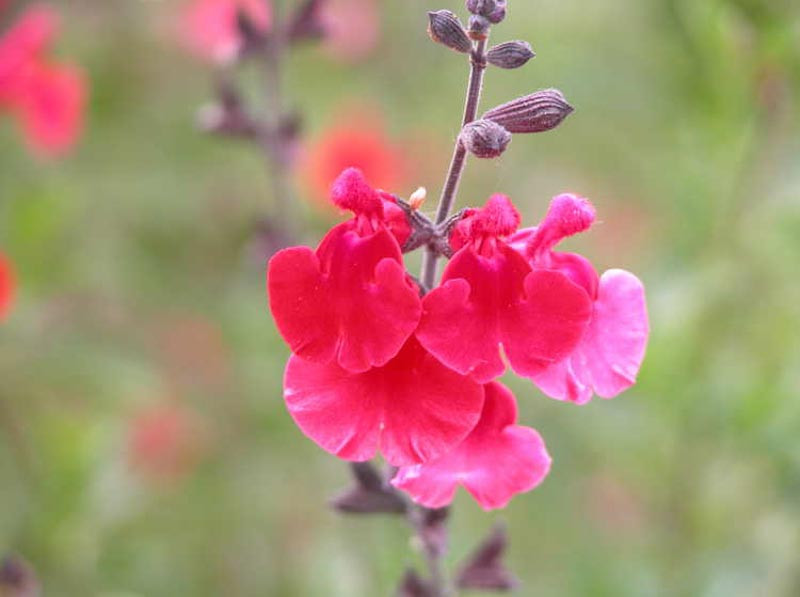
Summary: Tender perennial Baby Sage cultivar with exceptionally large, velvety red flowers and striking dark stems, blooming from early summer to frost in favorable conditions.
Use: Ideal for beds, borders, cottage gardens, coastal gardens, and containers.
Highlight: Reliable, long-season nectar source for butterflies, hummingbirds, and beneficial insects.
Note: Best in sun with well-drained soil; once established it is often considered drought tolerant.
| Botanical Name | Salvia microphylla ‘Red Velvet’ |
|---|---|
| Family | Mint family (Lamiaceae) |
| Common Names | Baby Sage, Littleleaf Sage (cultivar: ‘Red Velvet’) |
| Native Range | Species native to Mexico and the southwestern United States; ‘Red Velvet’ is a garden hybrid selection |
| Plant Type and Habit | Tender perennial with a shrubby, bushy, well-branched habit |
| Hardiness (approx. USDA) | Often grown in USDA Zones 7-10 (protect in colder zones; may die back and regrow) |
| Height | 2-4 ft. (60-120 cm) |
| Spread | 2-4 ft. (60-120 cm) |
| Spacing | 24-36 in. (60-90 cm) for airflow and a full shape |
| Sun and Exposure | Full sun for maximum bloom; tolerates partial shade (especially afternoon shade in hot climates) |
| Soil | Moist but well-drained soil; adaptable if drainage is good |
| Seasonal Interest | Early summer through fall (often until first frost) |
| Flower Color | Intense, velvety crimson red |
| Foliage Color | Glossy, rounded rich green leaves |
| Fragrance | Aromatic foliage when brushed or crushed (typical of many salvias) |
| Drought Tolerant | Yes (once established) |
| Heat Tolerant | Yes (with drainage and sensible watering while establishing) |
| Humidity Tolerant | Often tolerant |
| Salt Tolerant | Slightly salt tolerant |
| Nectar – Pollen | Yes – nectar-rich tubular flowers |
| Attracts | Butterflies, hummingbirds, beneficial insects |
| Deer | Often considered deer and rabbit resistant |
| Toxicity | Generally considered non-toxic in ornamental use (use normal garden caution) |
| Invasive Status | Not considered invasive in typical garden use |
‘Red Velvet’ is a standout Baby Sage cultivar prized for its exceptionally large red flowers and refined, garden-ready habit. The blooms are tubular (classic salvia form) and appear in generous waves on upright stems. The extra drama comes from the contrast: velvety red petals against dark chocolate stems and calyxes. It’s bold, but not loud – more like velvet theater curtains in plant form.
The Salvia microphylla species is native to the mountains of Mexico and parts of the southwestern United States, where it grows on sunny slopes and in well-drained conditions. ‘Red Velvet’ is a cultivated hybrid selection, but it still “thinks like” a plant from those habitats: give it drainage and light, and it settles in quickly.
Expect a well-branched, vigorous shrub-like perennial, typically 2-4 feet tall and 2-4 feet wide (60-120 cm). It naturally forms a rounded, mounded shape that looks polished in borders. It also responds well to gentle pruning, which means you can keep it compact for smaller spaces or let it relax into a slightly larger, cottage-garden look.
This is where ‘Red Velvet’ earns its keep. The plant can bloom from early summer to frost, especially if you deadhead lightly and keep it from getting stressed during peak heat. The flowers are noticeably large for a Baby Sage type and appear in repeated flushes, so the plant rarely feels “done” for the season.
If you want the absolute longest bloom window, think like a practical gardener: water consistently while it establishes, then give occasional deep watering during extended dry spells. More steady moisture during peak bloom usually equals more flowers, without turning the plant into a floppy mess (as long as drainage is good).
The foliage is a handsome supporting actor: rounded, glossy, rich green leaves that look fresh through the growing season. The leaves are also aromatic when brushed, which adds to that “herb garden meets pollinator border” experience. Even when the plant pauses between bloom flushes, the tidy green mound still looks intentional.
Like many shrubby salvias, ‘Red Velvet’ is often grown across a range of climates, typically in USDA Zones 7-10. In colder zones it may die back and regrow from the base, especially with a protected site and good winter practices. In mild climates it behaves more like an evergreen or semi-evergreen shrub that appreciates seasonal tidying.
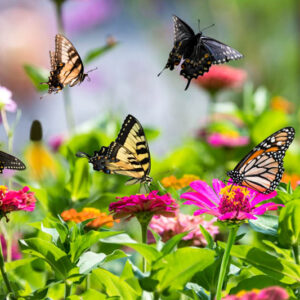
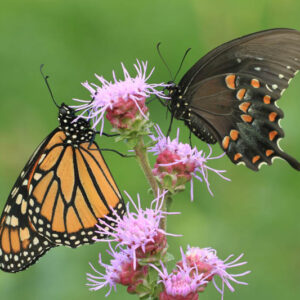
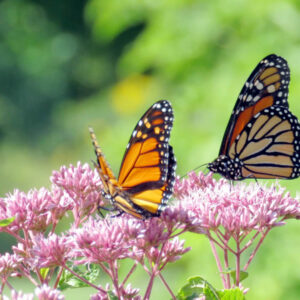
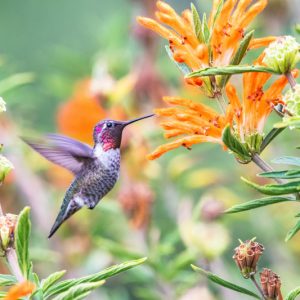
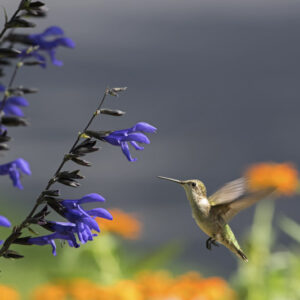
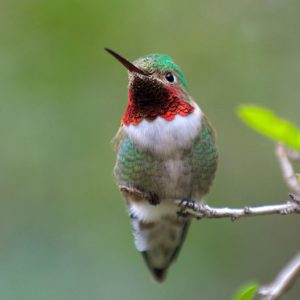
‘Red Velvet’ is built for visitors. Those tubular flowers are a natural fit for hummingbirds, and the color is a strong visual cue in sunny gardens. You’ll also see steady action from butterflies and a range of beneficial insects that help support a healthier garden ecosystem. Wildlife-Friendly Plants: Attract Bees, Butterflies & Birds
Like many salvias, the aromatic foliage makes this plant less appealing to browsing animals. It is often described as rabbit and deer-resistant, which is garden-speak for “usually not the first choice.”
Once established, ‘Red Velvet’ is often considered drought tolerant. The key phrase is “once established.” During the first season, regular watering helps build a deep root system. After that, it can handle dry periods, but it will bloom best when it gets occasional deep watering during long hot stretches. Discover 20 Top Salvia Varieties for a Thriving Xeriscape.
In ornamental garden use, salvias like Salvia microphylla are generally considered low concern. If pets or children sample plants, it’s still wise to discourage nibbling and contact a professional if you observe symptoms.
Salvia microphylla is not considered invasive in typical garden use. ‘Red Velvet’ is grown as a cultivated selection and is not generally associated with aggressive spread. If it produces occasional seedlings in ideal climates, they are usually easy to spot and manage.
To keep ‘Red Velvet’ flowering, think “steady support,” not “heavy feeding.” A little compost in spring or a balanced fertilizer during active growth is plenty. Too much nitrogen can push leafy growth and reduce bloom.
For small outbreaks, start simple: a strong spray of water, insecticidal soap, or neem oil.
‘Red Velvet’ is more than “a red salvia.” It’s a color anchor and a pollinator hub, and it can read as either bold or elegant depending on what you pair it with. The most successful design trick is repetition: use it in small groups, then echo that red again nearby so the planting feels intentional.
Yes. Salvia microphylla ‘Red Velvet’ is a tender perennial with a shrubby habit. It is commonly grown as a perennial in warm climates and may die back and regrow in colder areas when planted in a protected spot with good drainage.
In good conditions, ‘Red Velvet’ can bloom from early summer to frost. Light deadheading and occasional trimming after a big flush can help extend flowering and keep the plant looking fresh.
Yes. Its tubular red flowers are nectar-rich and consistently attract hummingbirds, butterflies, and other beneficial insects throughout the blooming season.
It blooms best in full sun (about 6-8 hours daily). It also tolerates partial shade, especially afternoon shade in very hot climates, though flowering may be slightly reduced.
Once established, it is often considered drought tolerant. It performs best when watered regularly during the first growing season, then watered deeply during prolonged dry spells for the strongest flowering.
It is often considered deer and rabbit resistant due to its aromatic foliage. While no plant is completely deer-proof, salvias are usually not a preferred choice when other plants are available.
Well-drained soil is the priority. ‘Red Velvet’ tolerates many soil types as long as drainage is good. Avoid consistently wet or heavy, poorly drained sites to reduce the risk of root rot.
Deadhead spent blooms to encourage rebloom. For shape and vigor, trim lightly after big bloom flushes. In late winter or early spring, prune back by about one-third to refresh growth and maintain a compact form.
Salvia microphylla ‘Red Velvet’ is a long-blooming, sun-friendly salvia with velvety red flowers and dramatic dark stems, delivering pollinator value and reliable color from early summer to frost in well-drained soil.
Updated: January 2026 – Reviewed by Gardenia Editors
| Hardiness |
7 - 10 |
|---|---|
| Heat Zones |
10 - 12 |
| Climate Zones | 8, 9, 10, 11, 12, 13, 14, 15, 16, 17, 18, 19, 20, 21, 22, 23, 24 |
| Plant Type | Perennials, Shrubs |
| Plant Family | Lamiaceae |
| Genus | Salvia |
| Common names | Sage |
| Exposure | Full Sun, Partial Sun |
| Season of Interest | Summer (Early, Mid, Late), Fall |
| Height | 2' - 4' (60cm - 120cm) |
| Spread | 2' - 4' (60cm - 120cm) |
| Spacing | 36" - 48" (90cm - 120cm) |
| Maintenance | Low |
| Water Needs | Average |
| Soil Type | Chalk, Clay, Loam, Sand |
| Soil pH | Acid, Alkaline, Neutral |
| Soil Drainage | Moist but Well-Drained |
| Characteristics | Cut Flowers, Fragrant, Showy |
| Tolerances | Drought, Deer, Rabbit, Heat, Humidity |
| Attracts | Bees, Birds, Butterflies, Hummingbirds |
| Garden Uses | Beds And Borders |
| Garden Styles | City and Courtyard, Coastal Garden, Informal and Cottage |
| Toxic to Humans | No known toxicity |
| Toxic to Cats | No known toxicity |
| Toxic to Dogs | No known toxicity |
| Toxic to Horses | No known toxicity |


| Hardiness |
7 - 10 |
|---|---|
| Heat Zones |
10 - 12 |
| Climate Zones | 8, 9, 10, 11, 12, 13, 14, 15, 16, 17, 18, 19, 20, 21, 22, 23, 24 |
| Plant Type | Perennials, Shrubs |
| Plant Family | Lamiaceae |
| Genus | Salvia |
| Common names | Sage |
| Exposure | Full Sun, Partial Sun |
| Season of Interest | Summer (Early, Mid, Late), Fall |
| Height | 2' - 4' (60cm - 120cm) |
| Spread | 2' - 4' (60cm - 120cm) |
| Spacing | 36" - 48" (90cm - 120cm) |
| Maintenance | Low |
| Water Needs | Average |
| Soil Type | Chalk, Clay, Loam, Sand |
| Soil pH | Acid, Alkaline, Neutral |
| Soil Drainage | Moist but Well-Drained |
| Characteristics | Cut Flowers, Fragrant, Showy |
| Tolerances | Drought, Deer, Rabbit, Heat, Humidity |
| Attracts | Bees, Birds, Butterflies, Hummingbirds |
| Garden Uses | Beds And Borders |
| Garden Styles | City and Courtyard, Coastal Garden, Informal and Cottage |
| Toxic to Humans | No known toxicity |
| Toxic to Cats | No known toxicity |
| Toxic to Dogs | No known toxicity |
| Toxic to Horses | No known toxicity |
How many Salvia microphylla ‘Red Velvet’ (Baby Sage) do I need for my garden?
| Plant | Quantity | |
|---|---|---|
| Salvia microphylla ‘Red Velvet’ (Baby Sage) | N/A | Buy Plants |
Create a membership account to save your garden designs and to view them on any device.
Becoming a contributing member of Gardenia is easy and can be done in just a few minutes. If you provide us with your name, email address and the payment of a modest $25 annual membership fee, you will become a full member, enabling you to design and save up to 25 of your garden design ideas.
Join now and start creating your dream garden!
Create a membership account to save your garden designs and to view them on any device.
Becoming a contributing member of Gardenia is easy and can be done in just a few minutes. If you provide us with your name, email address and the payment of a modest $25 annual membership fee, you will become a full member, enabling you to design and save up to 25 of your garden design ideas.
Join now and start creating your dream garden!