Black Sage, California Black Sage, Honey Sage


Salvia mellifera, better known as Black Sage (and sometimes called California Black Sage or Honey Sage), is one of those classic California natives that feels like it was designed for real-life conditions: heat, drought, wind, rocky soil, and long rainless summers. If you have a sunny space that begs for a low-water, pollinator-friendly, aromatic shrub, this plant is a standout.
It is also a keystone character in California’s wild plant communities, thriving in chaparral and coastal sage scrub while feeding wildlife and holding soil on slopes. Gardeners love the soft, pale lavender-to-white flower spikes in spring, the earthy fragrance after rain, and the fact that once it is established, it can be almost hands-off.
Salvia belongs to the Lamiaceae family, which includes other aromatic plants like rosemary, basil, and lavender. For a bigger-picture look at this diverse group, see What is Salvia? Understanding its role in gardening and beyond. You can also explore the genus here: Salvia.
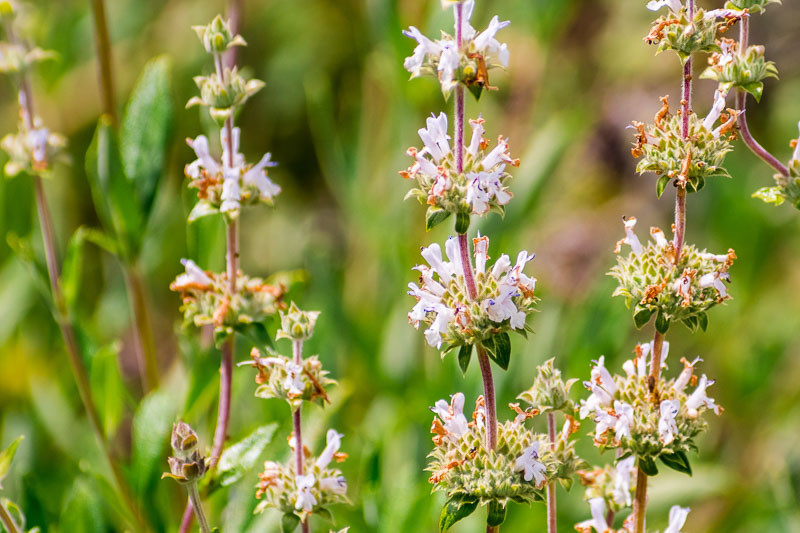
Summary: Aromatic, woody evergreen shrub (often summer-deciduous) with airy branching, small wrinkled leaves, and spikes of lavender to white tubular flowers in spring and early summer.
Use: Ideal for California native gardens, xeriscape, chaparral-style planting, sunny slopes, erosion control, and pollinator habitat.
Highlight: A top-tier nectar plant for bees and a celebrated honey plant along the Pacific Coast.
Note: Performs best in full sun and well-drained soil with little to no summer irrigation once established.
| Botanical Name | Salvia mellifera |
|---|---|
| Family | Mint family (Lamiaceae) |
| Common Names | Black Sage, California Black Sage, Honey Sage |
| Native Range | Coastal California and northern Baja California, Mexico |
| Native Habitat | Chaparral and coastal sage scrub on dry, rocky slopes and canyon sides, often up to about 3,000 ft (900 m) |
| Plant Type and Habit | Woody evergreen shrub with an open, spreading habit; often summer-deciduous in dry conditions |
| Hardiness (approx. USDA) | Hardy in USDA Zones 8-11 |
| Height | 3-6 ft (90-180 cm) |
| Spread | 3-10 ft (90-300 cm), depending on site and moisture |
| Spacing | 5-8 ft (150-240 cm) for natural form and airflow |
| Sun and Exposure | Best in full sun; tolerates light shade but flowers more in sun |
| Soil | Prefers well-drained sandy or rocky soils; dislikes heavy, waterlogged clay |
| Water Needs | Water to establish; then keep very low-water (often none in summer once established in coastal climates) |
| Seasonal Interest | Blooms mid-spring to mid-summer, peaking in spring |
| Flower Color | Lavender to pale blue or white tubular flowers in clustered whorls |
| Foliage Color | Dark green to gray-green, often textured and wrinkled |
| Fragrance | Highly aromatic foliage with a strong, earthy scent (especially after rain) |
| Drought Tolerant | Yes – highly drought tolerant once established |
| Deer Resistant | Yes – typically deer resistant due to aromatic foliage |
| Good for Pollination | Yes – attracts bees, butterflies, and hummingbirds |
| Toxicity | Generally considered non-toxic to humans and animals |
| Invasive Status | Not considered invasive in typical garden use |
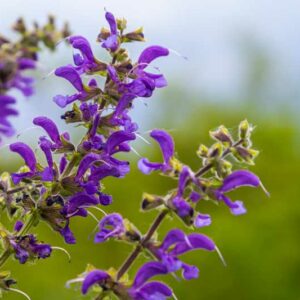
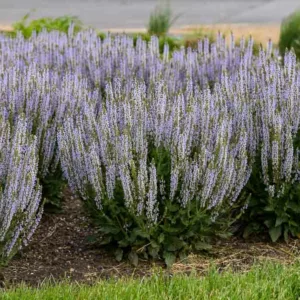
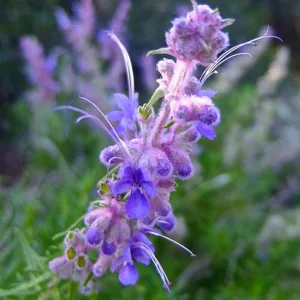
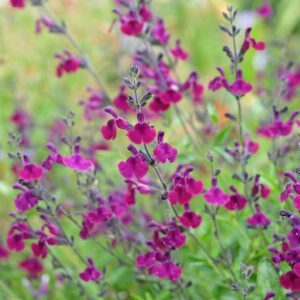
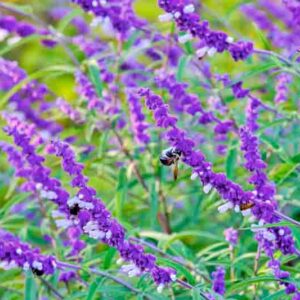
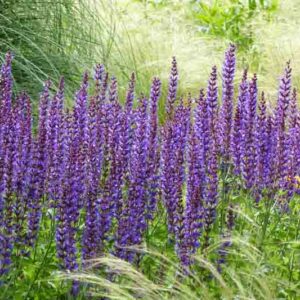
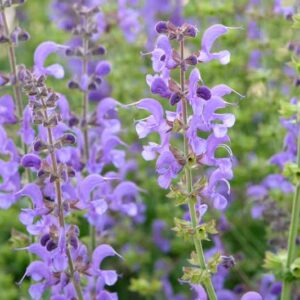
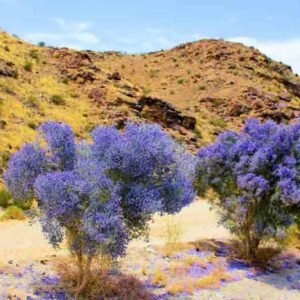
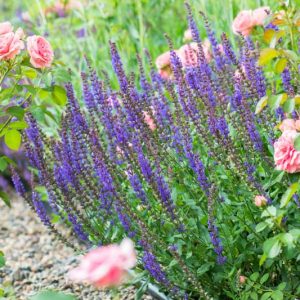
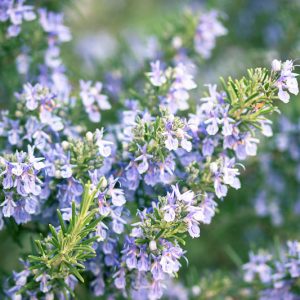
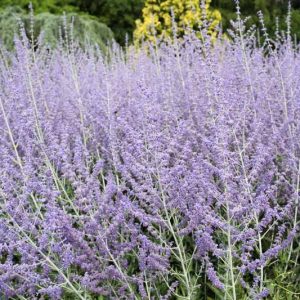
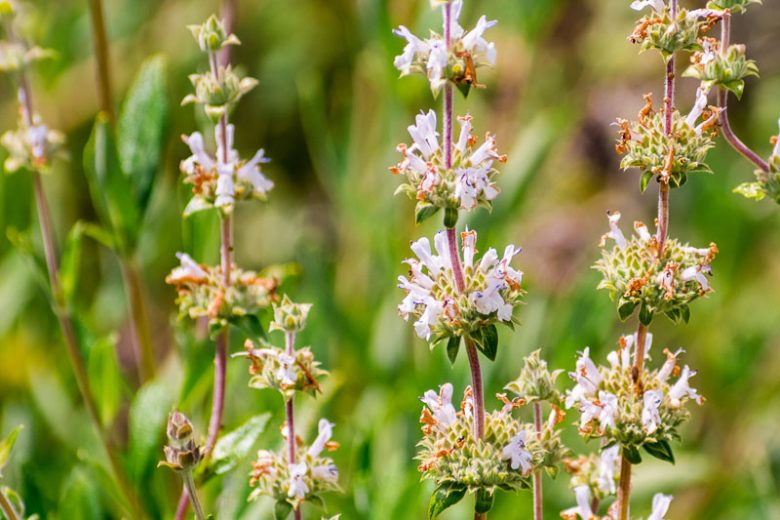
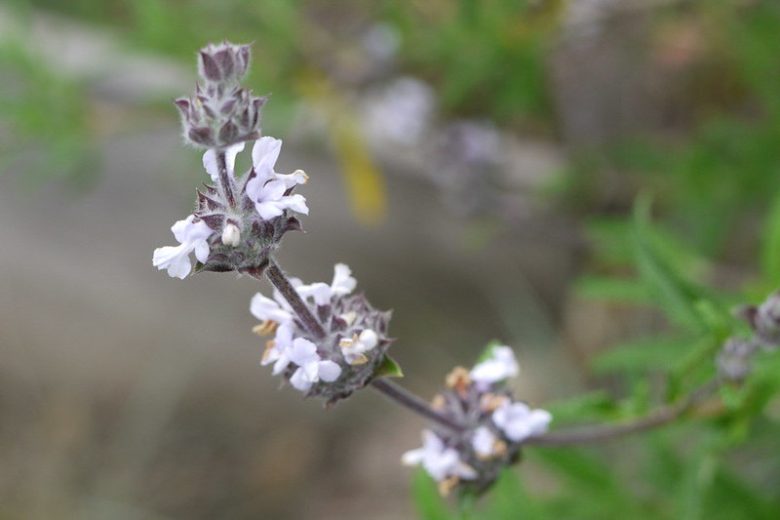
Black Sage is an openly branched, spreading woody shrub with square stems and small, highly aromatic leaves. The foliage is typically dark green to gray-green, sometimes textured, and famously fragrant when brushed or crushed. In bloom season, tall spikes rise above the foliage carrying whorls of tubular flowers in soft shades of lavender, pale blue, or white.
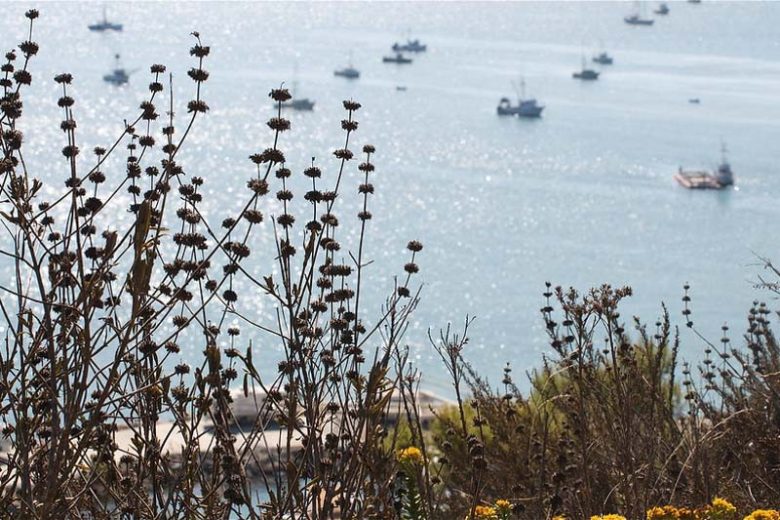
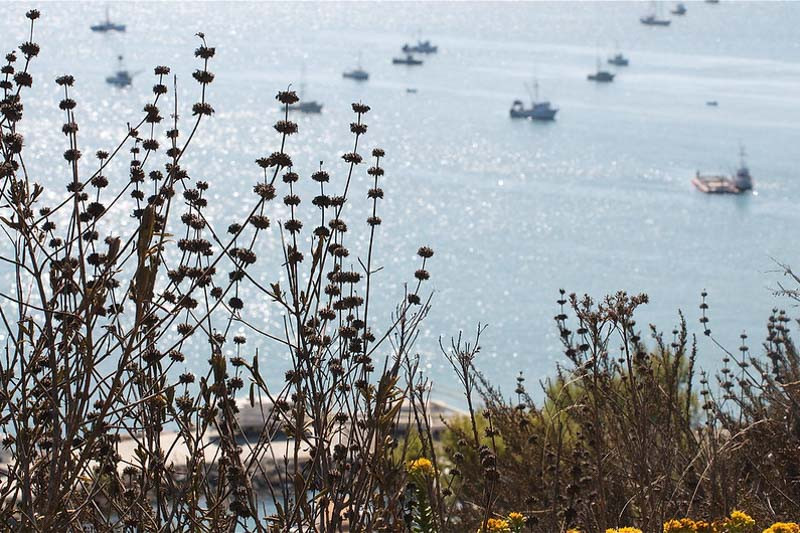
Salvia mellifera is native to coastal California and northern Baja California, extending north to around the San Francisco Bay Area. In the wild, it thrives in chaparral, coastal sage scrub, and dry, rocky slopes where soil drains fast and summers are long and dry. That natural background explains why it excels in low-water landscapes and restoration projects.
This is a woody evergreen perennial shrub with a moderate growth rate and a naturally mounded, spreading form. In very dry conditions it can be summer-deciduous, shedding leaves during the hottest months to conserve water. In milder sites or with occasional irrigation, it may hold foliage longer. Mature plants can be long-lived – often 20 to 30 years in good conditions – which is part of its value as a sustainable landscape shrub.
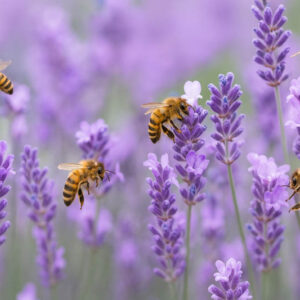
Black Sage typically blooms from mid-spring to mid-summer, with peak flowering in spring. Flowers are small, tubular, and arranged in tight whorls along tall spikes. They are nectar-rich and highly attractive to pollinators. Black Sage is widely recognized as one of the Pacific Coast’s best honey plants, and the seeds are an important food source for quail and other birds.
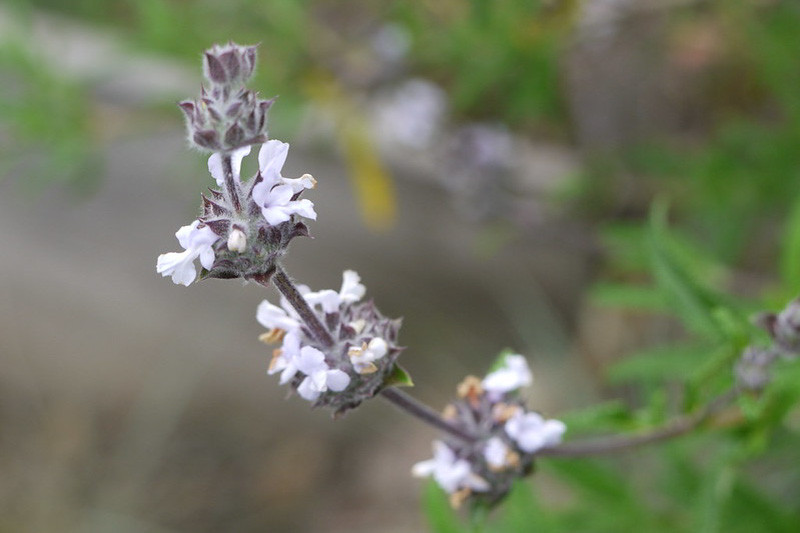
The leaves are small (about 1 to 3 inches long, 2 to 7 cm), wrinkled, and elliptical, with darker tops and paler undersides. The fragrance is strong and earthy – many gardeners notice it most after rain, when the oils lift into the air. In a sensory garden, that scent is a feature, not a footnote.
Salvia mellifera is hardy in USDA Zones 8-11. It thrives in hot, dry climates and tolerates mild frost. In colder zones within that range, the plant may show winter dieback, but it often rebounds with new growth in spring.
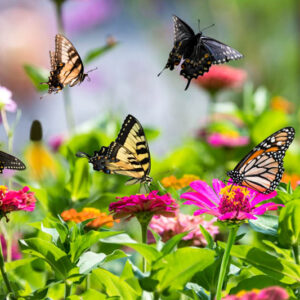
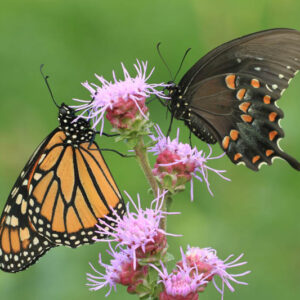
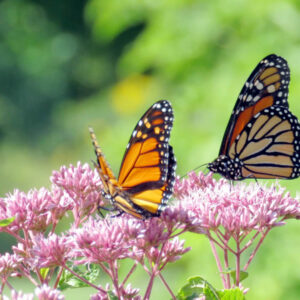
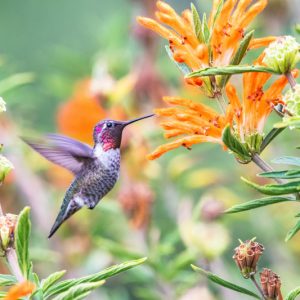
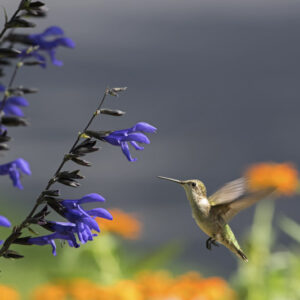
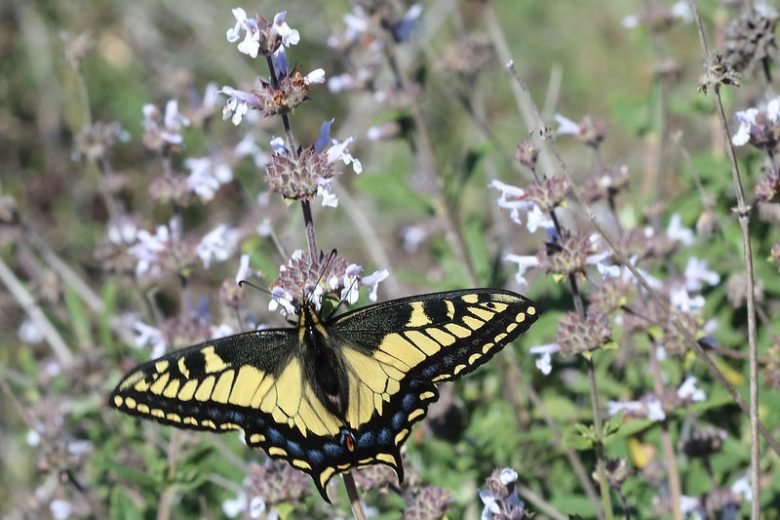
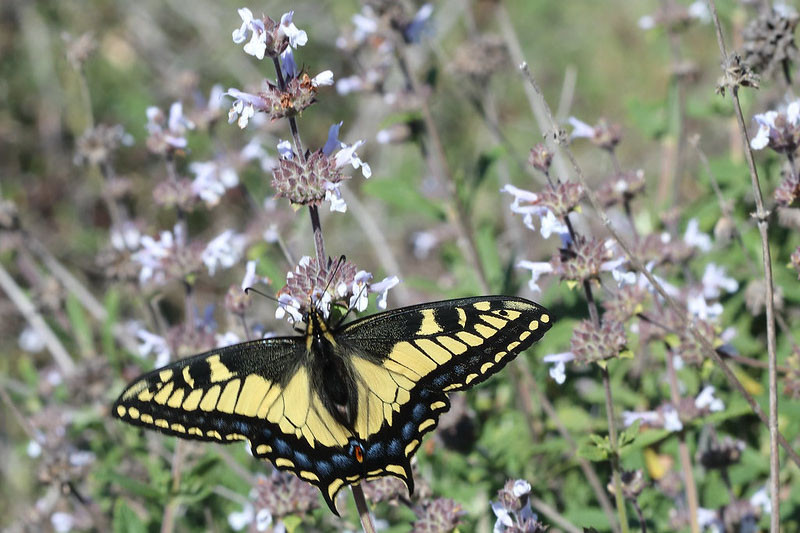
Black Sage is a magnet for pollinators, particularly native bees and hummingbirds. The flowers are nectar-rich, and the plant’s structure offers shelter for insects and small wildlife. In restoration settings, it is valued for both habitat support and slope stability.
The aromatic foliage of Black Sage often deters browsing animals, which is why it is frequently described as deer and rabbit resistant. For more on browsing pressure, see deer and rabbits. As always, resistant is not the same as immune – hungry wildlife will sample almost anything – but Black Sage is generally not a first-choice snack.
Black Sage is highly drought-tolerant. Once established, it often needs little to no supplemental watering, making it a smart choice for xeriscaping and water-wise landscapes. If you are building a drought-smart plant palette, you may also enjoy Discover 20 Top Salvia Varieties for a Thriving Xeriscape.
Black Sage is generally considered non-toxic to humans and animals, making it a safe option for gardens with kids and pets. That said, it is still an ornamental shrub – it is best treated as a “look and smell, not snack” plant.
Salvia mellifera is not considered invasive. It grows within a natural shrub footprint and is typically easy to site and manage in gardens, especially when planted with enough space for its mature width.
Black Sage typically thrives in nutrient-poor soils without added fertilizer. If growth looks weak in extremely depleted soil, use a small amount of compost or a gentle slow-release organic fertilizer in early spring. Keep it light – too much feeding can push soft growth that is less drought-tough.
Transplanting is easiest in cool weather (fall through early spring). Water the plant the day before, lift with as much root ball as possible, and replant promptly into well-drained soil. Keep it lightly moist (not soggy) for a few weeks while it re-establishes, then taper watering down.
Black Sage can be propagated by seed or cuttings. Collect seeds after flowers dry, sow outdoors in fall or start in spring. For cuttings, take 4 to 6 inch pieces from healthy stems in spring or summer and root in a free-draining mix. Division is sometimes possible with mature clumps, but seed and cuttings are the most common approaches.
Good news: Black Sage is generally pest-resistant. Occasionally, you may see aphids or whiteflies, especially on stressed plants or tender new growth. If needed, use insecticidal soap or neem oil.
Serious disease issues are uncommon, but overwatering and poor drainage can invite trouble. The classic problem is root rot in soils that stay wet, especially in cool seasons.
For the best “designed” look, pair Black Sage with plants that share its love of full sun, well-drained soil, and low water. Aim for contrast (silver + green), long bloom succession, and a few repeating drifts.
Salvia mellifera (Black Sage) is a fragrant, drought-tolerant California native shrub that blooms from mid-spring to mid-summer with nectar-rich lavender to white flowers, supports bees and hummingbirds, helps stabilize slopes, and thrives in full sun with well-drained soil and minimal care.
Salvia mellifera, commonly called black sage, is a perennial native shrub from coastal and inland Southern California and northern Baja California, valued for its fragrance, drought tolerance, and importance to pollinators.
Yes. Salvia mellifera is native to California and naturally occurs in chaparral and coastal sage scrub habitats.
Black sage has a strong, earthy, herbal scent that becomes more intense after rain or when the leaves are crushed.
Black sage typically grows 3 to 6 feet tall and wide, depending on water, soil, and pruning.
Yes. Once established, Salvia mellifera is highly drought tolerant and thrives with little to no supplemental watering.
Yes. Black sage is famous for producing highly prized black sage honey, especially in Southern California.
Salvia mellifera typically blooms from late winter through spring, with flower color ranging from pale lavender to white.
Traditionally, black sage has been used by Indigenous peoples for ceremonial, medicinal, and cleansing purposes.
Yes. Salvia mellifera is well suited for native gardens, water-wise landscapes, and habitat restoration projects.
California native plant cultivation notes – habitat range, summer-deciduous habit, and slope performance for Salvia mellifera
Water-wise garden guidance – establishment watering, drainage priorities, pruning timing, and low-irrigation approach for native sages
Pollinator and habitat gardening references – nectar value, bee attraction, and wildlife support in coastal sage scrub planting
Updated: January 2026 – Reviewed by Gardenia Editors
| Hardiness |
8 - 11 |
|---|---|
| Climate Zones | 7, 8, 9, 14, 15, 16, 17, 18, 19, 20, 21, 22, 23, 24 |
| Plant Type | Shrubs |
| Plant Family | Lamiaceae |
| Genus | Salvia |
| Common names | Sage |
| Exposure | Full Sun |
| Season of Interest | Spring (Mid, Late), Summer (Early, Mid) |
| Height | 3' - 6' (90cm - 180cm) |
| Spread | 3' - 10' (90cm - 3m) |
| Maintenance | Low |
| Water Needs | Low |
| Soil Type | Loam, Sand |
| Soil pH | Acid, Alkaline, Neutral |
| Soil Drainage | Well-Drained |
| Characteristics | Fragrant, Showy, Semi-Evergreen |
| Native Plants | California, United States |
| Tolerances | Drought, Deer, Erosion |
| Attracts | Bees, Birds, Butterflies, Hummingbirds |
| Garden Uses | Banks And Slopes, Beds And Borders, Ground Covers, Hedges And Screens |
| Garden Styles | Gravel and Rock Garden, Informal and Cottage, Mediterranean Garden |
| Toxic to Humans | No known toxicity |
| Toxic to Cats | No known toxicity |
| Toxic to Dogs | No known toxicity |
| Toxic to Horses | No known toxicity |


| Hardiness |
8 - 11 |
|---|---|
| Climate Zones | 7, 8, 9, 14, 15, 16, 17, 18, 19, 20, 21, 22, 23, 24 |
| Plant Type | Shrubs |
| Plant Family | Lamiaceae |
| Genus | Salvia |
| Common names | Sage |
| Exposure | Full Sun |
| Season of Interest | Spring (Mid, Late), Summer (Early, Mid) |
| Height | 3' - 6' (90cm - 180cm) |
| Spread | 3' - 10' (90cm - 3m) |
| Maintenance | Low |
| Water Needs | Low |
| Soil Type | Loam, Sand |
| Soil pH | Acid, Alkaline, Neutral |
| Soil Drainage | Well-Drained |
| Characteristics | Fragrant, Showy, Semi-Evergreen |
| Native Plants | California, United States |
| Tolerances | Drought, Deer, Erosion |
| Attracts | Bees, Birds, Butterflies, Hummingbirds |
| Garden Uses | Banks And Slopes, Beds And Borders, Ground Covers, Hedges And Screens |
| Garden Styles | Gravel and Rock Garden, Informal and Cottage, Mediterranean Garden |
| Toxic to Humans | No known toxicity |
| Toxic to Cats | No known toxicity |
| Toxic to Dogs | No known toxicity |
| Toxic to Horses | No known toxicity |
How many Salvia mellifera (Black Sage) do I need for my garden?
| Plant | Quantity | |
|---|---|---|
| Salvia mellifera (Black Sage) | N/A | Buy Plants |
Create a membership account to save your garden designs and to view them on any device.
Becoming a contributing member of Gardenia is easy and can be done in just a few minutes. If you provide us with your name, email address and the payment of a modest $25 annual membership fee, you will become a full member, enabling you to design and save up to 25 of your garden design ideas.
Join now and start creating your dream garden!
Create a membership account to save your garden designs and to view them on any device.
Becoming a contributing member of Gardenia is easy and can be done in just a few minutes. If you provide us with your name, email address and the payment of a modest $25 annual membership fee, you will become a full member, enabling you to design and save up to 25 of your garden design ideas.
Join now and start creating your dream garden!