San Luis Purple Sage, Purple Sage, Gray Sage, Purple Sagebrush
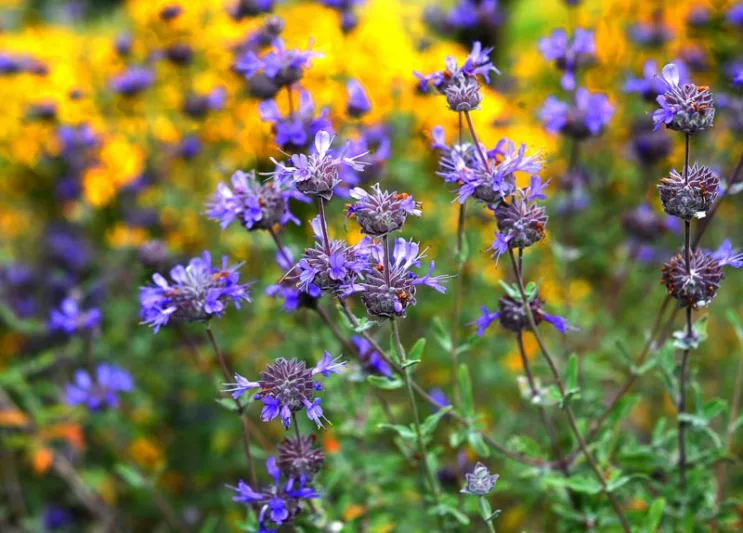


Want a shrub that looks good all year, shrugs off drought, and fills your garden with bees, butterflies, and hummingbirds? Meet Salvia leucophylla, widely known as Purple Sage, San Luis Purple Sage, or Gray Sage. This evergreen California native sage pairs silvery gray foliage with stacked purple flower whorls that glow in spring and early summer.
Part of the mint family Lamiaceae alongside rosemary, thyme, and lavender, this drought-tolerant Salvia is tailor-made for xeriscapes, coastal gardens, Mediterranean landscapes, and native wildlife gardens. Once established, Salvia leucophylla care is simple: give it sun, sharp drainage, and very little water, and it will reward you with color, fragrance, and pollinator activity year after year. What is Salvia? Understanding its role in gardening and beyond
Summary: Evergreen, sprawling to mounding California native shrub with soft, silvery gray foliage and stacked purple flower whorls in spring and early summer.
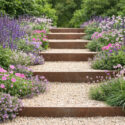
Use: Xeriscapes, coastal gardens, Mediterranean-style borders, native habitat plantings, erosion control on slopes, pollinator gardens, and wildlife-friendly hedges.
Highlight: Exceptionally drought-tolerant, deer- and rabbit-resistant, pollinator-magnet shrub that thrives in poor, rocky soils and brings long-lasting texture and color.
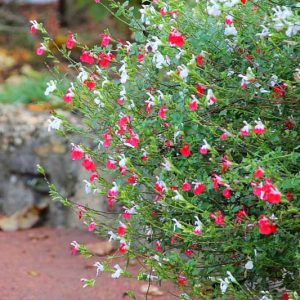
Note: “Purple Sage” also refers to other Salvias, including Salvia dorrii (Desert Sage), Salvia officinalis ‘Purpurascens’ (Purple-leaf Sage), and Salvia pachyphylla (Rose Sage), all beautiful, drought-tolerant garden choices.
| Botanical Name | Salvia leucophylla Greene |
|---|---|
| Family | Lamiaceae (mint family) |
| Common Names | Purple Sage, San Luis Purple Sage, Gray Sage |
| Native Range | Native to coastal California and northern Baja California, especially chaparral, coastal scrub, and rocky slopes from Santa Barbara County southward. |
| Plant Type and Habit | Evergreen shrub with a low, spreading, often mounding habit; arching branches with upturned tips that can spill over rocks and walls or cascade down slopes. |
| Hardiness (USDA) | Generally hardy in about USDA Zones 8-11; thrives in Mediterranean climates with hot, dry summers and mild, relatively frost-free winters. |
| Size | Typically about 3-5 ft tall and 6-8 ft wide, forming broad, informal mounds in low-maintenance landscapes. |
| Sun and Exposure | Full sun for best flowering, dense growth, and strongest silver color; tolerates light partial shade but blooms less. |
| Soil | Prefers well-drained, sandy, gravelly, or rocky soils. Tolerates poor, low-fertility ground; avoid heavy clay and waterlogged sites to prevent root rot. |
| Seasonal Interest | Mid-spring to early summer purple flower spikes held in tightly stacked whorls, plus silvery gray foliage that looks good year-round. |
| Primary Uses | Xeriscaping, coastal gardens, Mediterranean landscapes, erosion control, native plant borders, pollinator gardens, wildlife hedgerows, and informal slopes. |
Salvia leucophylla is an evergreen shrub with a naturally sprawling to mounding form. Arching branches carry narrow, wrinkled, silvery gray leaves covered in fine hairs that give the plant its signature soft, fuzzy texture and help it conserve water.
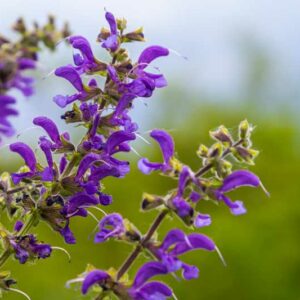
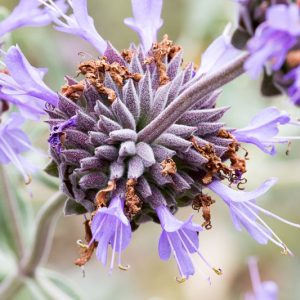
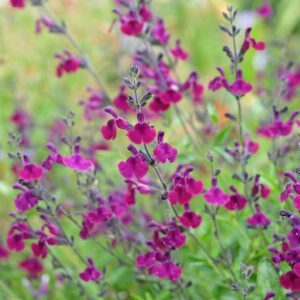
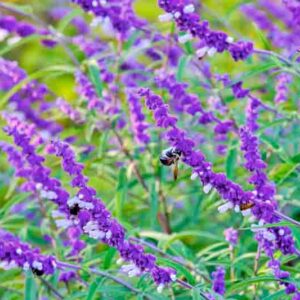
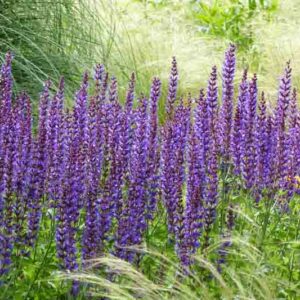
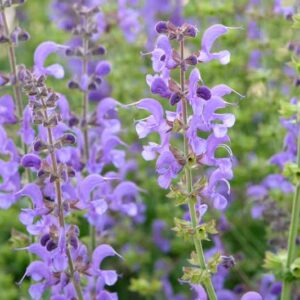
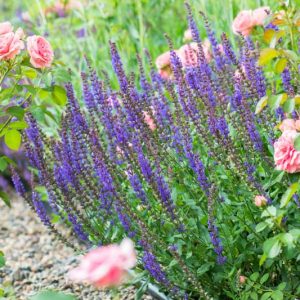
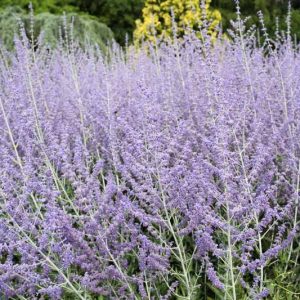
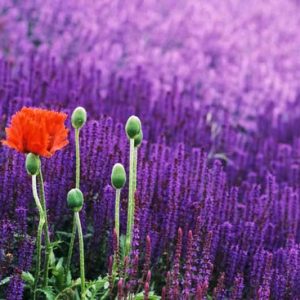
The floral show is what makes Purple Sage unforgettable. In mid-spring to early summer, stems are topped with densely stacked whorls of small purple flowers, each about an inch long. The purple bloom spikes sit dramatically against the silvery foliage, creating a high-contrast display in dry gardens, rockeries, and native borders.
Both flowers and leaves are aromatic with a pleasant, earthy fragrance, making this sage as enjoyable up close as it is beautiful from a distance. If you love salvias in general, you can explore the wider genus here: Salvia and dive deeper into its many uses with What is Salvia? Understanding its role in gardening and beyond.
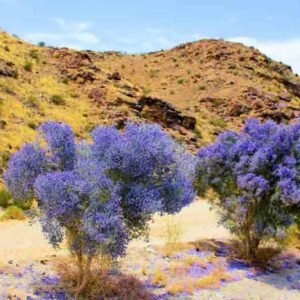
Purple Sage is native to coastal California, where it grows in chaparral, coastal scrub, and rocky slopes from Santa Barbara County into northern Baja California. In the wild, it is adapted to hot sun, arid summers, and nutrient-poor soils.
Its dense root system and shrubby habit help stabilize slopes and prevent erosion, while the flowers and foliage support local wildlife, including pollinators and small birds that use the plant for shelter in naturalized landscapes.
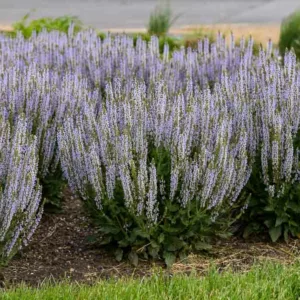
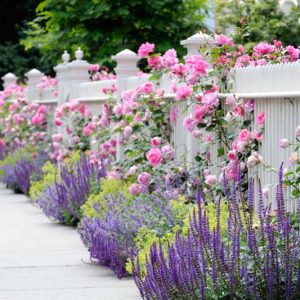
Salvia leucophylla typically grows about 3-5 ft tall and 6-8 ft wide, forming a generous, informal mound. It can spill gracefully over rocks, cascade down embankments, or form a soft, silvery backdrop at the edge of paths and driveways.
Its growth is steady but not aggressive, which makes it ideal for low-maintenance, naturalistic planting schemes where you want coverage and structure but do not want constant pruning and control.
The flowers of Purple Sage are tubular, purple, and arranged in tightly stacked whorls along the stems. Each bloom is roughly 1 inch (2.5 cm) long and rich in nectar, drawing in pollinators during its peak season.
Bloom time is generally from mid-spring to early summer, with the potential for some spotty rebloom in ideal conditions. The combination of purple flowers and silver leaves is especially striking in full sun and against gravel, decomposed granite, or stone.
Leaves are narrow, soft, wrinkled, and silvery gray, around 1-2 inches (2.5-5 cm) long. Fine hairs on leaves and stems create a velvety look and help reduce water loss in hot, dry conditions.
Brush past the plant and the foliage releases a pleasant, earthy, aromatic scent, adding another sensory layer to xeriscapes, coastal gardens, and Mediterranean-style borders.
Salvia leucophylla is hardy in roughly USDA Zones 8-11. It is perfectly at home in coastal and Mediterranean climates with hot, dry summers and mild winters. It does not tolerate prolonged, deep freezes, and sustained temperatures below about 0°F (-17°C) are typically beyond its comfort zone.
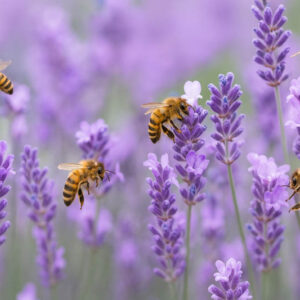
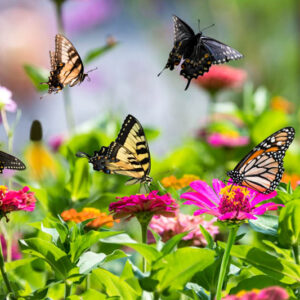
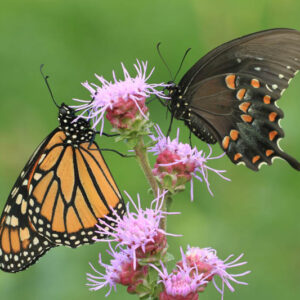
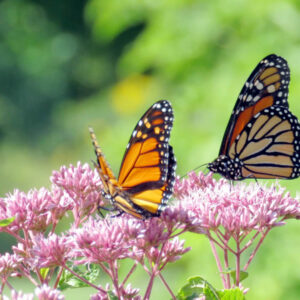
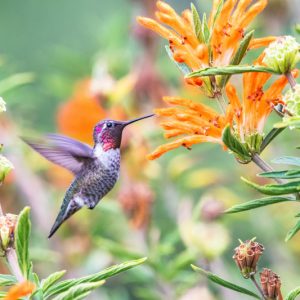
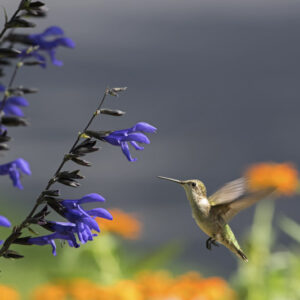
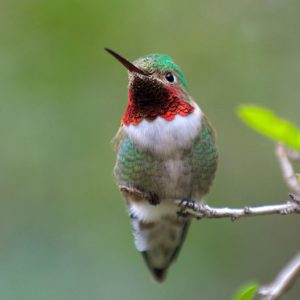
The nectar-rich flowers of Purple Sage are a magnet for bees, butterflies, and hummingbirds. In naturalistic plantings, its dense branches and evergreen foliage also provide cover for small birds and other wildlife.
Salvia leucophylla is naturally resistant to deer and rabbits thanks to its highly aromatic foliage. In areas with heavy browsing pressure, it is a smart choice for maintaining structure and greenery without constant damage.
As a chaparral native, Purple Sage is exceptionally drought-tolerant. Once established, it often needs little to no irrigation, relying on its deep root system to access stored soil moisture. That makes it ideal for water-wise designs and thriving xeriscapes. For more water-savvy salvias, see 20 Top Salvia Varieties for a Thriving Xeriscape.
Purple Sage is generally considered non-toxic to humans and animals, so it is a safe choice for family gardens and spaces visited by pets.
Salvia leucophylla is not considered invasive. Its growth is moderate and it tends to stay where it is planted, especially outside of its preferred dry, coastal climate. It is unlikely to run wild in typical home landscapes.
Salvia: Discover 10 Key Benefits of Growing Sage in Your Garden
Plant Purple Sage in well-drained soil, ideally sandy, gravelly, or rocky. It performs beautifully in nutrient-poor, low-organic soils and does not want rich, soggy ground.
Purple Sage rarely needs fertilizer. Too much nitrogen can cause lush, weak foliage and reduced flowering.
Should you cut back purple sage? Yes, thoughtful pruning keeps it dense and attractive.
Purple Sage can be propagated by seed, cuttings, or layering, so once you have one plant, it is easy to grow more.
Overall, Salvia leucophylla is a tough, low-maintenance shrub, but a few issues can appear if conditions are off.
Salvia leucophylla is an evergreen, drought-tolerant shrub in the mint family (Lamiaceae), native to coastal California and northern Baja California. It forms low, spreading mounds of silvery-gray foliage topped with purple flower whorls in spring and early summer. It is widely used in xeriscapes, coastal gardens, and native plant landscapes.
Salvia leucophylla is native to coastal regions of southern and central California and northern Baja California. It typically grows in chaparral, coastal scrub, and on rocky slopes from about Santa Barbara County south into Baja, where summers are dry and winters mild.
In typical garden conditions, Salvia leucophylla grows about 3 to 5 feet (90-150 cm) tall and 6 to 8 feet (180-240 cm) wide. It has a sprawling to mounding habit, with arching branches and upturned tips that can drape over rocks, walls, or slopes.
Salvia leucophylla is highly drought-tolerant once established. After its first growing season, it often needs little to no supplemental irrigation in Mediterranean-type climates, relying mainly on natural rainfall. Overwatering is more harmful than brief dry periods for this plant.
During the first growing season, water regularly but allow the soil to dry slightly between deep soakings to promote deep roots. After establishment, water sparingly: in many dry-summer climates, occasional deep watering during extended droughts is sufficient. Constant moisture should be avoided.
Yes. Salvia leucophylla is an excellent pollinator plant. Its nectar-rich flowers attract bees, butterflies, and hummingbirds. The shrub’s branching, evergreen structure can also provide cover for small birds and wildlife in naturalistic plantings and native gardens.
Yes, Salvia leucophylla can be grown in containers if the pot has excellent drainage and is filled with a sharply draining, gritty mix. Container plants will need more frequent watering than in-ground plants but still prefer to dry somewhat between waterings. In cold climates, containers should be protected from severe frost.
Salvia leucophylla grows at a moderate rate. Young plants establish roots and framework in their first year or two, then fill out into broad mounds. In suitable conditions, they can reach near-mature size within several growing seasons but do not usually become aggressively fast-growing.
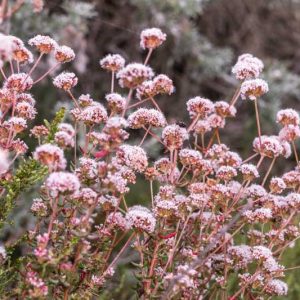
Good companions include other drought-tolerant and Mediterranean or California natives: succulents (such as agaves and smaller aloes), ornamental grasses, California buckwheat (Eriogonum fasciculatum), Cleveland sage (Salvia clevelandii), and low-water perennials and wildflowers. All should share a need for full sun and excellent drainage.
Salvia leucophylla is widely used in xeriscapes, coastal gardens, and Mediterranean-style designs. It is effective for covering slopes, stabilizing erosion-prone areas, forming informal hedges or drifts in native plantings, and providing a silvery backdrop for more colorful perennials and wildflowers. Its low water needs and wildlife value make it especially useful in climate-resilient and habitat-focused landscapes.
Updated: November 2025
Key horticultural details for Salvia leucophylla are drawn from native plant references, university and arboretum fact sheets, and xeriscape trial notes, along with resources on Salvia and drought-tolerant California shrubs.
| Hardiness |
8 - 11 |
|---|---|
| Climate Zones | 8, 9, 14, 15, 16, 17, 19, 20, 21, 22, 23, 24 |
| Plant Type | Shrubs |
| Plant Family | Lamiaceae |
| Genus | Salvia |
| Common names | Purple Sage, Sage |
| Exposure | Full Sun |
| Season of Interest | Spring (Mid, Late), Summer (Early) |
| Height | 3' - 5' (90cm - 150cm) |
| Spread | 6' - 8' (180cm - 240cm) |
| Spacing | 72" - 96" (180cm - 240cm) |
| Maintenance | Low |
| Water Needs | Low |
| Soil Type | Loam, Sand |
| Soil pH | Acid, Alkaline, Neutral |
| Soil Drainage | Well-Drained |
| Characteristics | Fragrant, Showy, Evergreen |
| Native Plants | California, United States |
| Tolerances | Drought, Deer, Rabbit, Clay Soil, Poor Soil, Erosion |
| Attracts | Bees, Birds, Butterflies |
| Garden Uses | Banks And Slopes, Beds And Borders, Hedges And Screens |
| Garden Styles | Informal and Cottage, Mediterranean Garden |
| Toxic to Humans | No known toxicity |
| Toxic to Cats | No known toxicity |
| Toxic to Dogs | No known toxicity |
| Toxic to Horses | No known toxicity |


| Hardiness |
8 - 11 |
|---|---|
| Climate Zones | 8, 9, 14, 15, 16, 17, 19, 20, 21, 22, 23, 24 |
| Plant Type | Shrubs |
| Plant Family | Lamiaceae |
| Genus | Salvia |
| Common names | Purple Sage, Sage |
| Exposure | Full Sun |
| Season of Interest | Spring (Mid, Late), Summer (Early) |
| Height | 3' - 5' (90cm - 150cm) |
| Spread | 6' - 8' (180cm - 240cm) |
| Spacing | 72" - 96" (180cm - 240cm) |
| Maintenance | Low |
| Water Needs | Low |
| Soil Type | Loam, Sand |
| Soil pH | Acid, Alkaline, Neutral |
| Soil Drainage | Well-Drained |
| Characteristics | Fragrant, Showy, Evergreen |
| Native Plants | California, United States |
| Tolerances | Drought, Deer, Rabbit, Clay Soil, Poor Soil, Erosion |
| Attracts | Bees, Birds, Butterflies |
| Garden Uses | Banks And Slopes, Beds And Borders, Hedges And Screens |
| Garden Styles | Informal and Cottage, Mediterranean Garden |
| Toxic to Humans | No known toxicity |
| Toxic to Cats | No known toxicity |
| Toxic to Dogs | No known toxicity |
| Toxic to Horses | No known toxicity |
How many Salvia leucophylla (Purple Sage) do I need for my garden?
| Plant | Quantity | |
|---|---|---|
| Salvia leucophylla (Purple Sage) | N/A | Buy Plants |
Create a membership account to save your garden designs and to view them on any device.
Becoming a contributing member of Gardenia is easy and can be done in just a few minutes. If you provide us with your name, email address and the payment of a modest $25 annual membership fee, you will become a full member, enabling you to design and save up to 25 of your garden design ideas.
Join now and start creating your dream garden!
Create a membership account to save your garden designs and to view them on any device.
Becoming a contributing member of Gardenia is easy and can be done in just a few minutes. If you provide us with your name, email address and the payment of a modest $25 annual membership fee, you will become a full member, enabling you to design and save up to 25 of your garden design ideas.
Join now and start creating your dream garden!