Persimmons come in many delicious forms—crisp, apple-like Fuyu, soft and honey-sweet Hachiya, and melt-in-your-mouth Saijo. Each variety offers unique flavors, textures, and culinary uses. Whether you love them fresh, baked, or dried, learning the differences helps you enjoy this golden-orange fruit in the most delightful ways.
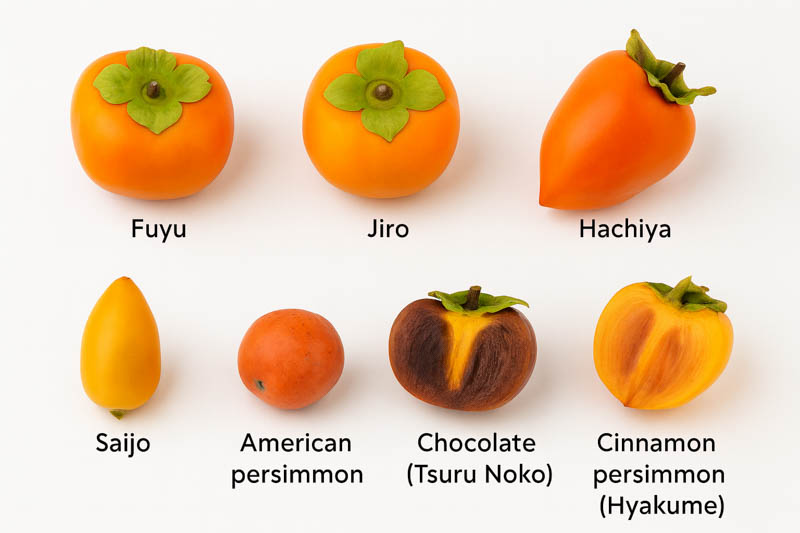


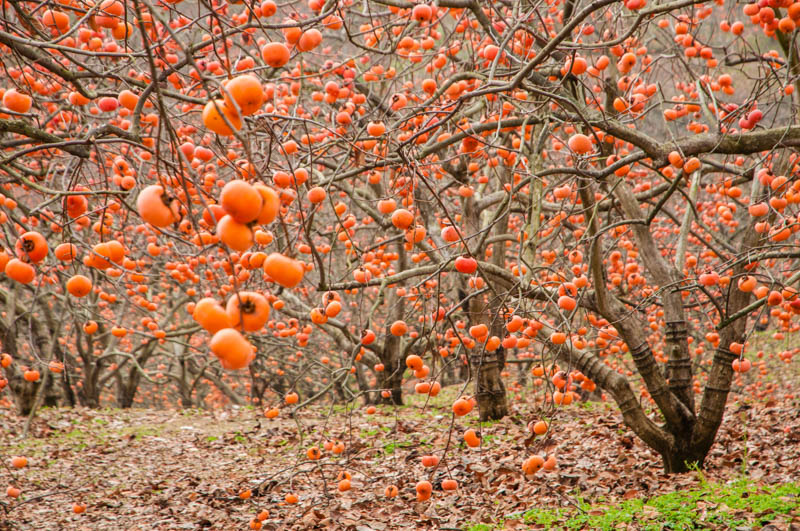
Summary: Those glossy orange orbs at fall markets come in two personalities: non-astringent (e.g., Fuyu—sweet even when firm) and astringent (e.g., Hachiya, Saijo—mouth-puckering until jelly-soft, then syrupy-sweet). Choose the type that matches how you like to eat—crisp slices or spoonable custard.
Taste: Firm non-astringents = honeyed, gently spicy crunch. Fully soft astringents = rich, jammy sweetness (think dates/apricot/vanilla).
Use: Fresh snacks and salads (Fuyu/Jiro), baking and puddings (Hachiya/Saijo), drying (hoshigaki), smoothies, jams.
Ripening Cue: Astringents must turn very soft before eating; speed with a paper bag + apple/banana (ethylene).
| Botanical Name | Diospyros kaki (Asian/Japanese persimmon); D. virginiana (American persimmon) |
|---|---|
| Family | Ebenaceae |
| Common Names | Persimmon, Japanese/Asian Persimmon, American Persimmon, Kaki |
| Native Range | East Asia (esp. China, Korea, Japan) for D. kaki; Eastern North America for D. virginiana |
| Plant Type & Habit | Deciduous fruit tree; rounded canopy; ornamental fall fruit display |
| Hardiness (USDA) | D. kaki: 7–10 • D. virginiana: 4–9 |
| Size | Typically 15–30 ft (4.5–9 m) tall/wide; American species to 30–60 ft (9–18 m) |
| Sun & Exposure | Full sun (best fruiting); tolerates light shade |
| Soil | Well-drained loam; pH 6.0–7.5; adapts to clay/sand with good drainage |
| Bloom & Fruit | Small inconspicuous flowers; fruit ripens late fall–early winter. Two key types: non-astringent (eat firm) vs. astringent (eat jelly-soft) |
| Wildlife | Fruit attracts birds and mammals; flowers visited by insects; netting may be needed near maturity |
| Toxicity | Edible. Unripe astringent fruit is extremely tannic (astringent) but becomes safe/delicious when fully soft |
| Invasiveness | Generally not invasive; check local guidance for American species suckering |
| Primary Uses | Fresh eating, baking/puddings, drying (hoshigaki), preserves; ornamental fall fruit |
If you’ve strolled through a farmers market or perused late-autumn fruit displays, you’ve likely spotted those glossy orange orbs: persimmons. But not all persimmons are created equal—some are crisp and snackable right away, while others transform from unpleasantly mouth-puckering to syrupy-sweet if you wait for the perfect ripeness.
In this comprehensive guide, we’ll explore popular persimmon varieties—how to choose, enjoy, and even grow them, with a conversational (and botanically precise) twist for curious plant lovers and home growers.
Persimmons are deciduous fruit trees from the genus Diospyros. The Asian or Japanese persimmon (Diospyros kaki) is the most widely cultivated species for edible fruit. Persimmons are native to East Asia, especially China, Korea, and Japan, though they have history and relatives (like the American persimmon) across the globe. The fruits can range from squat and tomato-like to elongated and acorn-shaped, with differences that go beyond appearances.
| Variety | Shape & Color | Astringency | Best Eaten | Notable Traits | Hardiness |
|---|---|---|---|---|---|
| Fuyu | Squat, tomato-shaped; bright orange | Non-astringent | Firm or soft | Eat like an apple; most widely grown | Zones 7-10 |
| Hachiya | Acorn-shaped; vivid orange | Astringent | Soft, jelly-like | Essential for baking, puddings | Zones 7–10 |
| Saijo | Conical/oblong; yellow-orange to deep orange | Astringent | Very soft, custardy | Very sweet, seedless or nearly so; good for drying | Zones 7–10 |
| Jiro | Squat, rounded; orange | Non-astringent | Firm or soft | Cold-tolerant; lower tendency to split characterizes mature trees | Zones 7-10 |
| Chocolate (‘Tsuru Noko’) | Medium, bright orange skin; brown-speckled/brown flesh | Pollination-variant non-astringent | Fully ripe | Nutty, spicy, unique jelly-brown flesh | Zones 7–10 |
| Cinnamon (‘Hyakume’) | Squat, bright orange; cinnamon-flecked flesh when pollinated | Pollination-variant non-astringent | Firm when pollinated; otherwise fully soft | Sweet, gently spicy; great fresh or dried | Zones 7–10 |
| American Persimmon | Small, round; orange-yellow | Astringent (ripens to sweet) | Often sweetest after a light frost | Cold-hardy (East US native) | Zones 4–9 |
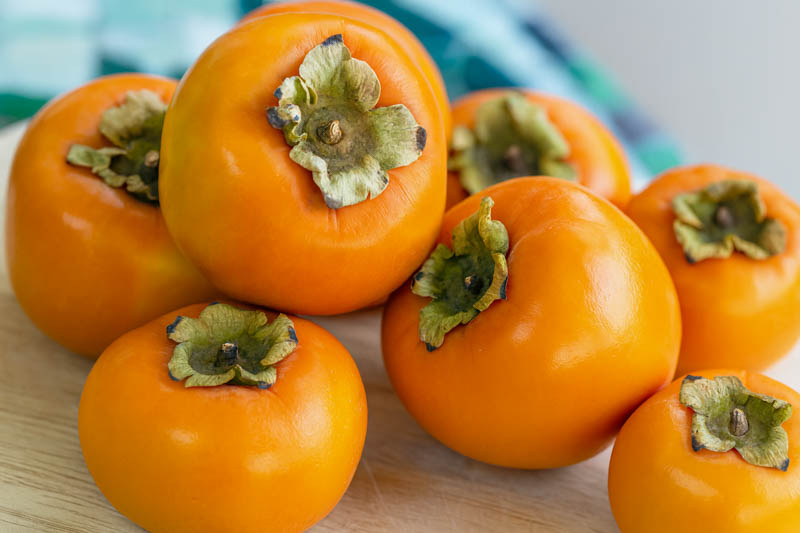
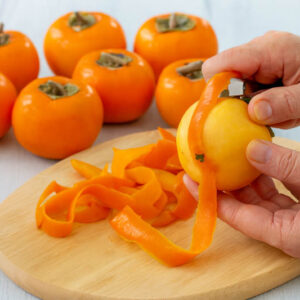
Fuyu persimmons are the most planted and eaten in the world—and for good reason. Short and squat, Fuyu looks like a vibrant orange tomato with a flat bottom. This non-astringent variety is ready to eat when firm—just snack on it like an apple, or slice it into salads, salsas, or desserts. The flavor profile is mellow, subtly sweet with a hint of cinnamon and clove as it softens. Fuyus rarely have seeds and don’t oxidize (brown) quickly once cut, making them excellent for kids’ lunches, cheese platters, or dehydrating.
Fuyu is heat-tolerant and can survive brief frosts. Great for home gardeners new to fruit trees.
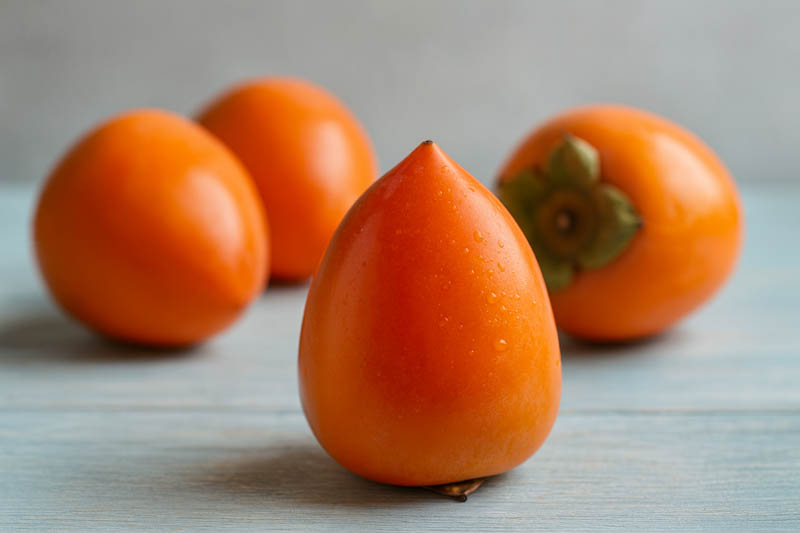
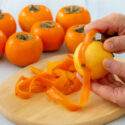
Hachiya is acorn-shaped, slightly larger, and a favorite among bakers and traditional cooks. This is an astringent persimmon, so never bite into a firm Hachiya; you’ll regret it! When ripe, Hachiya transforms from mouth-puckering to ultra-sweet, with flesh turning jelly-like, translucent, and almost custardy—great for eating with a spoon or using in classic puddings, spice cakes, and jams. Let it ripen at room temp until almost collapsing under its own weight.
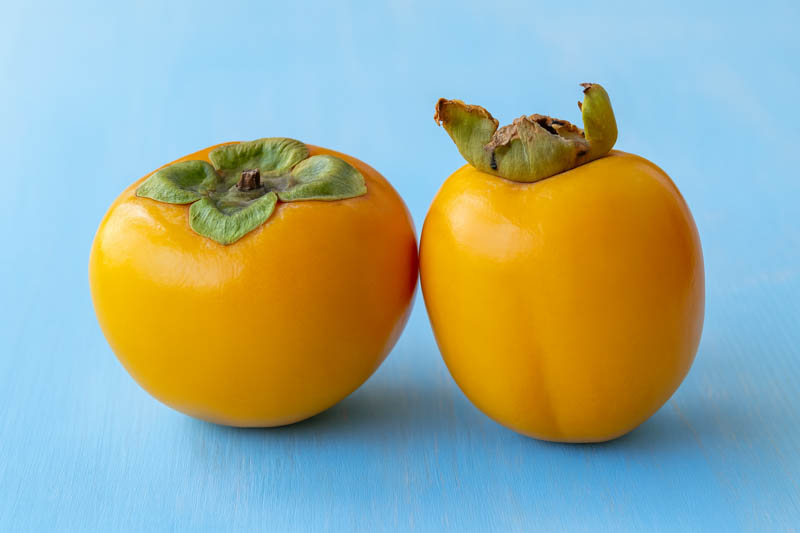
Saijo is a connoisseur’s persimmon, prized for its intensely sweet, honeyed flavor and exquisite eating quality. The name Saijo literally means “the very best one” in Japanese—a bold claim backed by generations of growers. Saijo fruits are smaller, oblong, and conical, ripening from yellow-orange to deeper hues. It’s another astringent type, so wait until fully soft, with a skin almost wrinkly and translucent.
Besides eating raw or dried, Saijo is wonderful as a topping on oatmeal, in smoothies, or baked into sweet treats.
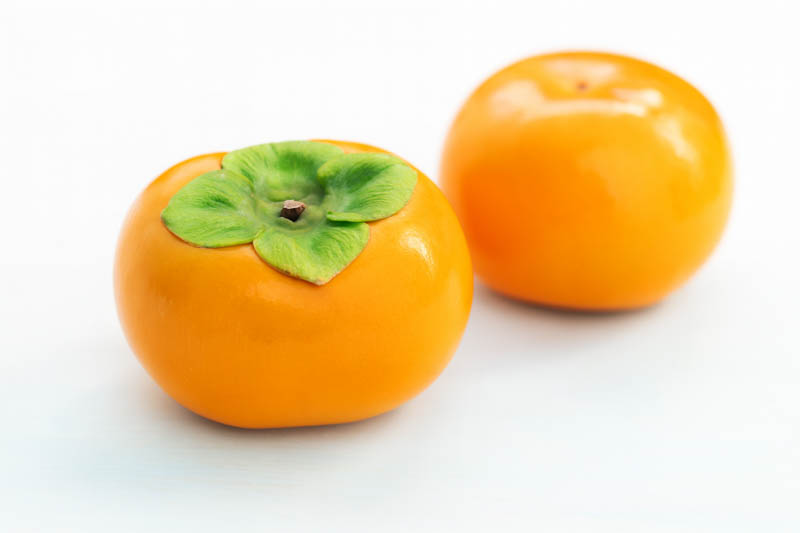
Jiro is a classic non-astringent cultivar often considered a sibling to Fuyu but with a reputation for extra cold tolerance and heavy, reliable crops. Fruits are squat, orange, firm when ripe, and generally seedless.
Maekawa Jiro is similar but produces especially large, deluxe fruit.
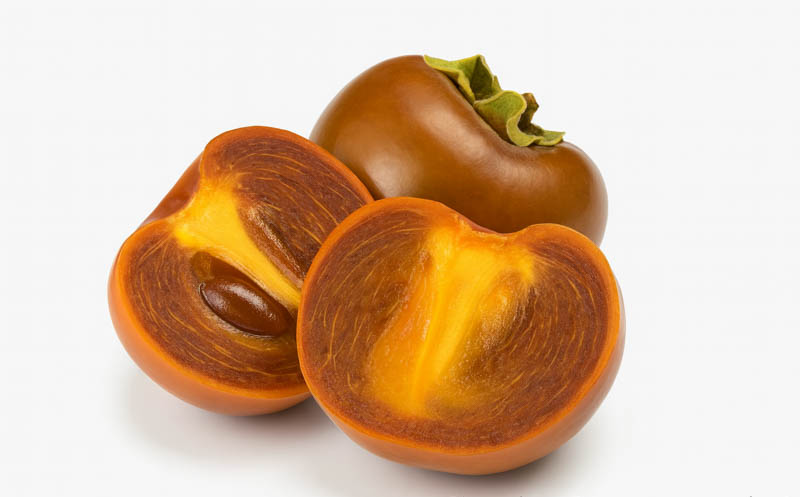
Chocolate (Tsuru Noko) is a unique “pollination-variant” astringent persimmon. Fruits are medium-sized, bright orange, with brown-flecked or streaked jelly interior when pollinated—hence the name.
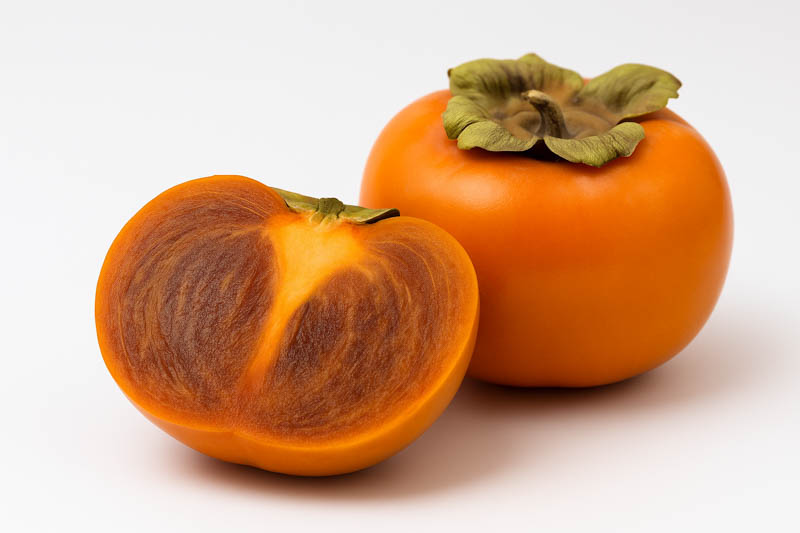
Cinnamon persimmon, also called Hyakume, is a pollination-variant type whose pale orange flesh gets cinnamon-colored streaks when pollinated.
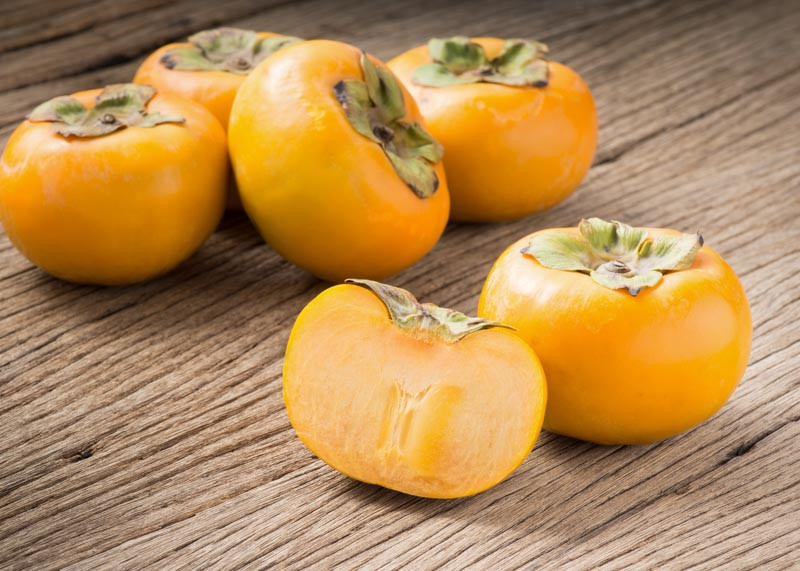
The American persimmon is a cold-hardy native featuring small, round, astringent fruit that ripens after frost. It is typically dioecious (separate male/female trees). Many named female cultivars will set seedless fruit without pollination, but a nearby male increases yield and seed set.
Here’s a quick-reference chart for successful persimmon growing at any experience level.
| Aspect | Care Details |
|---|---|
| Light | Full sun (best fruiting), tolerates partial shade |
| Soil | Well-drained, loamy soil preferred; pH 6.0–7.5; tolerates clay, sand |
| Water | Deep, infrequent watering; more during dry season; drought tolerant when mature |
| Fertilizer | Minimal needs; avoid excess nitrogen; apply balanced fertilizer only if growth is poor |
| Pruning | Open-center for light and airflow; remove crowded/dead wood in winter; minimal once established |
| Pests/Disease | Generally problem-free; occasional mealybug, scale, or anthracnose; ensure ant control |
Applies to Hachiya, Saijo, and other astringent types. Non-astringent varieties (Fuyu, Jiro) can be eaten firm.
| Fruit State | Counter (Room Temp) | Refrigerator | Freezer | Notes |
|---|---|---|---|---|
| Astringent (firm) — Hachiya, Saijo | 3–10 days to soften | Not ideal (slows ripening) | Not recommended | Ripen at room temp; use paper bag + apple/banana to speed. |
| Astringent (fully soft) | 1–2 days | 2–4 days | 6–12 months (as pulp) | Store unstacked; freeze scooped pulp for best texture. |
| Non-astringent (firm) — Fuyu, Jiro | 3–7 days (ripen to preference) | Up to 2 weeks | 6–12 months (as pulp; slices become soft) | Edible when firm or soft; refrigeration extends life. |
Times are typical ranges; check fruit daily. Cooler rooms slow ripening; warmer rooms speed it up.
Absolutely! The thin skin is edible—just wash thoroughly. Some find the skin tough on larger astringent types, but for Fuyu and most non-astringents, it is pleasant and full of nutrients.
That’s the tannins! Wait for astringent types to ripen—soft, jelly-like, and super sweet. Non-astringent types can be eaten firm or soft without that sensation.
Firm ones keep in the fridge for up to 2 weeks. Ripe, soft persimmons should be enjoyed in a few days, or freeze the pulp for longer storage.
Few fruits evoke as much seasonal excitement as a perfectly ripe persimmon. Whether you crave a crisp Fuyu or swoon for a luscious Hachiya or Saijo, there’s a variety suited for every palate and garden. Don’t hesitate to explore the more unusual types—the joy of persimmons is found in every bite, no matter the name or shape.
Updated: September 2025 • Reviewed by Gardenia Editors
| Hardiness |
4 - 10 |
|---|---|
| Plant Type | Fruits, Trees |
| Plant Family | Ebenaceae |
| Genus | Diospyros |
| Common names | Japanese Persimmon, Kaki, Persimmon |
| Exposure | Full Sun |
| Season of Interest | Fall |
| Height | 30' - 60' (9.1m - 18.3m) |
| Spread | 10' - 35' (3m - 10.7m) |
| Maintenance | Low |
| Water Needs | Average |
| Soil Type | Loam |
| Soil pH | Acid, Alkaline, Neutral |
| Soil Drainage | Moist but Well-Drained, Well-Drained |
| Characteristics | Showy, Fruit & Berries |
| Attracts | Bees, Birds |
| Garden Styles | City and Courtyard, Informal and Cottage |
| Toxic to Humans | No known toxicity |
| Toxic to Cats | No known toxicity |
| Toxic to Dogs | No known toxicity |
| Toxic to Horses | No known toxicity |
| Hardiness |
4 - 10 |
|---|---|
| Plant Type | Fruits, Trees |
| Plant Family | Ebenaceae |
| Genus | Diospyros |
| Common names | Japanese Persimmon, Kaki, Persimmon |
| Exposure | Full Sun |
| Season of Interest | Fall |
| Height | 30' - 60' (9.1m - 18.3m) |
| Spread | 10' - 35' (3m - 10.7m) |
| Maintenance | Low |
| Water Needs | Average |
| Soil Type | Loam |
| Soil pH | Acid, Alkaline, Neutral |
| Soil Drainage | Moist but Well-Drained, Well-Drained |
| Characteristics | Showy, Fruit & Berries |
| Attracts | Bees, Birds |
| Garden Styles | City and Courtyard, Informal and Cottage |
| Toxic to Humans | No known toxicity |
| Toxic to Cats | No known toxicity |
| Toxic to Dogs | No known toxicity |
| Toxic to Horses | No known toxicity |
Create a membership account to save your garden designs and to view them on any device.
Becoming a contributing member of Gardenia is easy and can be done in just a few minutes. If you provide us with your name, email address and the payment of a modest $25 annual membership fee, you will become a full member, enabling you to design and save up to 25 of your garden design ideas.
Join now and start creating your dream garden!
Create a membership account to save your garden designs and to view them on any device.
Becoming a contributing member of Gardenia is easy and can be done in just a few minutes. If you provide us with your name, email address and the payment of a modest $25 annual membership fee, you will become a full member, enabling you to design and save up to 25 of your garden design ideas.
Join now and start creating your dream garden!