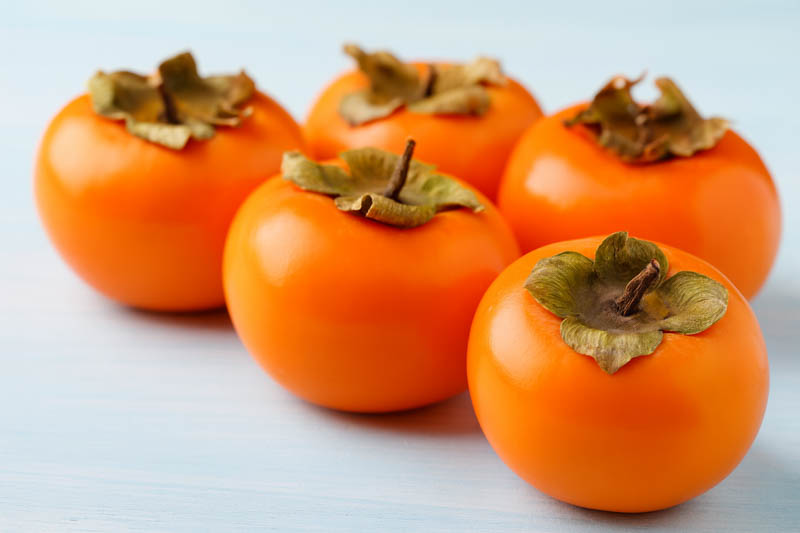
Persimmon
Whether you crave a fall fruit that glows like the harvest moon or a hardy, handsome tree for your edible landscape, Diospyros has something for you. From classic Japanese persimmons to America’s own native wild persimmon, these trees bring jewel-like fruit, easy elegance, and low-maintenance beauty to gardens big and small.
World favorite: The superstar of edible persimmons is the Japanese species Diospyros kaki, grown across Asia, the Mediterranean, and the Americas.
Two personalities: Some persimmons are sweet while still firm, others must ripen until jelly-soft to lose their puckery tannins.
Snack straight away: Fuyu is a non-astringent type you can bite like an apple. Slice it into salads, lunchboxes, or a cheese board.
Compact and tough: Jiro stays relatively small, bears heavily, and is known for extra cold tolerance.
Dessert legend: The acorn-shaped Hachiya is astringent when firm but turns custardy and spoon-soft when ripe, perfect for puddings and quick breads.
Honeyed treat: Slender, conical Saijo means “the very best one” in Japanese and lives up to its name once fully soft.
Native hero: Diospyros virginiana, the American persimmon, is rugged, wildlife-friendly, and turns unbelievably sweet, especially after a light frost.
Easygoing growers: Persimmons prefer full sun and well-drained soil, but they tolerate a range of conditions and become drought-hardy once established.
Perfect timing: Fruit ripens from late fall into early winter, delivering bright flavor just as other fruits fade.
Good for you: They’re naturally rich in fiber, vitamins, and antioxidants. Explore the wellness perks here: persimmon health benefits.
Kitchen chameleons: Eat firm types fresh, dry slices for snacks, or blend soft types into smoothies and bakes.
Choose your match: Need help picking a cultivar for taste or climate? Start with this handy overview: Fuyu, Hachiya, Saijo and more.
Plant a persimmon for easy-care shade, fiery foliage, and sweet, unforgettable harvests that brighten the darkest days of the year.