Fuyu Persimmon, Japanese Persimmon, Oriental Persimmon, Kaki
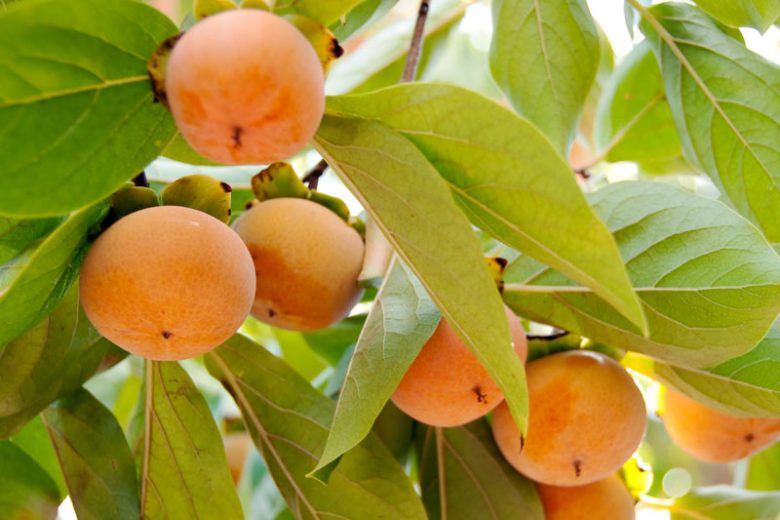
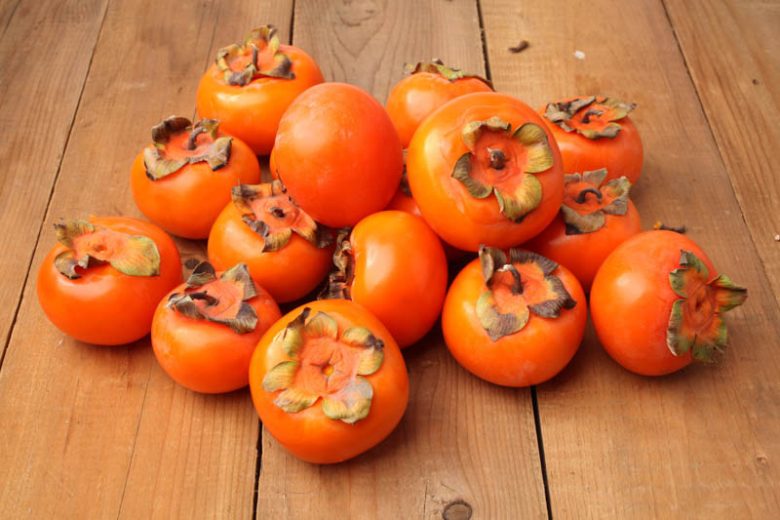
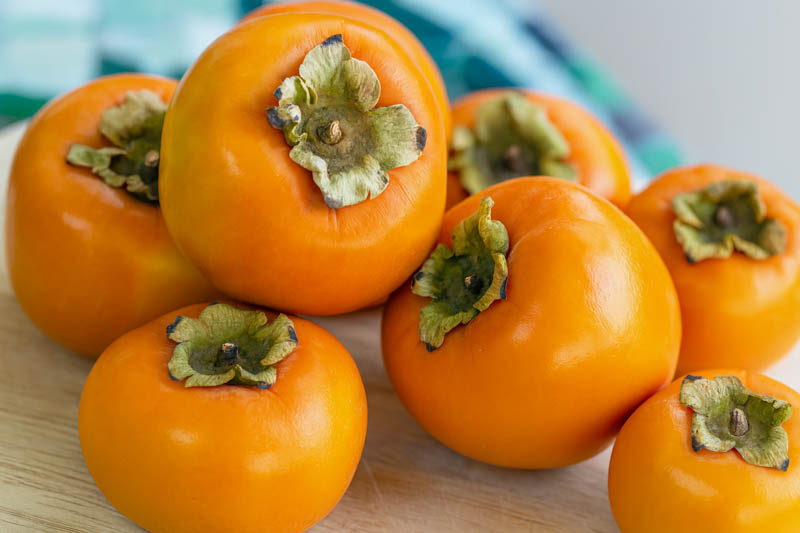


If you want a tree that dazzles with autumn color and gifts you with crisp, seedless fruit you can munch like an apple, meet the ‘Fuyu’ Japanese persimmon (Diospyros kaki ‘Fuyu’). Whether you love slicing Fuyu for salads, drying it for chewy snacks, or sharing a basketful at holiday time, this non-astringent persimmon is a proven star for home gardens and urban orchards. Let’s discover why ‘Fuyu’ deserves a place in your landscape—and your kitchen!
| Botanical Name | Diospyros kaki ‘Fuyu’ |
| Common Names | Fuyu Persimmon, Japanese Persimmon |
| Plant Type | Deciduous fruit tree |
| Hardiness Zones | USDA 7–10 |
| Height & Spread | 20–30 ft. tall × 15–25 ft. wide |
| Fruit Size & Shape | Medium to large (3–4 in.), squat, flat, tomato-shaped, bright orange |
| Fruit Texture & Flavor | Firm and sweet when crisp; honeyed and rich when soft—never astringent |
| Fruit Season | Late fall through early winter |
| Sun Requirements | Full sun |
| Soil pH | 6.0–7.5 (well-drained, loamy) |
| Main Uses | Fresh eating, salads, baking, dried fruit, smoothies, jam, gifts |
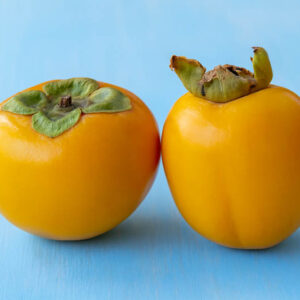
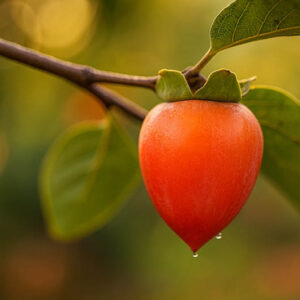
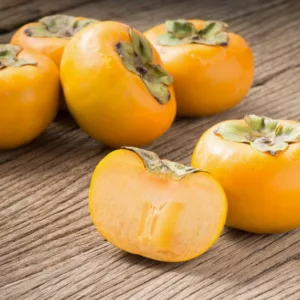
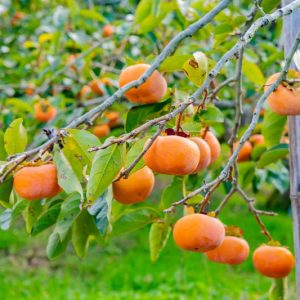
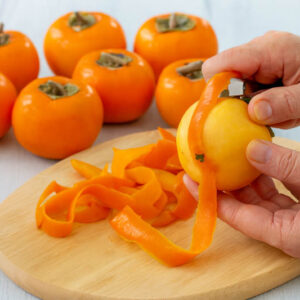
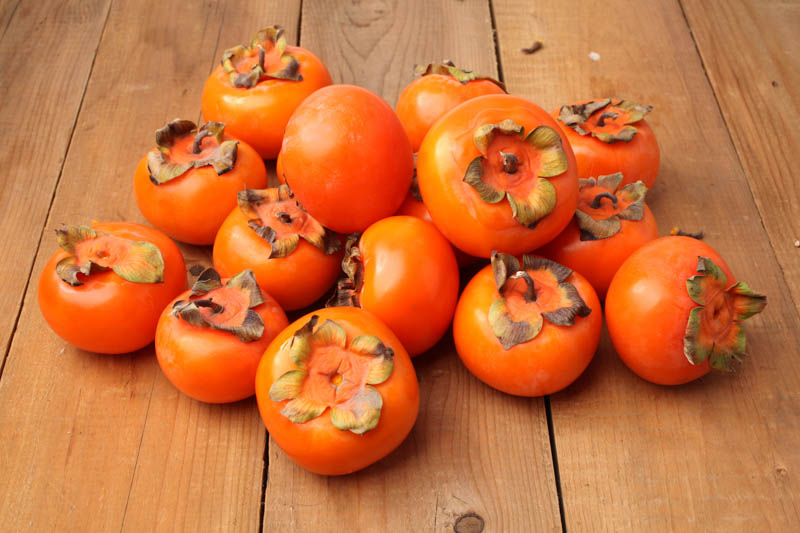
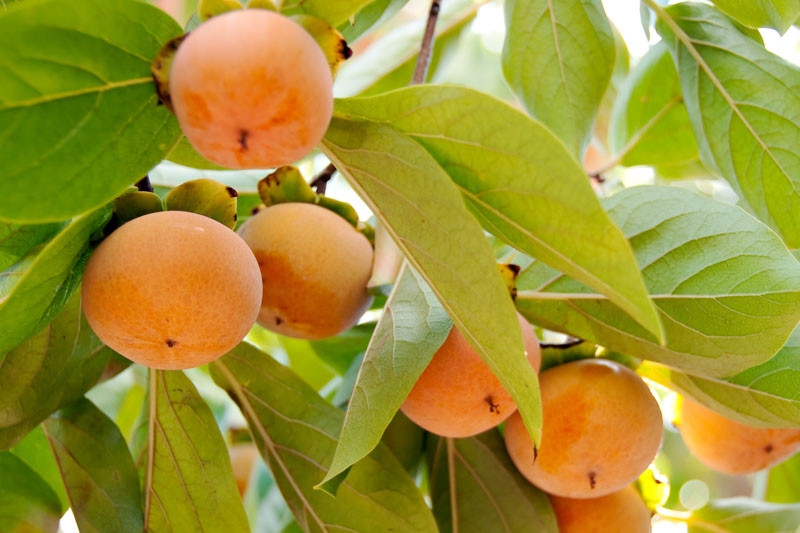
‘Fuyu’ is Japan’s and the West’s most popular persimmon. Its squat, tomato-like fruit is glossy orange and completely edible while firm—think of slicing it into salads or biting into it like an apple. The skin is thin and smooth, the flesh crisp or jelly-sweet (depending on ripeness), and flavor floral, honeyed, and mild. Fuyu is non-astringent, so there’s zero risk of the unpleasant “mouth-puckering” you get from astringent types. Fruit is usually seedless—just slice and enjoy.
‘Fuyu’ descends from Asian persimmons native to China and Japan. It’s widely grown in home orchards and commercial groves from California to the Mediterranean, as well as South America and Australia. The tree is revered in Japanese culture as a symbol of autumn and abundance.
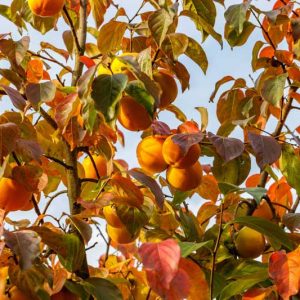
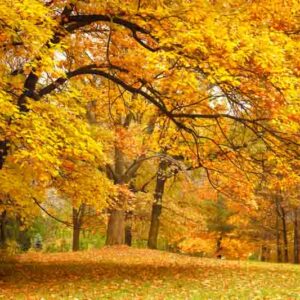
This tree is handsome and manageable, reaching 20–30 feet tall (6-9 m) and 15–25 feet (4.5-7.5 m) wide with a rounded crown. Fuyu forms a strong central trunk and wide branches, perfect for supporting heavy crops. Its deeply grooved bark gives winter interest; leaves are glossy deep green, turning blazing gold, ochre, or burgundy each fall. Even after leaf drop, orange fruit hang from bare branches like lanterns, brightening late autumn and early winter.
Fuyu trees grow steadily (1–2 ft per year when young), then focus energy on fruit production. Grafted trees start bearing in 2–4 years, seedlings in 7–10. With a little care, Fuyu can produce fruit for 50+ years. Some have lived well over a century in favorable climates!
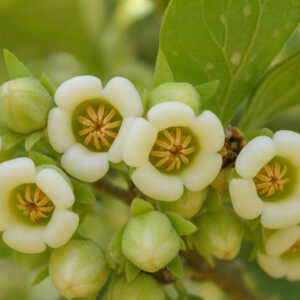
In late spring, look for small, creamy-white, bell-shaped flowers (often hidden among leaves). Fuyu is self-fertile—no pollinator needed for a crop—but will set a few seeds if another kaki is nearby. Most Fuyu fruit are seedless, tidy, and easy to slice or eat whole. Mature trees reliably yield generous crops.
Fuyu’s broad, deep green leaves flush golden-orange, red, or burgundy each fall, before dropping to reveal fruit. The branches and trunk are sculptural, and the tree’s tidy, rounded shape makes it a standout as a specimen or shade tree in home gardens.
Ripening Fuyu fruit attract songbirds (mockingbirds, blue jays, waxwings, cardinals) and mammals like squirrels, raccoons, opossums, and deer. Pollinators such as bees feed at the flowers in late spring. If you want to keep more of your harvest, netting or fencing is a good idea—especially as fruit ripens.
Fuyu thrives in USDA zones 7–10. It prefers mild winters and warm, sunny summers. Once established, it will shrug off mild drought and survive brief frosts down to 10°F (–12°C). A sunny spot with good airflow brings the best fruit and fall color.
Ripe Fuyu fruit is very safe and delicious for people. Unripe fruit (like all persimmons) contains tannins and may cause digestive upset if eaten in quantity. For pets, very small tastes of seedless, ripe Fuyu are typically fine, but avoid seeds and never let animals eat large amounts. Always check with your vet for sensitive pets.
Fuyu (and Diospyros kaki in general) is not considered invasive outside its native region. It does not spread by seed or root suckers. Prune off any suckers or water sprouts from the rootstock base to keep the tree tidy.
| Nutrient | Amount per 100g |
|---|---|
| Calories | 70 kcal |
| Protein | 0.6 g |
| Carbohydrates | 18.6 g |
| Fiber | 3.6 g |
| Fat | 0.2 g |
| Vitamin A | 81 µg (≈9% DV) |
| Vitamin C | 7.5 mg (≈8% DV) |
| Potassium | 161 mg |
| Manganese | 0.355 mg (≈15% DV) |
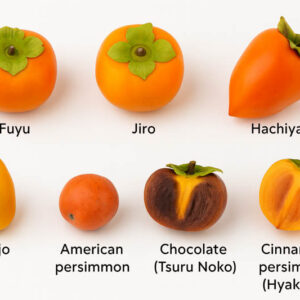
| Variety | Type | Flavor & Appearance | Best Uses |
|---|---|---|---|
| Fuyu | Non-astringent | Crisp like an apple when firm; sweet and mild when ripened orange. Flat, squat fruit shape. | Fresh eating, salads, dried persimmon, baking |
| Hachiya | Astringent | Astringent when firm, turns jelly-soft and sugary when fully ripe. Acorn-shaped fruit. | Persimmon bread, baking, preserves, pudding |
| Jiro | Non-astringent | Flattened fruit, crisp and mild with less seeds. Stays sweet even when firm. | Fresh eating, slicing, salads, desserts |
| Izu | Non-astringent | Small to medium-sized, round and sweet, early maturing. Few seeds if any. | Snacking, salads, dehydrating for dried persimmon |
| Saijo | Astringent | Long, oval fruit becomes honey-sweet and incredibly soft when ripe. Called “the very best one”. | Eaten fresh when soft, preserves, traditional dried persimmon (hoshigaki) |
| Chocolate (Tsuru Noko) | Pollination-variant | Rich, spicy-sweet orange flesh with brown streaks when pollinated. Small, round fruit. | Eating fresh, unique desserts, culinary novelty |
🌟 Home Grower Story:
“A few years ago, we planted a young ‘Fuyu’ tree in our small city backyard. The first autumn it fruited, I was amazed to find over two dozen squat orange persimmons—more than we could eat! My neighbor had never tasted one, so I left a basket on her porch. Now every year, we trade Fuyu fruit for her homemade jam, and my kids love packing slices in their school lunches. The gift that keeps giving!”
| Hardiness |
7 - 10 |
|---|---|
| Heat Zones |
7 - 10 |
| Climate Zones | 6, 7, 8, 9, 14, 15, 16, 18, 19, 20, 21, 22, 23, 24, H1 |
| Plant Type | Fruits, Trees |
| Plant Family | Ebenaceae |
| Genus | Diospyros |
| Common names | Japanese Persimmon, Kaki, Persimmon |
| Exposure | Full Sun |
| Season of Interest | Spring (Mid, Late), Summer (Early, Mid, Late), Fall, Winter |
| Height | 20' - 30' (6.1m - 9.1m) |
| Spread | 20' - 30' (6.1m - 9.1m) |
| Maintenance | Low |
| Water Needs | Average |
| Soil Type | Loam |
| Soil pH | Acid, Alkaline, Neutral |
| Soil Drainage | Moist but Well-Drained, Well-Drained |
| Characteristics | Showy, Fruit & Berries |
| Tolerances | Heat |
| Attracts | Bees, Birds |
| Garden Uses | Wall-Side Borders |
| Garden Styles | City and Courtyard, Informal and Cottage |
| Toxic to Humans | No known toxicity |
| Toxic to Cats | No known toxicity |
| Toxic to Dogs | No known toxicity |
| Toxic to Horses | No known toxicity |


| Hardiness |
7 - 10 |
|---|---|
| Heat Zones |
7 - 10 |
| Climate Zones | 6, 7, 8, 9, 14, 15, 16, 18, 19, 20, 21, 22, 23, 24, H1 |
| Plant Type | Fruits, Trees |
| Plant Family | Ebenaceae |
| Genus | Diospyros |
| Common names | Japanese Persimmon, Kaki, Persimmon |
| Exposure | Full Sun |
| Season of Interest | Spring (Mid, Late), Summer (Early, Mid, Late), Fall, Winter |
| Height | 20' - 30' (6.1m - 9.1m) |
| Spread | 20' - 30' (6.1m - 9.1m) |
| Maintenance | Low |
| Water Needs | Average |
| Soil Type | Loam |
| Soil pH | Acid, Alkaline, Neutral |
| Soil Drainage | Moist but Well-Drained, Well-Drained |
| Characteristics | Showy, Fruit & Berries |
| Tolerances | Heat |
| Attracts | Bees, Birds |
| Garden Uses | Wall-Side Borders |
| Garden Styles | City and Courtyard, Informal and Cottage |
| Toxic to Humans | No known toxicity |
| Toxic to Cats | No known toxicity |
| Toxic to Dogs | No known toxicity |
| Toxic to Horses | No known toxicity |
How many Diospyros kaki ‘Fuyu’ (Japanese Persimmon) do I need for my garden?
| Plant | Quantity | |
|---|---|---|
| Diospyros kaki ‘Fuyu’ (Japanese Persimmon) | N/A | Buy Plants |
Create a membership account to save your garden designs and to view them on any device.
Becoming a contributing member of Gardenia is easy and can be done in just a few minutes. If you provide us with your name, email address and the payment of a modest $25 annual membership fee, you will become a full member, enabling you to design and save up to 25 of your garden design ideas.
Join now and start creating your dream garden!
Create a membership account to save your garden designs and to view them on any device.
Becoming a contributing member of Gardenia is easy and can be done in just a few minutes. If you provide us with your name, email address and the payment of a modest $25 annual membership fee, you will become a full member, enabling you to design and save up to 25 of your garden design ideas.
Join now and start creating your dream garden!