Saijo Persimmon, Japanese Persimmon, Oriental Persimmon, Kaki
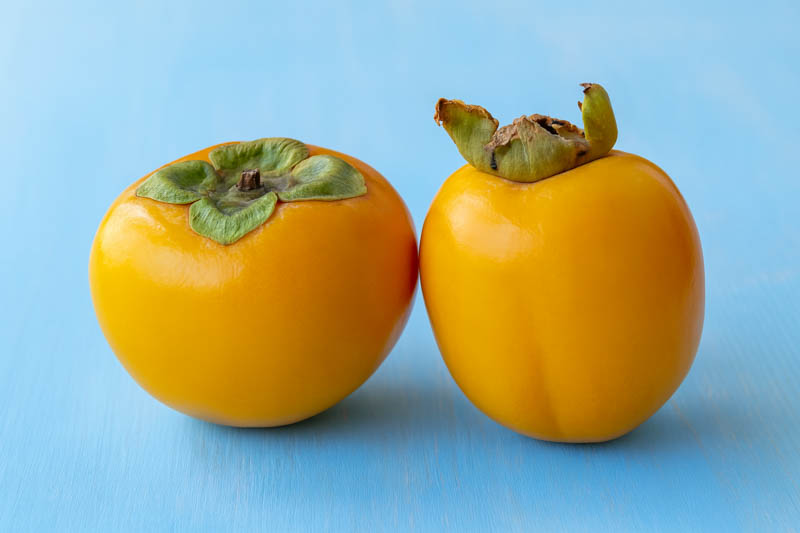


If you dream of fruit that’s sun-gold, silky as jam, and so sweet it’s called “the very best one,” look no further than ‘Saijo’ Japanese persimmon (Diospyros kaki ‘Saijo’). This beloved astringent variety wow gardeners and cooks with its honey-like flavor and melt-in-your-mouth texture. Saijo is a star of fresh-eating, autumn desserts, sun-dried treats, and is so pretty on the tree that it brightens up gardens and hearts all fall and winter. Let’s discover the history, beauty, versatility—and secrets—of this Asian treasure!
| Botanical Name | Diospyros kaki ‘Saijo’ |
| Common Names | Saijo Persimmon, Japanese Persimmon, Oriental Persimmon |
| Plant Type | Deciduous fruit tree |
| Hardiness Zones | USDA 7–10 |
| Height & Spread | 15-25 ft. tall × 10–18 ft. wide |
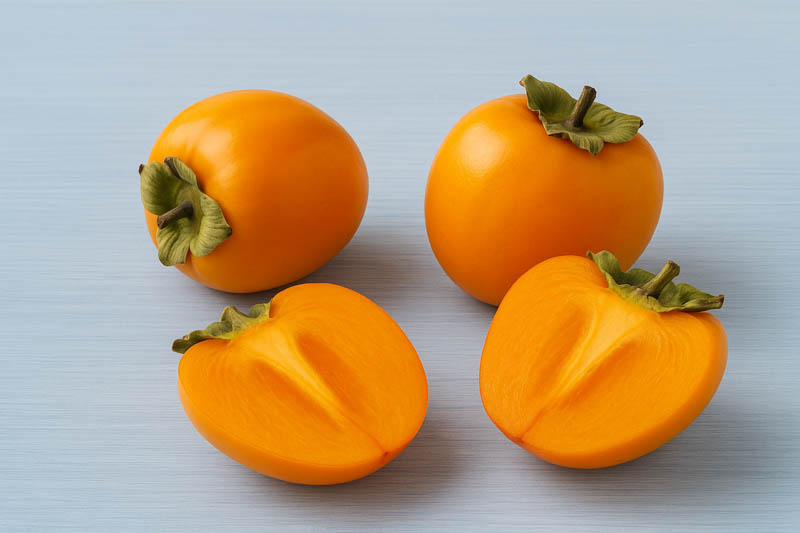
| Fruit Size & Shape | Medium, long oval to egg shaped (2–4 in.), gold-orange |
| Fruit Texture & Flavor | Ultra-soft and custardy when fully ripe; honey-sweet and floral, highly astringent until jelly soft |
| Fruit Season | Late fall to early winter; ripens after harvest |
| Sun Requirements | Full sun |
| Soil pH | 6.0–7.5 (well-drained, loamy) |
| Main Uses | Fresh eating (when ripe), puddings, baking, jam, smoothies, dried ‘hoshigaki’, autumn gifts |
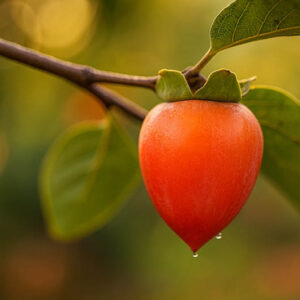
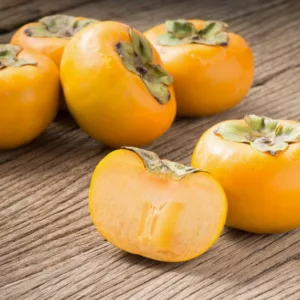
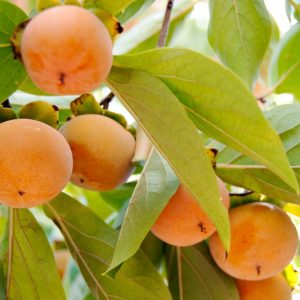
Elegant, slender, and glowing gold-orange, Saijo fruit are easy to recognize. Their thin skin and nearly seedless flesh hide one of the most luscious textures and flavors in the fruit world: soft, custardy or jelly-like pulp with a honeyed sweetness, hints of apricot, and zero tartness when fully ripe. The fruit must be allowed to become completely soft to banish astringency and experience “the best”—just peel and eat with a spoon!
Saijo hails from Japan’s mountainous regions, where chilly winters and hot summers develop the tree’s famous cold-hardiness. Its name translates to “the very best one,” a title you’ll understand the first time you savor its rich, melt-in-your-mouth flavor. Japanese temple gardens, Southern U.S. orchards, and backyard growers everywhere prize Saijo for bounty, reliability, and its show-stopping appearance in fall.
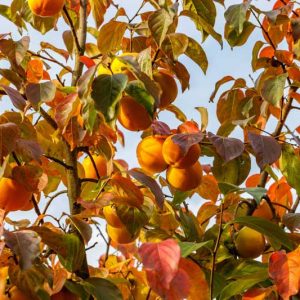
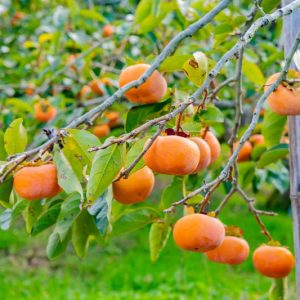
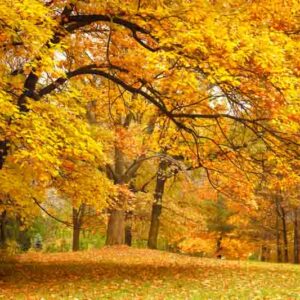
Smaller than many Asian persimmon trees, Saijo matures at 15-25 ft. tall (4.5-7.5 m) × 10–18 ft. wide (3-5.4 m)—easily kept even smaller by pruning. Its graceful, upright habit fits city yards or edible gardens, with arching branches strong enough to carry huge crops. Fall brings a curtain of golden leaves, then a fireworks display as fruit glows on bare limbs against gray skies.
Modest vigor (1–2 ft/year) means it’s simple to train and manage. Grafted Saijo typically begins fruiting at 2–4 years old, with a healthy lifespan reaching 40–50+ years and fruiting abundantly in middle and late age.
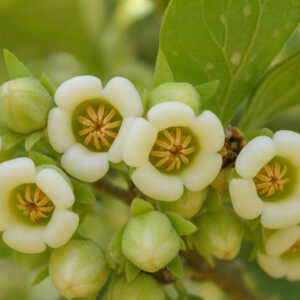
Self-fertile, you only need one tree for a good harvest—although more trees or wild persimmons nearby can improve yield and seed set. Small, creamy-to-yellow flowers emerge in late spring. Almost all homegrown Saijo fruit are seedless—perfect for jam, drying, or eating fresh.
Lush, glossy green leaves shade the tree in summer, turning dramatic gold and copper in fall. The bark is attractively crosshatched and striking in winter’s bare season. Long, gleaming fruit dangle like lanterns for weeks after leaf drop, decorating the garden for the year’s grand finale.
Bees and pollinators love Saijo’s spring flowers; deer, birds (jays, robins, waxwings), squirrels, and raccoons feast on dropped or unharvested fruit. Expect a bit of competition! Net vulnerable branches if wildlife claim too much.
Saijo is the toughest of Asian persimmons, thriving from USDA Zone 7 through 10, withstanding winter lows to –10°F (–23°C) once mature. Plant in sunniest locations; warm autumns help fruit soften and ripen perfectly.
Ripe Saijo is safe for people and most pets in moderation, but unripe or huge unmoderated amounts may cause digestive discomfort due to tannins. Never let pets eat seeds.
This variety is domesticated and tidy—rarely suckering. Prune away trunk sprouts for form.
| Nutrient | Amount per 100g |
|---|---|
| Calories | 70 kcal |
| Protein | 0.6 g |
| Carbohydrates | 18.6 g |
| Fiber | 3.6 g |
| Fat | 0.2 g |
| Vitamin A | 81 µg (≈9% DV) |
| Vitamin C | 7.5 mg (≈8% DV) |
| Potassium | 161 mg |
| Manganese | 0.355 mg (≈15% DV) |
| Variety | Type | Flavor & Appearance | Best Uses |
|---|---|---|---|
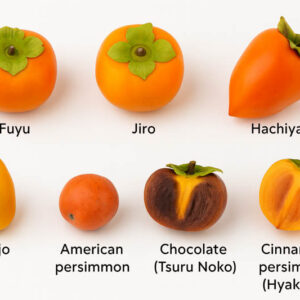
| Fuyu | Non-astringent | Squat and tomato-shaped, firm when ripe, sweet and mild | Fresh eating, salads, slicing, drying, baking |
| Hachiya | Astringent | Acorn-shaped, firm is astringent, turns jelly-soft and honey-sweet when ripened | Pudding, baking, preserves, fresh when fully soft |
| Jiro | Non-astringent | Flattened, four-sided, extra-firm and very mild, low-seed | Fresh eating, salads, bento, drying, desserts |
| Izu | Non-astringent | Small and round, early, sweet and tender | Snacking, salads, drying |
| Saijo | Astringent | Long oval, very soft and honeyed when ripe (“the best one”) | Eaten fresh when soft, drying (hoshigaki), preserves |
| Chocolate (Tsuru Noko) | Pollination-variant | Small, round, brown-streaked orange flesh, spicy-sweet when pollinated | Fresh, desserts, unique culinary use |
🌟 Home Grower Story:
“Saijo was my first persimmon and still my favorite. Every autumn, I check the trees daily, looking for those almost-bursting golden fruits. My neighbors call them ‘nature’s candy.’ We freeze pulp for bread and pudding, and every year, new friends want to plant one after tasting Saijo for the first time.”
| Hardiness |
7 - 10 |
|---|---|
| Heat Zones |
7 - 10 |
| Climate Zones | 6, 7, 8, 9, 14, 15, 16, 18, 19, 20, 21, 22, 23, 24, H1 |
| Plant Type | Fruits, Trees |
| Plant Family | Ebenaceae |
| Genus | Diospyros |
| Common names | Japanese Persimmon, Kaki, Persimmon |
| Exposure | Full Sun |
| Season of Interest | Spring (Mid, Late), Summer (Early, Mid, Late), Fall, Winter |
| Height | 15' - 25' (4.6m - 7.6m) |
| Spread | 10' - 18' (3m - 5.5m) |
| Maintenance | Low |
| Water Needs | Average |
| Soil Type | Loam |
| Soil pH | Acid, Alkaline, Neutral |
| Soil Drainage | Moist but Well-Drained, Well-Drained |
| Characteristics | Showy, Fruit & Berries |
| Tolerances | Heat |
| Attracts | Birds, Bees |
| Garden Uses | Wall-Side Borders |
| Garden Styles | City and Courtyard, Informal and Cottage |
| Toxic to Humans | No known toxicity |
| Toxic to Cats | No known toxicity |
| Toxic to Dogs | No known toxicity |
| Toxic to Horses | No known toxicity |


| Hardiness |
7 - 10 |
|---|---|
| Heat Zones |
7 - 10 |
| Climate Zones | 6, 7, 8, 9, 14, 15, 16, 18, 19, 20, 21, 22, 23, 24, H1 |
| Plant Type | Fruits, Trees |
| Plant Family | Ebenaceae |
| Genus | Diospyros |
| Common names | Japanese Persimmon, Kaki, Persimmon |
| Exposure | Full Sun |
| Season of Interest | Spring (Mid, Late), Summer (Early, Mid, Late), Fall, Winter |
| Height | 15' - 25' (4.6m - 7.6m) |
| Spread | 10' - 18' (3m - 5.5m) |
| Maintenance | Low |
| Water Needs | Average |
| Soil Type | Loam |
| Soil pH | Acid, Alkaline, Neutral |
| Soil Drainage | Moist but Well-Drained, Well-Drained |
| Characteristics | Showy, Fruit & Berries |
| Tolerances | Heat |
| Attracts | Birds, Bees |
| Garden Uses | Wall-Side Borders |
| Garden Styles | City and Courtyard, Informal and Cottage |
| Toxic to Humans | No known toxicity |
| Toxic to Cats | No known toxicity |
| Toxic to Dogs | No known toxicity |
| Toxic to Horses | No known toxicity |
How many Diospyros kaki ‘Saijo’ (Japanese Persimmon) do I need for my garden?
| Plant | Quantity | |
|---|---|---|
| Diospyros kaki ‘Saijo’ (Japanese Persimmon) | N/A | Buy Plants |
Create a membership account to save your garden designs and to view them on any device.
Becoming a contributing member of Gardenia is easy and can be done in just a few minutes. If you provide us with your name, email address and the payment of a modest $25 annual membership fee, you will become a full member, enabling you to design and save up to 25 of your garden design ideas.
Join now and start creating your dream garden!
Create a membership account to save your garden designs and to view them on any device.
Becoming a contributing member of Gardenia is easy and can be done in just a few minutes. If you provide us with your name, email address and the payment of a modest $25 annual membership fee, you will become a full member, enabling you to design and save up to 25 of your garden design ideas.
Join now and start creating your dream garden!