Hachiya Persimmon, Japanese Persimmon, Oriental Persimmon, Kaki
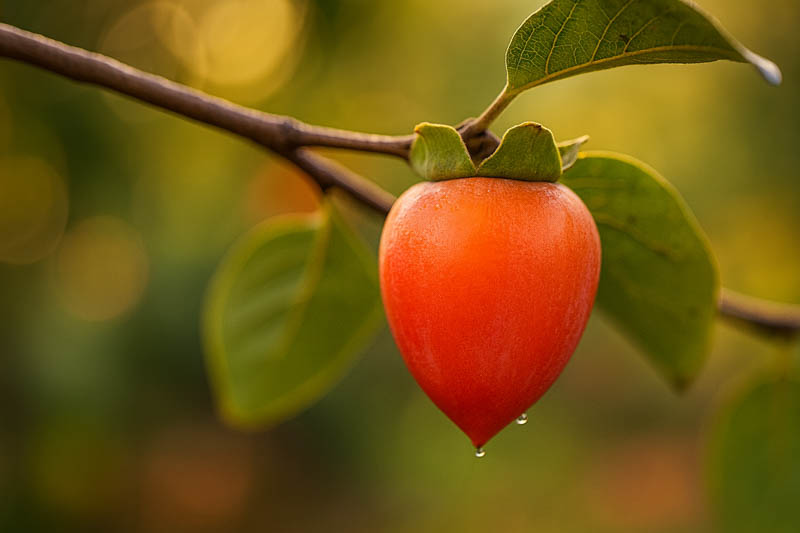
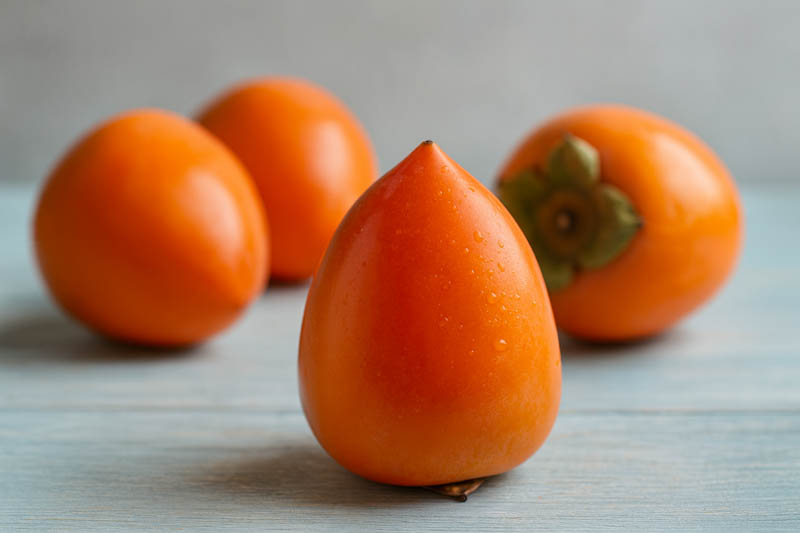
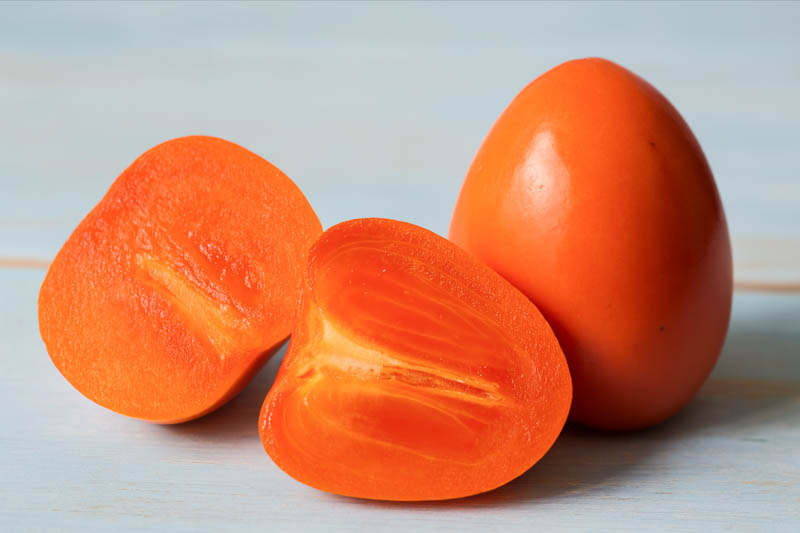


If you dream of a fruit that transforms from an unassuming acorn-shaped orb to a shimmering, honey-sweet jelly in autumn, ‘Hachiya’ Japanese persimmon (Diospyros kaki ‘Hachiya’) is a legendary astringent variety you need to meet. Revered for its intense flavor and melt-in-your-mouth texture when fully ripe, Hachiya is the classic “baking” persimmon, star of holiday breads and fruit puddings, and a treat that rewards patience. Let’s explore why this jewel is beloved by bakers, foragers, and gardeners alike—and how you can enjoy homegrown Hachiya at its very best!
| Botanical Name | Diospyros kaki ‘Hachiya’ |
| Common Names | Hachiya Persimmon, Japanese Persimmon |
| Plant Type | Deciduous fruit tree |
| Hardiness Zones | USDA 7–10 |
| Height & Spread | 20–30 ft. tall × 15–25 ft. wide |
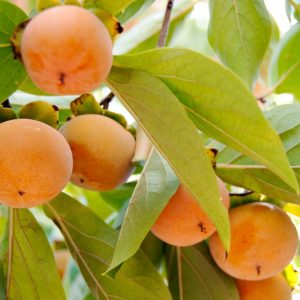
| Fruit Size & Shape | Large (3–4.5 in.), acorn-shaped, deep flame-orange |
| Fruit Texture & Flavor | Gelatinous, smooth, pudding-like when fully soft; richly sweet and honey-floral; extremely astringent when firm |
| Fruit Season | Late fall to early winter; ripens after harvest |
| Sun Requirements | Full sun |
| Soil pH | 6.0–7.5 (well-drained, loamy) |
| Main Uses | Fruit pudding, baking, preserves, smoothies, jam, drying, fresh (only when very soft) |
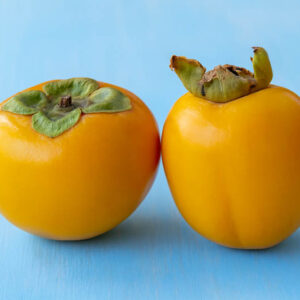
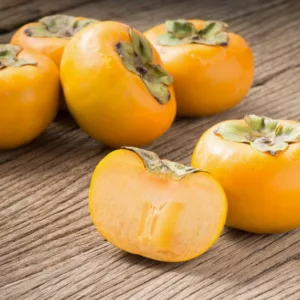
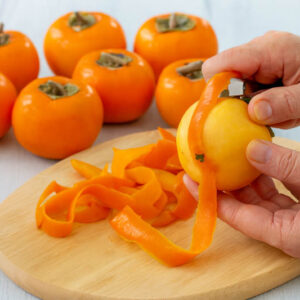
Hachiya fruits are teardrop- or acorn-shaped, with smooth, glossy skin that matures to a vibrant orange-red. The fruits are remarkably astringent (mouth-puckering!) if eaten before they soften completely; but let one ripen to near bursting on your counter, and you’re rewarded with golden, jelly-like flesh bursting with honeyed, floral sweetness. When fully ripe, the flesh becomes custard-like and spoonable. Hachiya often contains a few seeds and has a thin, easily peeled skin. Its intense flavor and smooth texture are celebrated worldwide, especially by bakers and fans of traditional persimmon pudding.
Hachiya is a classic Japanese persimmon cultivar, also widely grown in China, Korea, California, and other temperate regions with mild winters and warm autumns. The tree’s iconic fruit has long been a symbol of abundance in Asian harvest festivals and a staple in traditional kitchens.
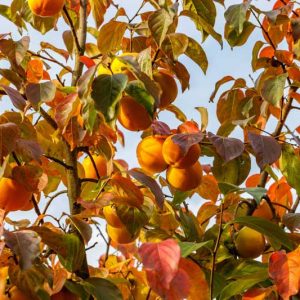
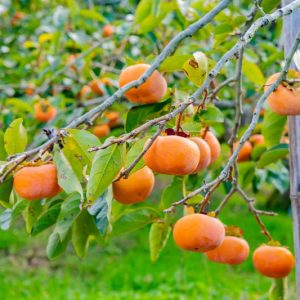
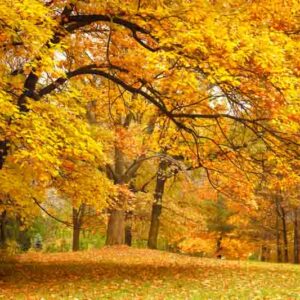
A stately tree, Hachiya matures at 20–30 ft. tall and 15–25 ft. wide with a broad, rounded canopy. The branches are strong, able to support heavy crops, and deeply grooved bark adds winter interest. Glossy, dark green leaves turn brilliant gold and orange in fall, dropping to reveal the dramatic, flame-colored fruit.
Hachiya grows at a moderate pace, about 1–2 feet per year until mature. Grafted trees may produce fruit as soon as 3–5 years after planting, with a healthy tree continuing to bear for 40–50 years or more.
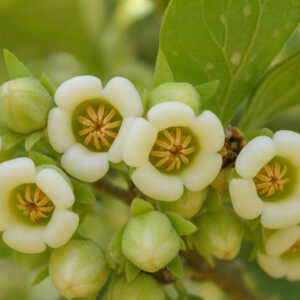
Hachiya blooms in late spring, with inconspicuous, creamy-white, bell-shaped flowers. Most Hachiya trees are self-fertile, requiring no pollinator. Fruit are seedless unless cross-pollinated; even when seeded, they tend to ripen just as sweet.
The tree’s broad, dark green leaves make it a summer standout. Come autumn, vibrant foliage gives way to brilliant orange fruit that looks like glowing lanterns—especially when illuminated by low winter light. The striking bark and sturdy frame make Hachiya a four-season garden feature.
Soft, ripe Hachiya fruit is irresistible to birds (mockingbirds, robins, waxwings) and mammals such as squirrels, raccoons, opossums, and deer. The flowers attract bees and other pollinators in spring. While garden wildlife appreciates the bounty, use netting or pick early to keep enough ripe fruit for yourself!
Best suited to USDA Zones 7–10, Hachiya tolerates light frost when mature and thrives in locations with warm autumns that allow the fruit to ripen fully. A sunny, sheltered spot with well-drained soil yields the healthiest trees and best crops.
Only eat Hachiya fruit when fully soft and jelly-like—unripe flesh is extremely astringent due to tannins and can cause digestive discomfort. Very small amounts of ripe flesh are safe for most pets, but avoid unripe fruit and seeds. Always consult with a vet before sharing with animals.
Hachiya is a well-behaved tree in gardens, not considered invasive, but may produce some root suckers—simply remove them as needed.
| Nutrient | Amount per 100g |
|---|---|
| Calories | 70 kcal |
| Protein | 0.6 g |
| Carbohydrates | 18.6 g |
| Fiber | 3.6 g |
| Fat | 0.2 g |
| Vitamin A | 81 µg (≈9% DV) |
| Vitamin C | 7.5 mg (≈8% DV) |
| Potassium | 161 mg |
| Manganese | 0.355 mg (≈15% DV) |
| Variety | Type | Flavor & Appearance | Best Uses |
|---|---|---|---|
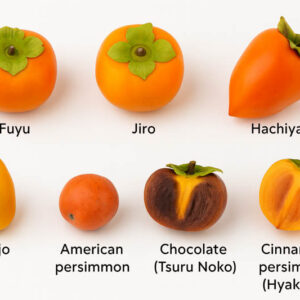
| Fuyu | Non-astringent | Squat and tomato-shaped, firm when ripe, sweet and mild | Fresh eating, salads, slicing, drying, baking |
| Hachiya | Astringent | Acorn-shaped, firm is astringent, turns jelly-soft and honey-sweet when ripened | Pudding, baking, preserves, fresh when fully soft |
| Jiro | Non-astringent | Flattened, four-sided, extra-firm and very mild, low-seed | Fresh eating, salads, bento, drying, desserts |
| Izu | Non-astringent | Small and round, early, sweet and tender | Snacking, salads, drying |
| Saijo | Astringent | Long oval, very soft and honeyed when ripe (“the best one”) | Eaten fresh when soft, drying (hoshigaki), preserves |
| Chocolate (Tsuru Noko) | Pollination-variant | Small, round, brown-streaked orange flesh, spicy-sweet when pollinated | Fresh, desserts, unique culinary use |
🌟 Home Grower Story:
“Our Hachiya tree lights up autumn with lantern-like fruit. The trick is being patient—once they’re jelly-soft, we scoop the pulp onto hot toast, blend into smoothies, or whip up my grandma’s famous persimmon bread. Friends and neighbors line up for the extras every year!”
| Hardiness |
7 - 10 |
|---|---|
| Heat Zones |
7 - 10 |
| Climate Zones | 6, 7, 8, 9, 14, 15, 16, 18, 19, 20, 21, 22, 23, 24, H1 |
| Plant Type | Fruits, Trees |
| Plant Family | Ebenaceae |
| Genus | Diospyros |
| Common names | Japanese Persimmon, Kaki, Persimmon |
| Exposure | Full Sun |
| Season of Interest | Spring (Mid, Late), Summer (Early, Mid, Late), Fall, Winter |
| Height | 20' - 30' (6.1m - 9.1m) |
| Spread | 15' - 25' (4.6m - 7.6m) |
| Maintenance | Low |
| Water Needs | Average |
| Soil Type | Loam |
| Soil pH | Acid, Alkaline, Neutral |
| Soil Drainage | Moist but Well-Drained, Well-Drained |
| Characteristics | Showy, Fruit & Berries |
| Tolerances | Heat |
| Attracts | Birds, Bees |
| Garden Uses | Wall-Side Borders |
| Garden Styles | City and Courtyard, Informal and Cottage |
| Toxic to Humans | No known toxicity |
| Toxic to Cats | No known toxicity |
| Toxic to Dogs | No known toxicity |
| Toxic to Horses | No known toxicity |


| Hardiness |
7 - 10 |
|---|---|
| Heat Zones |
7 - 10 |
| Climate Zones | 6, 7, 8, 9, 14, 15, 16, 18, 19, 20, 21, 22, 23, 24, H1 |
| Plant Type | Fruits, Trees |
| Plant Family | Ebenaceae |
| Genus | Diospyros |
| Common names | Japanese Persimmon, Kaki, Persimmon |
| Exposure | Full Sun |
| Season of Interest | Spring (Mid, Late), Summer (Early, Mid, Late), Fall, Winter |
| Height | 20' - 30' (6.1m - 9.1m) |
| Spread | 15' - 25' (4.6m - 7.6m) |
| Maintenance | Low |
| Water Needs | Average |
| Soil Type | Loam |
| Soil pH | Acid, Alkaline, Neutral |
| Soil Drainage | Moist but Well-Drained, Well-Drained |
| Characteristics | Showy, Fruit & Berries |
| Tolerances | Heat |
| Attracts | Birds, Bees |
| Garden Uses | Wall-Side Borders |
| Garden Styles | City and Courtyard, Informal and Cottage |
| Toxic to Humans | No known toxicity |
| Toxic to Cats | No known toxicity |
| Toxic to Dogs | No known toxicity |
| Toxic to Horses | No known toxicity |
How many Diospyros kaki ‘Hachiya’ (Japanese Persimmon) do I need for my garden?
| Plant | Quantity | |
|---|---|---|
| Diospyros kaki ‘Hachiya’ (Japanese Persimmon) | N/A | Buy Plants |
Create a membership account to save your garden designs and to view them on any device.
Becoming a contributing member of Gardenia is easy and can be done in just a few minutes. If you provide us with your name, email address and the payment of a modest $25 annual membership fee, you will become a full member, enabling you to design and save up to 25 of your garden design ideas.
Join now and start creating your dream garden!
Create a membership account to save your garden designs and to view them on any device.
Becoming a contributing member of Gardenia is easy and can be done in just a few minutes. If you provide us with your name, email address and the payment of a modest $25 annual membership fee, you will become a full member, enabling you to design and save up to 25 of your garden design ideas.
Join now and start creating your dream garden!