Create Your Garden

Salvia x sylvestris ‘Tanzerin’ (Wood Sage)

Tanzerin Wood Sage, Tanzerin Meadow Sage, Wood Sage ‘Tanzerin’, Meadow Sage ‘Tanzerin’, Salvia × sylvestris ‘Tanzerin’, Salvia × sylvestris ‘Tänzerin’, Salvia nemorosa ‘Tanzerin’, Salvia ‘Tanzerin’

AGM Award
Salvia x Sylvestris 'Tanzerin', Wood Sage 'Tanzerin', Salvia x Superba 'Tanzerin', Salvia Nemorosa 'Tanzerin', Salvia Sylvestris 'Tanzerin', Early blooming salvia, award-winning salvia

Salvia x sylvestris ‘Tanzerin’ (Wood Sage) – Rich Violet Flower Spikes, Reddish-Purple Bracts, Long Bloom Season, And A Pollinator Magnet For Sunny Borders

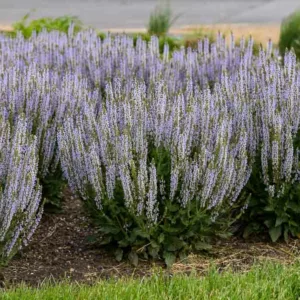
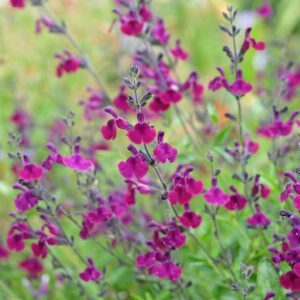
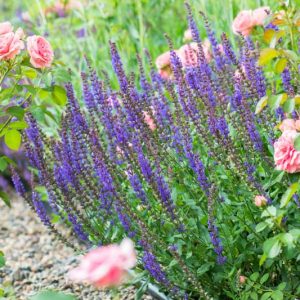
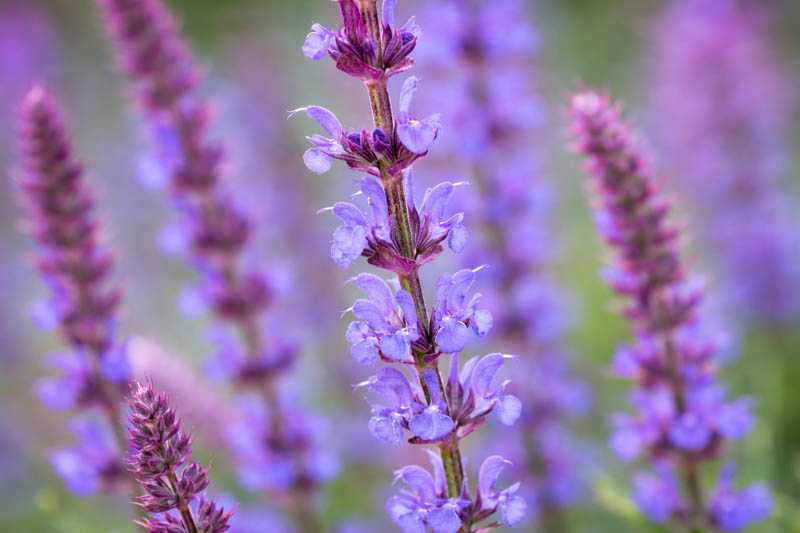
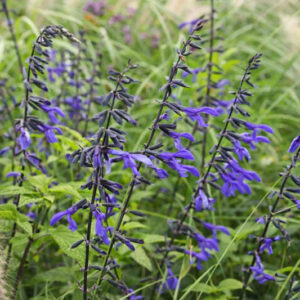
Salvia x sylvestris ‘Tanzerin’ (often seen as Tänzerin) is the kind of wood sage that makes a planting look instantly more “put together”. It delivers upright spires of rich violet flowers paired with reddish-purple bracts and calyces – a color combo that reads as deep, saturated, and slightly dramatic without being loud. The plant itself stays tidy, bushy, and clump-forming, so you get strong vertical structure without a messy footprint.

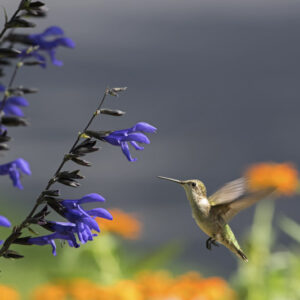
If you love perennials that earn their keep (beautiful, reliable, and great for wildlife), ‘Tanzerin’ is an easy choice. It thrives in full sun, prefers well-drained soil, and is known for blooming for weeks in early summer, often continuing throughout summer with timely deadheading. It is also a magnet for bees, butterflies, and hummingbirds.

Why gardeners keep planting it: ‘Tanzerin’ gives you bold flower spires, a neat clump, and repeat-friendly bloom – plus it plays beautifully with yellows, roses, and classic cottage-garden companions.

Salvia belongs to the Lamiaceae family – the aromatic, pollinator-friendly group that also includes rosemary, basil, and lavender. If you like plants that smell good, handle sun, and support beneficial insects, this family tends to deliver.
Takeaway: Salvia x sylvestris ‘Tanzerin’ is a compact wood sage with rich violet flower spikes and reddish-purple bracts that blooms for weeks in early summer and often continues through summer – best in full sun and well-drained soil, drought tolerant once established, and highly attractive to bees, butterflies, and hummingbirds.

Quick Facts – Salvia x sylvestris ‘Tanzerin’ (Wood Sage)

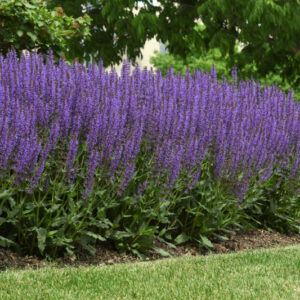
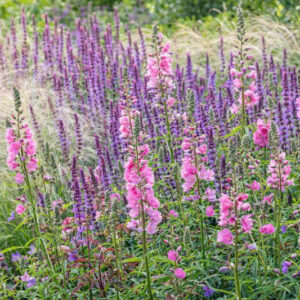
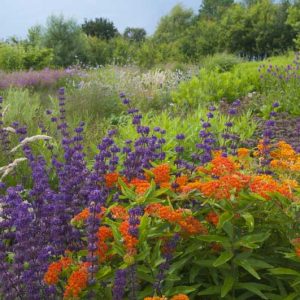
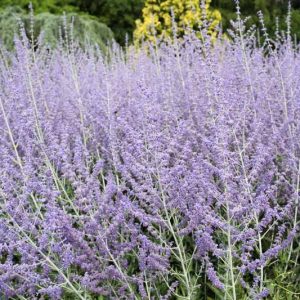
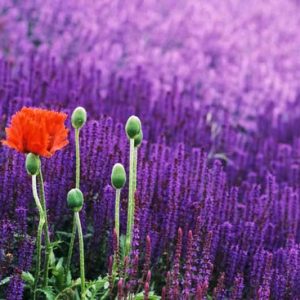
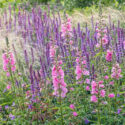
Salvia x sylvestris 'Tanzerin' (Wood Sage) with rich violet flowers and reddish-purple bracts

Summary: Award-winning, bushy herbaceous perennial with rich violet flower spikes and distinctive reddish-purple bracts and calyces.
Use: Excellent for sunny borders, cottage gardens, mixed borders, butterfly gardens, and pollinator gardens – also works in containers and gravel-style plantings.
Highlight: Long early-summer bloom, often continuing through summer when deadheaded.
Note: Best in full sun and dry to medium, well-drained soil; drought tolerant once established and often considered deer resistant.

Botanical Name Salvia x sylvestris ‘Tanzerin’
Family Mint family (Lamiaceae)
Common Names Wood sage, sage
Native Range ‘Tanzerin’ is a garden hybrid (not a wild native plant). It is associated with European wood-sage breeding and is widely grown for garden performance.
Plant Type and Habit Clump-forming herbaceous perennial with upright flower spikes
Hardiness (approx. USDA) Hardy in USDA Zones 4-8
Height 24-36 in. (60-90 cm)
Spread 12-24 in. (30-60 cm)
Spacing 12-18 in. (30-50 cm)
Sun and Exposure Best in full sun; light shade tolerated
Soil Average, dry to medium, well-drained soil; sandy or gravelly soils preferred
Seasonal Interest Early summer for weeks, often continuing through summer with deadheading
Flower Color Rich violet flowers with reddish-purple bracts and calyces
Foliage Color Green, aromatic foliage
Fragrance Aromatic foliage (fresh herbal scent when brushed)
Drought Tolerant Yes (once established)
Heat Tolerant Unknown
Humidity Tolerant Unknown
Pollution Tolerant Yes
Nectar / Pollen Yes
Attracts Bees, butterflies, hummingbirds
Deer / Rabbit Often considered deer and rabbit resistant
Toxicity Generally considered non-toxic
Invasive Status Not considered invasive
Care – Quick
  • Planting: Full sun in well-drained soil; avoid soggy winter spots.
  • Water: Water regularly during establishment; afterward water mainly during prolonged drought.
  • Feeding: Keep it modest – compost in spring is usually enough.
  • Pruning / Deadheading: Remove spent spikes to encourage more flowers; cut back after flowering.
  • Mulching: Thin mulch is fine; keep it off the crown to prevent rot.
  • Propagation: Divide clumps in spring to maintain cultivar traits.
  • Winter care: Prioritize drainage – winter-wet soil is the main enemy of longevity.
Quick promise
Salvia x sylvestris ‘Tanzerin’ delivers rich violet flower spikes with reddish-purple bracts from early summer for weeks, often continuing through summer with deadheading – best in full sun and well-drained soil, drought tolerant once established, and highly attractive to bees, butterflies, and hummingbirds.

What Is Salvia x sylvestris ‘Tanzerin’ (Wood Sage)?

Description

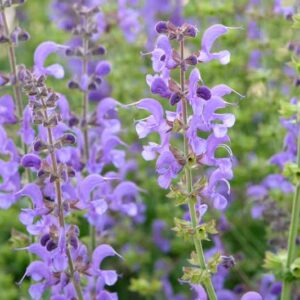
Salvia x sylvestris ‘Tanzerin’ is a hardy, upright, clump-forming perennial grown for its long show of flower spikes and its clean, rounded habit. It rises from a mound of aromatic foliage and sends up strong stems packed with small, two-lipped blooms. The real signature is the contrast – rich violet flowers sitting in reddish-purple bracts and calyces, which makes the entire spike look deeper and more saturated from a distance.

Garden shorthand: Think of ‘Tanzerin’ as “vertical color with good manners” – it adds spires and rhythm, but it stays in a polite clump.

Native Information

‘Tanzerin’ is a garden hybrid, so it does not have a single wild native range the way a straight species does. What it does inherit is the classic wood-sage preference for sunny, open conditions and well-drained soils – the same kind of “meadow edge” environment many hardy salvias are associated with in cultivation and in related European species.

Growth Habit and Vigor

This is where ‘Tanzerin’ shines in real gardens. It grows as a rounded clump, typically 24-36 inches tall (60-90 cm) and about 12-24 inches wide (30-60 cm), depending on conditions. In full sun and leaner soil, it stays compact and upright. In shade or rich soil, you may see softer growth – which is the plant’s gentle hint to dial back fertilizer and give it more sun.

Flowers and Bloom Time

Expect the main show in early summer, with spikes that keep coming for weeks. With consistent deadheading (removing spent flower spikes), it often continues blooming throughout summer. Practically speaking, you can treat deadheading like a “repeat bloom button” – snip spent spikes back to the leafy mound, water once deeply if the weather is hot and dry, and let the plant reset for another round.

Deadheading shortcut: Cut the first flush back as soon as it starts to fade (not weeks later). Earlier cleanup usually means faster rebloom.

Foliage and Seasonal Interest

The foliage is green, textured, and aromatic when brushed or crushed – a hallmark of the mint family and one reason many salvias are less tempting to browsers. Even when not flowering, ‘Tanzerin’ contributes a tidy mound that reads as intentional ground-level structure in a border.

Awards

‘Tanzerin’ has earned the prestigious Award of Garden Merit from the Royal Horticultural Society, a strong indicator that it performs reliably in gardens.

Hardiness

In many gardens, Salvia x sylvestris ‘Tanzerin’ performs as a cold-hardy perennial in roughly USDA Zones 4-8. It typically dies back in winter and returns in spring, with best longevity in sites that avoid winter-wet soil.

Landscape Uses

  • Sunny borders and perennial beds: Adds strong vertical rhythm and rich color.
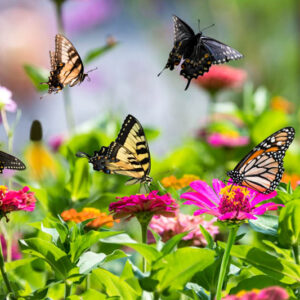
  • Butterfly and pollinator gardens: Nectar-rich blooms draw beneficial visitors.
  • Cottage gardens: A natural fit among softer, romantic textures.
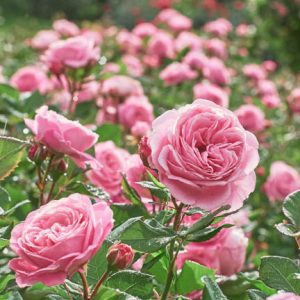
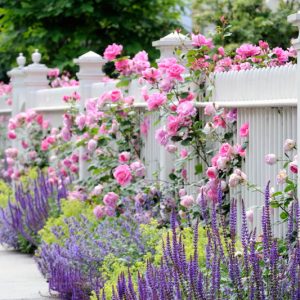
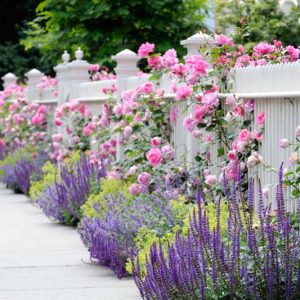
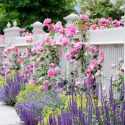
  • Mixed borders with roses: The violet tones and upright spires look great threaded between rose shrubs.
  • Gravel, rock, and Mediterranean-style plantings: Thrives in well-drained, sun-baked spots when established.

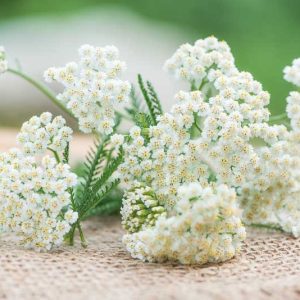
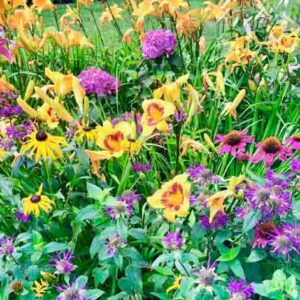
Color-combo wise, ‘Tanzerin’ is famously easy. It looks especially good with yellow Achillea (Yarrow), daylilies, and roses – basically anything that benefits from a vertical violet accent.

Wildlife and Ecological Value

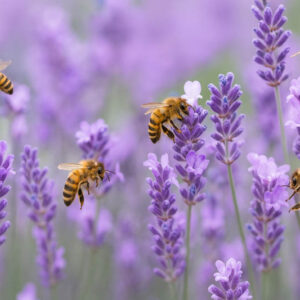
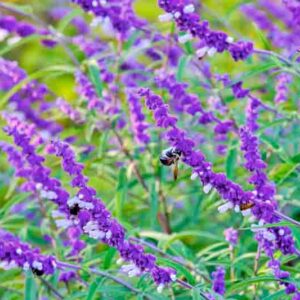
Wood sages are pollinator classics, and ‘Tanzerin’ is no exception. The nectar-rich tubular blooms attract bees, butterflies, and hummingbirds, so this plant does double duty: it adds beauty to your border and helps support garden biodiversity.

Deer and Rabbits

‘Tanzerin’ is often described as rabbit and deer-resistant thanks to its aromatic foliage. As always: resistant does not mean impossible. But compared with many soft-leaved border plants, salvias tend to be lower on the snack list.

Drought Tolerance

Once established, this wood sage is considered drought tolerant. For best rebloom and a fresher look in midsummer, give it a deep soak during prolonged drought (especially in sandy soil or containers), then let the soil dry back down.

Toxicity

Ornamental salvias like this are generally considered low-risk in gardens, but it is still smart to treat all ornamentals as “not for snacking” – especially for pets that like to chew leaves.

Invasiveness

‘Tanzerin’ is not considered invasive. It forms a well-behaved clump and is easy to manage with normal maintenance.
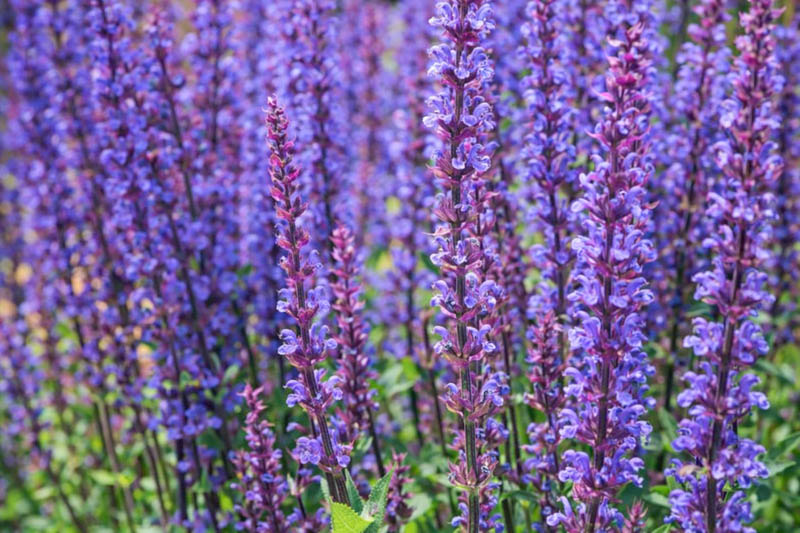
Best placement tip: Give ‘Tanzerin’ at least 6 hours of sun and excellent drainage. More sun usually means stronger stems, richer color, and better repeat bloom.

Salvia x Sylvestris 'Tanzerin', Wood Sage 'Tanzerin', Salvia x Superba 'Tanzerin', Salvia Nemorosa 'Tanzerin', Salvia Sylvestris 'Tanzerin', Early blooming salvia, award-winning salvia

Growing Conditions for Salvia x sylvestris ‘Tanzerin’

Light

  • Full sun: Best flowering, compact habit, and sturdy stems.
  • Light shade: Tolerated, but flowering may be lighter and growth looser.

Soil

  • Well-drained is non-negotiable: Winter-wet soil is the quickest path to root problems and poor longevity.
  • Average to moderately fertile: Too rich can mean leafy growth and fewer flowers.
  • Sandy or gravelly soils: Often ideal for sturdy stems and long-term performance.

Water

  • Year 1 (establishment): Water consistently so roots grow deep and resilient.
  • Mature plants: Water during prolonged drought. A deep soak can improve summer flowering, especially after deadheading.

Feeding

‘Tanzerin’ is not a heavy feeder. If you want the simplest plan: top-dress with compost in spring and stop there. Over-fertilizing can lead to softer growth and fewer flowers.

Mulch

  • Use a light mulch to moderate moisture and suppress weeds.
  • Keep mulch away from the crown to reduce rot risk, especially in winter.

Planting Tips

  • Plant in spring or early fall so roots establish before extremes.
  • Space plants about 12-18 inches (30-50 cm) for airflow and a fuller clump effect.
  • Set the crown at soil level, water in well, and let the soil drain between waterings.

Maintenance – Pruning – Deadheading

  • Deadheading: Remove fading spikes to keep bloom coming.
  • Midseason reset: After the main flush, cut stems back toward the leafy mound for a tidy look and potential rebloom.
  • End of season: Cut back in late fall or early spring, depending on your winter style and local conditions.

Propagation

  • Division: The most reliable method for keeping ‘Tanzerin’ true to type – divide in spring.
  • Cuttings: Possible from non-flowering shoots in late spring or early summer (use a free-draining mix).
  • Seed: Seedlings may not match the parent cultivar.
Care tip: For the best long-season look, treat deadheading as routine grooming – quick snips every week or two can keep ‘Tanzerin’ flowering and looking crisp.

Salvia x sylvestris ‘Tanzerin’: Pests, Diseases, and Common Problems

Pests

Wood sages are generally easygoing. In some gardens (especially damp, shaded, or stressed plantings), you may see slugs or snails. During hot, dry spells, keep an eye out for spider mites on stressed plants, particularly in containers. Most pest issues are manageable with better airflow, a strong water spray, or insecticidal soap. Organic options like neem oil can help when needed.
Diseases

  • Root rot: Usually tied to poor drainage or winter-wet soil. Prioritize drainage first.
  • Powdery mildew: More likely with crowding and humidity. Give sun, space, and airflow.
  • Verticillium wilt: Uncommon, but possible in stressed plants. Keep conditions balanced.
  • Rust: Occasional in humid climates – remove affected leaves and improve airflow.

Common Problems

  • Flopping stems: Usually too much shade, too much nitrogen, or consistently wet soil. Move to more sun and keep soil leaner and better drained.
  • Short bloom window: Often from late (or no) deadheading. Cut spikes back as they fade to extend flowering.
  • Winter decline: Almost always a drainage issue. If you only fix one thing, fix drainage.
Problem-solver rule: Sun plus drainage solves most salvia issues. If your plant struggles, start there before you reach for fertilizer.

Salvia x Sylvestris 'Tanzerin', Wood Sage 'Tanzerin', Salvia x Superba 'Tanzerin', Salvia Nemorosa 'Tanzerin', Salvia Sylvestris 'Tanzerin', Early blooming salvia, award-winning salvia

Design Ideas With Salvia x sylvestris ‘Tanzerin’

  • Border rhythm: Repeat ‘Tanzerin’ every few feet to create a steady vertical pattern through mixed plantings.
  • High-contrast combos: Pair violet spikes with yellow yarrows or golden daylilies for instant pop.
  • Rose partner: Tuck it between roses so the spikes rise through the shrubs and echo deeper rose tones.
  • Pollinator corridor: Combine with long-blooming nectar plants so the garden stays busy from spring to fall.
  • Gravel-garden elegance: Use with drought-tolerant companions in sharp-draining soil for a Mediterranean feel.
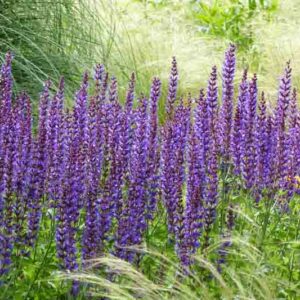
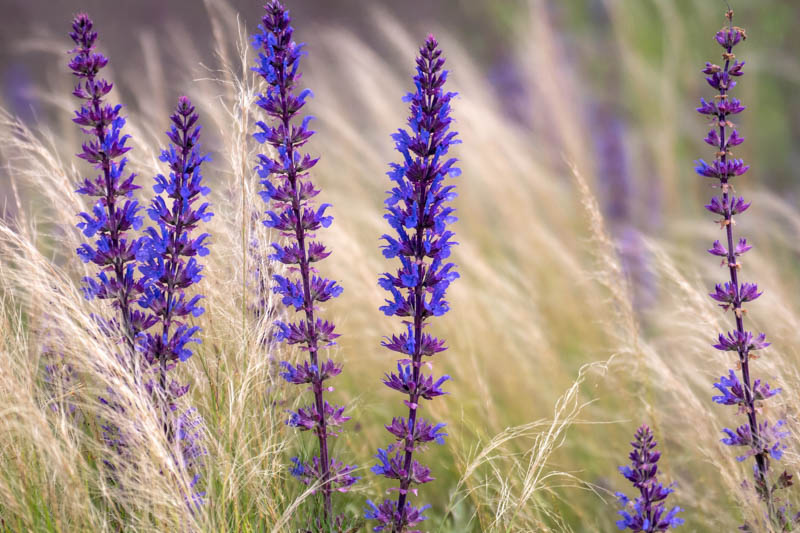
Design tip: Plant in drifts (3, 5, or 7) so the violet color reads as a statement. Single plants look nice – groups look unforgettable.
 

Popular Cultivars of Salvia x sylvestris

  • Caradonna – Dark purple stems and saturated violet-blue flower spikes; compact, upright, and highly architectural.
  • Mainacht (May Night) – A classic, award-winning selection with deep blue-purple flowers and excellent garden performance.
  • Ostfriesland – Rich violet-blue flower spikes on a compact, reliable plant well suited to borders and mass planting.
  • Amethyst – Lavender-purple blooms on a well-balanced plant that blends easily with other perennials.
  • Tänzerin – Rich violet tones with reddish-purple bracts; neat clumps and repeat-friendly bloom.
  • Blue Hill (Blauhügel) – Clear, medium blue flower spikes on a spreading, informal plant ideal for naturalistic plantings.
  • Snow Hill (Schneehügel) – Pure white flower spikes that provide striking contrast and brighten mixed perennial borders.

Frequently Asked Questions

Is Salvia x sylvestris ‘Tanzerin’ drought tolerant?

Yes. Once established, Salvia x sylvestris ‘Tanzerin’ is drought tolerant and performs best in dry to medium, well-drained soil. For stronger summer flowering, water deeply during prolonged drought, especially in sandy soil or containers.

When does Salvia ‘Tanzerin’ bloom?

It blooms in early summer for weeks and often continues through summer, especially if you remove spent flower spikes (deadhead) as they fade.

Does Salvia ‘Tanzerin’ need full sun?

Full sun is best for the most flowers and the strongest, most upright stems. Light shade is tolerated, but flowering may be reduced and plants can loosen.

How tall and wide does Salvia x sylvestris ‘Tanzerin’ grow?

It typically grows about 24-36 inches tall (60-90 cm) and spreads around 12-24 inches (30-60 cm), forming a tidy, upright clump with flower spikes.

Is Salvia ‘Tanzerin’ deer resistant?

It is often considered deer resistant because the aromatic foliage is not a preferred food source. However, no plant is completely deer-proof, especially when browsing pressure is high.

What soil does Salvia ‘Tanzerin’ prefer?

It performs best in average, dry to medium, well-drained soil. Sandy or gravelly soils are often ideal. Avoid poorly drained or waterlogged sites, especially in winter, to reduce the risk of root rot.

References

Royal Horticultural Society (RHS) – Salvia × sylvestris ‘Tänzerin’ plant profile and cultivation notes

Updated: January 2026 – Reviewed by Gardenia Editors

Salvia: Plant Care and Growing Guide


Here are some tips on how to plant and grow salvia successfully

Requirements

Hardiness 4 - 8
Heat Zones 4 - 9
Climate Zones 2, 3, 4, 5, 6, 7, 8, 9, 10, 14, 15, 16, 17, 18, 19, 20, 21, 22, 23, 24
Plant Type Perennials
Plant Family Lamiaceae
Genus Salvia
Common names Sage
Exposure Full Sun
Season of Interest Summer (Early, Mid, Late)
Height 2' - 3' (60cm - 90cm)
Spread 1' - 2' (30cm - 60cm)
Spacing 12" - 18" (30cm - 50cm)
Maintenance Low
Water Needs Average
Soil Type Chalk, Loam, Sand
Soil pH Acid, Alkaline, Neutral
Soil Drainage Moist but Well-Drained
Characteristics Cut Flowers, Fragrant, Plant of Merit, Showy
Tolerance Drought, Deer, Rabbit, Dry Soil
Attracts Bees, Butterflies, Hummingbirds
Garden Uses Beds And Borders, Patio And Containers, Wall-Side Borders
Garden Styles City and Courtyard, Coastal Garden, Informal and Cottage, Mediterranean Garden
How Many Plants
Do I Need?
Explore Great Plant Combination Ideas
Salvia (Sage)
Guides with
Salvia (Sage)
Not sure which Salvia (Sage) to pick?
Compare Now

Alternative Plants to Consider

Salvia guaranitica (Blue Anise Sage)
Salvia splendens ‘Van-Houttei’ (Scarlet Sage)
Salvia nemorosa ‘Blue By You’ (Sage)
Salvia microphylla (Baby Sage)
Salvia pratensis (Meadow Sage)
Salvia nemorosa ‘Perfect Profusion’ (Sage)

Recommended Companion Plants

Rosa (Rose)
Achillea (Yarrow)
Allium (Ornamental Onion)
Eryngium (Sea Holly)
Echinacea (Coneflower)
Hemerocallis (Daylilies)

Find In One of Our Guides or Gardens

Perennial Border with Allium, Kniphofia, Lamb’s Ear
A Welcoming Hedge
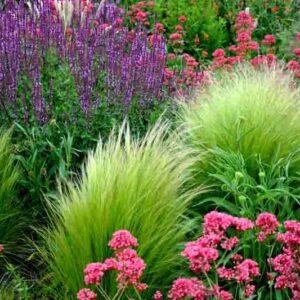
A Soft, Dreamy Border with Stipa, Salvia and Sidalcea
Bold Blooms and Swaying Grasses: A Drought-Tolerant Garden
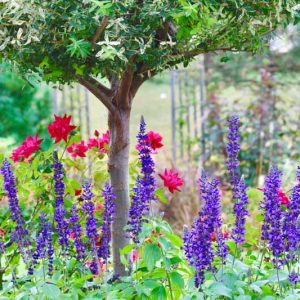
A Lovely Border Idea with Roses, Sage and Willow
A Pretty Duo to Try: Asclepias and Salvia
Annual Salvias: Heat-Loving Color That Blooms All Season
Best Full Sun Perennials for Zone 8: Top Heat-Tolerant Garden Winners
Best Full Sun Shrubs for Zone 8: Heat-Loving Shrubs That Thrive in Sunshine
Top Zone 6 Full Sun Perennials – Color That Thrives in Heat & Cold
Top Zone 7 Full Sun Perennials for Long Bloom, Color & Pollinators
Native Garden Ideas – Best Native Plants for a Beautiful Yard
Mediterranean Gardens: Low-Water Design, Plants & Ideas
Drought Tolerant Gardens – The Ultimate Water-Wise Guide
Pollinator Gardens: Plants, Designs & Care Guide
Why Rosemary is Perfect for Gardens and Pots
Grow These 20 Herbs Indoors for Freshness All Year
Salvia: Discover the Top Benefits of Growing Sage in Your Garden
Salvia Varieties for a Stunning, Water-Wise Garden
Salvia nemorosa (Woodland Sage)
What is Salvia? Understanding Its Role in Gardening and Beyond
Top 70 Summer Flowers to Brighten Your Garden and Home
50 Best Fall Flowers to Color Your Autumn Garden
Desert Shrubs: Essential Plants for Dry Gardens
Desert Flowers: Bringing Color to Dry Gardens
50 Fall Wildflowers: Top Picks for a Vibrant Autumn Garden
50 Summer Wildflowers: Bright Blooms for Your Garden
50 Wildflowers that Thrive in Sun
50 Blue Wildflowers for Every Garden
50 Pink Wildflowers for Every Garden
50 Purple Wildflower to Brighten Your Garden
50 California Wildflowers: From Desert Blooms to Coastal Gems
50 Texas Wildflowers to Brighten Your Garden
Top 50 Most Beautiful Flowers Worldwide
Stunning Blue Flowers to Enhance Your Garden’s Beauty
Add a Splash of Color: Perfect Flowering Shrubs for Small Gardens
42 Best Perennial Flowers and Plants to Brighten Your Garden Every Season
30 Best Spring Flowers Every Gardener Should Grow
How to Create an Enchanting Butterfly Garden
For the Love of Butterflies: Best Flowers to Attract them to Your Garden
6 Reasons You Should Create a Butterfly Garden
Salvia (Sage)
Best Annual Flowers and Plants to Spruce up Your Garden
Hummingbird
18 Best Plants That Repel Mosquitoes
Rosemary: Learn How To Plant, Grow and Harvest
Salvia yangii (Russian Sage)
Best Annual Flowers and Plants for Full Sun
Wonderful Plants That Repel Insects
Companion Planting With Herbs
Great Rose Companion Plants: Nepeta, Salvia and Lavandula
Best and Worst Companion Plants for Rosemary
Hardy Perennial Salvias (Sage)
Salvia guaranitica (Blue Anise Sage)
Plants with Purple Flowers to Add Charm to Your Garden
Salvia: Plant Care and Growing Guide
Best Flowers to Attract Hummingbirds
While every effort has been made to describe these plants accurately, please keep in mind that height, bloom time, and color may differ in various climates. The description of these plants has been written based on numerous outside resources.
Buy Plants

Requirements

Hardiness 4 - 8
Heat Zones 4 - 9
Climate Zones 2, 3, 4, 5, 6, 7, 8, 9, 10, 14, 15, 16, 17, 18, 19, 20, 21, 22, 23, 24
Plant Type Perennials
Plant Family Lamiaceae
Genus Salvia
Common names Sage
Exposure Full Sun
Season of Interest Summer (Early, Mid, Late)
Height 2' - 3' (60cm - 90cm)
Spread 1' - 2' (30cm - 60cm)
Spacing 12" - 18" (30cm - 50cm)
Maintenance Low
Water Needs Average
Soil Type Chalk, Loam, Sand
Soil pH Acid, Alkaline, Neutral
Soil Drainage Moist but Well-Drained
Characteristics Cut Flowers, Fragrant, Plant of Merit, Showy
Tolerance Drought, Deer, Rabbit, Dry Soil
Attracts Bees, Butterflies, Hummingbirds
Garden Uses Beds And Borders, Patio And Containers, Wall-Side Borders
Garden Styles City and Courtyard, Coastal Garden, Informal and Cottage, Mediterranean Garden
How Many Plants
Do I Need?
Explore Great Plant Combination Ideas
Salvia (Sage)
Guides with
Salvia (Sage)
Not sure which Salvia (Sage) to pick?
Compare Now

Gardening Ideas

Plant Calculator

How many Salvia x sylvestris ‘Tanzerin’ (Wood Sage) do I need for my garden?

Input your garden space dimensions

Your Shopping List

Plant Quantity
Salvia x sylvestris ‘Tanzerin’ (Wood Sage) N/A Buy Plants

Please Login to Proceed

You Have Reached The Free Limit, Please Subscribe to Proceed

Subscribe to Gardenia

To create additional collections, you must be a paid member of Gardenia
  • Add as many plants as you wish
  • Create and save up to 25 garden collections
Become a Member

Plant Added Successfully

Your garden is taking shape. Unlock full planning.

You’ve reached the free limit. Upgrade for $25/year to add as many plants as you wish and save up to 25 garden collections. Unlock Annual Membership

Update Your Credit
Card Information

Cancel

Create a New Collection

Sign Up to Our Newsletter

    You have been subscribed successfully

    Join Gardenia.net

    Create a membership account to save your garden designs and to view them on any device.

    Becoming a contributing member of Gardenia is easy and can be done in just a few minutes. If you provide us with your name, email address and the payment of a modest $25 annual membership fee, you will become a full member, enabling you to design and save up to 25 of your garden design ideas.

    Join now and start creating your dream garden!

    Join Gardenia.net

    Create a membership account to save your garden designs and to view them on any device.

    Becoming a contributing member of Gardenia is easy and can be done in just a few minutes. If you provide us with your name, email address and the payment of a modest $25 annual membership fee, you will become a full member, enabling you to design and save up to 25 of your garden design ideas.

    Join now and start creating your dream garden!
    Find your Hardiness Zone

    Find your Heat Zone

    Find your Climate Zone