Create Your Garden

Salvia nemorosa ‘Rose Marvel’ (Woodland Sage)

Rose Marvel Meadow Sage, Meadow Sage ‘Rose Marvel’, Wood Sage ‘Rose Marvel’, Perennial Salvia ‘Rose Marvel’, Garden Sage ‘Rose Marvel’, Steppe Sage ‘Rose Marvel’, Balkan Clary ‘Rose Marvel’, Salvia ‘Rose Marvel’
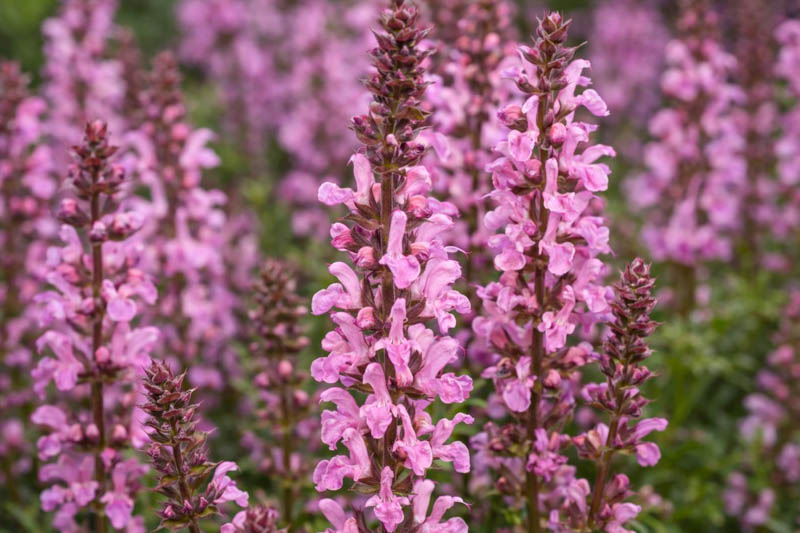
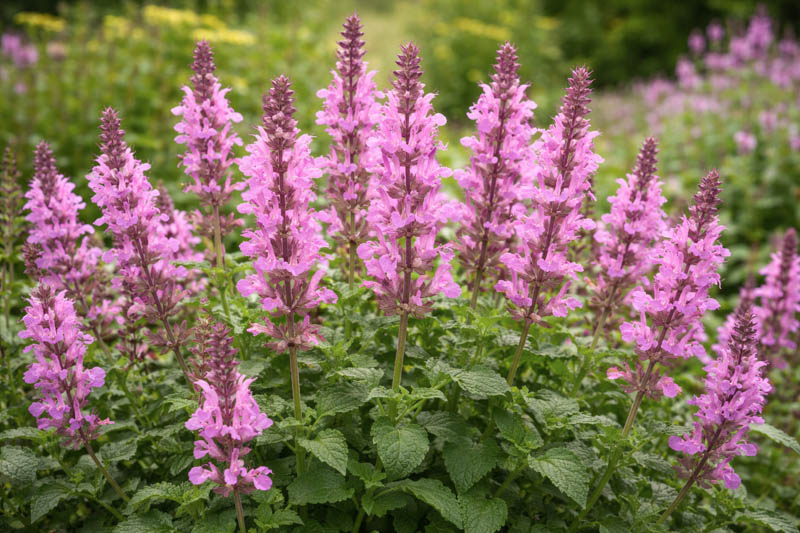
Salvia Nemorosa 'Rose Marvel', Sage 'Rose Marvel', Balkan Clary 'Rose Marvel', Steppe Sage 'Rose Marvel', Pink Sage, Pink Salvia

Salvia nemorosa ‘Rose Marvel’ (Woodland Sage) – Ultra-Large Deep Rose Flower Spikes, Compact Dwarf Habit, And A Pollinator Magnet For Full Sun Gardens

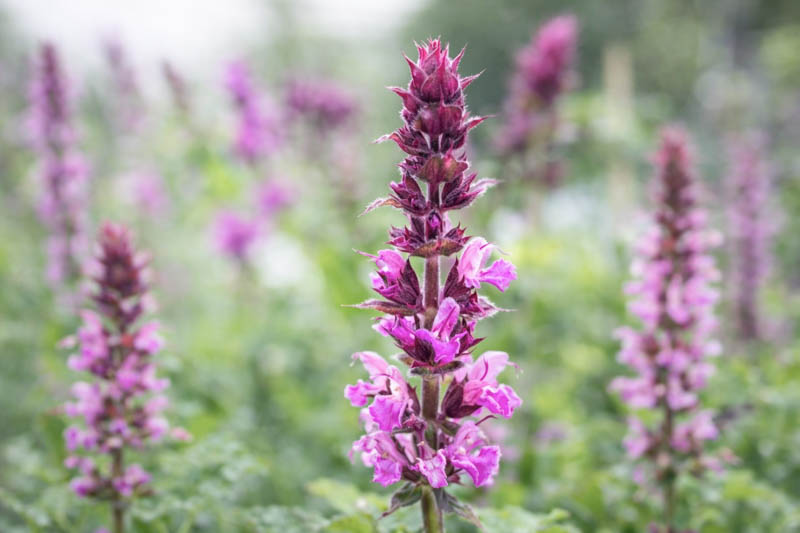
Salvia nemorosa ‘Rose Marvel’ is the kind of plant that makes a garden look instantly more intentional – without adding work. It grows into a neat, rounded clump of aromatic green foliage, then sends up thick spikes of rich, deep rose flowers highlighted by dramatic purple calyces. The name is not hype. This cultivar is noted for ultra-large blossoms for a woodland sage, and the color reads bold and saturated instead of getting lost in the border.

If your garden style leans sunny, low-maintenance, and pollinator-friendly, this compact salvia belongs on your shortlist. The nectar-rich flowers are a favorite with bees, butterflies, and hummingbirds. Once established, it is typically considered drought tolerant, and many gardeners also appreciate its deer resistant reputation. Think of it as a compact, dependable workhorse for perennial borders, cottage gardens, butterfly gardens, and containers where you want long color without fuss.
Why gardeners love it: ‘Rose Marvel’ stays compact, blooms heavily, and delivers unusually large deep rose flower spikes that keep borders vibrant from early summer into fall with deadheading.

Quick Facts – Salvia nemorosa ‘Rose Marvel’ (Sage)

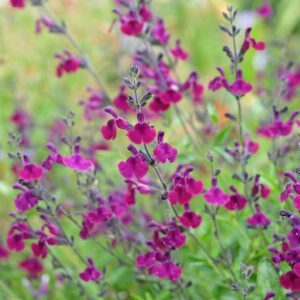
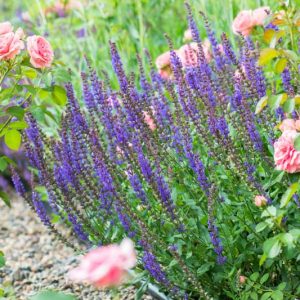
Salvia nemorosa 'Rose Marvel' with ultra-large deep rose flower spikes and purple calyces

Summary: Compact herbaceous perennial with a tidy clumping habit and upright spikes of rich, deep rose flowers highlighted by purple calyces.
Use: Ideal for front-of-border edging, small gardens, containers, pollinator gardens, cottage gardens, and mass plantings.
Highlight: Long bloom from early summer to fall, especially with deadheading and a light shear after the first flush.
Note: Best in full sun and dry to medium, well-drained soil. Often considered drought tolerant once established and deer and rabbit resistant.

Botanical Name Salvia nemorosa ‘Rose Marvel’
Family Mint family (Lamiaceae)
Common Names Sage, woodland sage, Balkan clary sage
Native Range Native to Central and Eastern Europe and parts of Western Asia (the species Salvia nemorosa).

Note: ‘Rose Marvel’ is a cultivated selection and is not a wild native plant.

Plant Type and Habit Compact, clump-forming herbaceous perennial with upright flower spikes
Hardiness (approx. USDA) Hardy in USDA Zones 4-9
Height 10-12 in. (25-30 cm)
Spread 10-12 in. (25-30 cm)
Spacing 12-15 in. (30-40 cm)
Sun and Exposure Best in full sun; light shade tolerated
Soil Average, dry to medium, well-drained soil; sandy or gravelly soils are excellent
Seasonal Interest Early summer to fall; longer with deadheading and a light shear
Flower Color Rich deep rose (often reads as rose-magenta) with purple calyces
Foliage Color Mid-green to gray-green
Fragrance Aromatic foliage (herbal, sage-like when crushed)
Drought Tolerant Yes (once established)
Heat Tolerant Unknown
Humidity Tolerant Unknown
Pollution Tolerant Yes
Nectar / Pollen Yes
Attracts Bees, butterflies, hummingbirds, beneficial insects
Deer / Rabbit Often considered deer and rabbit resistant
Toxicity Generally considered non-toxic
Invasive Status Not considered invasive
Care – Quick
  • Planting: Full sun in well-drained soil; avoid winter-wet sites.
  • Water: Water regularly during establishment; afterward water only during prolonged drought.
  • Feeding: Light spring compost or a modest balanced fertilizer is enough.
  • Pruning / Deadheading: Deadhead spent spikes to encourage more blooms; shear lightly after the first flush for a strong rebloom.
  • Mulching: Thin mulch layer is fine; keep mulch away from the crown.
  • Propagation: Divide clumps in spring or early fall, or take stem cuttings in late spring to summer to maintain cultivar traits.
  • Winter care: Avoid soggy soil; cut back in late fall or early spring.
Quick promise
Salvia nemorosa ‘Rose Marvel’ delivers ultra-large deep rose flower spikes on a compact, tidy plant – happiest in full sun and well-drained soil, drought tolerant once established, and highly attractive to bees, butterflies, and hummingbirds.

What Is Salvia nemorosa ‘Rose Marvel’ (Sage)?

Description

Noted for its ultra-large blossoms, Salvia nemorosa ‘Rose Marvel’ produces stunning spikes of rich, deep rose flowers adorned with purple calyces from early summer to fall. Showy, undemanding, this hardy Salvia cultivar is an excellent dwarf reblooming variety that provides color and impact over a long season in both the landscape and containers.

In real-garden terms, this is a salvia you can tuck into smaller spaces without losing that classic salvia wow factor. It looks polished at the front of a perennial border, along a walkway edge, in mass plantings, or in a container where you want vertical color without a tall, lanky plant stealing the show.

Note: If you want a compact salvia with ultra-large deep rose blooms for full sun, ‘Rose Marvel’ is a space-saving choice that performs like a bigger border plant.

Native Information

The species Salvia nemorosa is native to Central and Eastern Europe and parts of Western Asia. ‘Rose Marvel’ is a cultivar (a selected garden form) chosen for compact habit and unusually large flowers, so it is best described as garden-origin rather than a naturally occurring wild plant.

Growth Habit and Vigor

Reliable, this erect, bushy herbaceous perennial grows in round clumps of mid-green, aromatic wavy-edged leaves, up to 10-12 in. tall and wide (25-30 cm). The habit is naturally rounded and dense, which means it looks “finished” without staking, pinching, or constant correction. Give it sun and drainage and it usually stays upright and crisp all season.

Garden shorthand: “Small plant, big flower spikes.” Use it where you need punch without height.

Flowers and Bloom Time

The show typically begins in early summer and can continue into fall. Each flower spike is packed with blossoms, and those purple calyces keep the display looking good even as individual flowers cycle. Want the longest season? Here is the secret: salvias love a little encouragement. If you remove spent flower spikes (deadheading) and give a light shear after the first flush, ‘Rose Marvel’ often reblooms and keeps color coming when other perennials start to slow down.

Foliage and Seasonal Interest

The foliage forms a dense mound and is pleasantly aromatic. Brush the leaves and you get that classic, herbal sage scent. Even when it is not flowering, it behaves like a tidy edging plant instead of a floppy filler. In colder climates, top growth dies back in winter, but the crown is hardy and resprouts vigorously in spring when soils warm.

Hardiness

Salvia nemorosa ‘Rose Marvel’ is generally hardy in about USDA Zones 4-9. The biggest key to overwintering is not extra pampering, it is drainage. Like many salvias, it dislikes sitting in cold, wet soil. If your garden holds water, consider raised beds, gravelly amendments, or planting slightly high.

Landscape Uses

  • Perennial borders: Perfect at the front edge, where compact plants keep the border looking crisp.
  • Butterfly gardens: A dependable nectar source that draws pollinators in droves.
  • Cottage gardens: Classic, romantic, and easy to mix with old-fashioned companions.
  • Containers and patio pots: A great “thriller” in larger containers without the lanky height.
  • Mass plantings: Plant in drifts for a saturated ribbon of deep rose color.

This superb cultivar is really an interesting plant that makes an attractive accent in perennial borders, butterfly gardens, and cottage gardens. Combines beautifully with yellow Achillea (Yarrow), daylilies, or interspersed with roses. Very useful and adaptable in the garden, it is trouble-free and easy to grow.

Design tip that actually works: plant ‘Rose Marvel’ in groups of three, five, or seven, then repeat those groups down the border. Repetition makes a garden look intentional, even if you planted it in sneakers with a coffee in hand.

Wildlife and Ecological Value

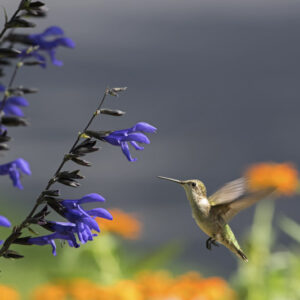
‘Rose Marvel’ is a real magnet for butterflies, hummingbirds and bees! The flowers are rich in nectar and keep beneficial visitors circling for weeks. If you are building a sunny pollinator garden, this plant earns its space because it combines long bloom, compact form, and high wildlife value in one easy perennial.

Pollinator callout: Plant ‘Rose Marvel’ near herbs, lavender, nepeta, and echinacea to create a “nectar runway” that keeps beneficial visitors circling your garden all summer.

Deer and Rabbits

This plant is often described as rabbit and deer-resistant. Aromatic foliage is usually less appealing to browsing animals. Of course, “resistant” is not the same as “deer-proof,” but in many gardens, damage is minimal compared to tender, non-aromatic perennials.

Drought Tolerance

Once established, ‘Rose Marvel’ is commonly considered drought tolerant and well-suited to dry to medium soil. For the best rebloom and the tidiest clump, give a deep watering during extended heat. Think “soak occasionally,” not “sip daily.” In containers, you will water more often because pots dry out faster.

Practical watering rule: Water deeply during the first season, then shift to occasional deep watering in drought. Too much water plus poor drainage is the fastest way to disappoint a salvia.

Toxicity

Salvia nemorosa ‘Rose Marvel’ is generally considered non-toxic to humans and pets. It is grown as an ornamental. As with all garden plants, discourage nibbling and avoid ingestion of large quantities.

Invasiveness

‘Rose Marvel’ is not considered invasive. It forms a well-behaved clump that slowly expands. If you want more plants, division is the easy, reliable way to increase your stock without surprises.
Salvia Nemorosa 'Rose Marvel', Sage 'Rose Marvel', Balkan Clary 'Rose Marvel', Steppe Sage 'Rose Marvel', Pink Sage, Pink Salvia

Growing Conditions for Salvia nemorosa ‘Rose Marvel’

Light

  • Full sun: Best flowering, strongest stems, most compact habit.
  • Light shade: Tolerated (especially in hot climates), but expect slightly looser growth and fewer spikes.

Soil

  • Well-drained is the rule: Avoid soggy, low spots and winter-wet soil.
  • Average to lean soils: Too-rich soil can push leafy growth and reduce sturdy flowering.
  • Sandy or gravelly soils: Often ideal for overwintering and upright stems.

Water

  • Year 1 (establishment): Water regularly while roots settle in, especially during heat.
  • Mature plants: Water during extended drought for best bloom and rebloom performance.
Best-looking secret: The fastest way to keep ‘Rose Marvel’ blooming is simple – deadhead the first round, shear lightly, then water deeply once.

Feeding

‘Rose Marvel’ does not need heavy feeding. Too much fertilizer can lead to lush foliage, fewer flowers, and softer stems. A light compost top-dressing in spring is usually plenty. If your soil is very poor, a modest, balanced fertilizer once in spring is enough.
Mulch

  • Use a thin mulch layer to conserve moisture and reduce weeds.
  • Keep mulch away from the crown to reduce the chance of rot.

Planting Tips

  • Plant in spring or early fall so roots establish before extremes.
  • Space plants for airflow and a cleaner look as they fill in.
  • Set the crown at soil level, backfill, and water deeply.
Planting sweet spot: Full sun plus well-drained soil is the combo that keeps ‘Rose Marvel’ compact, upright, and loaded with flower spikes.

Maintenance – Pruning – Deadheading

  • Deadheading: Snip spent flower spikes down to the leafy mound to encourage more blooms.
  • After the first flush: A light shear can refresh the plant and often triggers a new round of flowering.
  • End of season: Cut back in late fall or early spring, depending on your climate and garden style.

Propagation

  • Division: The most reliable method for maintaining a named cultivar. Divide in spring or early fall and replant immediately.
  • Stem cuttings: Softwood cuttings taken in late spring to early summer root readily and produce plants true to the parent. Semi-ripe cuttings can also be taken in mid- to late summer.
  • Seed: Possible, but seedlings may not come true to the parent cultivar.
Care tip: Want the longest bloom season? Deadhead promptly, shear lightly after the first flush, then water deeply once and let the plant reset for a second show.

Salvia Nemorosa 'Rose Marvel', Sage 'Rose Marvel', Balkan Clary 'Rose Marvel', Steppe Sage 'Rose Marvel', Pink Sage, Pink Salvia

Salvia nemorosa ‘Rose Marvel’: Pests, Diseases, and Common Problems

Pests

This is generally a trouble-free plant. In some gardens, you may see occasional aphids on tender new growth, slugs, or snails.

Diseases

  • Root rot: The most common serious issue, usually from poor drainage or winter-wet soil. Improve drainage and avoid low, soggy sites.
  • Powdery mildew: Can show up in crowded, humid conditions. Provide sun, spacing, and airflow.

Common Problems

  • Flopping: Usually from too much shade or overly rich soil. Move to more sun and reduce feeding.
  • Weak rebloom: Often from late deadheading or drought stress. Deadhead earlier and water deeply during hot stretches.
  • Winter loss: Most often linked to soggy soil, not cold. Prioritize drainage.
Problem solver: If ‘Rose Marvel’ ever looks tired midseason, shear it back lightly after flowering and give one deep watering. It often bounces back fast.

Design Ideas With Salvia nemorosa ‘Rose Marvel’

  • Front-edge ribbon: Plant a repeating line along the front of a border for crisp structure and long color.
  • Classic contrast: Pair with yellow Achillea, daylilies, or golden grasses for bold complementary color.
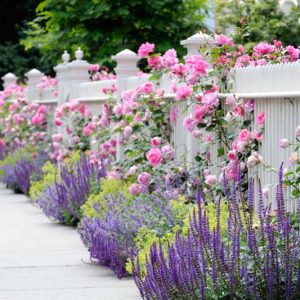
  • Rose companion: Interplant near roses to fill gaps and add deep rose-on-rose harmony or contrast with soft pastels.
  • Pollinator corridor: Mix with nepeta, echinacea, gaura, and ornamental grasses for season-long movement.
  • Container structure: Use in larger pots as a vertical “thriller” with trailing companions.
Design tip: The easiest way to make a planting look professional is repetition. Use three, five, or seven plants in a drift, then repeat that drift down the border.
 

Popular Cultivars of Salvia nemorosa

  • New Dimension Blue – Compact, bushy habit with chubby spikes of intense violet-blue flowers; excellent for edging and containers.
  • Caradonna – Dark purple stems and saturated violet-blue flower spikes; compact, upright, and highly architectural.
  • Mainacht (May Night) – A classic, award-winning selection with deep blue-purple flowers and excellent garden performance.
  • Ostfriesland – Rich violet-blue flower spikes on a compact, reliable plant well suited to borders and mass planting.
  • Blue by You – Early blooming with vivid blue-violet flowers and strong rebloom potential when deadheaded.
  • Perfect Profusion – Exceptionally floriferous with a long flowering season and dense, upright flower spikes.
  • Violet Riot – Compact habit with intense violet-blue blooms and excellent uniformity.
  • Crystal Blue – Clear blue flowers on a tidy, medium-sized plant; ideal for mixed borders.
  • Blue Marvel – Dense, shorter flower spikes with ultra-large blossoms in intense royal blue shades; excellent for the front of borders.
  • Bumbleblue – Compact and floriferous with rich violet-blue blooms and strong pollinator appeal.
  • Bumbleberry – Deep rose-purple flowers on a compact plant, perfect for color-rich borders.
  • Pink Dawn – Soft pink flower spikes that bring a lighter, romantic tone to sunny plantings.
  • Rose Marvel – Vibrant rose-pink flowers with a dense, compact habit and excellent rebloom.
  • Amethyst – Lavender-purple blooms on a well-balanced plant that blends easily with other perennials.
  • Tänzerin – Graceful, airy flower spikes in soft violet tones; elegant and slightly looser in habit.

Frequently Asked Questions

Is Salvia nemorosa ‘Rose Marvel’ drought tolerant?

Yes. Once established, Salvia nemorosa ‘Rose Marvel’ is commonly considered drought tolerant and performs well in dry to medium, well-drained soil. For best flowering and repeat bloom, water deeply during prolonged heat or drought, especially in sandy soil or containers.

When should I deadhead Salvia ‘Rose Marvel’?

Deadhead as soon as the first flower spikes begin to fade. Snip spent spikes down to the leafy mound to encourage repeat bloom. For a faster reset, lightly shear after the first flush and water deeply once.

Does Salvia ‘Rose Marvel’ need full sun?

Full sun is best for the most flowers, the strongest stems, and the most compact growth. Light shade is tolerated, especially in hot climates, but flowering may be reduced and the plant can be slightly looser.

How tall and wide does Salvia nemorosa ‘Rose Marvel’ grow?

It typically reaches about 10-12 inches tall (25-30 cm) and about 10-12 inches wide (25-30 cm), forming a compact mound with upright deep rose flower spikes.

Is Salvia ‘Rose Marvel’ deer resistant?

It is often considered deer resistant because the aromatic foliage is not a preferred food source. However, no plant is completely deer proof, and browsing can occur under high pressure.

How do I propagate Salvia nemorosa ‘Rose Marvel’?

Propagate by division in spring or early fall. Lift the clump, separate healthy rooted sections, and replant at the same depth. Seed is possible, but seedlings may not come true to the cultivar.

What soil does Salvia ‘Rose Marvel’ prefer?

It performs best in average, dry to medium, well-drained soil. Sandy or gravelly soils are ideal. Avoid waterlogged sites, especially in winter, to reduce the risk of root rot.

References

Missouri Botanical Garden Plant Finder – cultural guidance for Salvia nemorosa selections, including light, soil, maintenance, and bloom season.

Updated: January 2026 – Reviewed by Gardenia Editors

Salvia: Plant Care and Growing Guide


Here are some tips on how to plant and grow salvia successfully

Requirements

Hardiness 4 - 9
Heat Zones 5 - 9
Climate Zones 2, 3, 4, 5, 6, 7, 8, 9, 10, 14, 15, 16, 17, 18, 19, 20, 21, 22, 23, 24
Plant Type Perennials
Plant Family Lamiaceae
Genus Salvia
Common names Sage
Exposure Full Sun
Season of Interest Summer (Early, Mid, Late)
Height 10" - 1' (25cm - 30cm)
Spread 10" - 1' (25cm - 30cm)
Spacing 12" - 15" (30cm - 40cm)
Maintenance Low
Water Needs Average
Soil Type Chalk, Loam, Sand
Soil pH Acid, Alkaline, Neutral
Soil Drainage Moist but Well-Drained, Well-Drained
Characteristics Cut Flowers, Fragrant, Showy
Tolerance Drought, Deer, Rabbit, Dry Soil
Attracts Bees, Butterflies, Hummingbirds, Birds
Garden Uses Beds And Borders, Patio And Containers, Small Gardens
Garden Styles City and Courtyard, Coastal Garden, Informal and Cottage, Mediterranean Garden
How Many Plants
Do I Need?
Explore Great Plant Combination Ideas
Salvia (Sage)
Guides with
Salvia (Sage)
Not sure which Salvia (Sage) to pick?
Compare Now

Alternative Plants to Consider

Salvia guaranitica (Blue Anise Sage)
Salvia splendens ‘Van-Houttei’ (Scarlet Sage)
Salvia nemorosa ‘Blue By You’ (Sage)
Salvia microphylla (Baby Sage)
Salvia pratensis (Meadow Sage)
Salvia nemorosa ‘Perfect Profusion’ (Sage)

Recommended Companion Plants

Achillea (Yarrow)
Rosa (Rose)
Nepeta (Catmint)
Allium (Ornamental Onion)
Hemerocallis (Daylilies)
Echinacea (Coneflower)

Find In One of Our Guides or Gardens

Annual Salvias: Heat-Loving Color That Blooms All Season
Best Full Sun Perennials for Zone 8: Top Heat-Tolerant Garden Winners
Best Full Sun Shrubs for Zone 8: Heat-Loving Shrubs That Thrive in Sunshine
Top Zone 6 Full Sun Perennials – Color That Thrives in Heat & Cold
Top Zone 7 Full Sun Perennials for Long Bloom, Color & Pollinators
Native Garden Ideas – Best Native Plants for a Beautiful Yard
Mediterranean Gardens: Low-Water Design, Plants & Ideas
Drought Tolerant Gardens – The Ultimate Water-Wise Guide
Pollinator Gardens: Plants, Designs & Care Guide
Why Rosemary is Perfect for Gardens and Pots
Grow These 20 Herbs Indoors for Freshness All Year
Salvia: Discover the Top Benefits of Growing Sage in Your Garden
Salvia Varieties for a Stunning, Water-Wise Garden
Salvia nemorosa (Woodland Sage)
What is Salvia? Understanding Its Role in Gardening and Beyond
Top 70 Summer Flowers to Brighten Your Garden and Home
50 Best Fall Flowers to Color Your Autumn Garden
Desert Shrubs: Essential Plants for Dry Gardens
Desert Flowers: Bringing Color to Dry Gardens
50 Fall Wildflowers: Top Picks for a Vibrant Autumn Garden
50 Summer Wildflowers: Bright Blooms for Your Garden
50 Wildflowers that Thrive in Sun
50 Blue Wildflowers for Every Garden
50 Pink Wildflowers for Every Garden
50 Purple Wildflower to Brighten Your Garden
50 California Wildflowers: From Desert Blooms to Coastal Gems
50 Texas Wildflowers to Brighten Your Garden
Top 50 Most Beautiful Flowers Worldwide
Stunning Blue Flowers to Enhance Your Garden’s Beauty
Add a Splash of Color: Perfect Flowering Shrubs for Small Gardens
42 Best Perennial Flowers and Plants to Brighten Your Garden Every Season
30 Best Spring Flowers Every Gardener Should Grow
How to Create an Enchanting Butterfly Garden
For the Love of Butterflies: Best Flowers to Attract them to Your Garden
6 Reasons You Should Create a Butterfly Garden
Salvia (Sage)
Best Annual Flowers and Plants to Spruce up Your Garden
Hummingbird
18 Best Plants That Repel Mosquitoes
Rosemary: Learn How To Plant, Grow and Harvest
Salvia yangii (Russian Sage)
Best Annual Flowers and Plants for Full Sun
Wonderful Plants That Repel Insects
Companion Planting With Herbs
Great Rose Companion Plants: Nepeta, Salvia and Lavandula
Best and Worst Companion Plants for Rosemary
Hardy Perennial Salvias (Sage)
Salvia guaranitica (Blue Anise Sage)
Plants with Purple Flowers to Add Charm to Your Garden
Salvia: Plant Care and Growing Guide
Best Flowers to Attract Hummingbirds
While every effort has been made to describe these plants accurately, please keep in mind that height, bloom time, and color may differ in various climates. The description of these plants has been written based on numerous outside resources.
Buy Plants

Requirements

Hardiness 4 - 9
Heat Zones 5 - 9
Climate Zones 2, 3, 4, 5, 6, 7, 8, 9, 10, 14, 15, 16, 17, 18, 19, 20, 21, 22, 23, 24
Plant Type Perennials
Plant Family Lamiaceae
Genus Salvia
Common names Sage
Exposure Full Sun
Season of Interest Summer (Early, Mid, Late)
Height 10" - 1' (25cm - 30cm)
Spread 10" - 1' (25cm - 30cm)
Spacing 12" - 15" (30cm - 40cm)
Maintenance Low
Water Needs Average
Soil Type Chalk, Loam, Sand
Soil pH Acid, Alkaline, Neutral
Soil Drainage Moist but Well-Drained, Well-Drained
Characteristics Cut Flowers, Fragrant, Showy
Tolerance Drought, Deer, Rabbit, Dry Soil
Attracts Bees, Butterflies, Hummingbirds, Birds
Garden Uses Beds And Borders, Patio And Containers, Small Gardens
Garden Styles City and Courtyard, Coastal Garden, Informal and Cottage, Mediterranean Garden
How Many Plants
Do I Need?
Explore Great Plant Combination Ideas
Salvia (Sage)
Guides with
Salvia (Sage)
Not sure which Salvia (Sage) to pick?
Compare Now

Gardening Ideas

Plant Calculator

How many Salvia nemorosa ‘Rose Marvel’ (Woodland Sage) do I need for my garden?

Input your garden space dimensions

Your Shopping List

Plant Quantity
Salvia nemorosa ‘Rose Marvel’ (Woodland Sage) N/A Buy Plants

Please Login to Proceed

You Have Reached The Free Limit, Please Subscribe to Proceed

Subscribe to Gardenia

To create additional collections, you must be a paid member of Gardenia
  • Add as many plants as you wish
  • Create and save up to 25 garden collections
Become a Member

Plant Added Successfully

Your garden is taking shape. Unlock full planning.

You’ve reached the free limit. Upgrade for $25/year to add as many plants as you wish and save up to 25 garden collections. Unlock Annual Membership

Update Your Credit
Card Information

Cancel

Create a New Collection

Sign Up to Our Newsletter

    You have been subscribed successfully

    Join Gardenia.net

    Create a membership account to save your garden designs and to view them on any device.

    Becoming a contributing member of Gardenia is easy and can be done in just a few minutes. If you provide us with your name, email address and the payment of a modest $25 annual membership fee, you will become a full member, enabling you to design and save up to 25 of your garden design ideas.

    Join now and start creating your dream garden!

    Join Gardenia.net

    Create a membership account to save your garden designs and to view them on any device.

    Becoming a contributing member of Gardenia is easy and can be done in just a few minutes. If you provide us with your name, email address and the payment of a modest $25 annual membership fee, you will become a full member, enabling you to design and save up to 25 of your garden design ideas.

    Join now and start creating your dream garden!
    Find your Hardiness Zone

    Find your Heat Zone

    Find your Climate Zone