Wendy’s Wish Salvia, Wendy’s Wish Sage, Hybrid Sage Wendy’s Wish, Ornamental Sage Wendy’s Wish, Salvia Wendy’s Wish, Salvia 'SAL 0101'
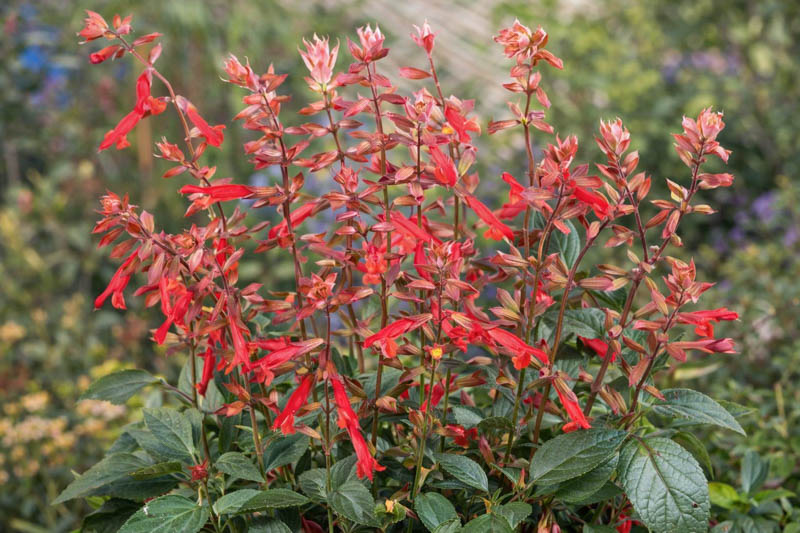
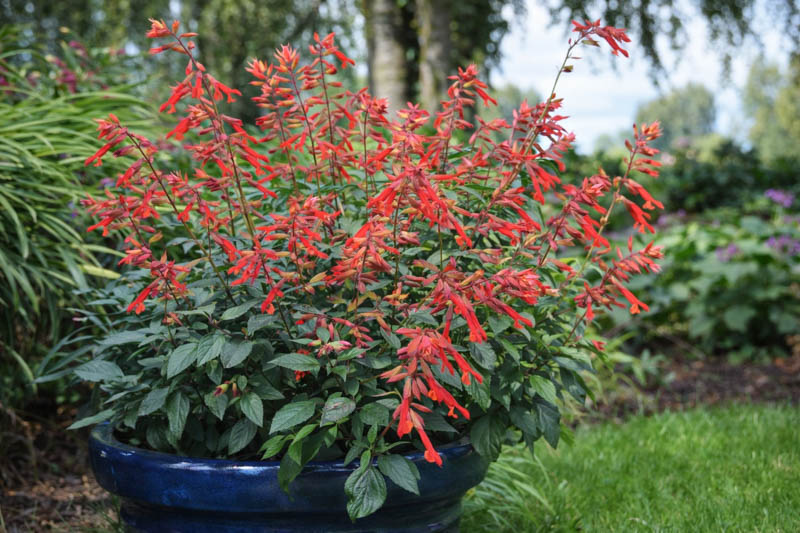
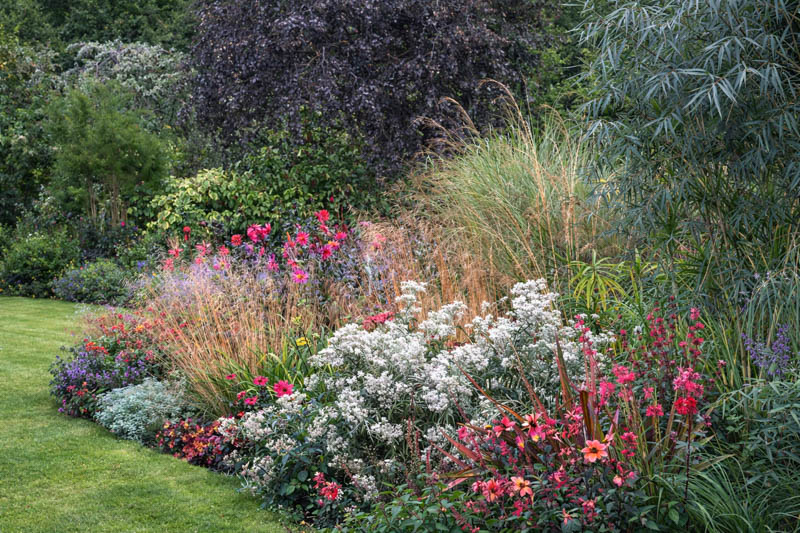


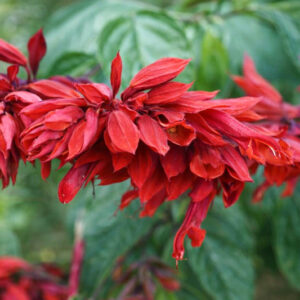
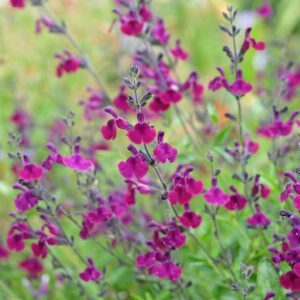
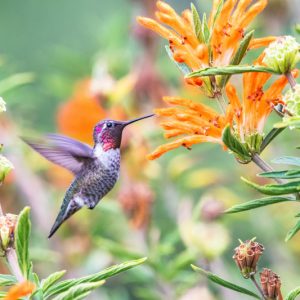
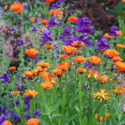
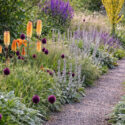
Salvia Ember’s Wish is one of those plants that makes a garden feel instantly brighter – and then it just keeps going. Once it settles in, it sends up tall, airy spikes of fiery orange and coral tubular flowers that rise above the foliage and keep blooming from spring to frost. Even better? The color holds strong through heat instead of fading out when summer gets intense.
Those vibrant blooms emerge from papery, dusty rose bracts on dark burgundy stems, so the plant looks layered and interesting even when you’re standing close. It’s fast-growing, easy to live with, and a consistent favorite of butterflies and hummingbirds. If your goal is long-season color plus nonstop garden life, this salvia is a practical showoff.
Summary: A fast-growing, woody-based tender perennial with bright fiery-orange to coral tubular flowers emerging from dusty rose bracts on dark burgundy stems.
Use: Excellent for borders, containers, patio pots, pollinator gardens, and mixed beds.
Highlight: Spring-to-frost bloom with color that holds in heat.
Note: Best in full sun and well-drained soil; often grown as an annual where winters are cold.
| Botanical Name | Salvia Ember’s Wish |
|---|---|
| Family | Mint family (Lamiaceae) |
| Common Names | Ember’s Wish Salvia, Ember’s Wish Sage, Hybrid Sage |
| Native Range | Garden origin – a cultivated hybrid selection (not a wild native range). |
| Plant Type and Habit | Tender perennial (often grown as an annual) – woody-based, clump-forming, with a slightly open, airy habit |
| Hardiness (approx. USDA) | Hardy in USDA Zones 9-11; treat as an annual or overwinter indoors elsewhere |
| Height | 3-4 ft (90-120 cm) |
| Spread | 2-3 ft (60-90 cm) |
| Spacing | 36 in. (90 cm) for airflow and a full clump |
| Sun and Exposure | Best in full sun; tolerates light shade in hot climates |
| Soil | Prefers average, medium-moisture, well-drained soil (drainage matters more than richness) |
| Seasonal Interest | Blooms from spring through frost |
| Flower Color | Fiery orange-coral tubular blooms with dusty rose bracts |
| Foliage | Mid-green, glossy leaves; lightly aromatic when brushed |
| Fragrance | Aromatic foliage |
| Drought Tolerant | Yes, once established. |
| Heat Tolerant | Yes – thrives in warm, sunny conditions |
| Nectar – Pollen | Yes – nectar-rich tubular blooms |
| Attracts | Bees, butterflies, and hummingbirds |
| Deer | Generally deer resistant |
| Best Garden Uses | Beds and borders, patio and containers, pollinator plantings |
| Toxicity | Ornamental plant – avoid ingestion and use standard garden caution around pets and children |
| Invasive Status | Not typically considered invasive in gardens |
This cultivar stands out for its glowing warm color palette and elegant form. Bright coral-orange flowers rise in spikes above the foliage, while dusty rose bracts add extra texture and a “finished” look even between bloom flushes. Dark burgundy stems deepen the contrast and make the flowers look even hotter and brighter.
Salvia Ember’s Wish is fast-growing and slightly open in habit, which gives it a relaxed, natural look in borders. It typically reaches 3 to 4 feet tall and about 2 to 3 feet wide. That size makes it big enough to anchor a planting, yet airy enough to blend smoothly with neighboring perennials.
This is a long-blooming salvia in the truest sense. It flowers from spring through fall, often right up to frost. In warm, bright conditions, you’ll see a steady cycle of fresh stems and new blooms. If you occasionally snip off finished spikes, the plant tends to re-bloom faster and look tidier, but it doesn’t demand constant attention.
The foliage forms a tidy base of mid-green, glossy leaves. Like many sages, the leaves are lightly aromatic when brushed. That scent and texture help explain its reputation for being deer resistant in many landscapes.
Salvia Ember’s Wish is hardy in USDA Zones 9-11 and is often treated as an annual in cooler climates. If you want to save it where winters are cold, overwintering indoors in bright light (or rooting a few cuttings) is a practical approach.
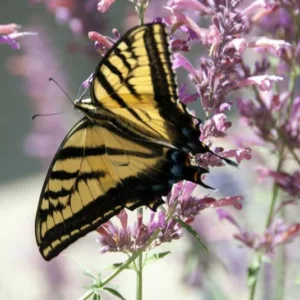
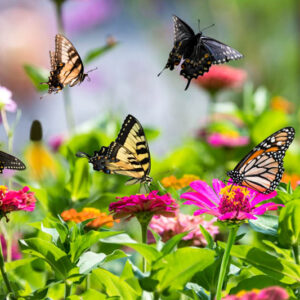
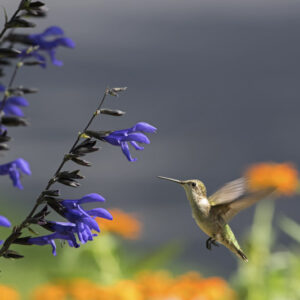
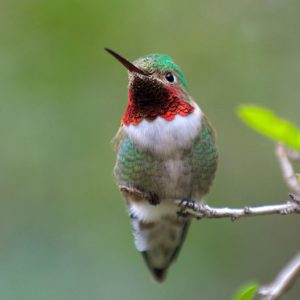
Hummingbirds are especially drawn to the nectar-rich tubular flowers, often visiting repeatedly. Butterflies and bees also benefit, making this plant a strong pollinator-friendly choice for sunny garden beds.
Thanks to its aromatic foliage, this salvia is generally deer resistant, though no plant is completely deer-proof.
Once established, Salvia Ember’s Wish is both heat tolerant and drought tolerant for short dry stretches. For best flowering, aim for consistent moisture without soggy soil – especially in containers, where roots dry faster and plants rely on you more.
Salvia Ember’s Wish is grown as an ornamental plant. While it is not typically flagged as highly toxic, ingestion is not recommended. Use standard caution around pets and young children.
This cultivar is well-behaved in gardens and is not considered invasive. It grows as a clump and does not typically spread aggressively.
To keep Salvia Ember’s Wish true to type, propagate it by cuttings rather than seed. Cuttings preserve the cultivar’s flower color and growth habit.
Salvia Ember’s Wish is generally trouble-free. During hot, dry weather, occasional aphids or spider mites may appear on tender growth. These are usually manageable with better airflow, steady watering, and a strong spray of water.
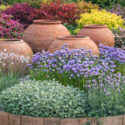
With its warm coral-orange blooms and tall, airy spikes, Salvia Ember’s Wish works best as a vertical accent plant that adds lift, movement, and long-season color. It’s bold without being bulky – which is why it’s equally useful in mixed borders and large containers.
Salvia ‘Ember’s Wish’ is a tender perennial in warm climates (USDA Zones 9–11). In colder regions, it is usually grown as an annual or overwintered indoors to protect it from frost.
Salvia Ember’s Wish blooms from spring to frost, often without interruption. Removing spent stems can encourage even more flowering, but the plant is naturally long-blooming and low-fuss.
Yes. Salvia Ember’s Wish is highly attractive to hummingbirds thanks to its tubular, nectar-rich flowers. Butterflies and bees are also frequent visitors.
Full sun produces the strongest growth and the most flowers. Light shade is tolerated, especially in hot climates, but too much shade can reduce bloom production.
Once established, Salvia Ember’s Wish tolerates short dry periods and handles heat well. However, it blooms best with regular deep watering, especially during hot weather or when grown in containers.
Salvia Ember’s Wish typically grows about 3 to 4 feet tall and 2 to 3 feet wide, forming a slightly open clump with flowering stems held above the foliage.
Salvia Ember’s Wish is generally deer resistant due to its aromatic foliage, though no plant is completely deer-proof in areas with heavy browsing pressure.
Yes. Salvia Ember’s Wish performs very well in large containers, where it acts as a tall focal plant. Containers require more frequent watering than garden beds.
Salvia Ember’s Wish is best propagated by softwood cuttings. Cuttings preserve the cultivar’s flower color and growth habit better than seed.
Heavy pruning is not necessary. It does not require deadheading, but removing spent flower stems can encourage fresh blooms and keep the plant looking tidy.
Updated: January 2026 – Reviewed by Gardenia Editors
| Hardiness |
9 - 11 |
|---|---|
| Climate Zones | 20, 21, 22, 23, 24, H1 |
| Plant Type | Annuals, Perennials |
| Plant Family | Lamiaceae |
| Genus | Salvia |
| Common names | Sage |
| Exposure | Full Sun |
| Season of Interest | Spring (Late), Summer (Early, Mid, Late), Fall |
| Height | 3' - 4' (90cm - 120cm) |
| Spread | 2' - 3' (60cm - 90cm) |
| Spacing | 36" (90cm) |
| Maintenance | Low |
| Water Needs | Average |
| Soil Type | Chalk, Loam, Sand |
| Soil pH | Acid, Alkaline, Neutral |
| Soil Drainage | Moist but Well-Drained, Well-Drained |
| Characteristics | Fragrant, Showy |
| Tolerances | Drought, Deer |
| Attracts | Bees, Butterflies, Hummingbirds |
| Garden Uses | Beds And Borders, Patio And Containers |
| Garden Styles | City and Courtyard, Coastal Garden, Gravel and Rock Garden, Informal and Cottage, Mediterranean Garden |
| Toxic to Humans | No known toxicity |
| Toxic to Cats | No known toxicity |
| Toxic to Dogs | No known toxicity |
| Toxic to Horses | No known toxicity |


| Hardiness |
9 - 11 |
|---|---|
| Climate Zones | 20, 21, 22, 23, 24, H1 |
| Plant Type | Annuals, Perennials |
| Plant Family | Lamiaceae |
| Genus | Salvia |
| Common names | Sage |
| Exposure | Full Sun |
| Season of Interest | Spring (Late), Summer (Early, Mid, Late), Fall |
| Height | 3' - 4' (90cm - 120cm) |
| Spread | 2' - 3' (60cm - 90cm) |
| Spacing | 36" (90cm) |
| Maintenance | Low |
| Water Needs | Average |
| Soil Type | Chalk, Loam, Sand |
| Soil pH | Acid, Alkaline, Neutral |
| Soil Drainage | Moist but Well-Drained, Well-Drained |
| Characteristics | Fragrant, Showy |
| Tolerances | Drought, Deer |
| Attracts | Bees, Butterflies, Hummingbirds |
| Garden Uses | Beds And Borders, Patio And Containers |
| Garden Styles | City and Courtyard, Coastal Garden, Gravel and Rock Garden, Informal and Cottage, Mediterranean Garden |
| Toxic to Humans | No known toxicity |
| Toxic to Cats | No known toxicity |
| Toxic to Dogs | No known toxicity |
| Toxic to Horses | No known toxicity |
How many Salvia Ember’s Wish (Sage) do I need for my garden?
| Plant | Quantity | |
|---|---|---|
| Salvia Ember’s Wish (Sage) | N/A | Buy Plants |
Create a membership account to save your garden designs and to view them on any device.
Becoming a contributing member of Gardenia is easy and can be done in just a few minutes. If you provide us with your name, email address and the payment of a modest $25 annual membership fee, you will become a full member, enabling you to design and save up to 25 of your garden design ideas.
Join now and start creating your dream garden!
Create a membership account to save your garden designs and to view them on any device.
Becoming a contributing member of Gardenia is easy and can be done in just a few minutes. If you provide us with your name, email address and the payment of a modest $25 annual membership fee, you will become a full member, enabling you to design and save up to 25 of your garden design ideas.
Join now and start creating your dream garden!