Spotted Cranesbill, Wild Cranesbill, Alum Bloom, Alum Root, American Kino Root, Chocolate Flower, North American Crowfoot, North American Wild Cranesbill, Rock Weed, Sailor's Knot, Shame-Face, Hardy Geraniums
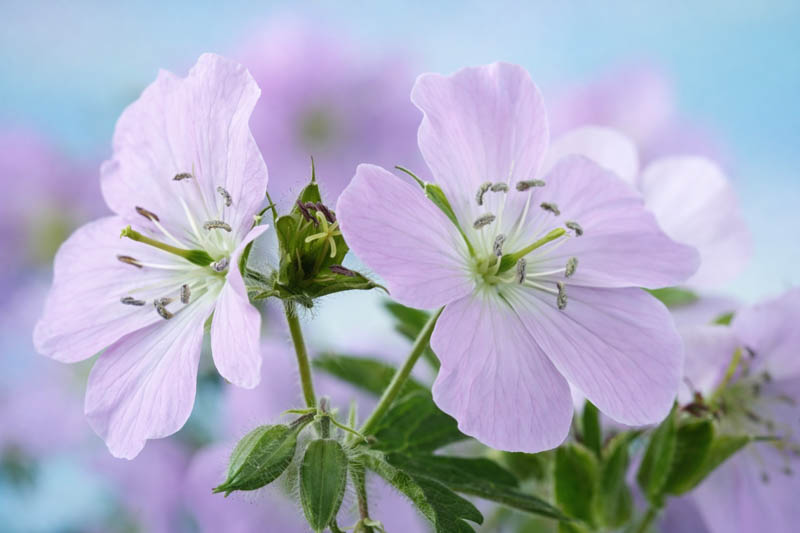
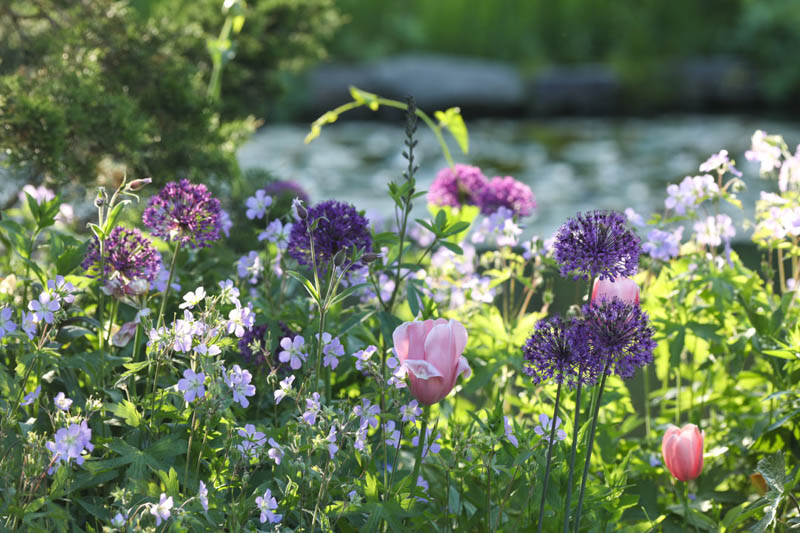


Geranium maculatum, commonly known as Wild Geranium, Spotted Cranesbill, or simply Cranesbill, is a clump-forming, herbaceous perennial wildflower native to eastern North America. It thrives in woodland edges, open shade, and naturalized areas where many garden perennials struggle – including challenging dry shade and thin, humus-rich forest soils.
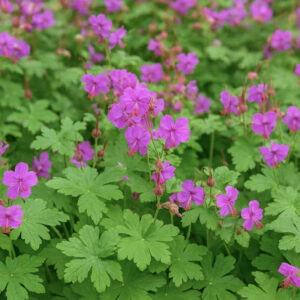
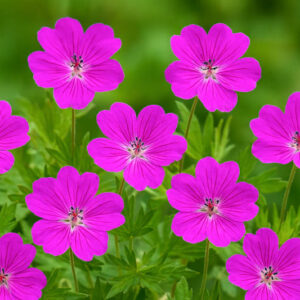
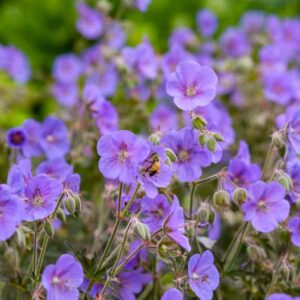
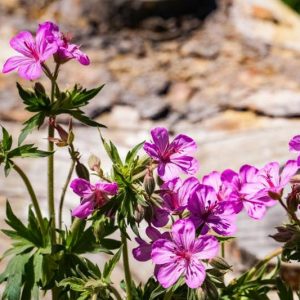
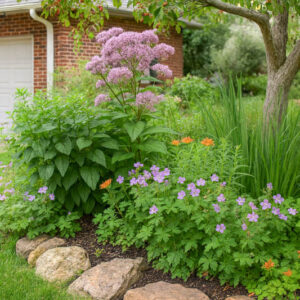
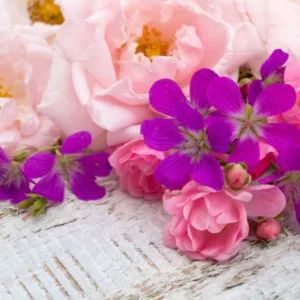
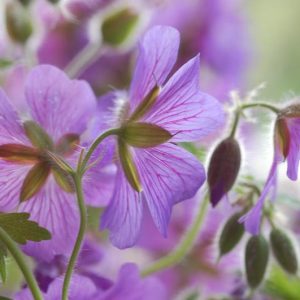
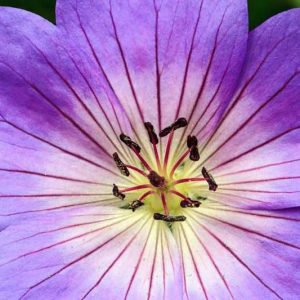
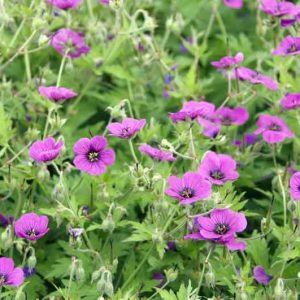
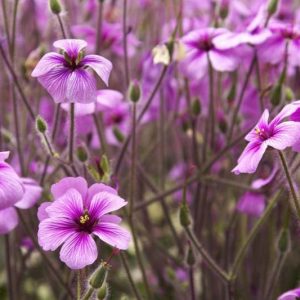
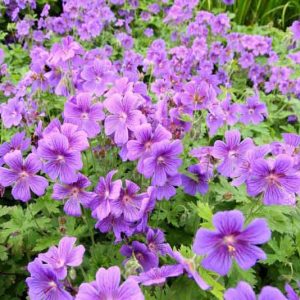
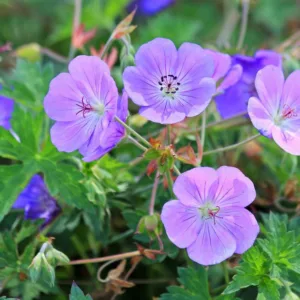
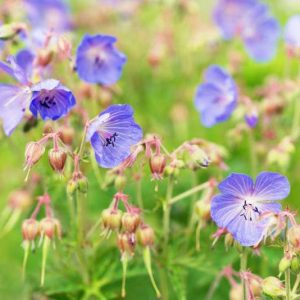
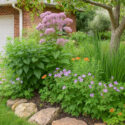
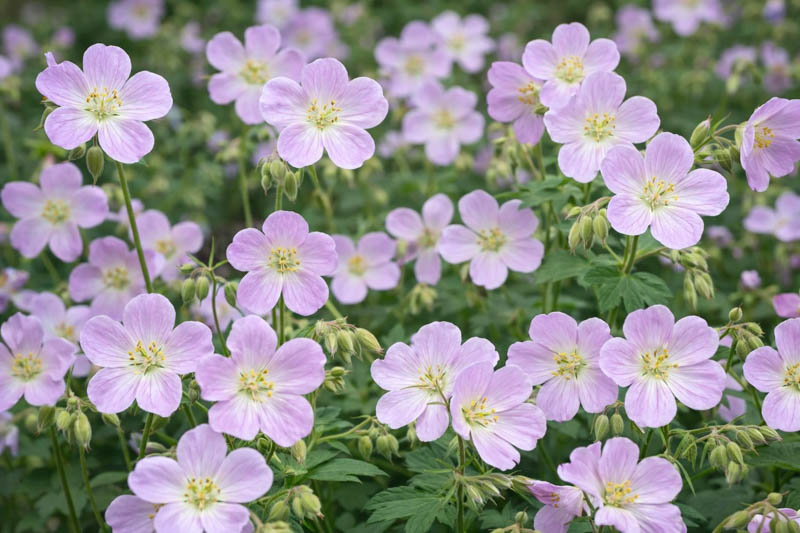
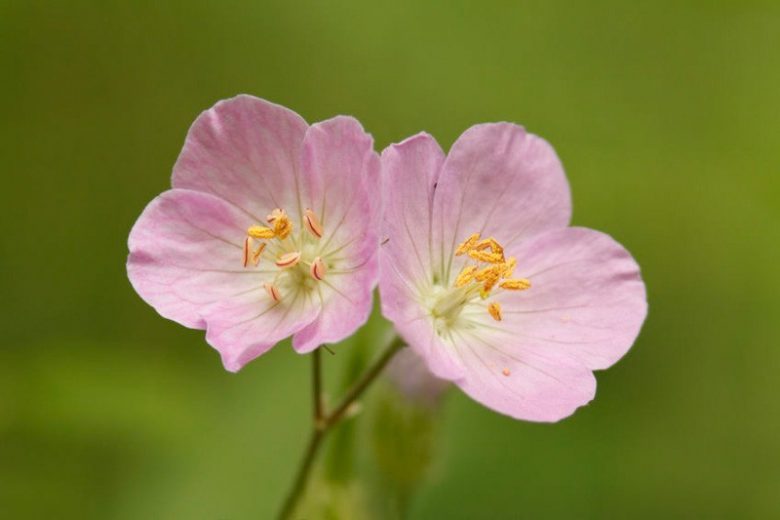
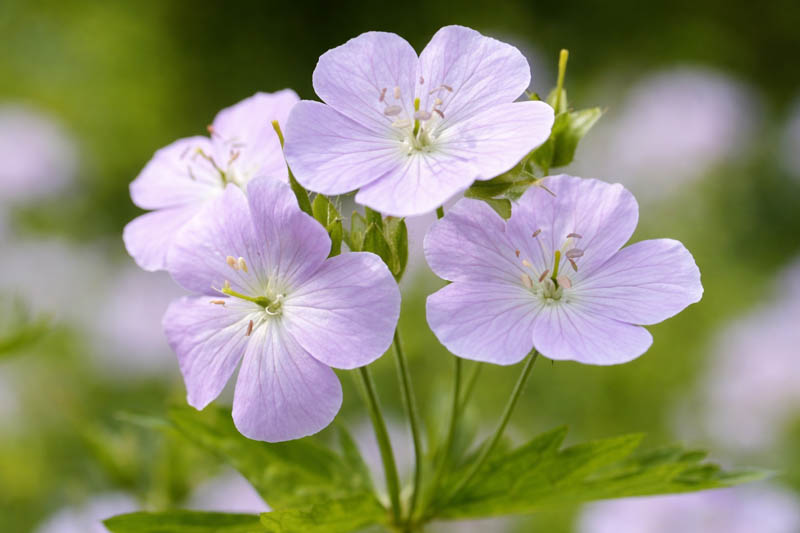
In mid to late spring, upright stems carry a profusion of upward-facing, saucer-shaped flowers in soft pink to lilac shades, often with a pale center and delicate darker veining that acts as a nectar guide for pollinators. These blooms hover above a mound of deeply lobed, medium green foliage that turns attractive fawn, red, or burgundy in fall. After flowering, distinctive beaked seed capsules form, giving rise to the common name “cranesbill”. Low maintenance, deer and rabbit resistant, and highly attractive to bees, butterflies, and songbirds, Geranium maculatum is a superb native ground cover for woodland gardens, meadows, and naturalized landscapes.
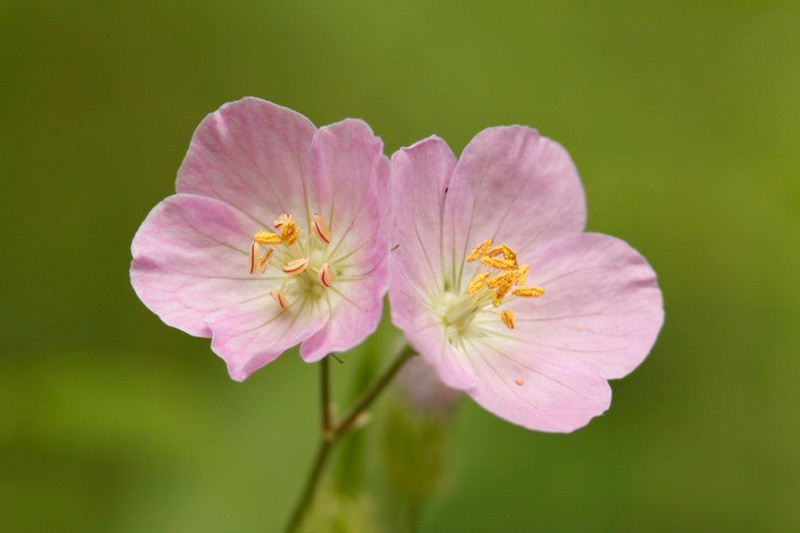
Summary: A clump-forming, herbaceous perennial wildflower with deeply cut, showy foliage and soft pink to lilac, saucer-shaped spring flowers.
Use: Woodland gardens, native plantings, ground cover in dry shade, meadows, naturalized areas, cottage gardens, pollinator gardens.
Highlight: Excellent for dry shade, with long-lasting spring bloom, attractive fall color, and high wildlife value.
Note: Thrives in partial shade or light shade and prefers rich, moist, well-drained soils but tolerates clay, loam, and sand and some drought once established.
| Botanical Name | Geranium maculatum |
|---|---|
| Family | Geraniaceae |
| Common Names | Wild Geranium, Spotted Cranesbill, Cranesbill, Wood Geranium |
| Native Range | Eastern and central North America – from southeastern Canada through the eastern and midwestern United States in mesic, base rich forests and woodland edges. |
| Plant Type and Habit | Herbaceous perennial wildflower with a clump-forming, mounding habit and spreading by short rhizomes and self seeding to form loose colonies. |
| Hardiness (approx. USDA) | Generally hardy in USDA Zones 3 to 8, with reports of successful cultivation beyond this range in favorable conditions. |
| Size | Typically 12-18 in. tall (30-45 cm) and 12-18 in. wide (30-45 cm), forming low mounds that can naturalize into drifts. |
| Sun and Exposure | Performs best in partial shade to light shade, tolerates full sun in cool climates with adequate moisture, and copes well with dry shade once established. |
| Soil | Rich, loamy, well-drained soils with abundant organic matter are ideal. Tolerates a range of textures, including clay, loam, and sandy soils, as long as drainage is reasonable. |
| Seasonal Interest | Mid to late spring flowers, attractive summer foliage, and colorful fall leaves that may turn fawn, red, or burgundy provide multi season interest. |
| Primary Uses | Woodland ground cover, native wildflower meadows, pollinator gardens, naturalized areas, mixed borders, cottage gardens, children’s and wildlife friendly gardens. |
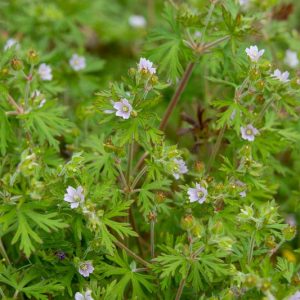
Geranium maculatum is a compact, clump forming woodland perennial with deeply divided, palmate leaves that create a soft, mounded silhouette. Each basal leaf is typically 3-6 in. long and wide, cut into 5-7 lobes with coarse serrations along the margins and both fine and coarse hairs on the surfaces. The foliage reads as a lush, textural carpet in shade, making an excellent native ground cover.
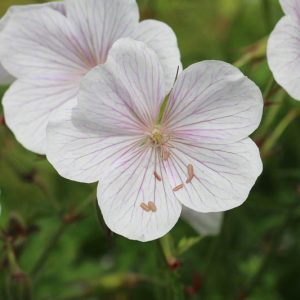
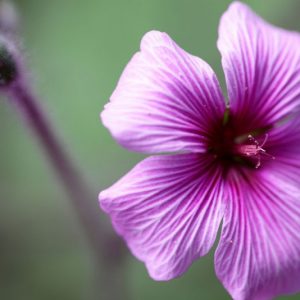
In mid to late spring, upright leafy stems rise above the basal foliage, each bearing loose clusters of saucer shaped flowers about 1-1.5 in. across. Petals range from pale lilac pink to deeper rose or lavender, often with fine darker veins that radiate toward a pale or creamy center. As flowers fade, they give way to distinctive beaked seed capsules resembling the bill of a crane, a signature feature of cranesbills.
Think of Geranium maculatum as the woodland multitasker – it softens shady edges, feeds pollinators, delights children with its “cranesbill” seed pods, and shrugs off deer and rabbits, all while asking for little more than leaf litter and light shade.
Wild Geranium is native to southeastern Canada and central and eastern United States. In nature, it grows in rich, mesic, base rich forests, woodland borders, shaded banks, and openings where soils hold moisture yet drain well. This forest origin explains its love of dappled light, leaf litter, and moderate moisture.
Geranium maculatum typically grows 1-2 ft. tall with a mounding, spreading habit supported by fibrous roots and a shallow taproot. Short rhizomes and self sown seed allow plants to gradually naturalize into loose drifts without becoming aggressive. In optimal conditions, colonies can slowly expand to fill available space, creating a cohesive native ground cover.
The growth rate is moderate to rapid, especially in cool, moist, humus rich soils. In the hottest part of summer, foliage may yellow or decline slightly, particularly in dry sites. Shearing or lightly cutting back plants after flowering encourages fresh foliage and a tidy appearance for the rest of the season.
Wild Geranium blooms in mid to late spring, often from April to June depending on climate. Each stem carries 2-5 flowers arranged in small umbels or corymbs. The saucer shaped flowers are soft pink to lilac, sometimes nearly white, with colored sepals and fine veins that guide pollinators toward nectar.
Peak flowering usually lasts about 6-7 weeks. Under good cultural conditions, some plants will produce a light rebloom in fall. Flowers are excellent for informal bouquets and pair beautifully with other spring woodland natives and bulbs.
The foliage of Geranium maculatum is as ornamental as its blooms. Basal leaves form a loose cluster near the ground, while pairs of opposite stem leaves near the base and smaller three lobed leaves higher on the stem add layers of texture. The medium green leaves give a soft, woodland feel and provide a fine backdrop to showier spring bulbs and shrubs.
As the growing season progresses, leaves can take on warm tones, especially in fall when they may turn fawn, red, or burgundy before going dormant. In cool, moist summers, foliage can remain attractive for months, while in hotter, drier climates it may decline earlier and benefit from a light trim to encourage fresh growth.
Wild Geranium is reliably hardy in USDA Zones 3 to 8, tolerating cold winters and late frosts with ease. It thrives in regions with cool to moderate summers and consistent moisture but also adapts to many garden settings when planted in part shade and well prepared soil.
Geranium maculatum is an important pollinator plant. Its flowers supply nectar and pollen for bees, butterflies, and other beneficial insects. It is known to support specialized bees such as Andrena (Ptilandrena) distans, which rely on members of the genus Geranium.
After flowering, the seeds are eaten by songbirds and small mammals, adding to its wildlife value. The foliage and mounded habit create small, cool microhabitats for invertebrates near the soil surface, contributing to overall woodland biodiversity.
Plant Wild Geranium in clusters rather than as single specimens. Mass plantings make it easier for bees, butterflies, and specialized native bees to find and revisit the flowers, turning your shade bed into a buzzing spring pollinator hub.
Wild Geranium is widely regarded as rabbit and deer resistant. The foliage is typically unpalatable to browsing mammals, and plants usually recover quickly even if minor nibbling occurs. For gardens where deer and rabbits limit plant choices, Geranium maculatum is a dependable option.
For more ideas on resilient plants, explore the Ultimate Guide to Deer-Resistant Plants: Strategies, Lists & Zone Picks.
In nature, Wild Geranium often grows in mesic, moisture retentive soils, but in gardens it shows surprising resilience in dry shade once established. While it prefers steady moisture, older plants can tolerate periods of dryness, especially when mulched with leaf litter or compost.
It is frequently included in lists of adaptable drought tolerant perennials for shade and woodland gardens and works well with other drought tolerant ground covers that save water and stop weeds. Pair it with other drought tolerant shrubs, perennials & ground covers for low maintenance, water wise shade plantings.
Geranium maculatum is generally considered safe and has a long history of ethnobotanical use. Native American communities used the plant medicinally, including preparations from the roots to treat diarrhea and as an astringent for open sores and wounds. As with all garden plants, it is wise to avoid encouraging children or pets to eat foliage or flowers and to consult a professional before using any plant medicinally.
Wild Geranium is not considered invasive. It spreads modestly by short rhizomes and self sowing, forming graceful colonies that remain easy to manage. Unwanted seedlings can be lifted and moved or composted, and clumps can be divided to share or reposition plants in the garden.
Wild Geranium has modest nutrient requirements. A yearly top dressing of compost or shredded leaves in spring is typically enough to fuel healthy growth and flowering. Avoid high nitrogen fertilizers, which can promote weak, floppy growth at the expense of flowers.

Wild Geranium is generally pest resistant and trouble free. Occasionally, slugs and snails may chew on tender young leaves, particularly in damp, shaded sites. Damage is usually cosmetic and rarely threatens plant health. Hand picking, barriers, or habitat adjustments such as reducing dense, damp debris may help when needed.
Geranium maculatum, commonly called Wild Geranium or Spotted Cranesbill, is a hardy, herbaceous perennial native to eastern North America. It belongs to the true geranium genus, not to the tender bedding geraniums often sold in containers (which are Pelargonium species). Wild Geranium is cold hardy, long lived, and ideal for woodland and shade gardens.
Geranium maculatum is not considered invasive. It spreads modestly by short rhizomes and self sowing, forming loose colonies rather than dense, smothering mats. In gardens, it is easy to manage by thinning seedlings, lifting unwanted clumps, or dividing plants. Its gentle spread makes it an excellent native ground cover.
Yes. One of the key strengths of Wild Geranium is its ability to grow in dry shade once established. It prefers moist, humus rich soils, but mature plants are surprisingly tolerant of tree root competition and occasional drought. Mulch with leaf mold or compost to conserve moisture and mimic woodland conditions.
Geranium maculatum typically blooms in mid to late spring, often from April to June depending on climate. Individual flowers last several days, and plants continue producing blossoms for 6-7 weeks. In favorable conditions, a light flush of rebloom may occur in fall after plants are lightly sheared or deadheaded.
Wild Geranium is widely regarded as both deer resistant and rabbit resistant. The foliage is not a preferred food for browsing mammals, and plants usually escape serious damage even in high pressure areas. While no plant is completely deer proof, Geranium maculatum is a reliable choice for wildlife challenged gardens.
Most plants grow 12-18 inches tall and wide, with flower stems sometimes reaching around 2 feet. For a continuous, natural looking ground cover, space plants about 12-18 inches apart. Over time, clumps will expand and seedlings may fill in gaps, creating a cohesive drift of foliage and flowers.
Yes. The flowers provide nectar and pollen for bees, butterflies, and other pollinators, including specialized native bees associated with Geranium species. After flowering, songbirds and small mammals eat the seeds. As a native woodland perennial, it contributes to local biodiversity and supports a variety of beneficial organisms.
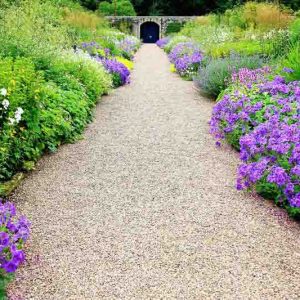
Although Wild Geranium is most often used in woodland and naturalized plantings, it also works beautifully in more structured borders when planted in groups or drifts. Its soft foliage and spring bloom pair well with hostas, ferns, heucheras, and spring bulbs in informal or semi formal designs, especially along shaded paths or under small trees.
USDA PLANTS Database – Distribution and native range data for Geranium maculatum in North America.
Regional native plant societies and botanical gardens (plant profiles and recommended native plant lists for woodland and pollinator gardens).
Updated: December 2025 • Reviewed by Gardenia Editors
| Hardiness |
3 - 8 |
|---|---|
| Heat Zones |
1 - 8 |
| Climate Zones | 1A, 1B, 2A, 2B, 3A, 3B, 4, 5, 6, 7, 8, 9, 10, 11, 12, 13, 14, 15, 16, 17, 18, 19, 20, 21, 22, 23, 24 |
| Plant Type | Perennials |
| Plant Family | Geraniaceae |
| Genus | Geranium |
| Common names | Cranesbill |
| Exposure | Full Sun, Partial Sun |
| Season of Interest | Spring (Late), Summer (Early) |
| Height | 1' - 2' (30cm - 60cm) |
| Spread | 1' - 2' (30cm - 60cm) |
| Spacing | 18" (50cm) |
| Maintenance | Low |
| Water Needs | Low, Average |
| Soil Type | Chalk, Clay, Loam, Sand |
| Soil pH | Acid, Alkaline, Neutral |
| Soil Drainage | Moist but Well-Drained, Well-Drained |
| Characteristics | Showy |
| Native Plants | United States, Pennsylvania, Rhode Island, Vermont, Connecticut, Delaware, Maine, Massachusetts, Maryland, New Hampshire, New Jersey, New York, Northeast, Midwest, Southeast, Southwest, Illinois, Indiana, Iowa, Kansas, Michigan, Minnesota, Missouri, North Dakota, Ohio, South Dakota, Wisconsin, Louisiana, Mississippi, North Carolina, South Carolina, Tennessee, Virginia, West Virginia, Alabama, Arkansas, Georgia, Kentucky, Oklahoma |
| Tolerances | Drought, Deer, Rabbit, Dry Soil, Heat, Fire |
| Attracts | Bees, Butterflies |
| Garden Uses | Beds And Borders, Ground Covers |
| Garden Styles | Gravel and Rock Garden, Informal and Cottage, Prairie and Meadow, Butterfly Garden, Pollinator Garden |
| Toxic to Humans | No known toxicity |
| Toxic to Cats | No known toxicity |
| Toxic to Dogs | No known toxicity |
| Toxic to Horses | No known toxicity |


| Hardiness |
3 - 8 |
|---|---|
| Heat Zones |
1 - 8 |
| Climate Zones | 1A, 1B, 2A, 2B, 3A, 3B, 4, 5, 6, 7, 8, 9, 10, 11, 12, 13, 14, 15, 16, 17, 18, 19, 20, 21, 22, 23, 24 |
| Plant Type | Perennials |
| Plant Family | Geraniaceae |
| Genus | Geranium |
| Common names | Cranesbill |
| Exposure | Full Sun, Partial Sun |
| Season of Interest | Spring (Late), Summer (Early) |
| Height | 1' - 2' (30cm - 60cm) |
| Spread | 1' - 2' (30cm - 60cm) |
| Spacing | 18" (50cm) |
| Maintenance | Low |
| Water Needs | Low, Average |
| Soil Type | Chalk, Clay, Loam, Sand |
| Soil pH | Acid, Alkaline, Neutral |
| Soil Drainage | Moist but Well-Drained, Well-Drained |
| Characteristics | Showy |
| Native Plants | United States, Pennsylvania, Rhode Island, Vermont, Connecticut, Delaware, Maine, Massachusetts, Maryland, New Hampshire, New Jersey, New York, Northeast, Midwest, Southeast, Southwest, Illinois, Indiana, Iowa, Kansas, Michigan, Minnesota, Missouri, North Dakota, Ohio, South Dakota, Wisconsin, Louisiana, Mississippi, North Carolina, South Carolina, Tennessee, Virginia, West Virginia, Alabama, Arkansas, Georgia, Kentucky, Oklahoma |
| Tolerances | Drought, Deer, Rabbit, Dry Soil, Heat, Fire |
| Attracts | Bees, Butterflies |
| Garden Uses | Beds And Borders, Ground Covers |
| Garden Styles | Gravel and Rock Garden, Informal and Cottage, Prairie and Meadow, Butterfly Garden, Pollinator Garden |
| Toxic to Humans | No known toxicity |
| Toxic to Cats | No known toxicity |
| Toxic to Dogs | No known toxicity |
| Toxic to Horses | No known toxicity |
How many Geranium maculatum (Wild Geranium) do I need for my garden?
| Plant | Quantity | |
|---|---|---|
| Geranium maculatum (Wild Geranium) | N/A | Buy Plants |
Create a membership account to save your garden designs and to view them on any device.
Becoming a contributing member of Gardenia is easy and can be done in just a few minutes. If you provide us with your name, email address and the payment of a modest $25 annual membership fee, you will become a full member, enabling you to design and save up to 25 of your garden design ideas.
Join now and start creating your dream garden!
Create a membership account to save your garden designs and to view them on any device.
Becoming a contributing member of Gardenia is easy and can be done in just a few minutes. If you provide us with your name, email address and the payment of a modest $25 annual membership fee, you will become a full member, enabling you to design and save up to 25 of your garden design ideas.
Join now and start creating your dream garden!