Got kiwi questions? This friendly FAQ covers green, golden, and kiwi berries—nutrition and calories, how to cut and ripen, storage, pet safety, and easy growing tips.
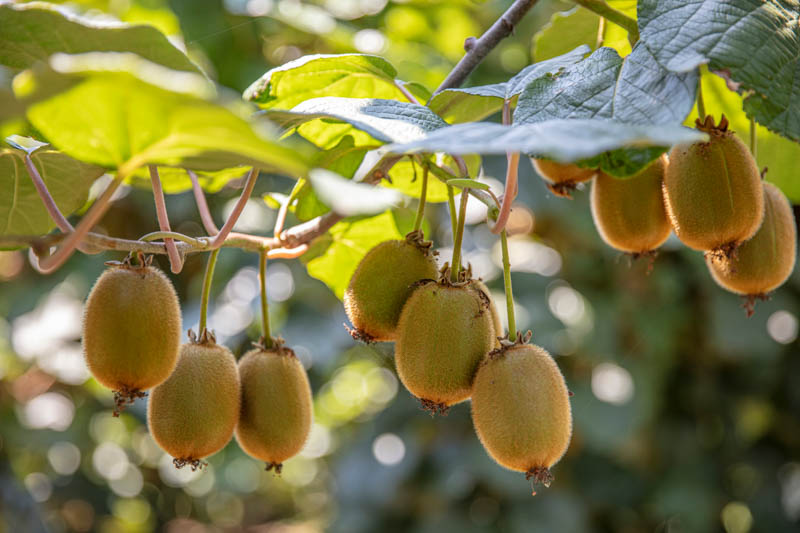


Curious about kiwi fruit, golden kiwi, or bite-size kiwi berries you can pop whole? You’re in the right place. Below you’ll find clear, skimmable answers to the questions people ask most—covering kiwi nutrition, how to cut and ripen kiwis, pet safety, growing tips, and more. Where it helps, we’ve linked to in-depth guides, including hardy kiwi vines, golden and green kiwifruit, showy ornamental species, and a deeper dive into health benefits.
“Kiwi” is a friendly umbrella name for several Actinidia species. The classic fuzzy green store kiwi is Actinidia deliciosa. Golden kiwi with bronzy, smoother skin and honeyed flavor is A. chinensis. Bite-size, smooth-skinned “kiwiberries” are usually A. arguta. All are related, all delicious.
Green kiwi (A. deliciosa) is tangy-sweet with a fuzzy skin. Golden kiwi (A. chinensis) tastes sweeter and lower-acid with smooth to lightly fuzzy skin and yellow flesh. Kiwi berries (A. arguta) are grape-sized, smooth-skinned, and you eat them whole—no peeling.
Yes—“hardy kiwi” and “kiwiberry” generally refer to Actinidia arguta. The vines shrug off serious winter cold compared to the fuzzy green and golden types, and the fruit is smooth-skinned and snackable right off the stem.
Match the species to your climate. Hardy kiwi (Actinidia arguta, USDA Zones 3–8) thrives in colder zones. Green fuzzy kiwi (A. deliciosa, Zones 7–9) prefers temperate areas. Golden kiwi (A. chinensis, Zones 8–10; 7 in warm, sheltered sites) wants a long, warm season. All love full sun, rich well-drained soil, and sturdy supports.
A typical raw green kiwi delivers about 60 calories per 100 g (roughly one medium fruit), with around 15 g carbs, 3 g fiber, and minimal fat. That makes kiwi a light, nutrient-dense snack. For a deeper look at kiwi nutrition, see our health overview here.
Yes. All kiwi skins are technically edible when cleaned. Many people prefer the smoother skins of golden kiwi and kiwi berries; green kiwi skin is fuzzier but still fine if you rinse and gently scrub. If you’d rather not, just scoop or peel.
Kiwi is famously high in vitamin C and offers fiber, vitamin K, potassium, vitamin E, and helpful polyphenols. The combo supports immunity, skin and collagen, digestion, and heart health. Explore science-backed benefits in our guide to kiwi nutrition and wellness.
Leave them at room temperature until they yield slightly to gentle pressure. To speed it up, tuck kiwis in a paper bag with a ripe banana or apple—ethylene does the magic. Once ripe, refrigerate to slow softening. Kiwi berries are more delicate, so enjoy them within a few days.
For quick snacking, slice the fruit in half and scoop with a spoon. For salads and platters, trim ends, peel vertically, then slice into rounds or wedges. For kiwi berries, simply rinse and eat whole. More “how-to” tips live inside our wellness guide here.
Many people find a daily kiwi gently supports regularity. Credit the fiber plus actinidin, a natural enzyme that helps break down proteins. Fun side note: actinidin can stop gelatin from setting and tenderizes meat fast—great for marinades, tricky for jello.
Both are excellent. Golden kiwi often has even more vitamin C and tastes sweeter and lower-acid, while green kiwi brings that classic tang with similar fiber. If you’re curious about golden types, browse A. chinensis.
Kiwi is modest in calories and offers fiber with natural sugars. Tolerance varies by individual and serving size. Many dietitians include kiwi in balanced, portion-aware plans. If you follow a therapeutic diet (low FODMAP, diabetes meal plan, or anticoagulant therapy), consult your clinician or dietitian.
In small, bite-size pieces without skin for sensitive pups, kiwi is generally safe as an occasional treat. Avoid seeds for tiny dogs, and skip sugary dried fruit. Full guidance, portion ideas, and red flags are in our pet primer Can Dogs Eat Kiwi?.
Cats may react to compounds in some ornamental relatives, especially “silver vine,” Actinidia polygama. It’s famous for feline fascination. Another showstopper, A. kolomikta, sports pink-white-splashed leaves—grown for looks, not fruit.
Usually, yes—most kiwis are dioecious. Plan roughly one male for six to eight females and match bloom timing. A popular exception is partially self-fertile ‘Issai’ among hardy kiwis; see A. arguta for details.
Patience pays. Grafted plants often bear in two to four years; seedlings take longer and vary in quality. Warmth, sun, a sturdy trellis, and steady training speed things along. Explore species pages for culture notes: A. deliciosa, A. chinensis, and A. arguta.
Think framework first. Establish a strong trunk and two permanent cordons along the top wire. In winter, renew fruiting laterals; in summer, tip long shoots after fruit set to boost light and airflow. Sturdy T-bars, multi-wire trellises, or pergolas are your best friends.
A. arguta is vigorous and, in parts of the Northeastern U.S., listed as potentially invasive. Check your state’s guidance, harvest fruit promptly, and never dump prunings in natural areas. Responsible training and pruning keep vines in bounds.
Ripen on the counter until slightly soft, then refrigerate to hold the texture. Peeled, sliced kiwi keeps well in an airtight container for a day or two. Kiwi berries are thin-skinned and bruise easily—snip clusters, chill promptly, and enjoy soon.
Some people experience oral itching due to sensitivity or allergy, and kiwi can cross-react with latex and certain pollens. If tingling is noticeable, enjoy small amounts and consult a clinician if symptoms persist. Peeling may help for those only sensitive to skin fuzz.
So many things. Try yogurt and granola, citrusy salads, salsas for fish or tofu, chia cups with golden kiwi, and smoothie bowls. Kiwi’s enzyme tenderizes meat fast—great for marinades, but limit contact time with delicate proteins.
Classic green fuzzy kiwifruit is Actinidia deliciosa, often represented by ‘Hayward’. Golden kiwi is A. chinensis, bred for sweet, low-acid taste and sunny flesh.
Yes. Actinidia kolomikta dazzles with pink-white variegated leaves and is grown mainly for looks in cooler climates. A. polygama sports silver-washed foliage and is the famed “silver vine” some cats adore. These are more ornamental than dessert-fruit workhorses.
Keep a bowl on the counter for easy ripening, stash a box of kiwi berries in the fridge for grab-and-go snacks, and rotate green and golden kiwi in your breakfast, smoothies, and salads. Our wellness guide shares simple ideas you can put on repeat here.
Pick what you’ll actually eat. Love bright, tangy zing and don’t mind peeling or scooping? Green kiwi (A. deliciosa). Prefer mellow, tropical sweetness and smoother skin? Golden kiwi (A. chinensis). Want snack speed and no peel? Kiwi berries (A. arguta).
If you’re planting, think of kiwis as vigorous climbers with big appetites and big payoffs. Give them sun, a stout trellis, steady moisture, and regular winter shaping plus light summer tipping. Match your climate to the right species, plan male-to-female ratios for pollination, and keep fruits picked promptly. For ornamental drama or feline fascination, explore A. kolomikta and A. polygama; for dessert bowls and smoothies, lean on A. deliciosa and A. chinensis; and for cold-tough, snack-ready berries, plant A. arguta.
The Health Benefits of Eating Kiwi Fruit • Can Dogs Eat Kiwi? • Green Kiwi (A. deliciosa) • Golden Kiwi (A. chinensis) • Hardy Kiwi (A. arguta) • Ornamental Kiwi (A. kolomikta) • Silver Vine (A. polygama)
| Hardiness |
3 - 10 |
|---|---|
| Plant Type | Climbers, Fruits |
| Plant Family | Actinidiaceae |
| Genus | Actinidia |
| Toxic to Humans | No known toxicity |
| Toxic to Cats | No known toxicity |
| Toxic to Dogs | No known toxicity |
| Toxic to Horses | No known toxicity |
| Hardiness |
3 - 10 |
|---|---|
| Plant Type | Climbers, Fruits |
| Plant Family | Actinidiaceae |
| Genus | Actinidia |
| Toxic to Humans | No known toxicity |
| Toxic to Cats | No known toxicity |
| Toxic to Dogs | No known toxicity |
| Toxic to Horses | No known toxicity |
Create a membership account to save your garden designs and to view them on any device.
Becoming a contributing member of Gardenia is easy and can be done in just a few minutes. If you provide us with your name, email address and the payment of a modest $25 annual membership fee, you will become a full member, enabling you to design and save up to 25 of your garden design ideas.
Join now and start creating your dream garden!
Create a membership account to save your garden designs and to view them on any device.
Becoming a contributing member of Gardenia is easy and can be done in just a few minutes. If you provide us with your name, email address and the payment of a modest $25 annual membership fee, you will become a full member, enabling you to design and save up to 25 of your garden design ideas.
Join now and start creating your dream garden!