Create Your Garden

Colorado Planting Zones – Growing Zones Guide

Colorado gardening spans alpine valleys to warm Western Slope orchards. Learn your USDA zone (3b–7b), key frost dates, regional microclimates, and the best vegetables, fruits, natives, and ornamentals for every elevation. Includes maps, planting calendars, and expert tips for thriving in Colorado’s sun, wind, and short seasons
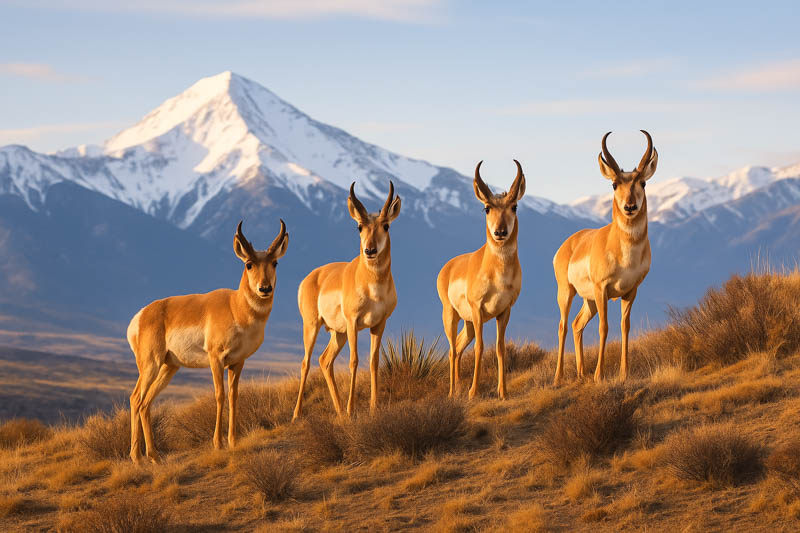
Colorado Growing Zones Guide: Frost Dates, Maps & What to Plant

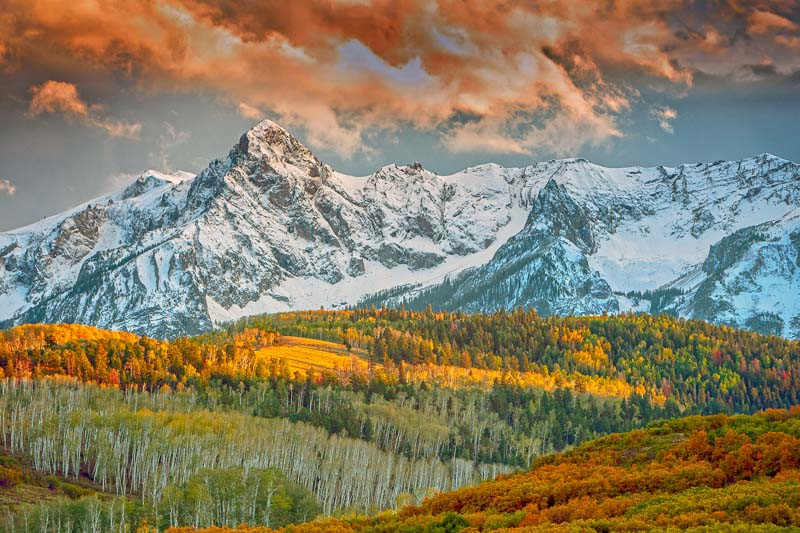
Gardening in Colorado might mean a windswept veggie patch on the Eastern Plains, a cozy pollinator garden along Denver’s Front Range, a shady backyard in Fort Collins, or a high-country bed filled with wildflowers near Breckenridge. Colorado planting zones stretch from chilly alpine valleys that flirt with frost in every month of the year to surprisingly mild, fruit-growing pockets along the Western Slope.

This guide will help you understand your Colorado growing zone, read the USDA map, plan around frost dates, and choose the best plants for your corner of the Centennial State.

What Planting Zone Is Colorado In?

Colorado sits at the intersection of the Rockies and the Great Plains, so its climates are wildly diverse. On the latest USDA Plant Hardiness Zone Map, most of Colorado falls between USDA hardiness zones 3b and 7b, with five main zone bands (3–7). The coldest areas are high-mountain valleys and passes; the warmest pockets hug the Western Slope and a few low, sheltered valleys and urban neighborhoods.

  • High Mountains & Alpine Valleys: Mountain towns and valleys above roughly 8,500–9,000 feet (places like Leadville, Crested Butte, and parts of the San Juan Mountains) are often zones 3b–4b, with long, snowy winters and very short growing seasons.
  • Foothills & Mountain Communities: Areas around 6,500–8,500 feet, including many Front Range foothill towns and resort communities, typically fall in zones 4a–5b.
  • Front Range & Urban Corridor: Denver, Boulder, Fort Collins, Colorado Springs, and many nearby suburbs and towns are mostly zones 5b–6a, with urban “heat island” pockets that behave like warm zone 6.
  • Eastern Plains: From the north plains near Sterling down through the Arkansas Valley, most locations sit in zones 4b–6a, with big skies, wind, and semi-arid conditions.
  • Western Slope & Southern Valleys: Grand Junction, Palisade, parts of the lower Colorado River valley, and milder southern valleys around Pueblo, Cañon City, and the Four Corners region can feel almost mild for Colorado, usually zones 6a–7b.

USDA Hardiness Zone Map for Colorado

The latest USDA Plant Hardiness Zone Map is based on 30-year averages of the coldest winter temperatures (1991–2020). In Colorado, it highlights the dramatic shift from the high, cold Rockies and San Luis Valley down to the more moderate Front Range communities and the comparatively mild Western Slope.
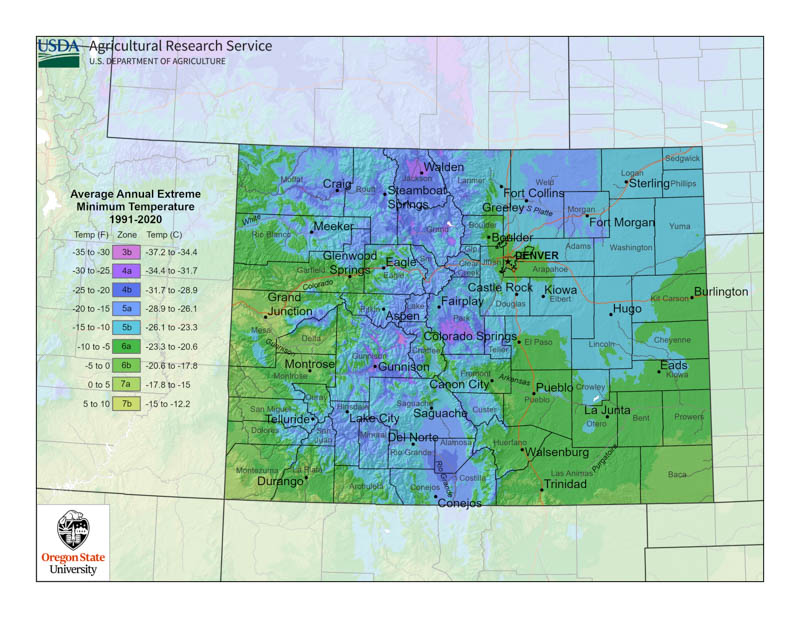
Colorado Planting Colorado Carolina Growing Zones, Colorado Garden Zones, Colorado Hardiness Zone Map

A simplified Colorado planting zone map based on the USDA 2023 Hardiness Zone Map, using 1991–2020 climate data.

Use the zone map together with your ZIP code to pinpoint your exact Colorado garden zone. Look up your Colorado planting zone by ZIP code using the USDA tool, then come back here or visit our Plant Finder for plants tailored to your zone, altitude, and site conditions.

Colorado Growing Zones by Region

On the map, Colorado might look like one big rectangle, but its growing zones and microclimates are incredibly varied. Elevation, slope, exposure, chinook winds, river valleys, and urban “heat islands” can shift conditions by a full zone or more from one neighborhood—or even one slope—to the next.

Eastern Plains & High Prairie (Approx. Zones 4b–6a)

This region includes the wide-open grasslands east of the Front Range—places like Sterling, Fort Morgan, Limon, La Junta, and Springfield. Winters can be cold and windy, but growing seasons are decent once spring finally settles in.

  • Great for cool-season vegetables, prairie grasses, hardy perennials, and tough shrubs that tolerate wind and low humidity.
  • Soils are often alkaline and either clayey or sandy—adding compost and mulching heavily pays off.
  • Last spring frosts typically run from late April into mid May; first fall frosts usually arrive from late September to mid October, depending on elevation.
🔎 Find plants by hardiness zone

Front Range & Urban Corridor (Approx. Zones 5b–6a)

From Fort Collins and Loveland down through Boulder, Denver, Aurora, and south to Colorado Springs and Pueblo, the Front Range is a long strip of valley floors and low benches backed by foothills. It’s home to many Colorado gardeners—and relatively friendly growing conditions.

  • Excellent for a wide range of vegetables, small fruits, ornamental shrubs, and perennials, especially in well-amended beds.
  • Urban neighborhoods and dense development create heat islands that can bump you into a warmer micro-zone (often 6a) and slightly lengthen the frost-free period.
  • Typical last frosts fall from late April into mid May; first frosts usually arrive from late September into mid October.
🔎 Find plants by hardiness zone

Foothills & Montane Communities (Approx. Zones 4a–5b)

Foothill neighborhoods above the main Front Range cities—think Evergreen, Conifer, Estes Park, Manitou Springs, and many canyon communities—trade summer heat for cool nights and extra snow.

  • Great for cold-hardy shrubs, conifers, and perennials that appreciate cooler nights and can handle snow load.
  • Vegetable gardens benefit from season-extension tools like raised beds, row covers, and walls-of-water around tomatoes and peppers.
  • Expect last frosts well into May (sometimes early June in colder spots) and first frosts arriving from mid September to early October.
🔎 Find plants by hardiness zone

High Mountains & San Luis Valley (Approx. Zones 3b–4b)

These are Colorado’s coldest gardening zones, where frost can strike in any month. Think high basins like the San Luis Valley (Alamosa and surroundings), plus ski towns and alpine valleys where nights are crisp even in July.

  • Short seasons favor quick-maturing vegetables, root crops, leafy greens, and very cold-hardy perennials and shrubs.
  • Raised beds, row covers, cold frames, and greenhouses make a huge difference in production.
  • Last frosts often linger into early–mid June, and first frosts can return in late August or early September.
🔎 Find plants by hardiness zone

Western Slope & Colorado River Valley (Approx. Zones 5b–7b)

From Grand Junction and Palisade to Montrose and Delta, the Western Slope enjoys some of Colorado’s longest, warmest growing seasons. This is prime country for peaches, wine grapes, and warm-loving vegetables—when water is available.

  • Excellent for tree fruits, grapes, and long-season crops like melons, peppers, and tomatoes.
  • Hot, sunny days and low humidity mean irrigation and mulching are essential.
  • Average last frosts can be in late April; first frosts often hold off until mid–late October.
🔎 Find plants by hardiness zone

Southern Valleys & Four Corners (Approx. Zones 5b–7b)

Areas around Pueblo, Cañon City, Trinidad, and the Four Corners region (including Durango and Cortez) often run warmer than you might expect for Colorado, thanks to lower elevations and sheltered valleys.

  • Great for extended harvests of warm-season vegetables, herbs, and many ornamental shrubs and perennials.
  • Summer heat and drought mean that mulching, drip irrigation, and drought-tolerant plants are your best friends.
  • Last frost dates can arrive in late April; first frosts often wait until mid–late October.
🔎 Find plants by hardiness zone

Colorado Frost Dates: When to Plant and When to Protect

In a state where you can drive from hot desert mesas to snowy passes in an afternoon, frost dates are your most practical planning tool. Your average last and first frosts determine when you can safely plant tomatoes, when to tuck cool-season crops under cover, and when to be ready for sudden cold snaps in fall.

Across Colorado, last spring frosts range from late April in warmer river valleys and low-elevation plains to early–mid June in the coldest mountain valleys. First fall frosts may hit high country gardens in late August or early September but delay until mid–late October in milder Western Slope and southern sites.

Region / City Average Last Spring Frost Average First Fall Frost Approx. Frost-Free Days
Denver (Central Front Range) Late April–Mid May (around Apr 25–May 10) Early–Mid October (around Oct 7–15) ~150–170 days
Colorado Springs (Southern Front Range) Early–Mid May (around May 5–10) Late September–Early October (around Sep 25–Oct 5) ~140–155 days
Fort Collins (Northern Front Range) Early–Mid May (around May 5–15) Early–Mid October (around Oct 1–12) ~145–160 days
Grand Junction (Western Slope) Late April–Early May (around Apr 20–May 5) Mid–Late October (around Oct 15–25) ~165–190 days
Alamosa (San Luis Valley) Early June (around Jun 5–10) Early September (around Sep 5–15) ~85–100 days
Steamboat Springs / High Mountain Towns Late May–Mid June (around May 25–Jun 15) Early–Mid September (around Sep 5–15) ~80–105 days

Dates summarized from regional climate and frost-date tools; always check a local forecast and ZIP-code–based lookup for the most precise information for your garden.

Use these frost dates as flexible guidelines—your own yard may run warmer or cooler depending on elevation, slope, wind exposure, nearby pavement or rock, and whether you’re tucked into a sheltered canyon or perched on a ridge. They’re averages, not guarantees, so keep an eye on the forecast during spring and fall cold snaps (and always be prepared for the occasional surprise June snow).
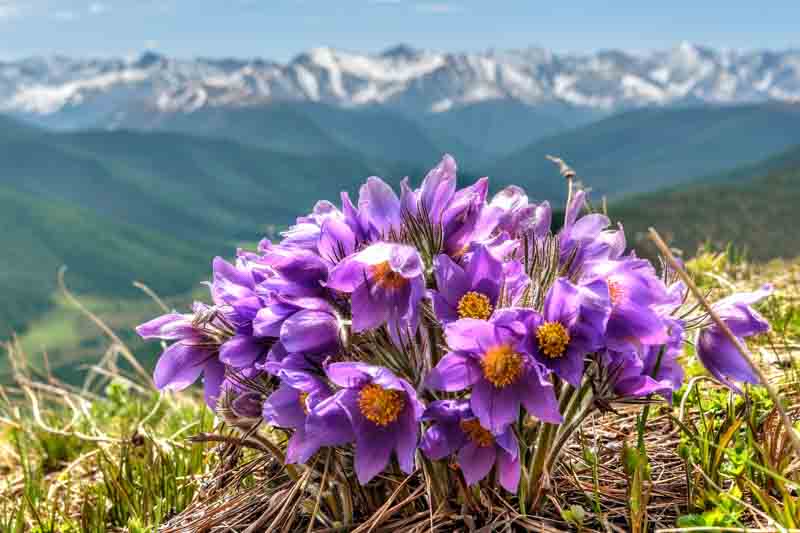
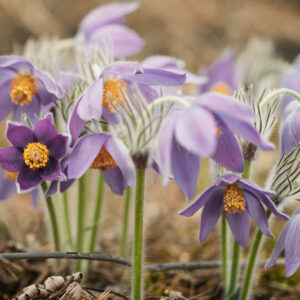
Colorado wildflowers, Colorado Native Plants, Pasque Flower, Pulsatilla patens

Interactive Colorado Planting Calendar (General Guide)

Tap a month to see what to plant in Colorado by zone. Use this as a starting point, then adjust for your exact frost dates, elevation, and whether you garden on a breezy ridge, in a sheltered city courtyard, or in a warm river valley.

🏔 Zones 3–4: High Mountains & San Luis Valley
🌾 Zones 4–5: Foothills & Eastern Plains
🌞 Zones 5–7: Front Range, Western Slope & Southern Valleys
January – Dream, Plan & Order Seeds
  • All zones: Review last year’s garden, test soil, sketch crop rotations, and order seeds early—popular short-season varieties sell out fast in Colorado.
  • Warmer zones (5–7): On mild days, clean up beds, prune dead branches, and plan irrigation upgrades for the dry season ahead.
February – Indoor Seed Starting Begins
  • Zones 5–7 (Front Range, Western Slope): Start onions, leeks, celery, and cool-season brassicas indoors; set up grow lights to compensate for short days.
  • High country (zones 3–4): Focus on planning and ordering ultra-short-season varieties; start onions and leeks indoors late in the month.
March – Cool-Season Crops & Early Prep
  • Zones 5–7 (lower elevations): As soon as soil can be worked, direct-sow peas, spinach, mache, and radishes; transplant hardy brassicas under low tunnels late in the month.
  • Zones 3–4: Start cabbage, broccoli, kale, and herbs indoors; snow and deep freezes are still likely outdoors.
April – Cool-Season Peak & Hardening Off
  • Zones 5–7: Sow carrots, beets, chard, and more peas; plant potatoes; start hardening off brassicas and hardy flowers for planting later in the month under protection.
  • Zones 3–4: Continue indoor seed starting; begin hardening off cool-season transplants late in the month if snow cover recedes.
May – Main Warm-Season Planting (After Frost)
  • Zones 5–7 (Front Range, plains, Western Slope): After your local last frost date, transplant tomatoes, peppers, eggplants, and basil; direct-sow beans, corn, cucumbers, and squash.
  • High country zones 3–4: Plant hardy greens, peas, and potatoes outdoors as soil thaws; keep warm-season crops in pots or protected beds for now.
June – Grow, Mulch & Succession Plant
  • All zones: Mulch beds to conserve precious moisture and reduce weeds; stake tomatoes and trellis peas and cucumbers.
  • Zones 5–7: Sow another round of beans and summer squash; plant heat-loving herbs like basil, dill, and oregano.
  • High country (3–4): Transplant warm-season crops into protected beds once danger of hard frost has passed; use row covers against cold nights and hail.
July – Peak Harvest & Start Fall Crops
  • All zones: Harvest peas, early potatoes, lettuce, beans, and the first tomatoes and zucchini. Stay on top of watering during hot, dry spells.
  • Zones 4–6: Start seeds for fall broccoli, kale, cabbage, and cauliflower indoors or in a shaded nursery bed.
  • Zone 7 pockets: Succession-sow heat-tolerant greens and bush beans for late-summer harvests.
August – Fall Garden Planting Window
  • Zones 4–5: Direct-sow fall carrots, beets, radishes, spinach, and lettuce early in the month; keep seedbeds moist in hot, dry air.
  • Zones 6–7: Sow cool-season crops in partially shaded beds or under shade cloth for late fall and early winter harvests.
  • High country (3–4): Enjoy harvests and focus on quick crops; frost may return as early as late August or early September.
September – Cool Nights, Fresh Greens
  • All zones: Enjoy fall plantings of lettuce, kale, radishes, and Asian greens; keep harvesting tomatoes and peppers until frost.
  • Zones 5–7: Sow one last round of fast greens early in the month for late-fall salads; be ready with covers for early frosts.
  • High country (3–4): Cover vulnerable plants regularly; shift focus to cleanup and bed prep as frost moves in.
October – Protect, Plant & Put Beds to Rest
  • High country & cooler zones (3–5): Pull spent warm-season crops, mulch perennials, plant garlic, and tuck in spring bulbs before the ground freezes.
  • Warmer zones (5–7): Use row covers and low tunnels to stretch tomato and pepper harvests; plant garlic, bulbs, and hardy perennials.
November – Clean Up, Mulch & Winterize
  • All zones: Pull spent annuals, mulch beds generously, protect young trees from rodents, and drain hoses and irrigation lines before hard freezes.
  • Zones 5–7: Under cover, harvest hardy greens into late November and sometimes December during mild years.
December – Reflect, Repair & Plan Ahead
  • All zones: Clean and sharpen tools, update your garden journal, and note which varieties thrived in your particular Colorado microclimate (and which ones struggled with hail, heat, or late frosts).

Colorado Gardening Tips by Zone

Colorado gardeners juggle intense sun, low humidity, alkaline soils, wind, hail, wildlife, and shifting hardiness zones. These tips will help your plants thrive from zone 3b to 7b:

  • Know your elevation and microclimate. A south-facing Denver courtyard can behave like a warm zone 6–7, while a nearby foothill slope might be a full zone colder.
  • Start seeds indoors for long-season crops like peppers, eggplants, and many tomatoes—especially in zones 3–5 where summers are shorter.
  • Improve soil structure. Many Colorado soils are compacted, clay-heavy, or sandy and alkaline. Add compost, leaf mold, and organic matter regularly to boost drainage, water-holding capacity, and microbial life.
  • Mulch generously to reduce weeds, conserve water, and protect roots from extreme temperature swings.
  • Use season extension. Row covers, low tunnels, cold frames, and even simple frost blankets can add weeks to both spring and fall harvests—crucial in high-altitude and short-season zones.
  • Plan for sun, wind & hail. Use windbreaks, plant taller crops to shelter shorter ones, and consider temporary hail cloth or netting in storm-prone areas.
  • Choose drought- and disease-resistant varieties of vegetables, roses, and ornamentals to cope with dry air, strong UV, and occasional late-summer storms.
  • Plan for wildlife. Deer, elk, rabbits, and voles are part of the Colorado gardening equation—use fencing, repellents, and deer-resistant plantings around key beds.
  • Lean on native plants and water-wise species to create low-maintenance, ecologically rich structure around your veggie beds and patios.

Beyond USDA Zones: Sunset Climate Zones in Colorado

While USDA hardiness zones (roughly 3b–7b in Colorado on the 2023 map) tell you how cold it gets in winter, they don’t capture elevation-driven temperature swings, intense sun, low humidity, or the short high-country growing season. For Western gardeners, the Sunset Western Garden climate zones are often more precise. Colorado falls mainly into Sunset Climate Zones 1, 2, and 10, covering everything from alpine tundra and cold intermountain valleys to the warmer, semi-arid Western Slope and plains. For many Colorado gardens, Sunset zones provide a more practical guide to plant selection because they account for altitude, day–night temperature swings, and overall growing conditions—not just winter lows.

Start Growing in Your Colorado Planting Zone

Now that you understand your Colorado planting zone, frost dates, and regional climate, you’re ready to choose plants that match your conditions and build a thriving Rocky Mountain garden. Blend edible crops, flowering perennials, and native plants for a landscape that feeds both your household and local wildlife. Curious how Colorado compares to other regions? Visit our national USDA planting zone guide to explore growing zones across the United States.
Colorado Native Plants

Frequently Asked Questions About Colorado Planting Zones

What USDA growing zones is Colorado in?

Colorado spans USDA hardiness zones 3b to 7b on the 2023 map. High mountain valleys and alpine areas are coldest (3b–4b), while warmest zones (6b–7b) occur on the Western Slope and in sheltered southern valleys. Most Front Range and plains communities fall between zones 4b and 6a.

What zone is Denver?

Denver sits mostly in zone 6a, with some slightly cooler 5b pockets in higher or exposed areas and slightly warmer 6b microclimates in dense urban neighborhoods. Denver’s elevation, sun exposure, and urban heat effects can shift its planting conditions by half a zone.

What zone is Colorado Springs?

Colorado Springs generally falls in zones 5b–6a, depending on elevation and wind exposure. Foothill and northern neighborhoods tend to be cooler, while lower, sheltered areas behave slightly warmer. The region experiences late spring frosts and early fall cold snaps due to elevation.

What growing zone is the Western Slope?

Colorado’s Western Slope—Grand Junction, Palisade, Delta, Montrose—ranges from zones 5b–7b, offering some of the state’s warmest, longest growing seasons. This region supports peaches, grapes, melons, and many long-season vegetables thanks to mild winters and extended frost-free periods.

What planting zone is Fort Collins?

Fort Collins is mostly zone 5b, with some 6a pockets in warm, sheltered urban areas. Areas nearer the foothills tend to run slightly cooler. Frost dates typically range from early–mid May to early–mid October.

When is the last frost in Colorado?

Colorado’s last frost varies widely by elevation:
High mountains (3b–4b): Early–mid June
Front Range (5b–6a): Late April–mid May
Western Slope (6a–7b): Late April–early May
Because weather can be unpredictable, gardeners should consult local forecasts each spring.

When is the first fall frost in Colorado?

First fall frost typically arrives:
High mountains: Late August–early September
Front Range: Late September–mid October
Western Slope: Mid–late October
Microclimates—such as sheltered courtyards or river valleys—may delay frost by several weeks.

What grows best in Colorado?

Colorado grows cool-season crops exceptionally well statewide—lettuce, spinach, peas, radishes, carrots, kale—and warm-season vegetables (tomatoes, peppers, squash, melons) thrive in lower elevations. Native flowers, drought-tolerant perennials, ornamental grasses, apples, pears, cherries, peaches, and grapes are strong performers.

Do peaches grow in Colorado?

Yes—Colorado peaches thrive in the warm Western Slope (zones 6b–7b), especially around Palisade and Grand Junction. In colder Front Range and plains areas, peaches can be grown in warm microclimates but may require frost protection due to early-blooming tendencies.

Which native plants are best for Colorado gardens?

Top native choices include Rocky Mountain columbine, blanket flower, penstemons, blue grama grass, buffalograss, rabbitbrush, serviceberry, and Gambel oak. Native plants tolerate Colorado’s sun, wind, low humidity, poor soils, and variable temperatures while supporting pollinators and wildlife.

Updated: December 2025

Guide Information

Hardiness 3 - 7
Climate Zones 1, 1A, 1B, 2, 2A, 2B, 10
Native Plants United States, Rocky Mountains, Colorado

Recommended Guides

50 Colorado Wildflowers to Know and Love
Monarch Nectar Plants for Colorado
Great Pollinator Plants for Colorado
USDA Planting Zones Guide: Growing Zones by State Across the United States
Native Garden Ideas – Best Native Plants for a Beautiful Yard
Pollinator Gardens: Plants, Designs & Care Guide
The Ultimate Guide to Native Plants for a Beautiful Garden
The Ultimate Guide to Wildlife-Friendly Plants for a Beautiful Garden
Guides with
Colorado
While every effort has been made to describe these plants accurately, please keep in mind that height, bloom time, and color may differ in various climates. The description of these plants has been written based on numerous outside resources.

Guide Information

Hardiness 3 - 7
Climate Zones 1, 1A, 1B, 2, 2A, 2B, 10
Native Plants United States, Rocky Mountains, Colorado
Guides with
Colorado

Related Items

Please Login to Proceed

You Have Reached The Free Limit, Please Subscribe to Proceed

Subscribe to Gardenia

To create additional collections, you must be a paid member of Gardenia
  • Add as many plants as you wish
  • Create and save up to 25 garden collections
Become a Member

Plant Added Successfully

Your garden is taking shape. Unlock full planning.

You’ve reached the free limit. Upgrade for $25/year to add as many plants as you wish and save up to 25 garden collections. Unlock Annual Membership

Update Your Credit
Card Information

Cancel

Create a New Collection

Sign Up to Our Newsletter

    You have been subscribed successfully

    Join Gardenia.net

    Create a membership account to save your garden designs and to view them on any device.

    Becoming a contributing member of Gardenia is easy and can be done in just a few minutes. If you provide us with your name, email address and the payment of a modest $25 annual membership fee, you will become a full member, enabling you to design and save up to 25 of your garden design ideas.

    Join now and start creating your dream garden!

    Join Gardenia.net

    Create a membership account to save your garden designs and to view them on any device.

    Becoming a contributing member of Gardenia is easy and can be done in just a few minutes. If you provide us with your name, email address and the payment of a modest $25 annual membership fee, you will become a full member, enabling you to design and save up to 25 of your garden design ideas.

    Join now and start creating your dream garden!
    Find your Hardiness Zone

    Find your Heat Zone

    Find your Climate Zone