Ginkgo 'Fairmont', Maidenhair Tree 'Fairmont', Fossil Tree 'Fairmont', Icho 'Fairmont'
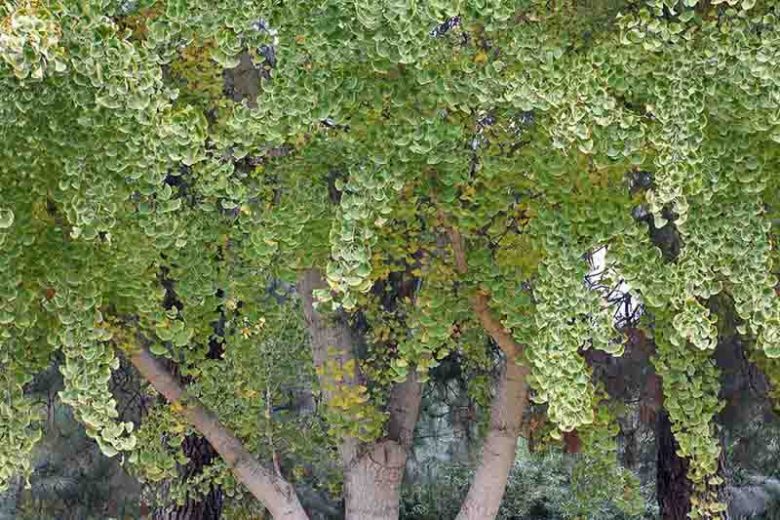


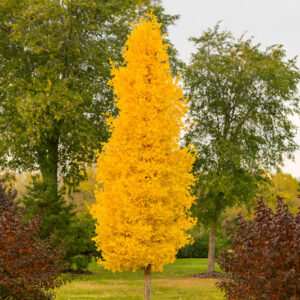
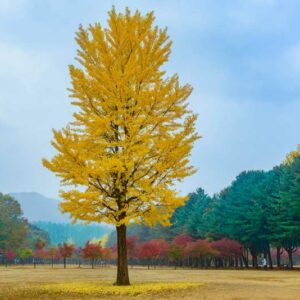
Ginkgo biloba ‘Fairmont’, also sometimes called ‘Fairmount,’ is a distinctive, male clone of the legendary Maidenhair Tree, treasured for its uniquely narrow, upright-pyramidal form, exceptional hardiness, and glorious fall color. Chosen from historic Fairmont Park in Philadelphia, this tree brings prehistoric charm and modern adaptability to today’s landscapes, thriving where many trees struggle.
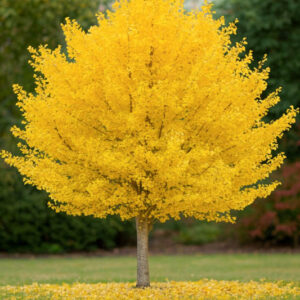
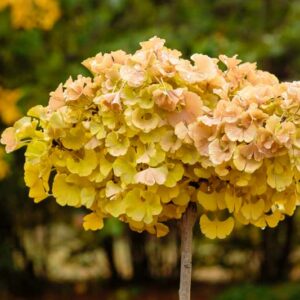
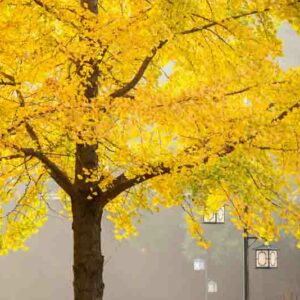
An Ancient Survivor with Modern Style: Ginkgo biloba is the last living member of its plant division, tracing its fossil record over 200 million years. ‘Fairmont’ stands out among ginkgoes for its dense, narrowly pyramidal to columnar crown, featuring strong, nearly horizontal branches when young that become gracefully upright with age. This gives the tree a striking, architectural silhouette that remains beautiful all year: lush with fan-shaped green leaves in summer, ablaze with brilliant gold in fall, and structurally dramatic against the winter sky.
It is celebrated as a shade tree that establishes quickly, is virtually pest and disease free, resists storm damage, and tolerates air pollution, heat, and moderate salt—making it especially valued in cities, campuses, and along streets where vertical space is limited but impact is needed. The ‘Fairmont’ offers deep, cooling shade beneath its dense canopy and never produces the messy, odorous fruit associated with female ginkgoes, making it low maintenance for urban and residential settings.
| Botanical Name | Ginkgo biloba ‘Fairmont’ |
| Common Names | Maidenhair Tree, Fairmont Ginkgo |
| Plant Type | Deciduous coniferous tree (male clone) |
| Hardiness Zones | USDA 3–9 (some sources 5–8A) |
| Height & Spread | 30–50 ft. tall × 8–12 ft. wide (9–15 × 2–4 m) — can reach 50-70 ft. tall and 15-18(25) ft. wide with age |
| Leaves & Fall Color | Fan-shaped, unique green leaves turn dazzling gold in autumn; rapid leaf drop after frost |
| Special Features | Male (fruitless), dense shade, storm and pest resistant, urban/heat tolerant |
| Main Uses | Specimen, street/boulevard tree, noise buffer, narrow planting spaces, city parks |
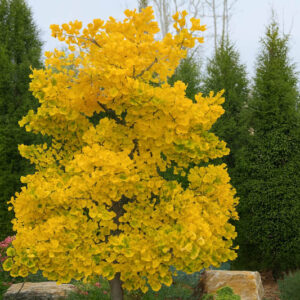
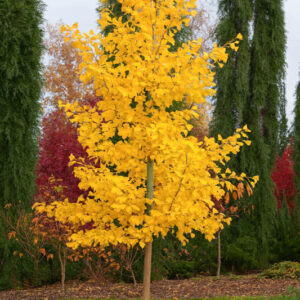
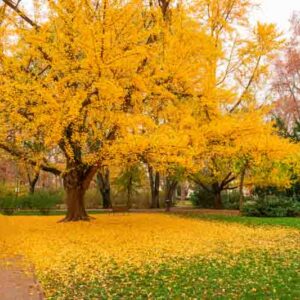
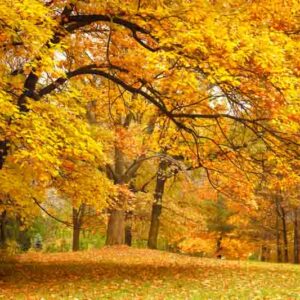
Form & Foliage: ‘Fairmont’ is defined by its tall, slender, columnar shape with dense, regular branching. Foliage emerges as classic ginkgo fans—vivid green, deeply veined, and fluttering in the breeze. By late autumn, the leaves turn a brilliant, buttery gold—the signature display of all great ginkgoes. Leaf drop may be quite rapid, blanketing the ground in golden splendor before winter reveals the tree’s sculptural silhouette, bristling with angular buds.
This cultivar remains elegant and showy year-round, ideal for designers seeking a vertical accent or strong lines in the urban landscape.
Native to China, ginkgoes have been planted as sacred trees in temple gardens for centuries and are celebrated for legendary longevity—some specimens believed to exceed 1,000 years. ‘Fairmont’ continues this legacy of endurance, adapting ancient genetics to today’s harsh urban realities and modern landscape designs.
‘Fairmont’ is the go-to ginkgo for urban avenues, tight parkways, and anywhere a slender, vertical accent is needed. It is also prized as a specimen, offering dramatic silhouette and fall brilliance for city parks, entrances, or small gardens. Perfect for modern spaces and formal plantings; adds interest when underplanted with bulbs or perennials for year-long display.
| Variety | Type | Foliage & Appearance | Best Uses |
|---|---|---|---|
| Autumn Gold | Full-size canopy | Classic upright tree, bright golden fall color, large, fan-shaped leaves | Shade tree, specimen, street and park use |
| Mariken | Dwarf/compact | Dense, rounded form; lush small leaves; deep yellow autumn foliage | Small gardens, containers, urban courtyards, bonsai |
| Princeton Sentry | Columnar/upright | Tall, narrow form; bright yellow fall color; tolerant of tight spaces | Street plantings, small city lots, narrow spaces |
| Saratoga | Upright spreading | Light green, deeply divided leaves; architectural branching | Specimen tree, shade, landscape accent |
| Majestic Butterfly | Variegated | Leaves streaked green and yellow; unique texture; compact size | Ornamental, small spaces, visual interest |
| Jade Butterflies | Dwarf/upright | Small, deeply lobed “butterfly” leaves; slow growing, bushy | Containers, bonsai, patios, small gardens |
| Pendula | Weeping | Arching, pendulous branches; umbrella-shaped; classic gold fall color | Focal point, ornamental, landscape curiosity |
| Beijing Gold | Variegated/dwarf | Striking creamy-yellow leaves, compact growth, rare | Show gardens, collectors, accent tree |
| Troll | Miniature/spherical | Tiny size, globe-like shape, very dense foliage | Rock gardens, bonsai, small landscape touch |
| Fairmont | Upright pyramidal | Narrow crown, horizontal branching, bright gold fall foliage | Street tree, specimen, urban planting, dense shade |
| Horizontalis | Spreading/weeping | Branching horizontal, layered, wide canopies; elegant shape | Landscape accent, specimen, garden focal point |
| Peve Maribo | Compact/miniature | Dense, upright habit; small deeply cut leaves; slow growing | Patios, containers, bonsai, edging |
| Tubifolia | Unusual foliage | Leaves very narrow, tube-shaped, almost aquatic look | Collector’s item, specimen, visual interest |
‘Fairmont’ is a male, columnar cultivar of Ginkgo biloba selected for its tall, upright habit, dense shade, and brilliant gold fall color. It is fruitless and ideal for urban plantings.
Usually 30–50 ft. tall and 8–12 ft. wide (9–15 × 2–4 m); old specimens can become 70 ft. tall by 15–18 ft. wide.
USDA Zones 3–9 (some sources 5–8A), making it suitable for a broad range of climates.
Requires full sun for best color and vigor. Tolerant of many soils—clay, loam, sand; acid or alkaline; must be well-drained.
No. ‘Fairmont’ is male, so it does not produce fruit or unpleasant odor.
Outstanding for urban use—resists air pollution, heat, moderate salt, storm, and pest/disease pressures.
By cuttings to ensure male, uniform growth. Seed-grown trees may vary in sex and shape.
| Hardiness |
3 - 9 |
|---|---|
| Heat Zones |
3 - 9 |
| Climate Zones | 1A, 1B, 2A, 2B, 3A, 3B, 4, 5, 6, 7, 8, 9, 10, 12, 14, 15, 16, 17, 18, 19, 20, 21, 22, 23, 24, A3 |
| Plant Type | Conifers, Trees |
| Plant Family | Ginkgoaceae |
| Genus | Ginkgo |
| Common names | Ginkgo, Maidenhair Tree |
| Exposure | Full Sun |
| Season of Interest | Spring (Mid, Late), Summer (Early, Mid, Late), Fall |
| Height | 30' - 50' (9.1m - 15.2m) |
| Spread | 8' - 12' (240cm - 3.7m) |
| Maintenance | Low |
| Water Needs | Low, Average |
| Soil Type | Chalk, Clay, Loam, Sand |
| Soil pH | Acid, Alkaline, Neutral |
| Soil Drainage | Well-Drained |
| Characteristics | Showy |
| Tolerances | Deer, Clay Soil, Drought, Salt, Heat |
| Garden Styles | City and Courtyard, Informal and Cottage, Prairie and Meadow |
| Toxic to Humans | Low severity |
| Toxic to Cats | No known toxicity |
| Toxic to Dogs | No known toxicity |
| Toxic to Horses | No known toxicity |


| Hardiness |
3 - 9 |
|---|---|
| Heat Zones |
3 - 9 |
| Climate Zones | 1A, 1B, 2A, 2B, 3A, 3B, 4, 5, 6, 7, 8, 9, 10, 12, 14, 15, 16, 17, 18, 19, 20, 21, 22, 23, 24, A3 |
| Plant Type | Conifers, Trees |
| Plant Family | Ginkgoaceae |
| Genus | Ginkgo |
| Common names | Ginkgo, Maidenhair Tree |
| Exposure | Full Sun |
| Season of Interest | Spring (Mid, Late), Summer (Early, Mid, Late), Fall |
| Height | 30' - 50' (9.1m - 15.2m) |
| Spread | 8' - 12' (240cm - 3.7m) |
| Maintenance | Low |
| Water Needs | Low, Average |
| Soil Type | Chalk, Clay, Loam, Sand |
| Soil pH | Acid, Alkaline, Neutral |
| Soil Drainage | Well-Drained |
| Characteristics | Showy |
| Tolerances | Deer, Clay Soil, Drought, Salt, Heat |
| Garden Styles | City and Courtyard, Informal and Cottage, Prairie and Meadow |
| Toxic to Humans | Low severity |
| Toxic to Cats | No known toxicity |
| Toxic to Dogs | No known toxicity |
| Toxic to Horses | No known toxicity |
How many Ginkgo biloba ‘Fairmont’ (Maidenhair Tree) do I need for my garden?
| Plant | Quantity | |
|---|---|---|
| Ginkgo biloba ‘Fairmont’ (Maidenhair Tree) | N/A | Buy Plants |
Create a membership account to save your garden designs and to view them on any device.
Becoming a contributing member of Gardenia is easy and can be done in just a few minutes. If you provide us with your name, email address and the payment of a modest $25 annual membership fee, you will become a full member, enabling you to design and save up to 25 of your garden design ideas.
Join now and start creating your dream garden!
Create a membership account to save your garden designs and to view them on any device.
Becoming a contributing member of Gardenia is easy and can be done in just a few minutes. If you provide us with your name, email address and the payment of a modest $25 annual membership fee, you will become a full member, enabling you to design and save up to 25 of your garden design ideas.
Join now and start creating your dream garden!