Ginkgo 'Jade Butterflies', Maidenhair Tree 'Jade Butterflies', Fossil Tree 'Jade Butterflies', Icho 'Jade Butterflies'

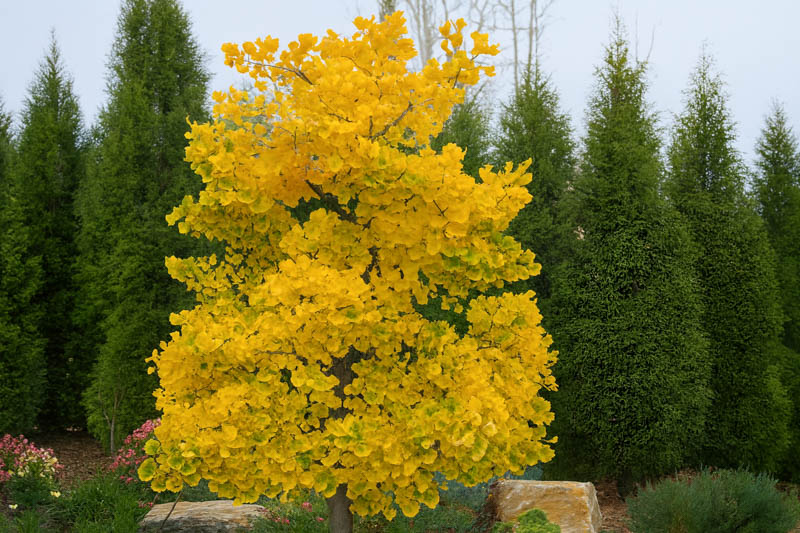


Within the dazzling world of ginkgo selections, Ginkgo biloba ‘Jade Butterflies’ has found ardent fans among home gardeners, plant collectors, and landscape designers. Why? This compact, vase-shaped male cultivar blends ancient resilience with modern beauty, delivering sculptural foliage in clusters and unforgettable golden fall color. It’s a perfect choice for small gardens, patios, and urban spaces where elegance meets practicality.
A Living Fossil in a Small Package: Like all ginkgoes, ‘Jade Butterflies’ traces its lineage back over 150 million years, yet its form and size are thoroughly contemporary. Originating in New Zealand and spreading to North American and European nurseries, it remains fruitless—no foul-smelling mess—and grows slowly into a showy but manageable tree for generations of enjoyment.
Whether you crave a four-season showpiece for a small urban courtyard, a focal point near walkways and patios, or a container accent for a sunny deck, ‘Jade Butterflies’ offers the refined drama of ginkgo’s ancient heritage, tailored perfectly for today’s compact landscapes.
| Botanical Name | Ginkgo biloba ‘Jade Butterflies’ |
| Common Names | Maidenhair Tree, Jade Butterfly Ginkgo |
| Plant Type | Deciduous dwarf tree, male clone |
| Hardiness Zones | USDA 4–8 |
| Height & Spread | 6-12 ft. tall × 3-9 ft. wide (1.8-3.6 × 0.9-2.7 m) after decades |
| Leaves & Fall Color | Deeply bi-lobed, fan-shaped green leaves, in dense clusters; showy, uniform golden autumn display |
| Special Features | Fruitless (male), slow growth, deer and rabbit resistant, compact form, urban tolerant |
| Main Uses | Small gardens, container growing, bonsai, patio or entryway trees, under power lines |
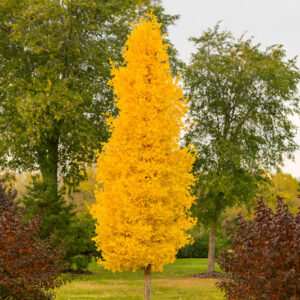
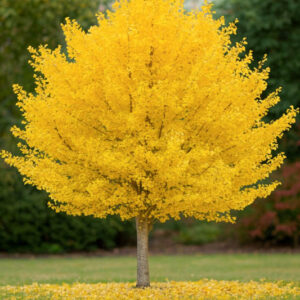
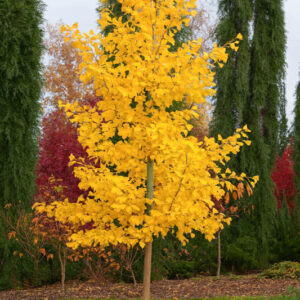
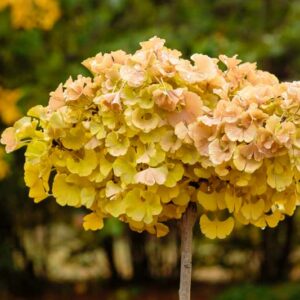
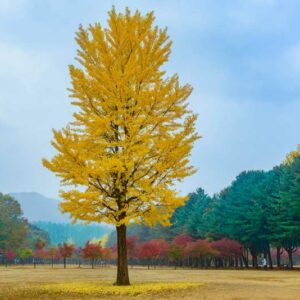
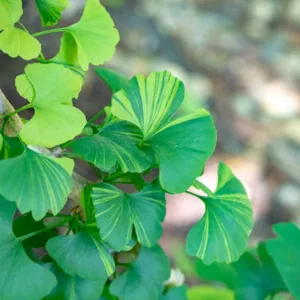
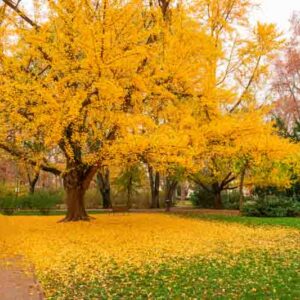
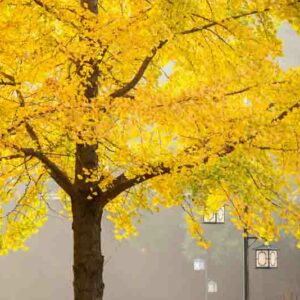
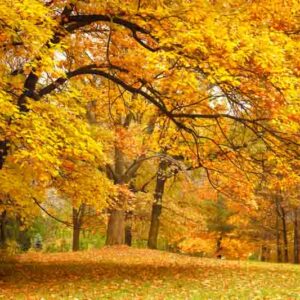
Form & Foliage: What sets ‘Jade Butterflies’ apart? Its dark green leaves emerge in spring, shaped like butterflies in flight—deeply divided, leathery, and elegant. Leaves cluster tightly, creating a lush, kinetic texture all season long. Come fall, it transforms in a riotous blast of pure gold—truly among the brightest of all ginkgo cultivars—a spectacle that often draws neighbors over just to take photos.
Habit: ‘Jade Butterflies’ grows upright, broad, and vase-shaped, eventually forming a stunning tree for its size. The canopy is never overbearing, making it easy to tuck into small borders, even beneath utility lines.
Fruitless and Allergy-Friendly: You’ll never face the notorious ginkgo mess—only male trees are sold, so ‘Jade Butterflies’ stays clean, fragrant, and allergy-free for patio enjoyment.
‘Jade Butterflies’ extends ginkgo’s ancient symbolism—longevity, peace, hope—into the smallest garden corners. With roots in New Zealand breeding programs, it is now celebrated worldwide for combining prehistoric resilience with contemporary form.
‘Jade Butterflies’ is a favorite for small-space gardens, patio accents, and bonsai collections. Use as:
| Variety | Type | Foliage & Appearance | Best Uses |
|---|---|---|---|
| Autumn Gold | Full-size canopy | Classic upright crown, bright gold leaves, large fans | Shade, specimen, street |
| Mariken | Dwarf | Dense, rounded, deep yellow | Courtyard, container |
| Princeton Sentry | Columnar | Tall, narrow, gold fall | Narrow spaces, street |
| Jade Butterflies | Compact upright | Dense, clustered leaves; vase shape; gold fall color | Small gardens, patios, bonsai |
| Majestic Butterfly | Variegated | Striped leaves, compact | Visual interest, small spaces |
Ginkgo biloba ‘Jade Butterflies’ condenses centuries of botanical heritage into a garden-ready, fuss-free showpiece. With gorgeous sculptural foliage, brilliant yellow autumns, and legendary durability, it’s the ideal choice for anyone seeking a compact ginkgo with outsized impact.
| Hardiness |
4 - 8 |
|---|---|
| Heat Zones |
3 - 9 |
| Climate Zones | 1A, 1B, 2A, 2B, 3A, 3B, 4, 5, 6, 7, 8, 9, 10, 12, 14, 15, 16, 17, 18, 19, 20, 21, 22, 23, 24, A3 |
| Plant Type | Conifers, Trees |
| Plant Family | Ginkgoaceae |
| Genus | Ginkgo |
| Common names | Ginkgo, Maidenhair Tree |
| Exposure | Full Sun |
| Season of Interest | Spring (Mid, Late), Summer (Early, Mid, Late), Fall |
| Height | 6' - 12' (180cm - 3.7m) |
| Spread | 3' - 9' (90cm - 270cm) |
| Maintenance | Low |
| Water Needs | Low, Average |
| Soil Type | Chalk, Clay, Loam, Sand |
| Soil pH | Acid, Alkaline, Neutral |
| Soil Drainage | Well-Drained |
| Characteristics | Plant of Merit, Showy |
| Tolerances | Deer, Clay Soil, Drought, Salt, Heat |
| Garden Styles | City and Courtyard, Informal and Cottage, Prairie and Meadow |
| Toxic to Humans | Low severity |
| Toxic to Cats | No known toxicity |
| Toxic to Dogs | No known toxicity |
| Toxic to Horses | No known toxicity |


| Hardiness |
4 - 8 |
|---|---|
| Heat Zones |
3 - 9 |
| Climate Zones | 1A, 1B, 2A, 2B, 3A, 3B, 4, 5, 6, 7, 8, 9, 10, 12, 14, 15, 16, 17, 18, 19, 20, 21, 22, 23, 24, A3 |
| Plant Type | Conifers, Trees |
| Plant Family | Ginkgoaceae |
| Genus | Ginkgo |
| Common names | Ginkgo, Maidenhair Tree |
| Exposure | Full Sun |
| Season of Interest | Spring (Mid, Late), Summer (Early, Mid, Late), Fall |
| Height | 6' - 12' (180cm - 3.7m) |
| Spread | 3' - 9' (90cm - 270cm) |
| Maintenance | Low |
| Water Needs | Low, Average |
| Soil Type | Chalk, Clay, Loam, Sand |
| Soil pH | Acid, Alkaline, Neutral |
| Soil Drainage | Well-Drained |
| Characteristics | Plant of Merit, Showy |
| Tolerances | Deer, Clay Soil, Drought, Salt, Heat |
| Garden Styles | City and Courtyard, Informal and Cottage, Prairie and Meadow |
| Toxic to Humans | Low severity |
| Toxic to Cats | No known toxicity |
| Toxic to Dogs | No known toxicity |
| Toxic to Horses | No known toxicity |
How many Ginkgo biloba ‘Jade Butterflies’ (Maidenhair Tree) do I need for my garden?
| Plant | Quantity | |
|---|---|---|
| Ginkgo biloba ‘Jade Butterflies’ (Maidenhair Tree) | N/A | Buy Plants |
Create a membership account to save your garden designs and to view them on any device.
Becoming a contributing member of Gardenia is easy and can be done in just a few minutes. If you provide us with your name, email address and the payment of a modest $25 annual membership fee, you will become a full member, enabling you to design and save up to 25 of your garden design ideas.
Join now and start creating your dream garden!
Create a membership account to save your garden designs and to view them on any device.
Becoming a contributing member of Gardenia is easy and can be done in just a few minutes. If you provide us with your name, email address and the payment of a modest $25 annual membership fee, you will become a full member, enabling you to design and save up to 25 of your garden design ideas.
Join now and start creating your dream garden!