Hardy Geranium Rozanne, Crane's Bill Rozanne, Rozanne Cranesbill, Geranium 'Gerwat', Geranium wallichianum 'Jolly Bee', Geranium 'Jolly Bee', Geranium hybridum 'Jolly Bee'
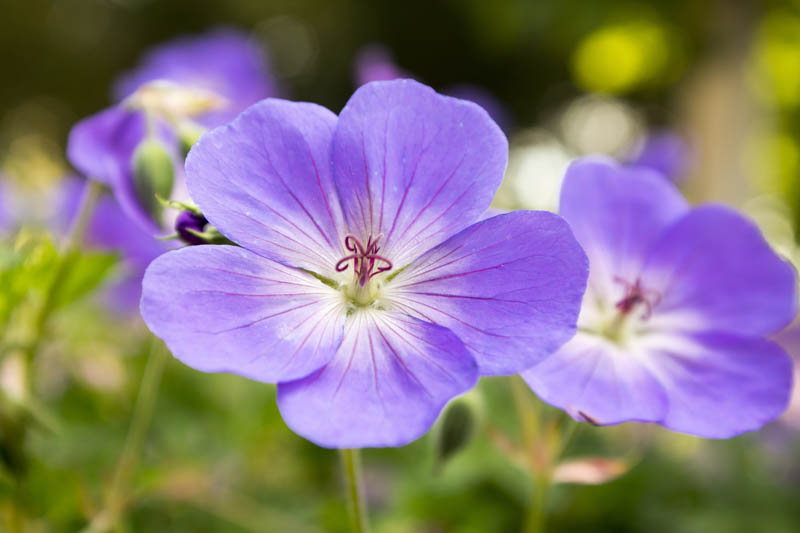
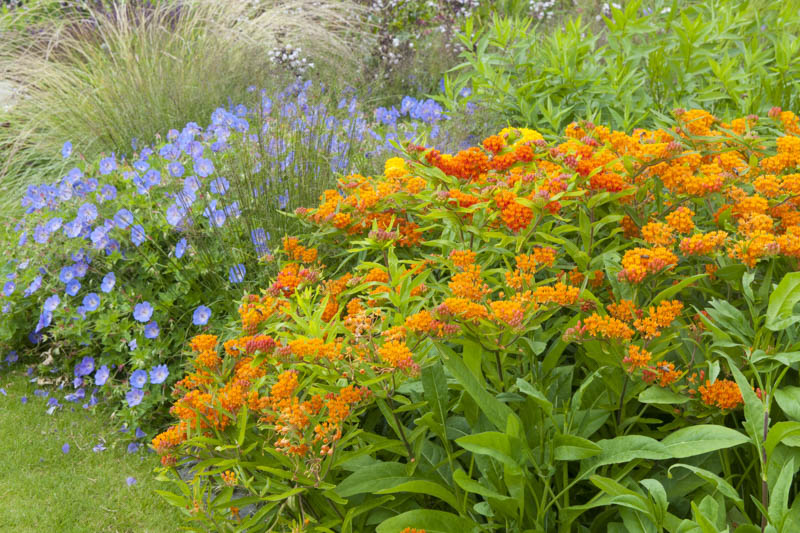
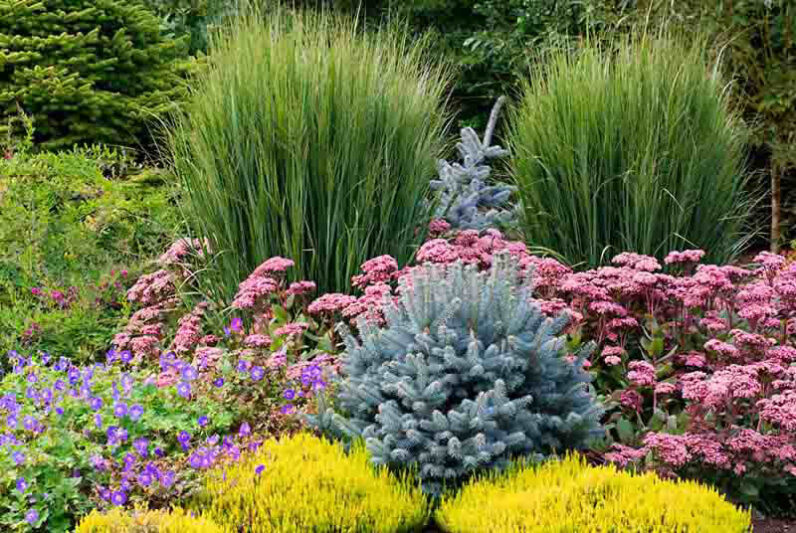
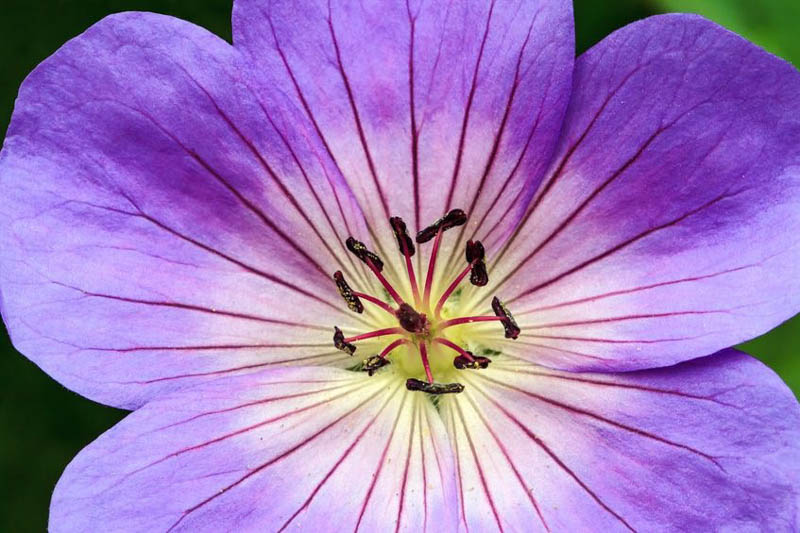
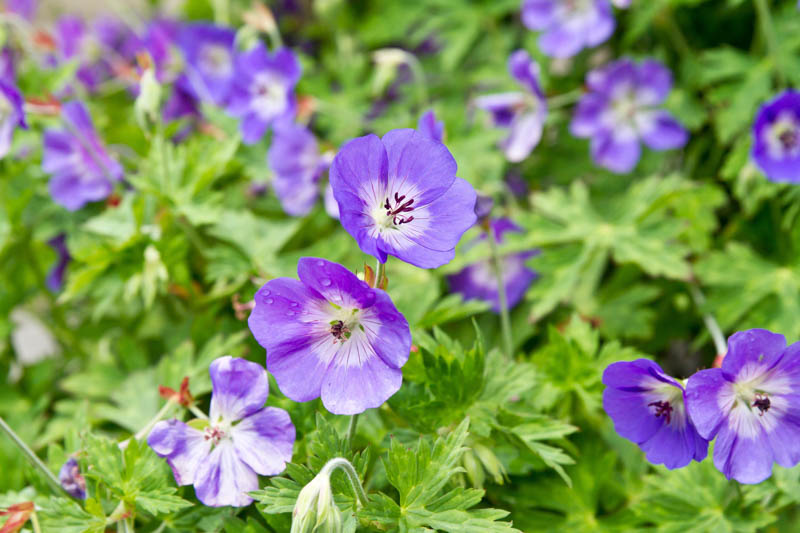
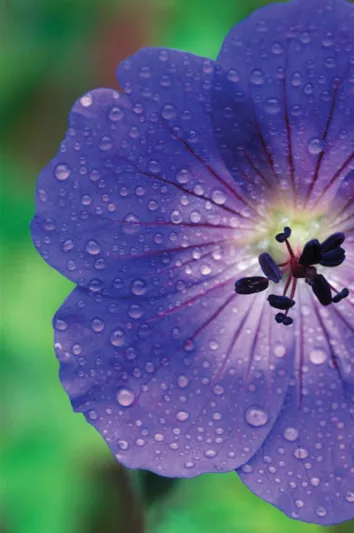


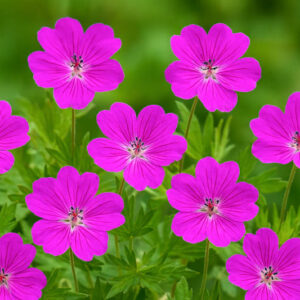
If you want a hardy perennial geranium that flowers for months, weaves beautifully through your borders, and asks for very little in return, Geranium ‘Rozanne’ is hard to beat. This outstanding cranesbill produces a generous flush of large violet blue flowers with glowing white centers from late spring right through to the first fall frosts.
Despite its elegant, almost delicate looking blooms, Rozanne geranium is tough, vigorous, and easy going. Give it full sun to partial shade, moist but well drained soil, moderate watering, and a simple cut back once a year, and it will reward you with a carpet of blue that flows through beds, borders, and even containers. It is one of the most loved hardy geraniums in the world for good reason.
Summary: Robust, clump forming herbaceous perennial geranium with spreading stems, marbled green foliage, and a near continuous display of large violet blue flowers with white eyes from late spring to frost.
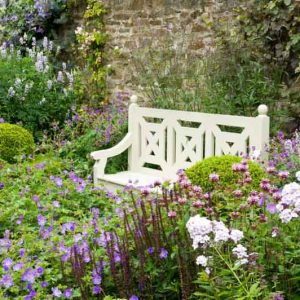
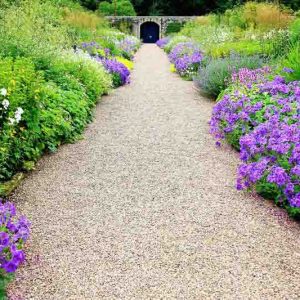
Use: Perennial borders, front of beds, ground cover, underplanting for shrubs and roses, cottage gardens, rock gardens, containers, and pollinator friendly plantings.
Highlight: Exceptionally long flowering season, cool blue blooms that mix effortlessly with many color schemes, and strong attraction for bees and butterflies, while remaining deer and rabbit resistant.
Note: Easy to grow, heat tolerant, and low maintenance, ideal for gardeners who want reliable summer color with minimal fuss.
| Botanical Name | Geranium ‘Rozanne’ |
|---|---|
| Family | Member of the Geranium (cranesbill) genus in the Geraniaceae family, which also includes ornamental Pelargonium (bedding geranium) cousins. |
| Common Names | Geranium Rozanne, Rozanne geranium, Rozanne cranesbill, hardy geranium Rozanne, perennial geranium Rozanne |
| Native Range | Hybrid cultivar discovered in a garden in Somerset, England. It does not occur in the wild, but its parent species are native to parts of Europe and Asia and are widely grown in gardens worldwide. |
| Plant Type and Habit | Herbaceous perennial with a spreading, mounding habit. Stems trail gently and knit together into a dense, weed suppressing mat. |
| Hardiness (approx. USDA) | USDA Zones 5 to 8 in average conditions, often succeeding in slightly colder or warmer microclimates with good drainage and winter protection. |
| Size | Typically about 18 to 20 in. tall (45 to 50 cm) and 24 to 36 in. wide (60 to 90 cm), forming a billowing mound that flows attractively around companions. |
| Sun and Exposure | Full sun to partial shade. In cooler climates, more sun encourages maximum bloom. In hotter regions, light afternoon shade helps protect foliage and flower color. |
| Soil | Prefers moist, well drained, moderately fertile soil. Adapts to many garden soils if drainage is good and extremes of dryness or waterlogging are avoided. |
| Seasonal Interest | Violet blue, saucer shaped flowers with white centers from late spring through fall, plus marbled green foliage that turns red or bronze in cool autumn weather. |
| Primary Uses | Borders, front of beds, ground cover, spilling over walls, underplanting for roses and shrubs, rock gardens, cottage gardens, containers, and pollinator plantings. |
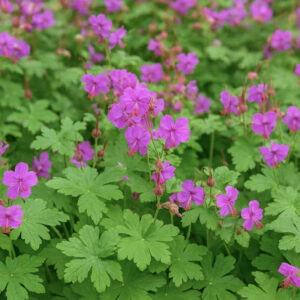
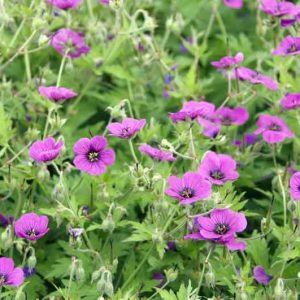
Geranium ‘Rozanne’ is a vigorous, long blooming hardy geranium that has become a modern classic. It forms a mound of gently trailing stems clothed in deeply cut, slightly marbled green leaves. From early summer, those stems are studded with large, saucer shaped flowers up to about 2 in. wide (5 cm).
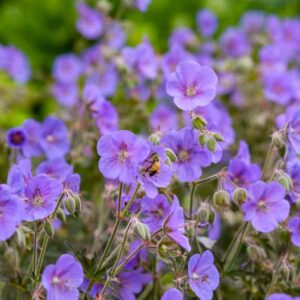
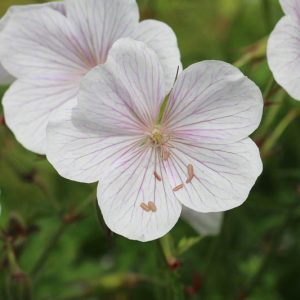
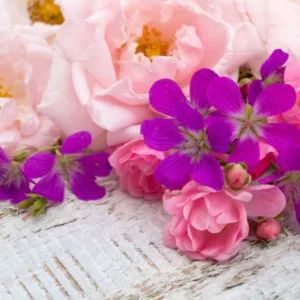
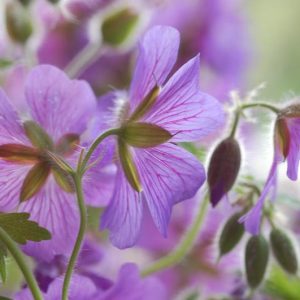
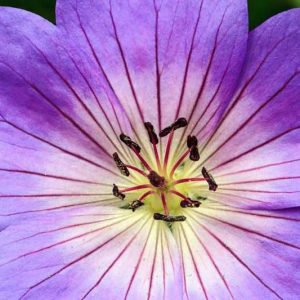
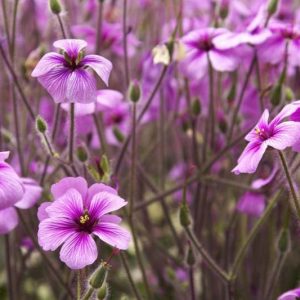
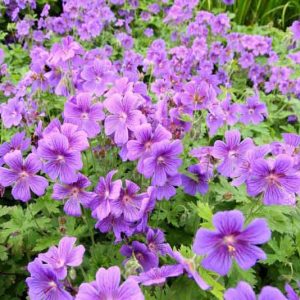
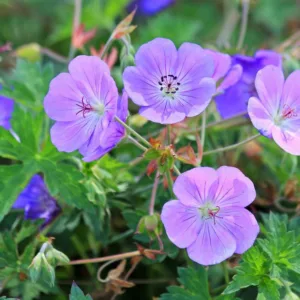
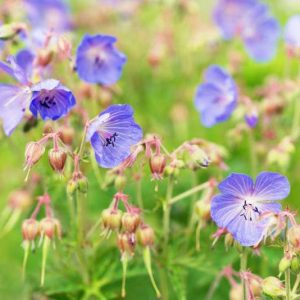
Each bloom is a rich violet blue with a bright white center and delicate purple veining. The flowers are held just above the foliage, creating a relaxed, meadowy effect that works beautifully in informal, natural style plantings as well as more traditional borders.
Geranium ‘Rozanne’ is the recipient of the Award of Garden Merit of the Royal Horticultural Society for its noteworthy qualities.
Rozanne is a cultivar, not a naturally occurring species. It was discovered in a private garden in Somerset, England, and later introduced worldwide. Its parentage traces back to species in the Geranium (cranesbill) genus, a group of perennials and subshrubs native mainly to temperate regions of Europe and Asia.
Because it is a selected hybrid, Rozanne combines the best traits of its parents: strong vigor, generous flowering, and a graceful, ground hugging habit that makes it easy to blend into almost any planting scheme.
Plant Type and Habit: Geranium Rozanne is a herbaceous perennial with a sprawling, spreading habit. Rather than growing tall and stiff, it knits itself through neighboring plants, softening edges and covering bare soil.
It usually grows 18 to 20 in. tall (45 to 50 cm) and 24 to 36 in. wide (60 to 90 cm). The stems are flexible and gently arching, so the plant tumbles nicely over path edges, low walls, and the rims of containers without overwhelming nearby companions.
The biggest reason gardeners fall in love with Rozanne is its incredibly long flowering season. While many hardy geraniums bloom in a strong flush and then rest, Rozanne just keeps going.
Expect nonstop flowering from late spring or early summer right into fall, often until the first frost. The violet blue flowers with white centers show up well from a distance and weave a cool ribbon of color through warmer reds, oranges, and yellows.
The foliage of Geranium Rozanne is attractive in its own right. The leaves are deeply divided, slightly marbled with deep green and chartreuse tones, and create a soft, textural mound that fills space even when the plant is not in peak bloom.
As temperatures cool in fall, the foliage often takes on reddish or bronze tints, adding one more season of interest before the plant dies back for winter.
Hardiness: Geranium Rozanne is generally hardy in USDA Zones 5 to 8. In these zones it will die back to the ground in winter and reemerge reliably each spring, often larger and showier than the year before.
In very cold climates, a protective mulch and well drained soil help the crowns survive freeze thaw cycles. In hot summer regions, some afternoon shade and consistent moisture help Rozanne stay lush and blooming.
You can tuck Rozanne into many parts of the garden:
Pollinators: The open, saucer shaped flowers of Geranium Rozanne are rich in nectar and pollen, making them very attractive to bees and butterflies. Planting Rozanne in drifts or repeated groups creates a pollinator friendly corridor that is beautiful and beneficial.
Deer and Rabbits: Thanks to its slightly aromatic foliage, Geranium Rozanne is usually left alone by browsing animals. It is generally considered resistant to deer and rabbits, though no plant is completely safe if food is scarce.
Drought Tolerance: While Rozanne appreciates regular moisture, it is reasonably drought tolerant once established, especially in cooler regions and in partial shade. It will look its best and flower longest with consistent watering that keeps soil lightly moist but not saturated.
In very dry gardens, pair it with deeper rooted perennials such as salvias recommended in Top Salvia Varieties for a Thriving Xeriscape to create a resilient, pollinator friendly planting.
Toxicity: Geranium Rozanne is not known to be toxic to humans or pets. This makes it a safe choice for family gardens, play areas, and pet friendly yards where curious hands and paws may brush against plants.
Invasiveness: Unlike some spreading perennials, Geranium ‘Rozanne’ is vigorous but not invasive. It does not typically self seed aggressively, and its spreading stems are easy to redirect or trim. It tends to stay where you plant it, gently expanding over time.
Benefits: The main benefits of growing Geranium Rozanne include its exceptionally long flowering period, easy care nature, excellent weed suppressing habit, and value for pollinators. It is a hardworking perennial that earns its place in almost any garden, just as salvias do in the sage family highlighted in Salvia: Discover 10 Key Benefits of Growing Sage in Your Garden.
Geranium Rozanne prefers:
If your garden soil is heavy clay, improve structure and drainage with compost, leaf mold, and grit, or plant in raised beds and gently sloping sites where excess water can drain away.
Geranium Rozanne is a low maintenance plant that responds well to simple grooming.
Rozanne is usually propagated vegetatively to maintain its unique traits.
Geranium Rozanne is generally a robust, trouble free perennial, but like any garden plant it can occasionally encounter pests, diseases, or cultural issues.
Aphids: These small, sap sucking insects can cluster on soft new growth, causing distortion and sticky honeydew. Often a strong spray of water is enough to knock them off. For heavier infestations, use insecticidal soap or neem based products such as those described in this neem oil guide.
Slugs and snails: These night feeding pests may chew holes in leaves, especially in damp, shady spots. Hand picking, wildlife friendly barriers such as copper tape or diatomaceous earth, and pet safe baits all help reduce damage.
Spider mites and whiteflies: In hot, dry conditions or on stressed plants, these pests may appear, causing stippling or leaf yellowing. Rinse foliage and use insecticidal soap or horticultural oil if needed.
Root rot: The main disease risk for Rozanne is staying too wet. Poorly draining soil or chronic overwatering can lead to root rot, where plants wilt even though the soil is moist. Improve drainage, reduce watering, and avoid planting directly into heavy, compacted clay.
Powdery mildew: In humid weather or crowded plantings with poor air circulation, a white, powdery film may appear on leaves. Space plants well, avoid wetting foliage when watering, and use fungicidal sprays if the problem becomes severe.
Yellowing leaves: Often related to overwatering, poor drainage, or nutrient deficiency. Check soil moisture and adjust watering, then topdress with compost or a balanced fertilizer if needed.
Leggy growth: If Rozanne is shaded or stretched between taller neighbors, stems may become long and floppy. Move to a sunnier spot if possible, or cut back and allow new, bushier growth to develop.
Flower fade: In very intense sun and heat, flower color may fade slightly. Providing light afternoon shade in hot climates helps maintain rich violet tones.
Geranium ‘Rozanne’ is a vigorous, herbaceous perennial cranesbill grown for its long season of violet blue flowers with white centers. It forms a spreading mound of deeply cut, slightly marbled green foliage and can bloom from late spring until the first fall frosts in many climates, making it one of the most floriferous hardy geraniums available.
Geranium ‘Rozanne’ is a true perennial. In USDA hardiness zones 5 to 8 it usually dies back to the ground in winter and reliably returns from the roots each spring. In colder zones it may need extra winter protection or be treated as a long blooming warm season plant, but botanically it is not an annual.
A mature clump of Geranium ‘Rozanne’ typically reaches about 18 to 20 inches tall (45 to 50 cm) and spreads 24 to 36 inches wide (60 to 90 cm). The plant tends to spread more horizontally than vertically, creating a broad, gently mounded ground cover effect rather than an upright clump.
Geranium ‘Rozanne’ grows best in full sun to partial shade. In cooler or coastal climates it can thrive in full sun and will usually flower most heavily that way. In hotter inland or southern climates it performs better with several hours of morning sun followed by light afternoon shade, which helps prevent leaf scorch and flower fade.
Once established in the ground, Geranium ‘Rozanne’ is moderately drought tolerant and can cope with short dry spells, especially in partial shade or cooler climates. However, it flowers best and maintains fresher foliage with steady, deep watering during prolonged dry weather. It tolerates drought better than heavy, waterlogged soil.
Geranium ‘Rozanne’ is very attractive to pollinators. Its open, saucer shaped flowers provide easy access to nectar and pollen for bees, hoverflies, and butterflies throughout its long blooming season. At the same time, the foliage is mildly aromatic and generally unpalatable to deer and rabbits, so the plant is usually described as deer resistant and rabbit resistant, though no plant is completely browse proof in all situations.
Updated: December 2025
| Hardiness |
5 - 8 |
|---|---|
| Heat Zones |
2 - 10 |
| Climate Zones | 2, 2A, 2B, 3, 3A, 3B, 4, 5, 6, 7, 8, 9, 10, 11, 14, 15, 16, 17, 18, 19, 20, 21, 22, 23, 24 |
| Plant Type | Perennials |
| Plant Family | Geraniaceae |
| Genus | Geranium |
| Common names | Cranesbill |
| Exposure | Full Sun, Partial Sun |
| Season of Interest | Spring (Late), Summer (Early, Mid, Late), Fall |
| Height | 1' - 2' (30cm - 60cm) |
| Spread | 2' - 3' (60cm - 90cm) |
| Spacing | 24" - 36" (60cm - 90cm) |
| Maintenance | Low |
| Water Needs | Average |
| Soil Type | Chalk, Clay, Loam, Sand |
| Soil pH | Acid, Alkaline, Neutral |
| Soil Drainage | Moist but Well-Drained, Well-Drained |
| Characteristics | Plant of Merit, Showy |
| Tolerances | Drought, Deer, Rabbit, Heat, Fire |
| Attracts | Butterflies, Bees |
| Garden Uses | Beds And Borders, Ground Covers, Hanging Baskets, Patio And Containers, Underplanting Roses And Shrubs |
| Garden Styles | Coastal Garden, Gravel and Rock Garden, Informal and Cottage, Butterfly Garden, Pollinator Garden |
| Toxic to Humans | No known toxicity |
| Toxic to Cats | No known toxicity |
| Toxic to Dogs | No known toxicity |
| Toxic to Horses | No known toxicity |


| Hardiness |
5 - 8 |
|---|---|
| Heat Zones |
2 - 10 |
| Climate Zones | 2, 2A, 2B, 3, 3A, 3B, 4, 5, 6, 7, 8, 9, 10, 11, 14, 15, 16, 17, 18, 19, 20, 21, 22, 23, 24 |
| Plant Type | Perennials |
| Plant Family | Geraniaceae |
| Genus | Geranium |
| Common names | Cranesbill |
| Exposure | Full Sun, Partial Sun |
| Season of Interest | Spring (Late), Summer (Early, Mid, Late), Fall |
| Height | 1' - 2' (30cm - 60cm) |
| Spread | 2' - 3' (60cm - 90cm) |
| Spacing | 24" - 36" (60cm - 90cm) |
| Maintenance | Low |
| Water Needs | Average |
| Soil Type | Chalk, Clay, Loam, Sand |
| Soil pH | Acid, Alkaline, Neutral |
| Soil Drainage | Moist but Well-Drained, Well-Drained |
| Characteristics | Plant of Merit, Showy |
| Tolerances | Drought, Deer, Rabbit, Heat, Fire |
| Attracts | Butterflies, Bees |
| Garden Uses | Beds And Borders, Ground Covers, Hanging Baskets, Patio And Containers, Underplanting Roses And Shrubs |
| Garden Styles | Coastal Garden, Gravel and Rock Garden, Informal and Cottage, Butterfly Garden, Pollinator Garden |
| Toxic to Humans | No known toxicity |
| Toxic to Cats | No known toxicity |
| Toxic to Dogs | No known toxicity |
| Toxic to Horses | No known toxicity |
How many Geranium Rozanne (Cranesbill) do I need for my garden?
| Plant | Quantity | |
|---|---|---|
| Geranium Rozanne (Cranesbill) | N/A | Buy Plants |
Create a membership account to save your garden designs and to view them on any device.
Becoming a contributing member of Gardenia is easy and can be done in just a few minutes. If you provide us with your name, email address and the payment of a modest $25 annual membership fee, you will become a full member, enabling you to design and save up to 25 of your garden design ideas.
Join now and start creating your dream garden!
Create a membership account to save your garden designs and to view them on any device.
Becoming a contributing member of Gardenia is easy and can be done in just a few minutes. If you provide us with your name, email address and the payment of a modest $25 annual membership fee, you will become a full member, enabling you to design and save up to 25 of your garden design ideas.
Join now and start creating your dream garden!