Tired of guessing what will survive in your garden? This practical guide explains hardiness zones, heat zones, and Sunset climate zones in plain language, so you can match plants to your conditions, stretch your growing season, and design a garden that looks good, feels healthy, and endures through everything gracefully.


Understanding how climate shapes plant performance is one of the most powerful steps you can take toward creating a thriving garden.
From winter lows to summer highs, from rainfall patterns to humidity and wind, every environmental factor influences whether a plant merely survives – or truly thrives.
Over the years, horticultural experts have created systems to help gardeners choose the right plants for their climate. These include USDA Plant Hardiness Zones, AHS Heat Zones, and the highly detailed Sunset Climate Zones. Together, these tools make it easier than ever to pick plants that naturally suit your region.
Selecting plants adapted to your climate is essential for long-term garden success. If you already know your USDA Hardiness Zone, AHS Heat Zone, or Sunset Climate Zone, explore the best plants for your area or get inspired with garden ideas tailored to your region. Or dive into our comprehensive regional plant selection guides to discover top-performing bulbs, perennials, shrubs, ornamental grasses, and trees.
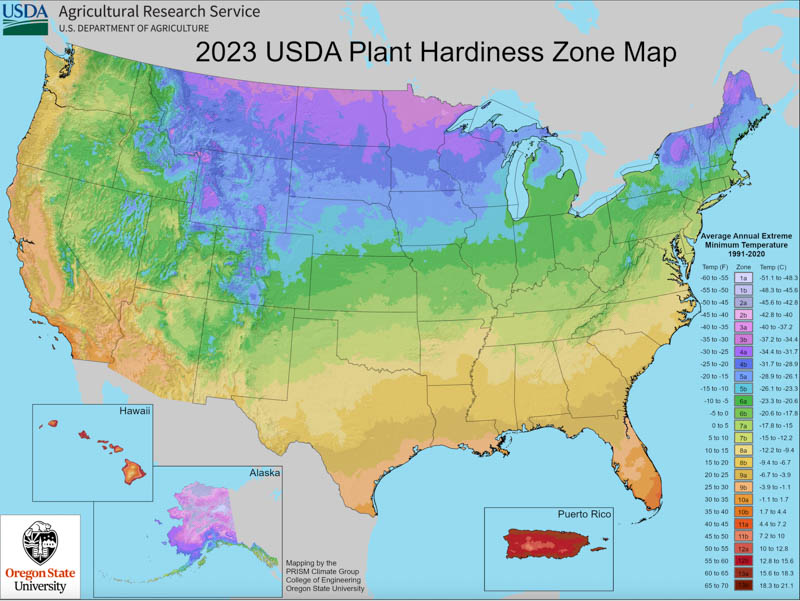
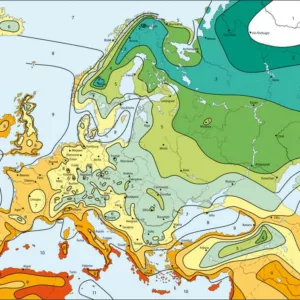
The USDA Hardiness Zone Map is the most widely used tool for understanding a plant’s cold tolerance.
Based on the average annual minimum winter temperatures, it divides North America into 13 primary zones,
each covering a 10°F (5.6°C) temperature band—from about -60°F (-51°C) to 70°F (21°C).
To reflect ongoing climate change and more recent temperature data, the USDA released an updated Hardiness Zone Map in 2023. According to the USDA, nearly half the country shifted into a slightly warmer zone in the 2023 update, typically by about half a zone. So it’s a good idea to recheck your current zone if you haven’t done so in a while.
For greater precision, each of the 13 zones is further divided into “a” and “b” half-zones. For example, Zone 6a is colder than Zone 6b. These half-zones help gardeners fine-tune their plant choices, especially in regions where a few degrees of winter cold can make the difference between survival and winter damage.
When choosing new trees, shrubs, perennials, matching a plant’s hardiness rating (including the “a” or “b” designation when available) to your zone helps ensure it can withstand your local winter conditions and return year after year. Plant tags, nursery catalogs, and gardening references almost always list a plant’s USDA hardiness zone for exactly this reason.
However, remember that the USDA map is a helpful guideline, not a perfect prediction. It does not account for:
These limitations are especially notable in the western United States, where climate conditions can shift dramatically over short distances.
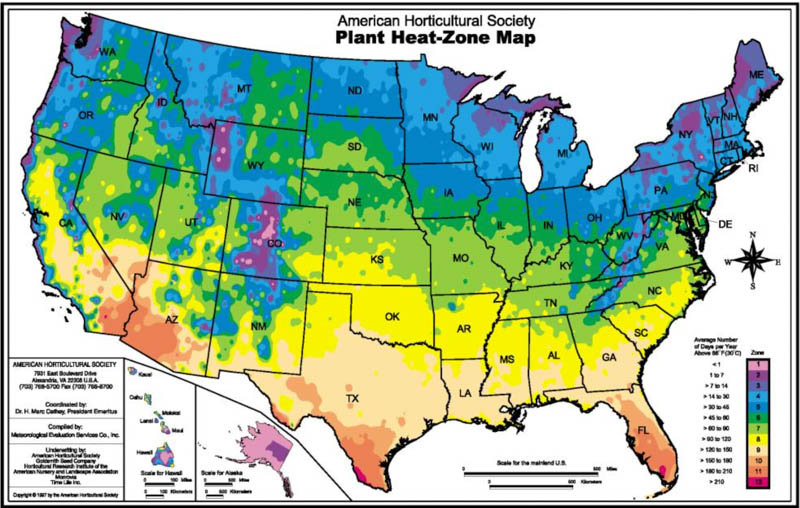
While winter cold determines whether a plant can survive, summer heat influences whether it can grow, bloom, and stay healthy.
To address this, the American Horticultural Society developed the AHS Plant Heat Zone Map, based on the number of days each
year when temperatures exceed 86°F (30°C)—the point at which many plants begin experiencing heat stress.
The AHS system includes 12 heat zones, ranging from fewer than one annual heat day (Zone 1) to more than 210 (Zone 12).
Plants are often labeled with both hardiness and heat tolerance, for example: 3–8, 8–1.
Understanding heat stress helps you anticipate issues like:
As with hardiness zones, heat zones serve as guidelines. Real-world plant performance can vary based on:
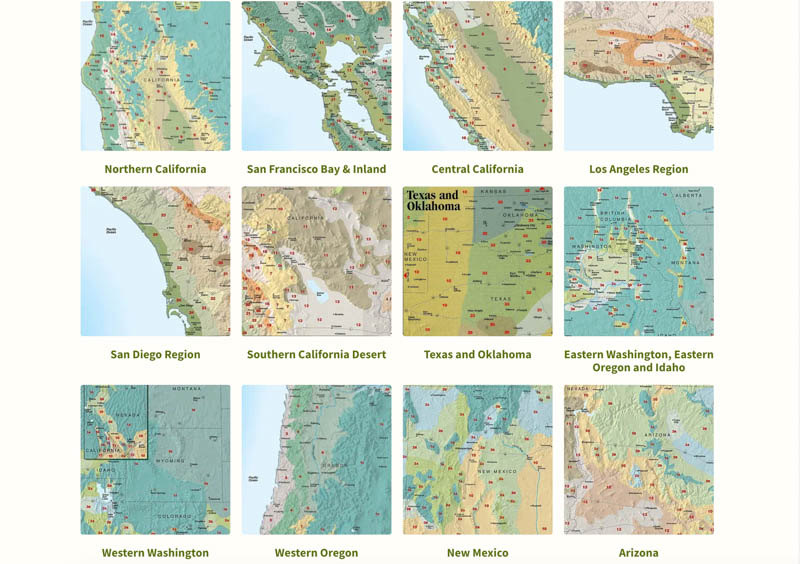
For gardeners—especially those in the western United States—who want a more nuanced understanding of climate, the
Sunset Climate Zone system offers unparalleled detail. Unlike the USDA system, which focuses solely on winter lows,
Sunset zones incorporate a broad range of climate influencers, such as:
This comprehensive approach helps gardeners identify not only where a plant can survive—but where it will thrive year-round. As a result, Sunset Climate Zones are considered the gold standard for gardeners in California and the 12 other western states.
Knowing your zone empowers you to make smarter, more sustainable plant choices. Whether you’re designing a low-maintenance
landscape, planting a pollinator haven, or experimenting with new varieties, climate-appropriate plants always offer
the best chance of success.
In our plant database, each plant includes detailed USDA hardiness, AHS heat, and Sunset climate zone information.
This means you can quickly see which plants are most likely to thrive in your specific conditions and plan your garden with confidence.
Start exploring now:
With the right plants, accurate zone information, and a deeper understanding of climate zones, your garden can flourish beautifully—season after season.
Plant hardiness zones describe the coldest winter temperatures a plant can tolerate. The most widely used system is the USDA Hardiness Zone Map, which divides regions into 13 zones based on average annual minimum winter temperatures. Zones help gardeners predict whether a plant can survive local winter conditions.
The USDA updated the Hardiness Zone Map in 2023 using more recent temperature data. Many areas became slightly warmer, and about half the United States shifted by approximately half a zone. This update reflects long-term climate trends and provides a more accurate guide for modern gardeners.
Each USDA zone is divided into two half-zones: “a” is the colder half and “b” is the warmer half. For example, Zone 6a is colder than Zone 6b. These subdivisions allow for more precise matching between plant cold tolerance and local winter temperatures.
AHS Heat Zones measure how many days per year temperatures exceed 86°F (30°C), the point at which many plants experience heat stress. The system includes 12 zones. Understanding heat tolerance helps gardeners choose plants that can thrive during hot summers, not just withstand winter cold.
At 86°F, a plant’s ability to photosynthesize begins to decline, and heat stress can cause flower bud drop, scorched leaves, and weakened roots. Extended exposure can reduce blooming and long-term growth. Heat zones help identify plants suited to regions with frequent high-temperature days.
Sunset Climate Zones classify regions based on a wide range of climate factors, including winter lows, summer highs, rainfall patterns, humidity, wind, and growing season length. They offer more detail than USDA zones and are especially useful for gardeners in the western United States.
Western climates vary sharply over short distances because of mountains, elevation changes, ocean influence, and arid conditions. USDA zones measure only winter minimum temperatures, so they do not reflect other important factors like rainfall, humidity, or summer heat common in western regions.
Both are important. Hardiness zones show whether a plant can survive winter cold, while heat zones show whether it can tolerate summer heat. Many plants fail not because of winter cold but because they cannot handle extended heat, so using both systems leads to more successful plant selection.
Sometimes. Microclimates, soil conditions, wind protection, shade, and watering practices can allow plants to survive outside their recommended zones. However, this is less predictable. Zone ratings are the most reliable guideline for long-term plant survival and performance.
A microclimate is a small area with conditions that differ from the surrounding region. Examples include sheltered courtyards, south-facing walls, raised beds, or shaded areas under trees. Microclimates can make a site warmer or cooler than the official zone, influencing which plants will thrive.
The USDA Hardiness Zone Map originated in the United States but is now used globally as a general cold-tolerance reference. Heat zones and Sunset zones are mainly used in the U.S., but the concepts are universal and help gardeners worldwide understand climate-appropriate planting.
Yes. Each plant in the Gardenia database includes USDA hardiness zones, AHS heat zones, and, when applicable, Sunset Climate Zones. This makes it easy for gardeners to select plants ideally matched to their local climate conditions.
You can search by your hardiness, heat, or climate zone using Gardenia’s Plant Finder. Each plant profile includes detailed climate information, helping you confidently choose trees, shrubs, perennials, grasses, and bulbs that will thrive in your location.
Updated: December 2025 • Reviewed by Gardenia Editors
| Toxic to Humans | No known toxicity |
|---|---|
| Toxic to Cats | No known toxicity |
| Toxic to Dogs | No known toxicity |
| Toxic to Horses | No known toxicity |
pali / 123RF Stock Photo
| Toxic to Humans | No known toxicity |
|---|---|
| Toxic to Cats | No known toxicity |
| Toxic to Dogs | No known toxicity |
| Toxic to Horses | No known toxicity |
Create a membership account to save your garden designs and to view them on any device.
Becoming a contributing member of Gardenia is easy and can be done in just a few minutes. If you provide us with your name, email address and the payment of a modest $25 annual membership fee, you will become a full member, enabling you to design and save up to 25 of your garden design ideas.
Join now and start creating your dream garden!
Create a membership account to save your garden designs and to view them on any device.
Becoming a contributing member of Gardenia is easy and can be done in just a few minutes. If you provide us with your name, email address and the payment of a modest $25 annual membership fee, you will become a full member, enabling you to design and save up to 25 of your garden design ideas.
Join now and start creating your dream garden!