Create Your Garden

How Often & How Much to Water a Peace Lily

Wondering how often to water a peace lily? Use our foolproof cues by light, pot size, and season to nail timing and amounts. Learn the best water to use, how to avoid droop and root rot, and quick fixes for brown tips and yellow leaves
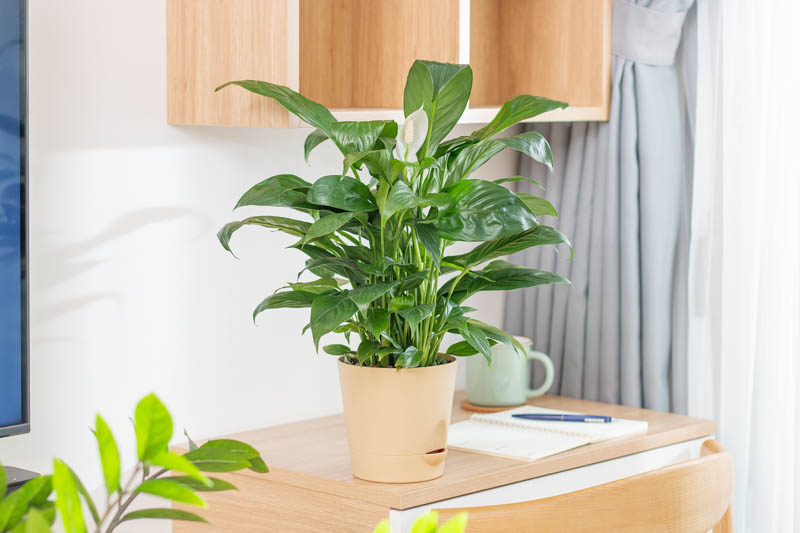
Peace lily, Houseplant, House Plant

How Often and How Much to Water Your Peace Lily (Spathiphyllum)

Peace lilies are rainforest understory divas—in the cutest way. Get watering right and they’ll reward you with lush, glossy leaves and elegant white spathes. Get it wrong and they’ll tell you fast with droops, yellowing, or crispy tips. This guide breaks down exactly how often to water, how much to give, and how to tailor your routine to light, pot size, soil, and season—plus fast fixes when things go sideways.
Quick Answer — How Often & How Much to Water

  • Dropped leaves + dry top inch: thirsty → water thoroughly until 10–20% drains; never leave standing water.
  • Droop while soil is wet/heavy: overwatered/poor drainage → let top inch dry, improve aeration, empty saucers.
  • Brown tips + white crust: salts/minerals → switch to distilled/RO/rainwater and flush the pot.
  • Wilts again 2–3 days after watering: rootbound/hot bright spot → repot 1–2″ wider or move to bright indirect light.
Peace lily being watered until excess drains

In average home conditions, water a peace lily when the top inch of mix is dry. Frequency depends on light and pot size: every 4–7 days in bright indirect light, 5–9 days in medium light, and 7–12 days in low light. When you water, soak thoroughly until a small stream drains from the holes (aim for 10–20% runoff), then empty the saucer. If using a decorative sleeve, lift the nursery pot to drain fully—don’t let water pool in the cachepot. Use distilled/RO/rainwater if possible. Avoid salt-softened water—sodium is a common hidden cause of tip burn.

  • Best baseline: Bright, indirect light + evenly moist, well-draining mix + 65–80°F (18–27°C) + moderate humidity.
  • Fast checks: Finger test the top inch; lift the pot (heavy = wet); peek for drainage holes; watch nearby vents/sun.

Peace Lily Watering Basics (What Actually Matters)

The peace lily plant evolved under tree canopies where soil stays evenly moist but never swampy. Indoors, your job is to mimic that rhythm. Three levers control watering: light (more light = faster drying), pot & soil (bigger pots and dense mixes dry slower), and environment (warm/dry air = faster drying). Master those, and you’ll nail frequency and amount.

How Often to Water (By Light & Season)

Light Level Typical Frequency* Notes
Bright indirect (near a sheer curtain) Every 4–7 days Fastest drying; watch for midday “flagging” on warm days.
Medium indirect (a few feet from bright window) Every 5–9 days Sweet spot for steady foliage and occasional blooms.
Low light (far from windows) Every 7–12 days Risk is overwatering—soil stays wet longer.

*Ranges vary by pot size, mix, humidity, and season. Always confirm by feeling the top inch of soil.
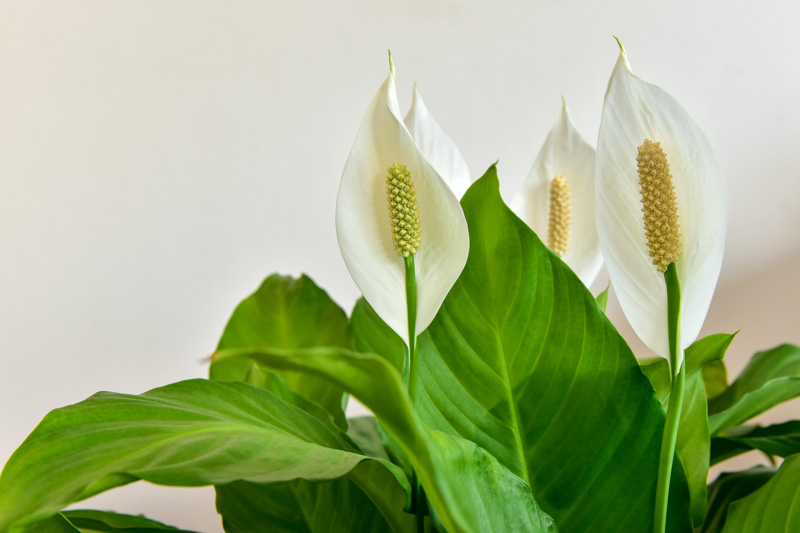
In winter (short days, cooler rooms), water less often. In spring/summer, growth accelerates—expect shorter intervals. If you’re unsure, wait a day and check again.

Peace Lily, Peace Lily Care, Peace Lily Plant, Peace Lilies, Spathiphyllum, Indoor Plants, Houseplants

How Much Water? (Easy Rule You’ll Actually Use)

  • Goal: Fully hydrate the rootball, then let excess drain. Aim for 10–20% runoff.
  • Start here: For a 6″ pot, that’s often about 1–2 cups (240–480 mL). For an 8″ pot, 2–4 cups (480–950 mL). Adjust to reach light runoff.
  • Top-watering method: Pour slowly in circles to wet evenly, pause, then add a bit more until you see a steady trickle from the holes.
  • Bottom-watering (when mix repels water): Set pot in 1–2″ of water for 15–30 minutes, then drain thoroughly. Great for hydrophobic peat-heavy mixes.

Water Quality Matters (Prevents Brown Tips)

Peace lilies can be sensitive to minerals, fluoride, and sodium. For spotless edges, use distilled, RO, or rainwater. If you must use tap, a carbon filter helps with chlorine but not fluoride or hardness.

Water Type Good for Peace Lilies? Notes
Distilled / RO / Rain Excellent Lowest salts; best for avoiding brown tips.
Filtered (carbon) Mixed Removes chlorine; not fluoride/minerals unless RO.
Hard tap Risky Mineral salts build up → tip burn; flush regularly.
Softened (salt) Avoid Sodium stresses roots; switch sources.

For more on preventing brown tips, see peace lily tips turning brown. If leaves yellow after watering changes, review yellow leaves: quick fixes.
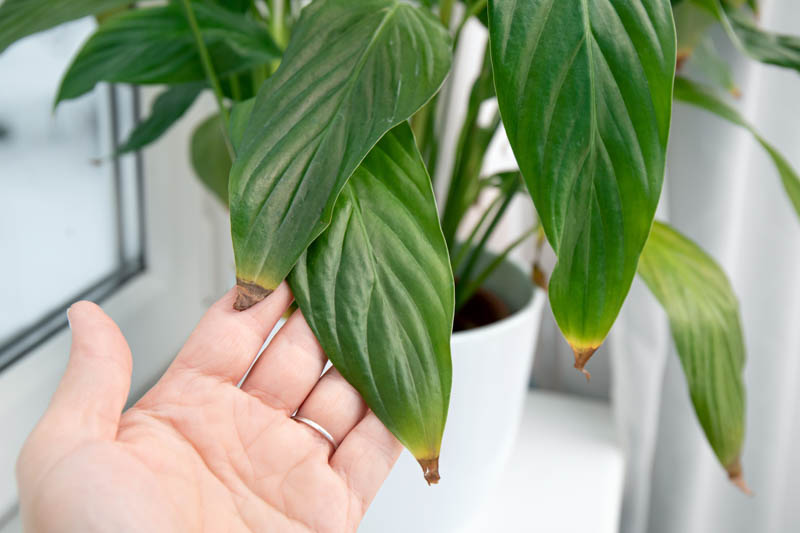
Peace lily with brown tips, Why Do Peace Lily Leaves Get Brown Tips?

Pot, Soil & Drainage: The Secret to “Evenly Moist”

Even with perfect technique, bad containers or compacted mix will sabotage you. Use a pot with drainage holes and a breathable mix so roots get water and air.

Airy Peace Lily Mix

  • 2 parts all-purpose houseplant mix
  • 1 part fine bark (orchid or composted)
  • 1 part perlite or pumice
  • Optional: a bit of coco coir for moisture balance

Tip: After repotting, water once, wait 15–30 minutes, then water again to collapse dry pockets.

When to Repot

  • Roots circle or poke from drainage holes
  • Water races through or you’re watering every 2–3 days
  • Soil stays wet > a week or crusty salts keep reappearing
  • Plant droops though you’re watering correctly

If you suspect rot from chronic wetness, act fast: trim mushy roots and refresh the mix. See the root rot guide and our drooping troubleshooting.

Step-by-Step Watering (Top & Bottom)

  1. Check dryness

    Press a finger into the top inch. If it’s dry (and the pot feels lighter), it’s time.

  2. Pre-wet (optional)

    If very dry, add a little water first, wait 2–3 minutes, then continue.

  3. Water slowly

    Pour around the rim in circles to wet evenly, pausing so the mix absorbs.

  4. Watch for runoff

    Stop when you get steady drainage (10–20%).

  5. Drain

    Empty the saucer after 5–10 minutes. Never leave the pot standing in water.

Bottom-watering rescue: Place the pot in 1–2″ of water for 15–30 minutes, then remove and let excess drain. Useful if water has been skipping past a dry core.

How Light, Pot Size & Room Conditions Change Amount

  • More light = more water: Leaves transpire faster. Keep up with the rhythm.
  • Bigger pot = more “buffer”: Larger volumes hold moisture longer; water less often but still to runoff.
  • Warm, dry air = quicker dry-downs: Use a pebble tray or humidifier (aim 40–60% RH).
  • Dense mixes = wet pockets: Aerate or repot; roots need air to avoid rot.

Common Watering Mistakes (and Easy Fixes)

  • Watering on a fixed day of the week: Instead, water when the top inch is dry. Plants don’t own calendars.
  • “Sips” only: Incomplete soak causes chronic thirst and salt buildup. Water thoroughly, then drain.
  • Cachepot trap: Hidden water collects in sleeves. After watering, remove the grow pot, drain fully, then return.
  • Tap water woes: Hard/fluoridated/softened water leads to crispy tips. Switch to distilled/RO/rainwater. For symptoms, see tips turning brown.

Watering & Symptoms: Quick Diagnosis

What You See Likely Watering Issue Do This
Sudden limp leaves, soil dry, pot very light Underwatering Deep soak to runoff; consider bottom-watering if mix repels water.
Droop while soil is wet/heavy Overwatering/poor drainage Let top inch dry; improve mix; ensure drainage holes; empty saucers.
Yellowing lower leaves after frequent watering Consistently too wet Space waterings; add aeration; review yellow leaves.
Brown tips + salt crust on soil rim Minerals/fertilizer salts Switch water source; flush 2–3× pot volume; see brown tips.
Plants wilting again 48–72 hrs after a soak Rootbound or hot bright spot Repot 1–2″ wider or divide; move to bright indirect light.

For a full droop playbook, check why peace lilies droop.

Care Calendar (Watering Rhythm All Year)

Month-by-Month Watering Reminders
Months Tasks
Jan–Feb Short days = slow drying. Water less often, but don’t let the rootball bone-dry. Keep away from cold drafts.
Mar–Apr Growth resumes—expect faster dry-downs. Refresh compacted mix; repot if rootbound.
May–Jun Peak growth. Keep evenly moist; rotate for even light. Flush salts if crust appears.
Jul–Aug AC dries air—use a pebble tray/humidifier. Avoid hot sun through glass (heat wilt).
Sep–Oct Days shorten—move closer to windows; begin spacing waterings slightly farther apart.
Nov–Dec Gentle pace—hold fertilizer; maintain even moisture; protect from heaters/drafts.

Safety & Bonus Tips

  • Pet safety: Peace lilies are considered toxic to pets if chewed. See cats and dogs guides.
  • Water temperature: Room-temp water only; icy water can shock roots.
  • Fertilizer & water: Feed lightly in spring/summer (half strength every 4–6 weeks). Always water first, then feed—never onto bone-dry soil.
  • Clean leaves: Dust blocks pores; wipe with a damp cloth (skip oil-based shine sprays).

Frequently Asked Questions

How do I know it’s time to water?

Feel the top inch—if it’s dry, water thoroughly to a light runoff. Lifting the pot helps too: light = dry, heavy = wet.

Is bottom-watering better for peace lilies?

It’s great when soil has gone hydrophobic (water runs down the sides). Use bottom-watering 15–30 minutes, then drain fully. Alternate with top-watering to prevent salt buildup.

Why is my plant drooping even though the soil is wet?

That’s classic overwatering/poor drainage or early root rot. Let the top inch dry, improve aeration, and check roots if smell is sour. See the droop guide for fixes.

Can tap water cause brown tips?

Yes—hard/fluoridated/softened water can burn edges. Switch to distilled/RO/rainwater and flush the pot.

Related Guides You’ll Actually Use

Bottom Line

Water when the top inch is dry, then soak to light runoff and drain completely. Keep the mix airy, light bright but indirect, and humidity moderate. Use gentle water to dodge brown tips, and adjust frequency with the seasons. Do that, and your peace lily will stay plump, glossy, and gloriously dramatic—only when it wants attention.

Guide Information

Hardiness 11 - 12
Plant Type Houseplants, Perennials
Plant Family Araceae
Common names Peace Lily
Exposure Partial Sun
Season of Interest Spring (Early, Mid, Late), Summer (Early, Mid, Late), Fall, Winter
Height 1' - 4' (30cm - 120cm)
Spread 1' - 4' (30cm - 120cm)
Maintenance Low
Water Needs Average
Soil Type Clay, Loam, Sand
Soil pH Acid, Alkaline, Neutral
Soil Drainage Moist but Well-Drained
Characteristics Showy, Evergreen

Recommended Guides

Are Peace Lilies Toxic to Dogs? Safety & Care Tips
Are Peace Lilies Toxic to Cats? Safety & Care Tips
Best Indoor Plants for Cleaner Air
Pothos vs. Philodendron: Which Houseplant Is Right for You?
How to Grow and Care for Pineapple Indoors
Overwinter Peppers Indoors: A Step-by-Step Guide
How to Grow Citrus Indoors: From Fragrant Blooms to Homegrown Fruit
Grow These 20 Herbs Indoors for Freshness All Year
How to Grow and Care for Indoor Palm Trees
Indoor Succulent Plants: Best Varieties for Your Home
Indoor Lavender Care: Your Guide to Growing Beautiful Plants
Indoor Vining Plants: The Secret to a Lush Home Interior
While every effort has been made to describe these plants accurately, please keep in mind that height, bloom time, and color may differ in various climates. The description of these plants has been written based on numerous outside resources.

Guide Information

Hardiness 11 - 12
Plant Type Houseplants, Perennials
Plant Family Araceae
Common names Peace Lily
Exposure Partial Sun
Season of Interest Spring (Early, Mid, Late), Summer (Early, Mid, Late), Fall, Winter
Height 1' - 4' (30cm - 120cm)
Spread 1' - 4' (30cm - 120cm)
Maintenance Low
Water Needs Average
Soil Type Clay, Loam, Sand
Soil pH Acid, Alkaline, Neutral
Soil Drainage Moist but Well-Drained
Characteristics Showy, Evergreen

Related Items

Please Login to Proceed

You Have Reached The Free Limit, Please Subscribe to Proceed

Subscribe to Gardenia

To create additional collections, you must be a paid member of Gardenia
  • Add as many plants as you wish
  • Create and save up to 25 garden collections
Become a Member

Plant Added Successfully

Your garden is taking shape. Unlock full planning.

You’ve reached the free limit. Upgrade for $25/year to add as many plants as you wish and save up to 25 garden collections. Unlock Annual Membership

Update Your Credit
Card Information

Cancel

Create a New Collection

Sign Up to Our Newsletter

    You have been subscribed successfully

    Join Gardenia.net

    Create a membership account to save your garden designs and to view them on any device.

    Becoming a contributing member of Gardenia is easy and can be done in just a few minutes. If you provide us with your name, email address and the payment of a modest $25 annual membership fee, you will become a full member, enabling you to design and save up to 25 of your garden design ideas.

    Join now and start creating your dream garden!

    Join Gardenia.net

    Create a membership account to save your garden designs and to view them on any device.

    Becoming a contributing member of Gardenia is easy and can be done in just a few minutes. If you provide us with your name, email address and the payment of a modest $25 annual membership fee, you will become a full member, enabling you to design and save up to 25 of your garden design ideas.

    Join now and start creating your dream garden!

    Find your Hardiness Zone

    Find your Heat Zone

    Find your Climate Zone