Create Your Garden

Are Peace Lilies Toxic to Cats? Safety & Care Tips

Yes, peace lilies are toxic to cats—mostly mouth irritation. Learn first aid, red flags, and peace lily care to keep curious pets safe.
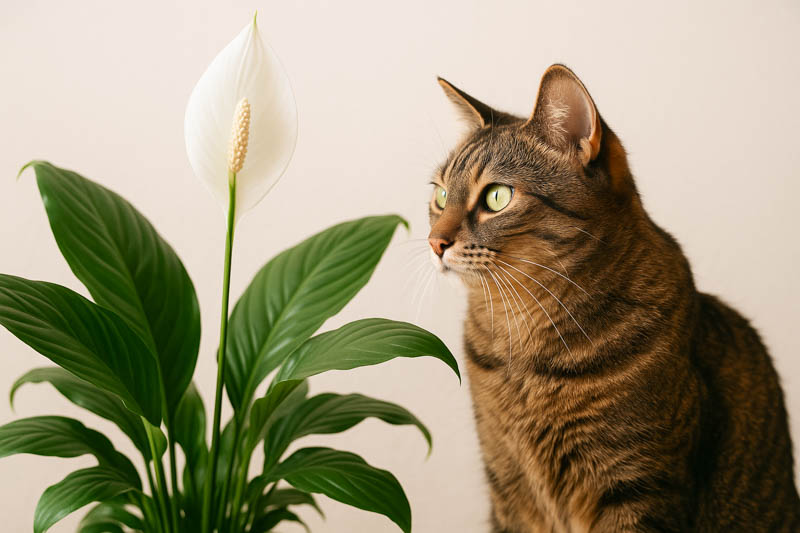
Are peace lilies toxic to cats? Is peace lily safe for cats?

Are Peace Lilies Toxic to Cats? What Every Cat Parent Should Know

If you share your home with a curious whiskered roommate, you’ve probably wondered: “Are peace lilies toxic to cats?” Short answer: yes. The peace lily plant (Spathiphyllum) contains needle-like calcium oxalate crystals that can irritate a cat’s mouth and stomach if chewed or licked.

The good news is that—unlike true lilies (Easter lily, tiger lily, daylily)—peace lilies don’t usually cause kidney failure in cats. Still, they’re not harmless, and quick, calm action matters.
Quick Answer — Peace Lilies & Cats

Peace lily plant on a shelf above a cat's reach

Is it toxic? Yes — peace lilies contain insoluble calcium oxalate crystals (raphides) that cause oral irritation and GI upset if chewed.
Typical signs: pawing at the mouth, drooling, lip smacking, vomiting, decreased appetite.
How severe? Usually mild to moderate and self-limiting with supportive care, but some cats need a vet visit for pain control or dehydration.
Not the same as true lilies: Peace lilies rarely cause kidney failure. True lilies (Lilium/Hemerocallis) can — seek emergency care if those are involved.

What Makes Peace Lilies Toxic to Cats?

Peace lilies belong to the Araceae family. Their leaves and stems contain bundles of tiny, needle-like crystals called insoluble calcium oxalate (you’ll also find these in philodendron, pothos, and calla lily). When a cat chews the plant, these crystals shoot into delicate mouth tissues, causing immediate stinging and swelling. It’s mechanical irritation rather than a systemic poison.

  • All parts can irritate (leaves, stems, spathes, roots), though cats typically nibble leaves.
  • Taste deterrent: The burn is fast and unpleasant, so many cats stop after one bite — but sensitive cats may still vomit or refuse food for a day.
  • Sap exposure: Sap on fur/paws can be licked later and cause a milder version of the same symptoms.

Symptoms to Watch For

Signs usually appear minutes to hours after nibbling. Here’s how the progression often looks:

Peace Lily Exposure in Cats — Symptom Timeline & What to Do
Time After Nibble Common Signs Home Steps Call the Vet If…
0–30 minutes Drooling, pawing at mouth, lip smacking, head shaking Gently rinse the mouth with cool water (syringe or small spoon). Offer a few sips of water or a small lick of tuna water/broth. Swelling of tongue/lips, gagging that doesn’t subside, or any breathing difficulty
30–180 minutes Vomiting, reluctance to eat, hiding Keep calm and quiet. Offer water; later, a small bland snack (a teaspoon of wet food) if the cat seems interested. Repeated vomiting, lethargy, or refusal to drink for 6–8 hours
6–24 hours Mild mouth soreness, decreased appetite Encourage hydration; use a fountain or offer low-sodium broth. Monitor litter box and behavior. No improvement by next day, signs worsen, or you’re unsure how much was eaten

Note: Never induce vomiting at home unless your veterinarian specifically instructs you to do so.

How Dangerous Is It, Really?

Most peace lily exposures are uncomfortable rather than catastrophic. That said, a few situations deserve fast veterinary guidance:

  • Very young, senior, or underlying-illness cats can dehydrate quickly if they vomit or refuse water.
  • History of asthma or airway disease + visible mouth swelling warrants prompt evaluation.
  • Eye exposure (rubbing plant juice into eyes) can cause redness and squinting — rinse with sterile saline if available and call your vet.

What To Do Right Now (Step by Step)

Step What to Do Why
1 Remove access: Take the plant out of the room and pick up any fallen leaves. Prevents repeat nibbling and stops further exposure to irritating sap.
2 Rinse the mouth: Using a small syringe or teaspoon, offer a few small flushes of cool water along the lips and gums; don’t force it. Helps wash away calcium oxalate crystals and reduces burning/tingling.
3 Offer fluids: Fresh water, or a few laps of tuna water/low-sodium chicken broth. Soothes the mouth and encourages hydration while irritation settles.
4 Wipe the fur/paws: If plant juice may be on fur, gently wipe with a damp cloth so it isn’t licked later. Prevents re-exposure from grooming and keeps crystals off sensitive areas.
5 Observe carefully: Note the time, amount eaten (even roughly), and any symptoms. Gives your vet accurate context to judge severity and next steps.
6 Call your vet or a poison helpline if symptoms are more than mild or you’re concerned. Professional advice is crucial for persistent vomiting, swelling, or breathing issues.
7 ASPCA Animal Poison Control Center: (888) 426-4435 • Pet Poison Helpline: (855) 764-7661 (fees may apply) Keep numbers handy—fast access saves time in a true emergency.

What Your Veterinarian May Do

In clinic, your vet will examine the mouth and throat, check hydration, and decide on supportive care. Typical treatments include:

  • Oral rinse to remove remaining crystals
  • Antiemetics (to control vomiting)
  • Pain relief for oral irritation
  • Fluid therapy if dehydration is a concern
  • Observation for several hours if swelling or persistent vomiting is present

Activated charcoal is usually not needed for insoluble oxalate exposures. Bloodwork/urine tests may be advised if the plant identification is uncertain or there’s a chance the cat encountered a true lily.

Peace Lily vs. “True” Lilies — Critical Difference

Plant naming is confusing. “Peace lily” isn’t a true lily. Here’s the key comparison:

Peace Lily vs. True Lily (Cat Safety at a Glance)
Plant Botanical Group Primary Risk Urgency
Peace lily (Spathiphyllum) Araceae (arum family) Oral/GI irritation from insoluble calcium oxalate crystals Usually non-emergency, but call your vet if vomiting, swelling, or appetite loss persists
True lilies (Lilium, Hemerocallis) Liliaceae/Asphodelaceae (e.g., Easter lily, tiger lily, daylily) Kidney failure in cats from tiny exposures (petals, leaves, pollen, even vase water) Emergency — seek immediate veterinary care (ideally within hours)

How Much Peace Lily Is “Too Much” for a Cat?

There’s no precise safe dose because cats vary. A small chew is often enough to cause mouth pain and drooling. Larger bites can trigger repeated vomiting and refusal to eat or drink — which is where dehydration risk comes in. Treat any ingestion seriously, minimize further exposure, and watch for the red-flag signs below.

Call Your Vet Promptly If Your Cat Shows:

  • Facial, tongue, or throat swelling
  • Repeated vomiting or refusal to drink for 6–8 hours
  • Lethargy, weakness, or signs of pain that don’t settle
  • Eye exposure (squinting, redness) or labored breathing
  • Any chance the plant was a true lily (Easter, tiger, daylily)

Prevention: Cat-Proofing Your Peace Lily (or Choosing Alternatives)

  • Location, location: Place plants in rooms the cat can’t access, or high shelves with no “launchpads” nearby.
  • Physical barriers: Use plant cloches, decorative cages, or clear acrylic risers around pots.
  • Soil toppers: Add river stones or a coco fiber mat to deter digging.
  • Training & enrichment: Give your cat acceptable greens (cat grass/wheatgrass), puzzle feeders, high perches, and playtime so plants are less interesting.
  • Taste deterrents: Ask your vet about pet-safe bitter sprays. Reapply regularly.

Prefer to avoid the risk altogether? Consider pet-safer houseplants with a similar vibe:

Frequently Asked Questions

Are the flowers more dangerous than the leaves?

All parts can irritate, but cats typically go for leaves. The white “flowers” (spathes) and the spadix can still cause drooling and GI upset if chewed.

Is the pollen or vase water dangerous like it is with true lilies?

With peace lilies, pollen and water aren’t known to cause kidney failure. However, licking pollen can still irritate the mouth. With true lilies, even a tiny bit of pollen or vase water is an emergency for cats.

Can my cat get sick from brushing against the plant?

Skin contact is less common, but sap on fur can be licked later and cause mild mouth irritation. Wipe any residue off with a damp cloth.

Can I keep a peace lily if I have cats?

Many cat parents do, but only with strict separation (closed rooms, high shelves with no jump access, or physical covers). If your cat is a dedicated plant nibbler, consider choosing a safer alternative.

Bottom Line

Peace lilies are toxic to cats but typically cause localized irritation rather than organ damage. A quick mouth rinse, hydration, and close monitoring are often all that’s needed after a small nibble. Call your veterinarian if symptoms persist, your cat seems unwell, or there’s any chance the plant was a true lily. When in doubt, it’s always safest to get professional advice — and to keep tempting greenery out of paw’s reach.


Guide Information

Hardiness 11 - 12
Plant Type Houseplants, Perennials
Plant Family Araceae
Common names Peace Lily
Exposure Partial Sun
Season of Interest Spring (Early, Mid, Late), Summer (Early, Mid, Late), Fall, Winter
Height 1' - 4' (30cm - 120cm)
Spread 1' - 4' (30cm - 120cm)
Maintenance Low
Water Needs Average
Soil Type Clay, Loam, Sand
Soil pH Acid, Alkaline, Neutral
Soil Drainage Moist but Well-Drained
Characteristics Showy, Evergreen

Recommended Guides

Are Succulents Poisonous to Cats?
Is Lavender Toxic to Cats?
Is Christmas Cactus Poisonous to Cats?
Are Amaryllis Poisonous to Cats?
Are Daffodils Poisonous to Cats?
Are Hyacinths Poisonous to Cats?
Are Tulips Toxic to Cats?
Are Calla Lilies Poisonous to Cats?
32 Popular Indoor Plants Toxic to Cats
While every effort has been made to describe these plants accurately, please keep in mind that height, bloom time, and color may differ in various climates. The description of these plants has been written based on numerous outside resources.

Guide Information

Hardiness 11 - 12
Plant Type Houseplants, Perennials
Plant Family Araceae
Common names Peace Lily
Exposure Partial Sun
Season of Interest Spring (Early, Mid, Late), Summer (Early, Mid, Late), Fall, Winter
Height 1' - 4' (30cm - 120cm)
Spread 1' - 4' (30cm - 120cm)
Maintenance Low
Water Needs Average
Soil Type Clay, Loam, Sand
Soil pH Acid, Alkaline, Neutral
Soil Drainage Moist but Well-Drained
Characteristics Showy, Evergreen

Related Items

Please Login to Proceed

You Have Reached The Free Limit, Please Subscribe to Proceed

Subscribe to Gardenia

To create additional collections, you must be a paid member of Gardenia
  • Add as many plants as you wish
  • Create and save up to 25 garden collections
Become a Member

Plant Added Successfully

Your garden is taking shape. Unlock full planning.

You’ve reached the free limit. Upgrade for $25/year to add as many plants as you wish and save up to 25 garden collections. Unlock Annual Membership

Update Your Credit
Card Information

Cancel

Create a New Collection

Sign Up to Our Newsletter

    You have been subscribed successfully

    Join Gardenia.net

    Create a membership account to save your garden designs and to view them on any device.

    Becoming a contributing member of Gardenia is easy and can be done in just a few minutes. If you provide us with your name, email address and the payment of a modest $25 annual membership fee, you will become a full member, enabling you to design and save up to 25 of your garden design ideas.

    Join now and start creating your dream garden!

    Join Gardenia.net

    Create a membership account to save your garden designs and to view them on any device.

    Becoming a contributing member of Gardenia is easy and can be done in just a few minutes. If you provide us with your name, email address and the payment of a modest $25 annual membership fee, you will become a full member, enabling you to design and save up to 25 of your garden design ideas.

    Join now and start creating your dream garden!
    Find your Hardiness Zone

    Find your Heat Zone

    Find your Climate Zone