Black Raspberry, Thimbleberry, Rubus occidentalis var. pallidus
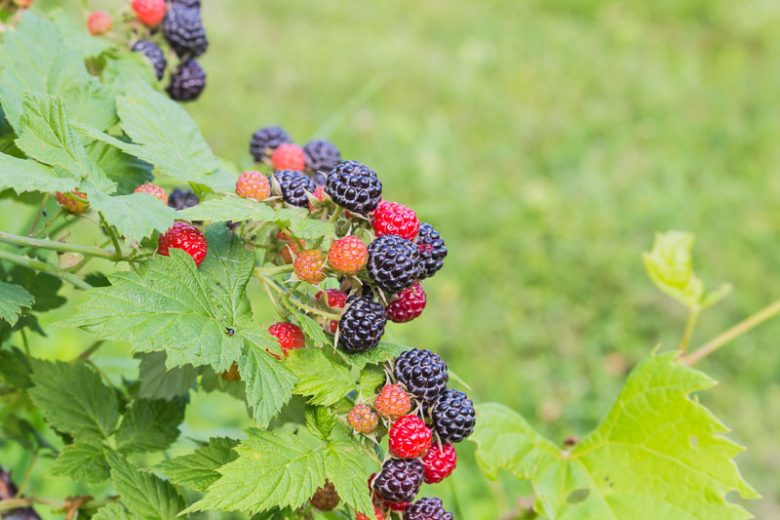


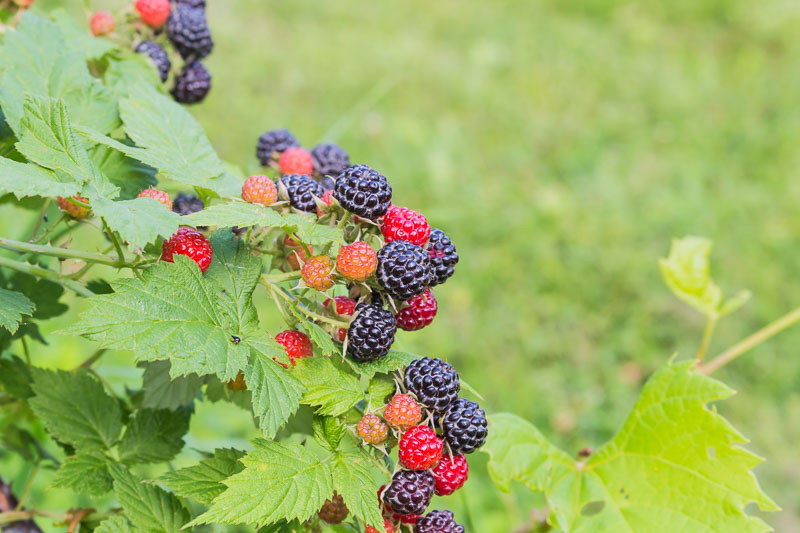
Summary: Native to eastern North America, black raspberries (Rubus occidentalis) are beloved for their perfumed, winey-sweet fruit and high anthocyanin content. These compact, arching canes produce abundant, jewel-toned berries prized for jams, syrups, and fresh eating.
Taste: Sweet-tart with earthy depth and wild berry perfume.
Use: Fresh, frozen, or preserved; excellent for jam, syrup, pies, and coulis.
Safety: Fruit is edible and non-toxic; canes are thorny—wear gloves when pruning or harvesting.
| Botanical Name | Rubus occidentalis |
|---|---|
| Family | Rosaceae (Rose family) |
| Common Names | Black Raspberry, Blackcap Raspberry, Thimbleberry |
| Native Range | Eastern and central North America (U.S. and Canada) |
| Plant Type & Habit | Deciduous shrub with arching, biennial canes; forms compact clumps |
| Hardiness (USDA) | 4–8; cold-hardy, less tolerant of hot, humid summers |
| Size | Canes 3–6 ft (0.9–1.8 m); spread 3–5 ft (0.9–1.5 m) |
| Sun & Exposure | Full sun; light afternoon shade beneficial in hot climates |
| Soil | Rich, loamy, well-drained soil with pH ~6.0–6.8 |
| Bloom & Fruit | White spring flowers; purple-black berries ripen early–mid summer |
| Wildlife | Flowers attract bees, hoverflies, and butterflies; fruits feed birds and mammals |
| Toxicity | Fruit edible and safe; no known toxicity. Canes are thorny. |
| Invasiveness | Spreads by tip-layering; manageable with pruning |
| Primary Uses | Fresh eating, jams, jellies, syrups, sauces, freezing, wildlife-friendly hedges |
Native, productive, and delicious—black raspberries are a backyard treasure that balance beauty, pollinator value, and fruit with unmatched perfume. With a little pruning know-how, you’ll be harvesting bowls of inky-sweet berries all summer long.
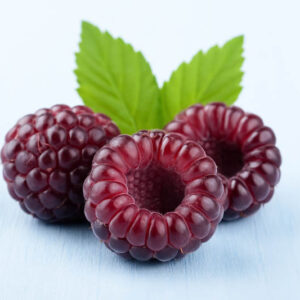
If you’ve ever tasted a true black raspberry, you remember it. Dark as midnight with a winey, perfumed sweetness, these berries are a different experience from both red raspberries and blackberries. They’re smaller, hollow (like all raspberries), and they pack a burst of flavor that makes jam taste like summer in a spoon. The best part? You can grow them at home with a simple trellis, a bit of pruning, and a sunny spot.
Black raspberry (Rubus occidentalis) is a hardy perennial shrub native to eastern North America. Like its red raspberry cousin, it persists year after year through a woody crown and root system, while the above-ground canes are biennial. Canes are arching, slender, and often covered with a whitish bloom that gives them a grayish cast. Unlike red raspberries, plants spread less by underground suckers and more by tip-layering—when cane tips touch soil, they root and form new plants (they do sucker, but less aggressively than many red raspberries).
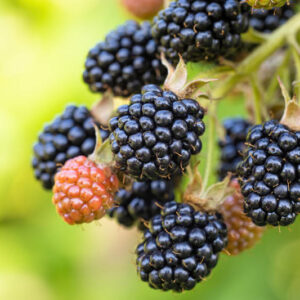
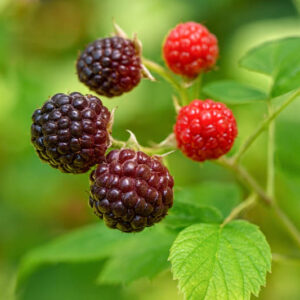
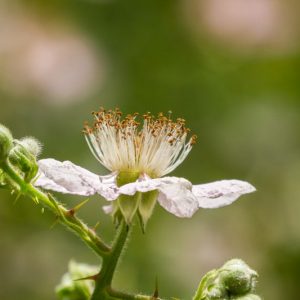
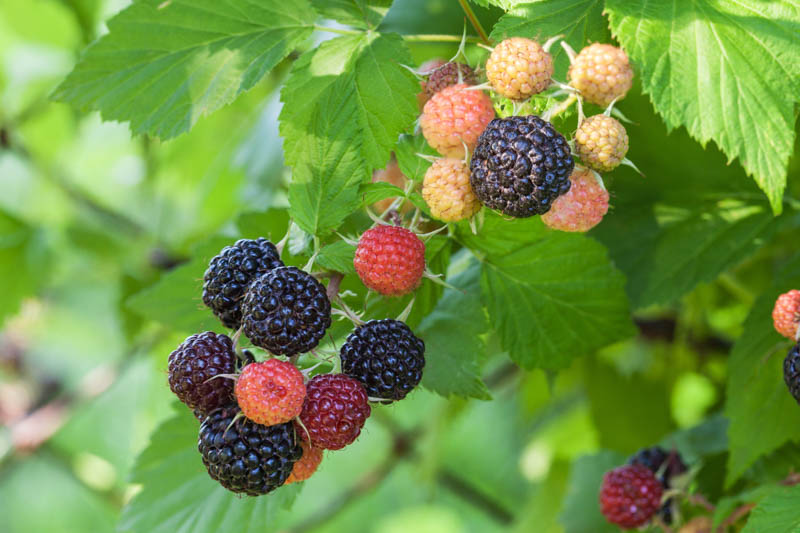
The leaves are compound, usually three leaflets, with a soft underside and toothed margins. White, five-petaled flowers open in late spring, attracting bees and other pollinators. Fruit follows in early to midsummer: small, nearly black aggregate berries that detach hollow from the core (the telltale raspberry trait). Their flavor is rich, sweet, and winey, with a fragrant depth that distinguishes them from both red raspberries and blackberries.
| Feature | Black Raspberry | Red Raspberry | Blackberry |
|---|---|---|---|
| Species | Rubus occidentalis Distinct North American species |
Rubus idaeus European & American forms; many cultivars |
Rubus spp. Complex group/ hybrids within subgenus Rubus |
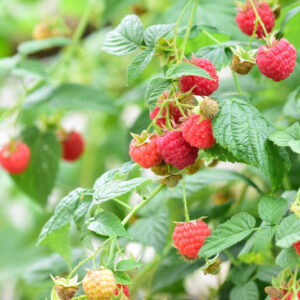
| Fruit structure | Hollow when picked (receptacle stays on plant) | Hollow when picked | Core stays in fruit (not hollow) |
| Growth habit | Arching canes; readily tip-layer to root | Upright to arching; spreads by suckers | Upright, semi-erect, or trailing—often vigorous |
| Pruning / training | Managed as a hill system: tip primocanes midseason (24–30 in / 60–75 cm to force laterals); shorten laterals in late winter; remove spent floricanes after harvest | Often in narrow hedgerows; floricane (summer-bearing) or primocane (everbearing) systems | Training varies by type; trailing need trellis; remove spent floricanes; manage vigorous primocanes |
Quick ID: Black raspberries are hollow when picked; blackberries keep the white core attached.
Black raspberries form clumps more than broad hedges. They naturally arch and readily tip-layer—touching cane tips root if they reach soil. Smart growers harness that: tip primocanes to force laterals (more fruiting wood) and keep plants compact.
With training, canes run 3–6 ft (0.9–1.8 m); clumps stay ~4–8 ft (1.2–2.4 m) wide. Kept as individual “hills,” plants fit beautifully in narrow beds or mixed edible borders.
Primocanes reach full height in one season. Expect light cropping in year two, then fuller, richer yields as the training cycle settles in.
Small white blossoms appear in spring on lateral spurs; more pollinators = more evenly filled drupelets. Planting nearby bee-friendly flowers boosts set and size.
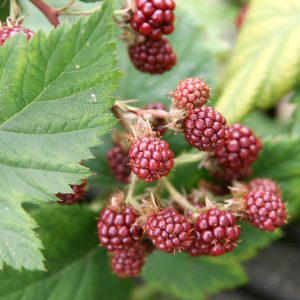
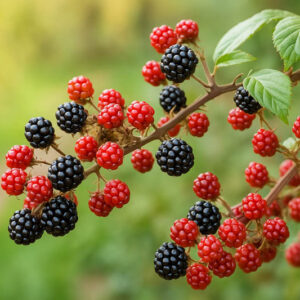
Early–midsummer clusters ripen to deep purple-black with a silvery bloom. Ripe berries slip cleanly off the core with a gentle tug and feel slightly soft, never hard.
Compound leaves with 3–5 leaflets turning shades of yellow in the fall; pruning and fall leaves make great mulch once composted (avoid returning diseased material).
Generally reliable in USDA 4–8; choose cultivars suited to your winters and protect from extreme heat and drought stress.
Pollinators: Black raspberry’s late-spring blooms are a magnet for native bees—especially bumble bees, small sweat bees, and mason bees—plus hoverflies and the occasional butterfly. More pollinators = fuller drupelets and bigger berries, so consider nearby nectar plants to keep traffic high.
Birds & mammals: Ripe fruit draws catbirds, robins, thrushes, cedar waxwings, and towhees; chipmunks, squirrels, and black bears will sample, too. Dense, thorny clumps offer cover and quick escape routes for songbirds and beneficial predators alike.
Coexistence tip: Use wildlife-safe netting of ≤ 1/4 in (6 mm) mesh, secure the bottom edge, and remove promptly after harvest.
Fruit is edible (and beloved). Canes are thorny; gloves save forearms. As with any herbal leaf use, consult a clinician before concentrated infusions during pregnancy.
Plants spread by suckers and tip-layering. Use edging, mow beyond the clump, and remove rooted tips you don’t want to keep plantings neat.
Grower Story We planted three black raspberry hills along a path and forgot to tip the first year. The canes arched, touched soil, and rooted—free plants, but chaos. Year two we tipped at 28″, shortened laterals in winter, added a simple two-wire support, and the berries got bigger, cleaner, and way easier to pick. Lesson: tip once, thank yourself all summer.
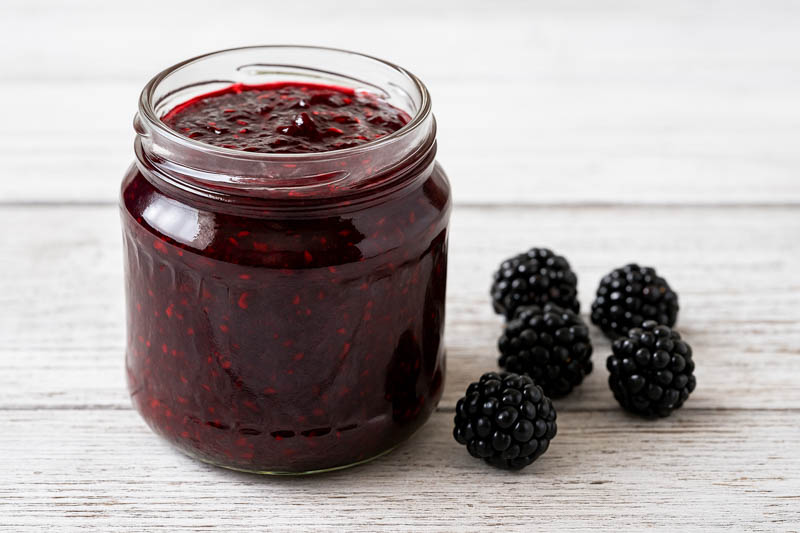
They shine everywhere red raspberries do—but bring deeper perfume and color.
| Nutrient | Amount (approx.) |
|---|---|
| Calories | ~50–60 |
| Carbohydrates | ~12–14 g |
| Fiber | ~6–7 g |
| Vitamin C | ~25–30 mg |
| Manganese | ~0.6–0.8 mg |
| Potassium | ~150–180 mg |
Note: Black raspberries are especially rich in anthocyanins—the pigments behind their signature color.
| Category | Description | Example Varieties |
|---|---|---|
| Standard (floricane) | Fruit on second-year laterals; managed with the hill system (tip primocanes, shorten laterals) | ‘Bristol’, ‘Cumberland’, ‘Jewel’ |
| Cold-hardy | Better winter survival in cold regions | ‘Bristol’, ‘Jewel’ |
| Large-fruited | Bigger berries; good for fresh eating and preserves | ‘Jewel’ |
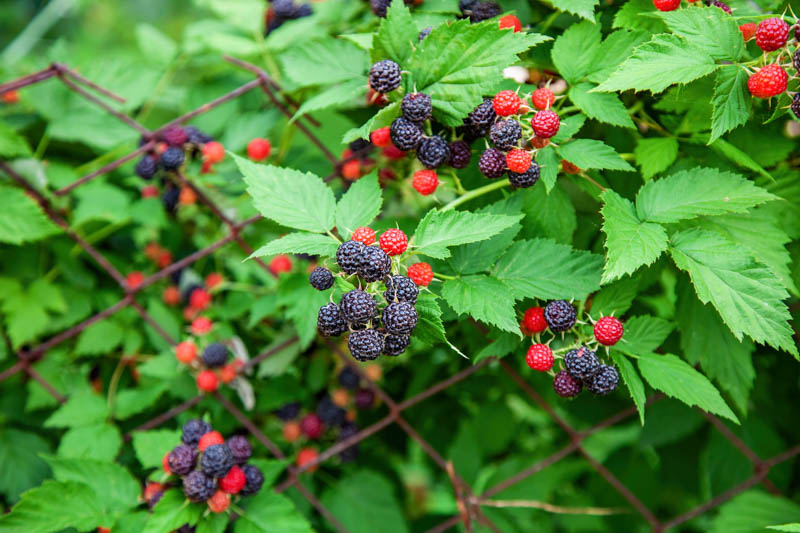
Two end posts with two wires (about 30 in / 76 cm and 48 in / 122 cm) are plenty. Soft ties keep laterals aligned for airflow and easy picking.
Steady moisture during growth and fruit swell (about 1–1.5 in / 2.5–4 cm per week). Drip or soaker hoses keep foliage dry and fruit firm.
Top-dress with compost in spring. If growth is pale or weak, apply a balanced organic fertilizer at label rates. Avoid heavy late-summer nitrogen.
Mulch suppresses weeds and stabilizes moisture. Hand-weed near crowns; roots are shallow.
During the first growing season (primocanes): When a cane reaches ~24–30 in (60–75 cm), tip it (remove the soft tip). This forces lateral branches and creates a sturdy, compact “hill.”
Late winter (dormant): Shorten each lateral to ~8–12 in (20–30 cm). This concentrates fruiting and keeps the plant tidy.
After harvest: Remove spent floricanes at ground level and discard. Keep the strong new primocanes for next year.
Result: Compact plants with strong, fruit-heavy laterals and easy, clean harvests.
Possible, but choose a large container (20+ gal), a strong stake or small trellis, and keep up with watering. The hill system is naturally container-friendly, but yield is usually better in-ground.
Aromatic alliums like garlic and chives help confuse pests. Pollinator flowers (borage, yarrow, lavender, marigolds) boost fruit set. Avoid planting near solanaceous crops, such as potatoes, tomatoes, and peppers in wilt-prone soils.
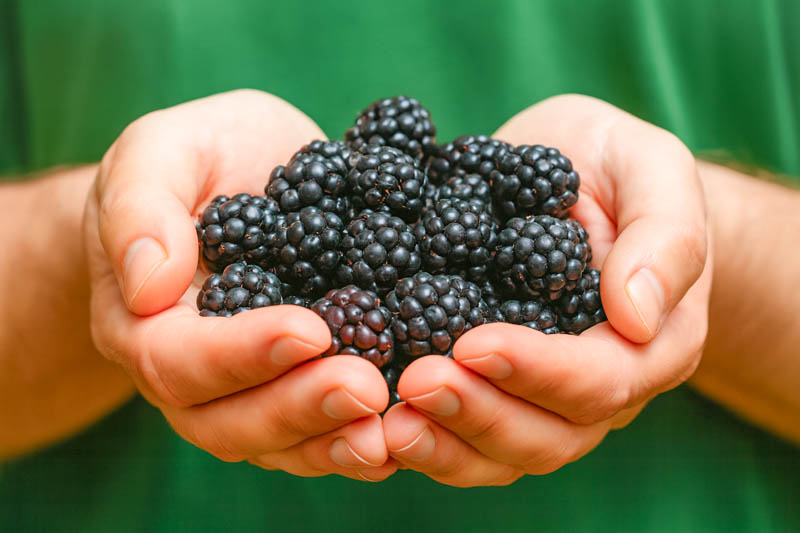
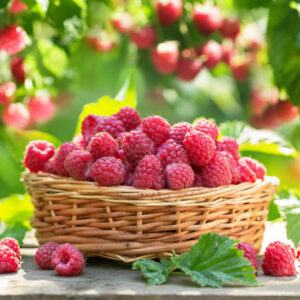
Harvest in the cool of morning. Use shallow containers (they bruise easily). Chill promptly; wash just before eating.
2–4 days in the refrigerator on a paper towel–lined tray; then move to a vented box.
Tray-freeze in a single layer; pack into bags. Perfect for smoothies, sauces, and bakes.
Black raspberry jam is a classic; syrup and coulis bring vivid color and perfume to pancakes and desserts.
Think lemonade, shrub, or cordial for the winter cabinet.
Separation tip: Black raspberries are more susceptible to some viruses. For best plant health, grow them in a separate bed from red raspberries and remove nearby wild brambles that can harbor pests and disease.
In many regions, black raspberries ripen in early to midsummer—often a short, intense season. Farmers markets sell out fast; at home, daily picking keeps bowls brimming and invites spontaneous desserts. Because the window is brief, freezing a few trays ensures purple-black flavor all year.
Black raspberries (Rubus occidentalis) are a different species than red raspberries (R. idaeus) and have hollow fruit when picked (like reds). Blackberries are mostly hybrids within the Rubus subgenus and keep the white core attached when picked. Black raspberries also arch and tip-layer readily and are best trained with the hill system.
A simple two-wire support helps keep laterals off the ground, improves airflow, and speeds picking. The hill system relies on tipping primocanes and shortening laterals.
Most cultivars do well in USDA 4–8. Choose cold-hardy selections in northern climates and provide afternoon shade and steady moisture in hotter regions.
Summer: tip primocanes at ~24–30 inches. Late winter: shorten laterals to ~8–12 inches. After fruiting: remove spent floricanes at ground level.
They spread by suckers and tip-layering. Keep plants in the hill system, mow beyond the clump, and remove unwanted rooted tips.
They’re legendary for jam and jelly—the perfume and color are outstanding.
Yes, but use large containers (20+ gal), provide a stout stake/trellis, water consistently, and manage with hill-system pruning. In-ground usually yields more.
| Hardiness |
4 - 8 |
|---|---|
| Plant Type | Fruits, Shrubs |
| Plant Family | Rosaceae |
| Genus | Rubus |
| Common names | Black Raspberry, Raspberry |
| Exposure | Full Sun, Partial Sun |
| Season of Interest | Summer (Early, Mid), Fall |
| Height | 3' - 6' (90cm - 180cm) |
| Spread | 4' - 8' (120cm - 240cm) |
| Spacing | 72" - 96" (180cm - 240cm) |
| Maintenance | Average |
| Water Needs | Average |
| Soil Type | Loam, Sand |
| Soil pH | Acid, Neutral |
| Soil Drainage | Moist but Well-Drained, Well-Drained |
| Characteristics | Showy, Fruit & Berries |
| Native Plants | United States, Northeast, Pennsylvania, Rhode Island, Vermont, Connecticut, Delaware, Maine, Massachusetts, Maryland, New Hampshire, New Jersey, New York, Illinois, Indiana, Iowa, Kansas, Michigan, Midwest, Minnesota, Missouri, Nebraska, North Dakota, Ohio, South Dakota, Wisconsin, Southeast, Mississippi, North Carolina, South Carolina, Tennessee, Virginia, West Virginia, Alabama, Arkansas, Georgia, Kentucky, Southwest, Oklahoma |
| Tolerances | Heat |
| Attracts | Bees, Birds, Butterflies, Hummingbirds |
| Toxic to Humans | No known toxicity |
| Toxic to Cats | No known toxicity |
| Toxic to Dogs | No known toxicity |
| Toxic to Horses | No known toxicity |


| Hardiness |
4 - 8 |
|---|---|
| Plant Type | Fruits, Shrubs |
| Plant Family | Rosaceae |
| Genus | Rubus |
| Common names | Black Raspberry, Raspberry |
| Exposure | Full Sun, Partial Sun |
| Season of Interest | Summer (Early, Mid), Fall |
| Height | 3' - 6' (90cm - 180cm) |
| Spread | 4' - 8' (120cm - 240cm) |
| Spacing | 72" - 96" (180cm - 240cm) |
| Maintenance | Average |
| Water Needs | Average |
| Soil Type | Loam, Sand |
| Soil pH | Acid, Neutral |
| Soil Drainage | Moist but Well-Drained, Well-Drained |
| Characteristics | Showy, Fruit & Berries |
| Native Plants | United States, Northeast, Pennsylvania, Rhode Island, Vermont, Connecticut, Delaware, Maine, Massachusetts, Maryland, New Hampshire, New Jersey, New York, Illinois, Indiana, Iowa, Kansas, Michigan, Midwest, Minnesota, Missouri, Nebraska, North Dakota, Ohio, South Dakota, Wisconsin, Southeast, Mississippi, North Carolina, South Carolina, Tennessee, Virginia, West Virginia, Alabama, Arkansas, Georgia, Kentucky, Southwest, Oklahoma |
| Tolerances | Heat |
| Attracts | Bees, Birds, Butterflies, Hummingbirds |
| Toxic to Humans | No known toxicity |
| Toxic to Cats | No known toxicity |
| Toxic to Dogs | No known toxicity |
| Toxic to Horses | No known toxicity |
How many Rubus occidentalis (Black Raspberry) do I need for my garden?
| Plant | Quantity | |
|---|---|---|
| Rubus occidentalis (Black Raspberry) | N/A | Buy Plants |
Create a membership account to save your garden designs and to view them on any device.
Becoming a contributing member of Gardenia is easy and can be done in just a few minutes. If you provide us with your name, email address and the payment of a modest $25 annual membership fee, you will become a full member, enabling you to design and save up to 25 of your garden design ideas.
Join now and start creating your dream garden!
Create a membership account to save your garden designs and to view them on any device.
Becoming a contributing member of Gardenia is easy and can be done in just a few minutes. If you provide us with your name, email address and the payment of a modest $25 annual membership fee, you will become a full member, enabling you to design and save up to 25 of your garden design ideas.
Join now and start creating your dream garden!