Black Raspberry 'Cumberland', Thimbleberry 'Cumberland'
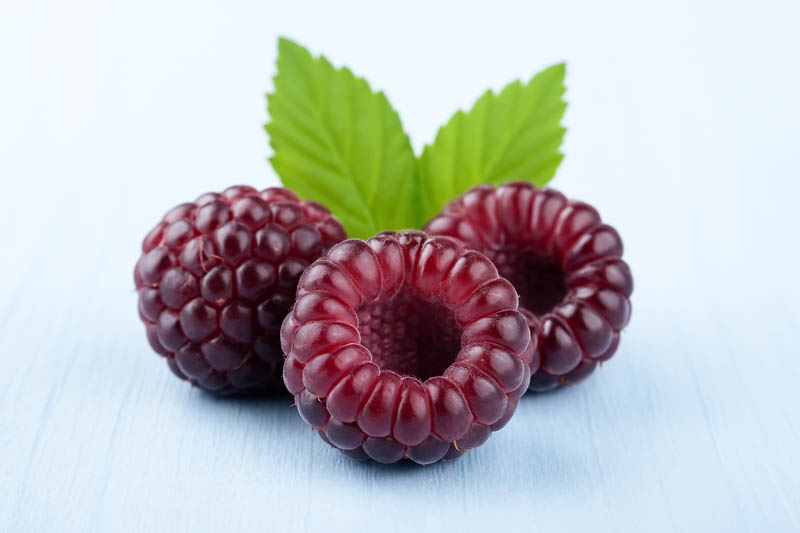
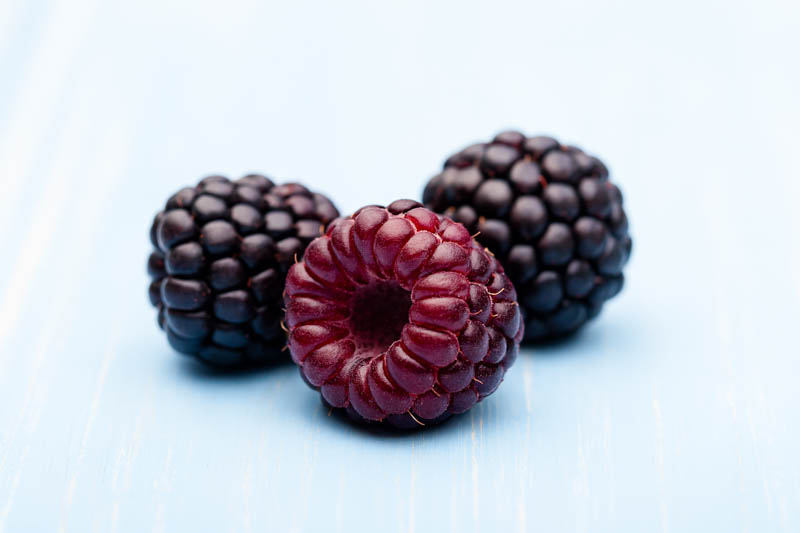
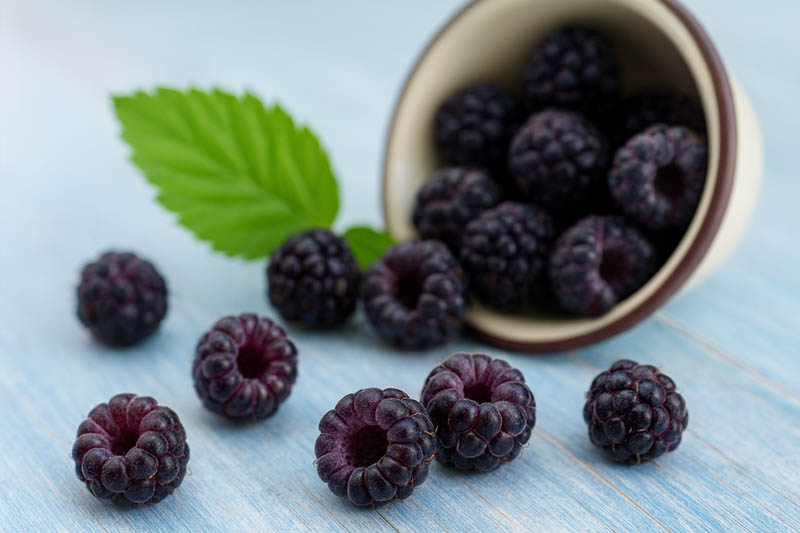


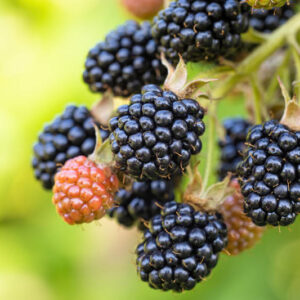
Summary: A heritage black raspberry cultivar introduced in 1890, Cumberland remains a grower favorite for its vigorous canes, winter hardiness, and deep, winey-sweet fruit. Berries are prized fresh, frozen, or preserved into jewel-toned jams and syrups.
Taste: Rich, perfumed sweetness with earthy depth; less tart than many red raspberries.
Use: Fresh eating, jams, syrups, cobblers, sauces, and freezing.
Safety: Edible; thorny canes require gloves for handling. Non-toxic to humans and pets (though large amounts may upset pets’ stomachs).
| Botanical Name | Rubus occidentalis ‘Cumberland’ |
|---|---|
| Family | Rosaceae (Rose family) |
| Common Names | Cumberland raspberry, blackcap raspberry |
| Native Range | Derived from North American black raspberry species; widely cultivated in the U.S. |
| Plant Type & Habit | Deciduous fruiting shrub with arching, biennial canes; forms compact clumps |
| Hardiness (USDA) | 4–8; cold-hardy, less tolerant of hot, humid summers |
| Size | Canes 3–6 ft (0.9–1.8 m); spreads 3–5 ft (0.9–1.5 m) per clump |
| Sun & Exposure | Full sun (6–8 hrs); light afternoon shade helps in hot summers |
| Soil | Rich, loamy, well-drained; pH ~6.0–6.8; dislikes waterlogging |
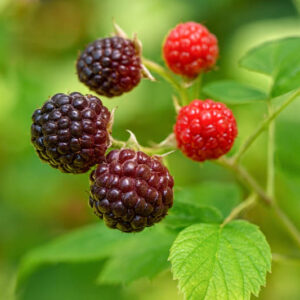
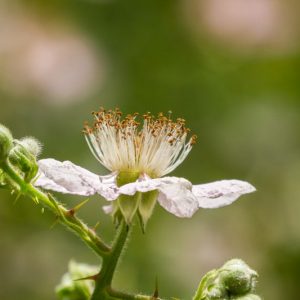
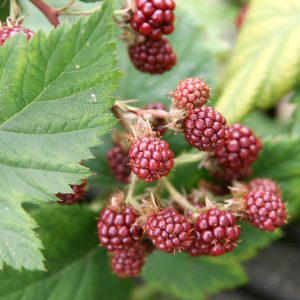
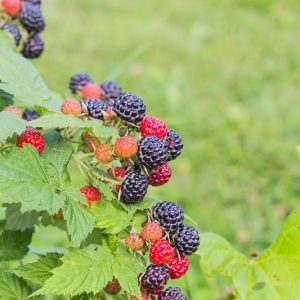
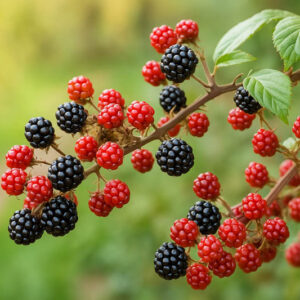
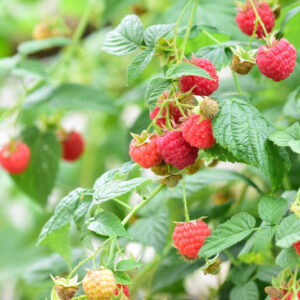
| Bloom & Fruit | White spring flowers; deep purple-black berries in early–midsummer on 2nd-year canes |
| Wildlife | Pollinator-friendly blossoms; fruits attract birds, mammals (use netting if needed) |
| Toxicity | Edible and safe; no known toxicity, but canes are thorny |
| Invasiveness | Spreads by tip-layering; manageable with pruning and mowing |
| Primary Uses | Fresh eating, jam, jelly, syrup, pies, sauces, freezing, wildlife-friendly hedges |
If you’ve ever fallen for the deep, winey sweetness of a black raspberry, ‘Cumberland’ is likely why. This heritage blackcap has been charming gardeners for generations with glossy, purple-black berries that pop off the core, gorgeous color for jams and syrups, and a growth habit that’s easy to manage once you know the rhythm. Plant a hill or two, give it sun, tip the canes at the right moment, and you’ll be carrying bowlfuls to the kitchen before you know it.
‘Cumberland’ has “staying power” for good reasons: it bears generously, the berries are nicely sized for a blackcap, the flavor screams summer, and the plants respond beautifully to the hill system (more on that below). The berries detach hollow from the core (as all raspberries do), so they’re easy to pick by the handful and drop into a waiting bowl. If you’re planting your first black raspberry, this cultivar is a forgiving teacher—vigorous, productive, and straightforward to prune.
Think deep berry perfume with a hint of wine and wildflower honey. ‘Cumberland’ is fabulous fresh, devastatingly good in jam, and the color is next-level for syrups and coulis. It also freezes like a champ: tray-freeze in a single layer, then bag. Your midwinter oatmeal will thank you.
Black raspberries, including ‘Cumberland’, make arching canes that love to root if the tips touch soil (tip-layering). We harness that energy with the hill system so the plant puts effort into productive laterals instead of runaway spaghetti:
End result: compact hills, cleaner fruit, easier picking, and impressive yields for the space.
A pair of end posts with two wires—one around 30 in (76 cm), the other ~48 in (122 cm)—is enough for a tidy row. Soft ties keep laterals from flopping, improve airflow, and make harvest a breeze. Minimal engineering, major payoff.
Keep moisture steady from bud-break through fruiting—about 1–1.5 in (2.5–4 cm) of water per week. Drip or soaker hoses are ideal; wet foliage invites disease. In spring, top-dress with compost. If growth looks pale or spindly, use a balanced organic fertilizer at label rates. Hold off on heavy nitrogen after midsummer—it can push soft growth that winters poorly.
Shallow roots mean gentle weeding. A 2–3 in (5–7.5 cm) mulch ring suppresses weeds, moderates moisture, and keeps fruit clean. Replenish yearly. In colder zones, that mulch is winter insurance, too.
‘Cumberland’ blooms in late spring and draws a lively court of native bees—especially bumble bees, sweat bees, and mason bees—plus hoverflies and visiting butterflies. More pollinators mean fuller drupelets and bigger berries.
Birds adore ripe fruit—catbirds, robins, waxwings. If you’re sharing more than you’d like, consider wildlife-safe netting of ≤ 1/4 in (6 mm) mesh and secure the bottom edge. Sly squirrels may sample, too.
Summer (primocanes): Tip each new cane at ~24–30 in (60–75 cm). The plant responds by pushing lateral branches that will fruit next year.
Late winter (dormant): Shorten laterals to ~8–12 in (20–30 cm). Remove weak or tangled growth to open the center.
After harvest: Cut spent floricanes to the ground and discard (do not compost diseased canes). Tie in new primocanes to your wires.
Pro tip: Keep a small bucket for clippings and a disinfectant wipe for pruners. Clean cuts reduce disease spread and you’ll move faster.
Yes, you can container-grow ‘Cumberland’, but go large—20+ gallons—with a strong stake or compact trellis. Water will be your full-time job in summer, and yields are typically better in-ground. Still, for patios and rented gardens, a single hill in a big pot can be downright delightful.
Aromatic alliums like garlic and chives help confuse pests. Pollinator magnets—borage, yarrow, lavender, marigolds—boost fruit set. Avoid planting in soils recently used for solanaceous crops such as potatoes, tomatoes, and peppers if verticillium wilt is a known issue.
Fruit is edible (and addictive). Canes are thorny; a good pair of gloves prevents “gardener’s pinstripes.” If you use the leaves for herbal infusions, check with a clinician—especially during pregnancy.
Separation tip: Black raspberries are more susceptible to certain viruses than reds. Grow ‘Cumberland’ in a separate bed from red raspberries and remove nearby wild brambles that can harbor trouble.
Grower Story I once skipped summer tipping “just this once.” The canes arched down, rooted everywhere, and picking turned into a jungle expedition. The next year I tipped at 28 inches, shortened laterals in late winter, and—magic—bigger berries, cleaner rows, faster harvest. Hill system for the win.
A simple two-wire support keeps laterals up, improves airflow, and speeds harvest. It’s not just tidy—it increases usable fruit.
It’s an heirloom with proven reliability, rich flavor, and strong vigor. Modern cultivars may offer specific disease resistances or slightly larger fruit, but ‘Cumberland’ still holds its own for home gardens.
Plant this year, tip and train, then harvest next summer on those second-year canes. After that, you’ll be in the yearly rhythm of pruning and picking.
It can wander by tip-layering. The hill system, regular mowing beyond the clump, and removing rooted tips you don’t want will keep it polite.
| Hardiness |
4 - 8 |
|---|---|
| Plant Type | Fruits, Shrubs |
| Plant Family | Rosaceae |
| Genus | Rubus |
| Common names | Black Raspberry, Raspberry |
| Exposure | Full Sun, Partial Sun |
| Season of Interest | Summer (Early, Mid), Fall |
| Height | 3' - 6' (90cm - 180cm) |
| Spread | 3' - 5' (90cm - 150cm) |
| Spacing | 36" - 48" (90cm - 120cm) |
| Maintenance | Average |
| Water Needs | Average |
| Soil Type | Loam, Sand |
| Soil pH | Acid, Neutral |
| Soil Drainage | Moist but Well-Drained, Well-Drained |
| Characteristics | Showy, Fruit & Berries |
| Attracts | Bees, Birds, Butterflies, Hummingbirds |
| Toxic to Humans | No known toxicity |
| Toxic to Cats | No known toxicity |
| Toxic to Dogs | No known toxicity |
| Toxic to Horses | No known toxicity |


| Hardiness |
4 - 8 |
|---|---|
| Plant Type | Fruits, Shrubs |
| Plant Family | Rosaceae |
| Genus | Rubus |
| Common names | Black Raspberry, Raspberry |
| Exposure | Full Sun, Partial Sun |
| Season of Interest | Summer (Early, Mid), Fall |
| Height | 3' - 6' (90cm - 180cm) |
| Spread | 3' - 5' (90cm - 150cm) |
| Spacing | 36" - 48" (90cm - 120cm) |
| Maintenance | Average |
| Water Needs | Average |
| Soil Type | Loam, Sand |
| Soil pH | Acid, Neutral |
| Soil Drainage | Moist but Well-Drained, Well-Drained |
| Characteristics | Showy, Fruit & Berries |
| Attracts | Bees, Birds, Butterflies, Hummingbirds |
| Toxic to Humans | No known toxicity |
| Toxic to Cats | No known toxicity |
| Toxic to Dogs | No known toxicity |
| Toxic to Horses | No known toxicity |
How many Rubus occidentalis ‘Cumberland’ (Black Raspberry) do I need for my garden?
| Plant | Quantity | |
|---|---|---|
| Rubus occidentalis ‘Cumberland’ (Black Raspberry) | N/A | Buy Plants |
Create a membership account to save your garden designs and to view them on any device.
Becoming a contributing member of Gardenia is easy and can be done in just a few minutes. If you provide us with your name, email address and the payment of a modest $25 annual membership fee, you will become a full member, enabling you to design and save up to 25 of your garden design ideas.
Join now and start creating your dream garden!
Create a membership account to save your garden designs and to view them on any device.
Becoming a contributing member of Gardenia is easy and can be done in just a few minutes. If you provide us with your name, email address and the payment of a modest $25 annual membership fee, you will become a full member, enabling you to design and save up to 25 of your garden design ideas.
Join now and start creating your dream garden!