Black Raspberry 'Bristol', Thimbleberry 'Bristol'
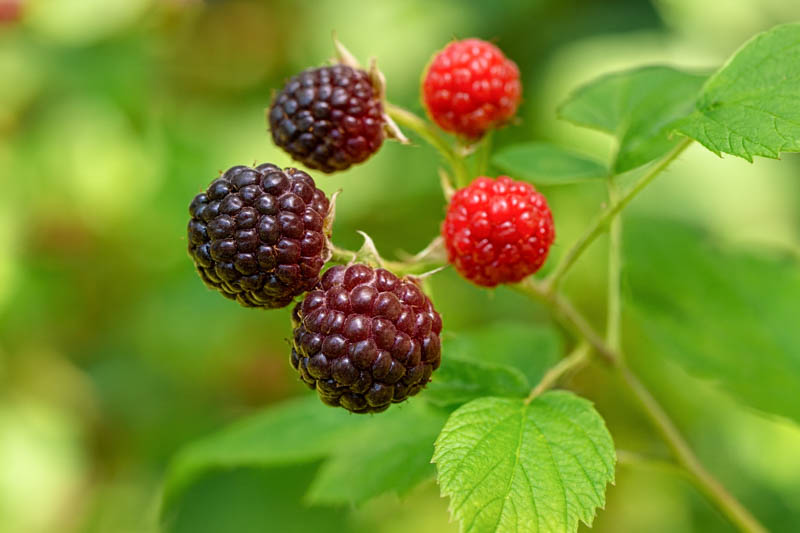


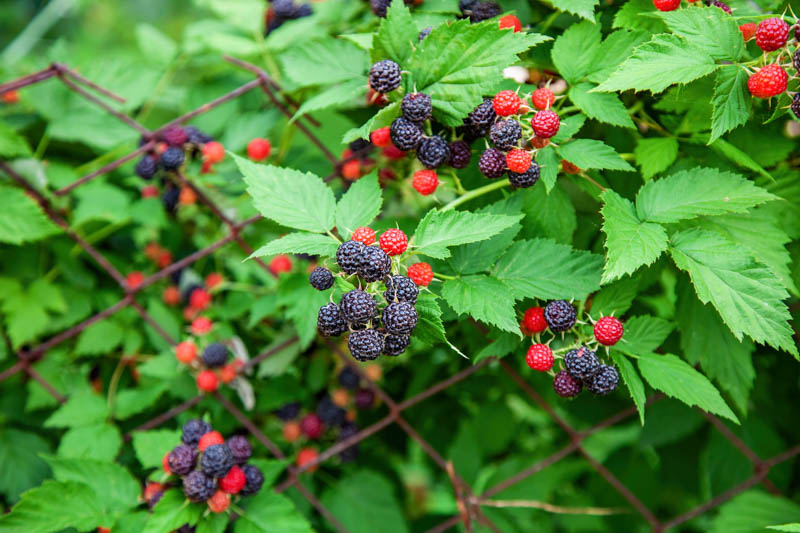
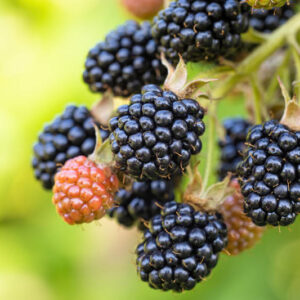
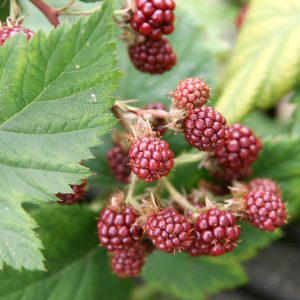
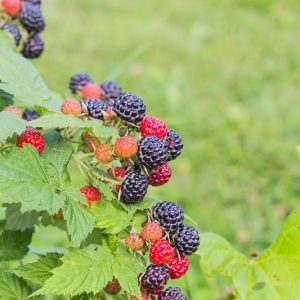
Summary: A celebrated blackcap renowned for cold hardiness, high yields, and large, glossy berries. ‘Bristol’ is a dependable, early-season workhorse that rewards simple hill-system training with bowlfuls of rich, winey-sweet fruit.
Taste: Intensely aromatic, balanced sweet-tart, with classic “blackcap perfume.”
Use: Fresh eating, pies, cobblers, jams and jellies, syrups, freezing and dehydrating.
Safety: Fruit is edible; canes are thorny—wear gloves. Generally non-toxic to people and pets (very large servings may upset pets).
| Botanical Name | Rubus occidentalis ‘Bristol’ |
|---|---|
| Family | Rosaceae (Rose family) |
| Common Names | Bristol black raspberry, blackcap |
| Native Range | Cultivar of North American black raspberry; widely adapted across the U.S. |
| Plant Type & Habit | Deciduous fruiting shrub; arching, biennial canes forming compact “hills” |
| Hardiness (USDA) | 4–8; notably cold-hardy; protect from extreme heat stress |
| Size | Canes 4-5 ft (1.2–1.5 m); clumps ~3–4 ft (0.9–1.2 m) wide with training |
| Sun & Exposure | Full sun (6–8 hrs); light afternoon shade in hot-summer regions |
| Soil | Rich, loamy, well-drained; slightly acidic pH ~6.0–6.8; raised rows help in wet springs |
| Bloom & Fruit | White spring flowers; early–midsummer harvest on second-year canes |
| Wildlife | Excellent for native pollinators; ripe fruit attracts birds—use wildlife-safe netting |
| Toxicity | Edible and safe; thorny canes warrant gloves |
| Invasiveness | Spreads by tip-layering; easy to manage with pruning and mowing |
| Primary Uses | Edible hedges, fresh fruit, preserves, desserts, freezing |
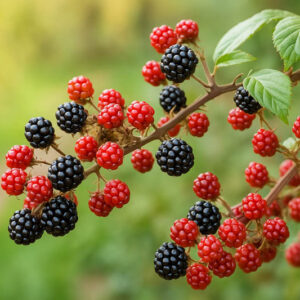
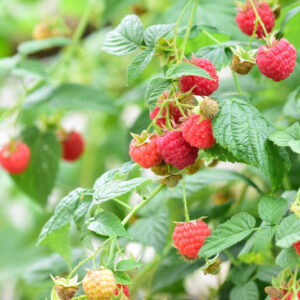
Craving black raspberries that taste like summer fireworks? Meet ‘Bristol’. It’s the blackcap so many gardeners swear by: reliably hardy, early to ripen, generous with clusters of glossy, purple-black berries that tumble into the bowl with a gentle tug. If you can give it sun and follow a few easy pruning moves, ‘Bristol’ will make you look like a berry whisperer.
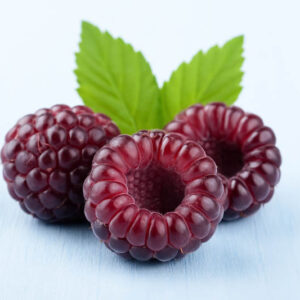
‘Bristol’ brings that classic blackcap perfume—sweet, winey, and faintly floral. The berries are a touch larger than many black raspberries, which makes them ideal for fresh snacking and speedier jam sessions. They freeze beautifully (tray-freeze first, then bag) and blitz into smoothies, sauces, and midwinter crumbles that taste like July.
Like all black raspberries, ‘Bristol’ grows biennial canes from a perennial crown and roots. Year-one canes (primocanes) shoot up and arch; year-two canes (floricanes) carry the flowers and fruit, then retire. The easiest way to keep order—and boost harvest—is the hill system:
The result: compact, productive “hills” with clean aisles, excellent airflow, and fruit that’s easier to see and pick.
A two-wire setup—wires at ~30 in (76 cm) and ~48 in (122 cm)—is all you need. Soft ties keep laterals aligned for sunlight and airflow, and you’ll pick faster with fewer thorns in your sleeves. Minimal engineering, major payoff.
Consistent moisture equals plumper berries. Aim for about 1–1.5 in (2.5–4 cm) per week during active growth and fruit swell. Drip or soaker hoses keep foliage dry (disease pressure drops when leaves stay dry). Each spring, top-dress with compost; if growth looks pale or sluggish, feed with a balanced organic fertilizer at label rates. Avoid heavy nitrogen after midsummer so new growth has time to harden off before winter.
Shallow roots appreciate gentle weeding. Mulch keeps weeds in check, stabilizes moisture, and makes fruiting time a lot less muddy. Replenish annually.
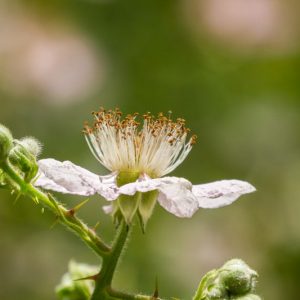
Late-spring bloom lures native bees—especially bumble bees, sweat bees, and mason bees—plus helpful hoverflies and visiting butterflies. More pollinators = fuller drupelets and bigger berries. Birds will happily help you pick; if they get pushy, use wildlife-safe netting with ≤ 1/4 in (6 mm) mesh and secure the bottom edge. Curious squirrels may sample, too.
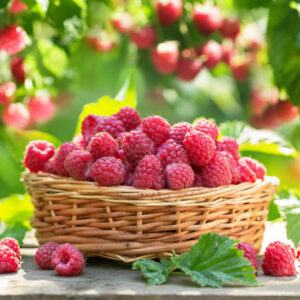
Harvest in the cool of morning, use shallow containers (they bruise if piled deep), and chill promptly. Wash right before eating or processing.
Summer (primocanes): Tip each cane at ~24–30 in (60–75 cm) to force multiple laterals.
Late winter: Shorten laterals to ~8–12 in (20–30 cm). Remove weak, crossing, or crowded canes. Tie the keepers to your two-wire trellis.
After harvest: Remove spent floricanes at ground level and discard (do not compost diseased wood). Thin new primocanes to the strongest few per hill.
Pro tip: Keep bypass pruners sharp and wipe blades when moving between plants. Clean tools equal cleaner cuts and fewer problems.
Separation tip: Black raspberries are more virus-sensitive than reds. Grow ‘Bristol’ in a separate bed from red raspberries and remove nearby wild brambles that can harbor pests and disease.
Grower Story The summer I finally tipped at 28 inches, magic happened. Laterals thickened, rows stayed open, and picking didn’t feel like spelunking through brambles. The following year, the berries were bigger and cleaner, and the jam—oh, the jam. If you only do one thing, tip on time.
It’s doable—choose a large container (20+ gallons), a sturdy stake or short trellis, and water consistently. Yield is usually better in-ground, but for patios or rentals, a single ‘Bristol’ hill in a big pot is a joy.
Alliums like garlic and chives help confuse pests. Pollinator magnets—borage, yarrow, lavender, marigolds—boost fruit set. Avoid planting in wilt-prone soils recently used for tomatoes, potatoes, or peppers.
Yes. It’s notably cold-hardy and dependable in USDA zones 4–8. In hotter areas, provide light afternoon shade and steady moisture.
A simple two-wire trellis keeps laterals off the ground, improves airflow, and speeds picking—totally worth the 30-minute setup.
Plant this year, tip and train, then harvest next summer on the second-year canes. You’ll be in the annual rhythm after that.
‘Bristol’ is very cold-hardy and early, with large, flavorful berries. ‘Cumberland’ is a classic heirloom with rich perfume; ‘Jewel’ is prized for size and productivity. All thrive with the hill system.
It can wander by tip-layering, but good pruning, mowing beyond the clump, and removing unwanted rooted tips keep it tidy.
| Hardiness |
4 - 8 |
|---|---|
| Plant Type | Fruits, Shrubs |
| Plant Family | Rosaceae |
| Genus | Rubus |
| Common names | Black Raspberry, Raspberry |
| Exposure | Full Sun, Partial Sun |
| Season of Interest | Summer (Early, Mid), Fall |
| Height | 4' - 5' (120cm - 150cm) |
| Spread | 3' - 4' (90cm - 120cm) |
| Spacing | 36" - 48" (90cm - 120cm) |
| Maintenance | Average |
| Water Needs | Average |
| Soil Type | Loam, Sand |
| Soil pH | Acid, Neutral |
| Soil Drainage | Moist but Well-Drained, Well-Drained |
| Characteristics | Showy, Fruit & Berries |
| Attracts | Bees, Birds, Butterflies, Hummingbirds |
| Toxic to Humans | No known toxicity |
| Toxic to Cats | No known toxicity |
| Toxic to Dogs | No known toxicity |
| Toxic to Horses | No known toxicity |


| Hardiness |
4 - 8 |
|---|---|
| Plant Type | Fruits, Shrubs |
| Plant Family | Rosaceae |
| Genus | Rubus |
| Common names | Black Raspberry, Raspberry |
| Exposure | Full Sun, Partial Sun |
| Season of Interest | Summer (Early, Mid), Fall |
| Height | 4' - 5' (120cm - 150cm) |
| Spread | 3' - 4' (90cm - 120cm) |
| Spacing | 36" - 48" (90cm - 120cm) |
| Maintenance | Average |
| Water Needs | Average |
| Soil Type | Loam, Sand |
| Soil pH | Acid, Neutral |
| Soil Drainage | Moist but Well-Drained, Well-Drained |
| Characteristics | Showy, Fruit & Berries |
| Attracts | Bees, Birds, Butterflies, Hummingbirds |
| Toxic to Humans | No known toxicity |
| Toxic to Cats | No known toxicity |
| Toxic to Dogs | No known toxicity |
| Toxic to Horses | No known toxicity |
How many Rubus occidentalis ‘Bristol’ (Black Raspberry) do I need for my garden?
| Plant | Quantity | |
|---|---|---|
| Rubus occidentalis ‘Bristol’ (Black Raspberry) | N/A | Buy Plants |
Create a membership account to save your garden designs and to view them on any device.
Becoming a contributing member of Gardenia is easy and can be done in just a few minutes. If you provide us with your name, email address and the payment of a modest $25 annual membership fee, you will become a full member, enabling you to design and save up to 25 of your garden design ideas.
Join now and start creating your dream garden!
Create a membership account to save your garden designs and to view them on any device.
Becoming a contributing member of Gardenia is easy and can be done in just a few minutes. If you provide us with your name, email address and the payment of a modest $25 annual membership fee, you will become a full member, enabling you to design and save up to 25 of your garden design ideas.
Join now and start creating your dream garden!