Russian Sage, Afghan Lavender, Perovskia atriplicifolia

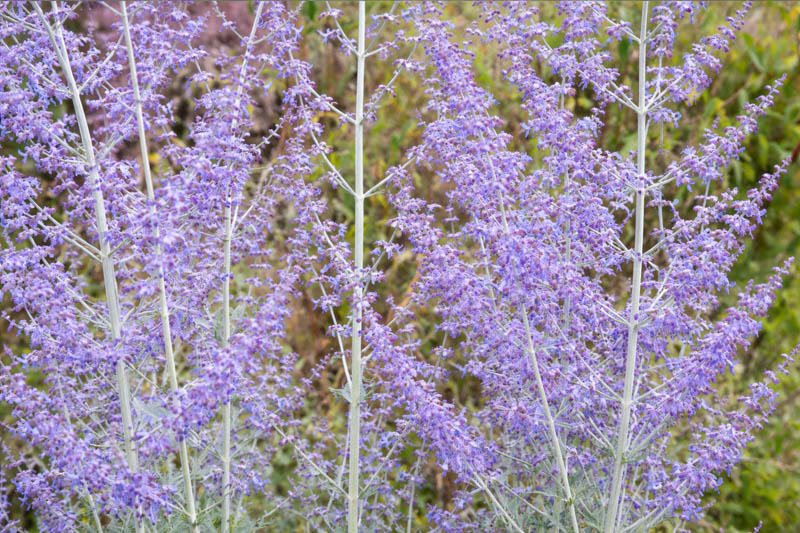
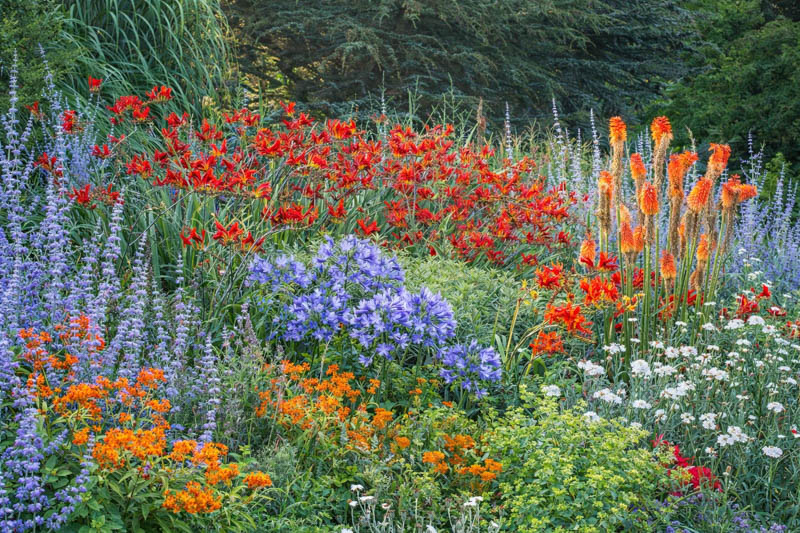
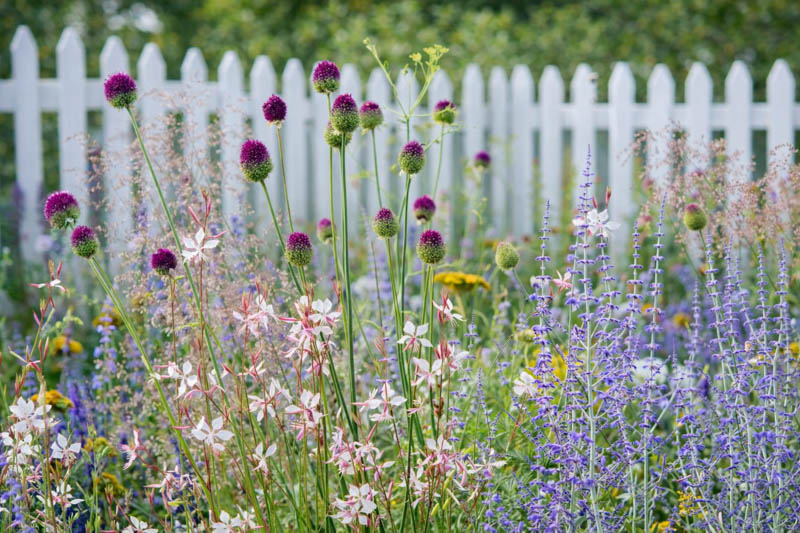
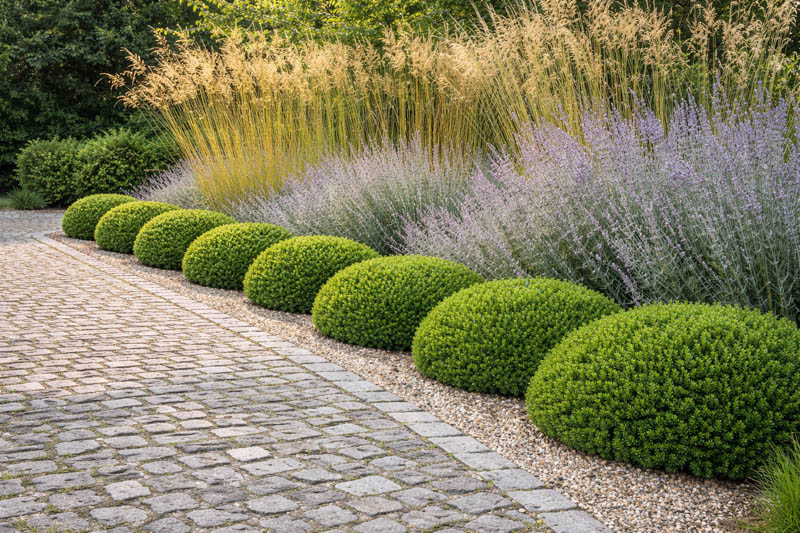


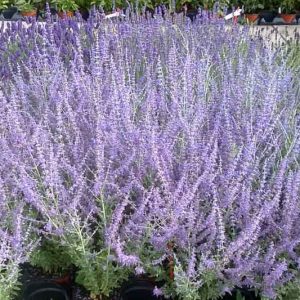
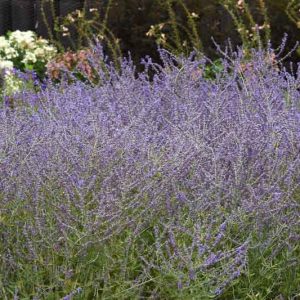
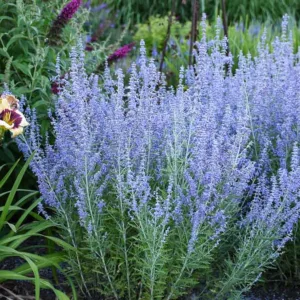
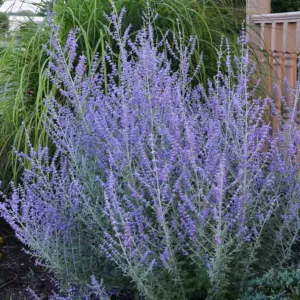
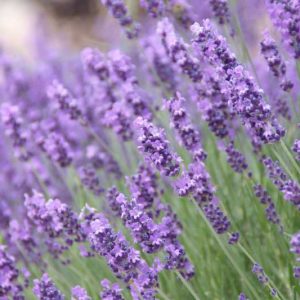
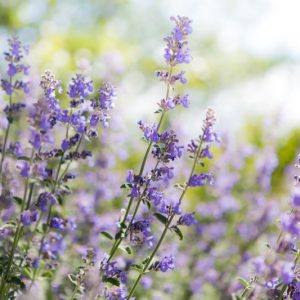
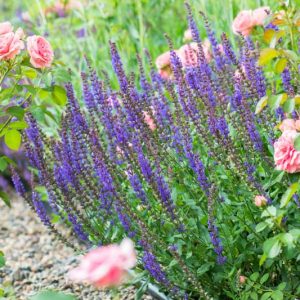
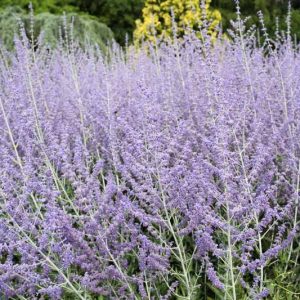
Salvia yangii (often still sold as Perovskia atriplicifolia) is the kind of plant that makes a garden look effortless – like it’s been glowing there forever. With its silver-white stems, aromatic gray-green foliage, and lavender-blue flower panicles, Russian Sage brings that dreamy lavender haze — with extra toughness and a longer late-season show.
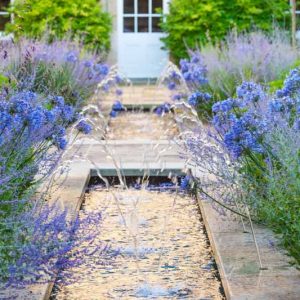
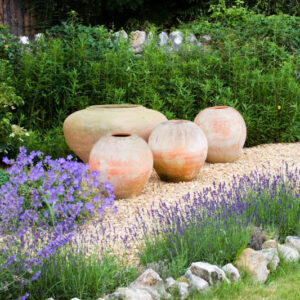
If your goal is full-sun impact with low water, this is a plant you can build around. It thrives in well-drained soil, shrugs off heat, and once established, it is reliably drought tolerant. Better yet – the flowers are a buffet for bees, butterflies, and hummingbirds. In sunny borders, xeriscapes, gravel gardens, and Mediterranean-style plantings, Salvia yangii is that rare combination of soft-looking and hard-working.
Summary: Bushy, woody-based deciduous perennial (often grown as a subshrub) with silvery stems and long panicles of lavender-blue flowers from mid-summer to fall.
Use: Ideal for xeriscaping, dry borders, gravel gardens, Mediterranean gardens, cottage gardens, and pollinator plantings.
Highlight: Long bloom season plus beautiful winter structure from the pale stems.
Note: Best in full sun and dry to medium, well-drained soil. Drought, heat, salt tolerant, and often considered deer and rabbit resistant.
| Botanical Name | Salvia yangii |
|---|---|
| Family | Mint family (Lamiaceae) |
| Common Names | Russian Sage, Perovskia |
| Native Range | Native to the steppes and hills of southwestern and central Asia |
| Plant Type and Habit | Woody-based deciduous perennial with a bushy, airy habit |
| Hardiness (approx. USDA) | Hardy in USDA Zones 5-9 |
| Height | 3-4 ft. (90-120 cm) |
| Spread | 3-4 ft. (90-120 cm) |
| Spacing | 36-48 in. (90-120 cm) |
| Sun and Exposure | Best in full sun for the strongest stems and best bloom |
| Soil | Average to lean, dry to medium, well-drained soil; avoid winter-wet sites |
| Seasonal Interest | Mid-summer through fall (weeks of bloom) |
| Flower Color | Lavender-blue to violet-blue |
| Foliage Color | Gray-green, often with a silvery cast |
| Fragrance | Aromatic foliage (herbal, sage-like when crushed) |
| Drought Tolerant | Yes (once established) |
| Heat Tolerant | Yes |
| Salt Tolerant | Yes |
| Pollution Tolerant | Often performs well in urban gardens |
| Poor Soil Tolerant | Yes |
| Nectar / Pollen | Yes – excellent nectar source |
| Attracts | Bees, butterflies, hummingbirds |
| Deer / Rabbit | Often considered deer and rabbit resistant |
| Toxicity | Generally considered low toxicity – discourage chewing |
| Invasive Status | Not considered invasive in typical garden use |
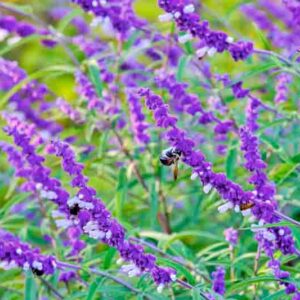
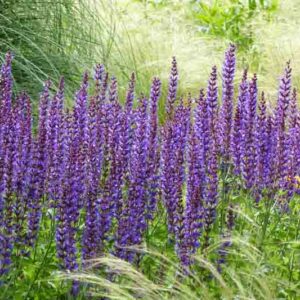
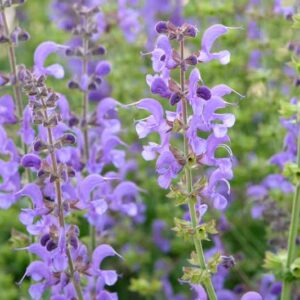
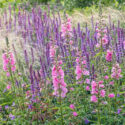
Salvia yangii is a woody-based perennial that behaves like a soft, airy shrub in summer. Thin, pale stems rise from the base and create a light, cloud-like framework that never feels heavy. Then come the flowers: long, terminal panicles made up of tiny lavender-blue blooms that hover above the foliage and shimmer in the sun.
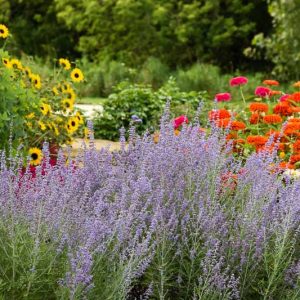
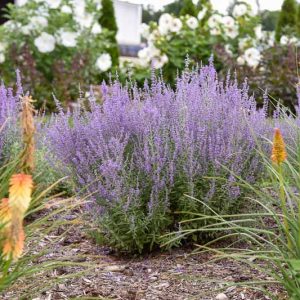
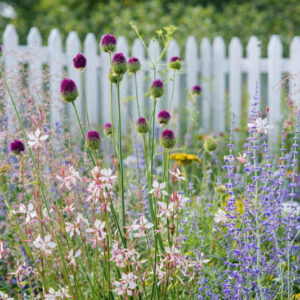
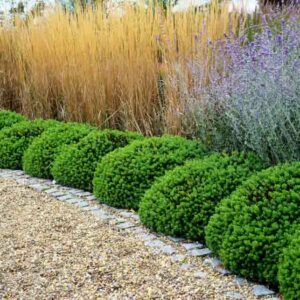
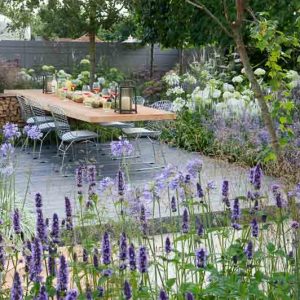
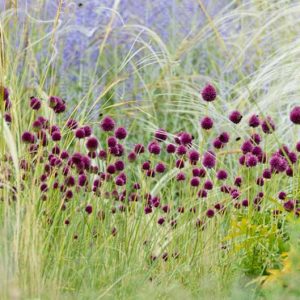
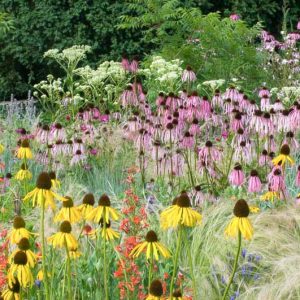
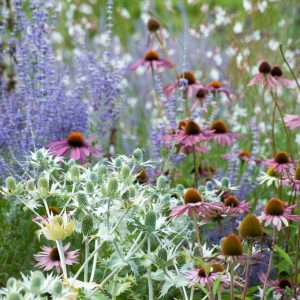
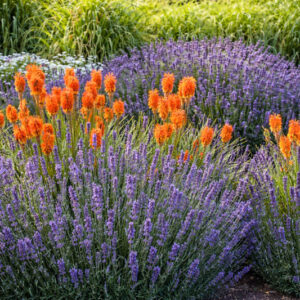
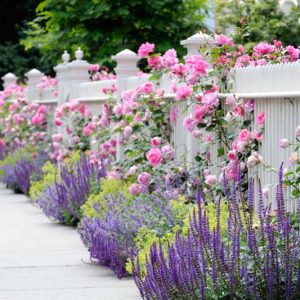
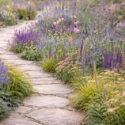
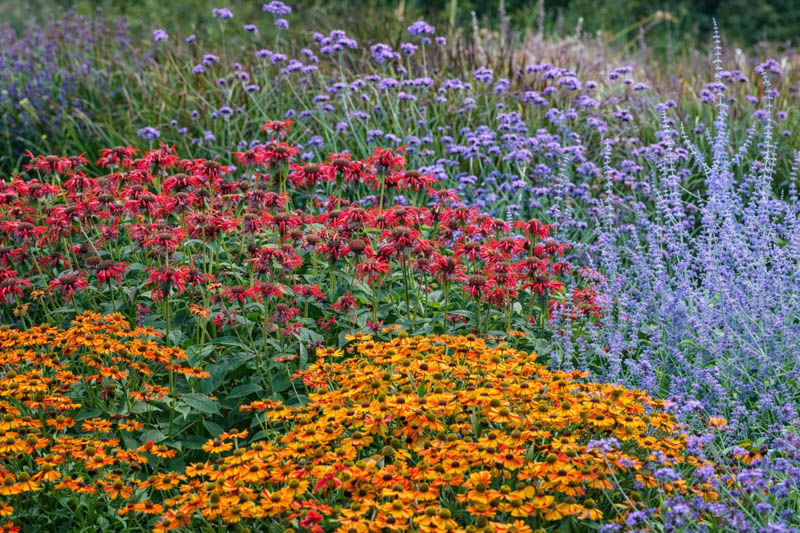
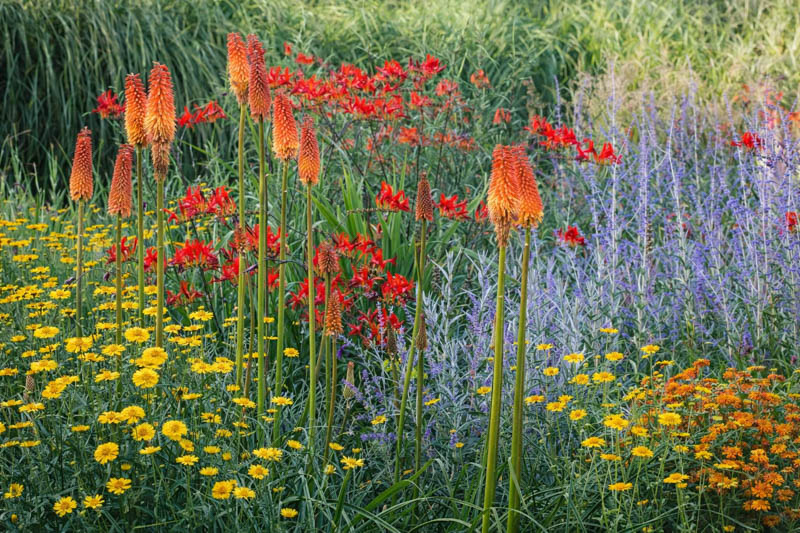
Here’s the visual trick Russian Sage pulls off so well: it adds height and haze without blocking the view. That makes it perfect for planting behind lower perennials, weaving through ornamental grasses, or repeating in drifts for a modern, naturalistic look.
Salvia yangii is native to the open steppes and sun-baked hills of southwestern and central Asia, where it has evolved to thrive in tough, exposed landscapes. Across its native range, it is widely distributed from western China and northwestern India through Pakistan, Afghanistan, Iran, and Turkey, extending into parts of eastern Europe. In the wild, it grows naturally on dry hillsides, windswept plains, and at higher elevations in mountainous regions, including the Himalayas.
This remarkable adaptability to varied climates, elevations, and lean soils explains why Salvia yangii has transitioned so effortlessly from rugged Asian landscapes to gardens around the world, where it is now valued as a resilient, reliable, and low-maintenance ornamental.
Expect a bushy clump about 3-4 feet tall and wide (90-120 cm), with a woody base and lots of upright stems. In full sun, plants stay more compact and sturdy. In shade or overly rich soil, stems can stretch and flop – which is basically the plant politely telling you it wants more sun and less pampering.
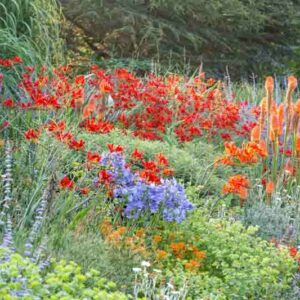
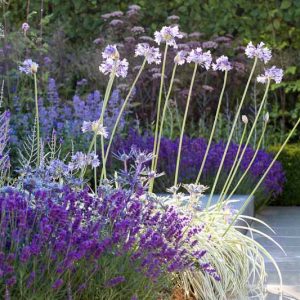
Russian Sage blooms for weeks from mid-summer into fall, right when many gardens start craving fresh color. The small flowers may be tiny up close, but en masse they read as a soft wash of lavender-blue that pairs beautifully with hot, bright, and pastel palettes alike.
For even longer performance, you can lightly trim or shape after the first big flush, but it is not a fussy bloomer. Its real talent is consistent, late-season color with minimal input.
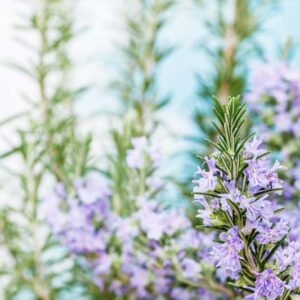
The leaves are finely dissected, gray-green, and pleasantly aromatic. Crush a leaf and you get that herbal, sage-like scent that often helps explain why browsing animals tend to ignore it. In winter, the flowers fade, but the pale stems remain – adding texture, movement, and a light structural feature when frost hits.
Russian Sage was named Perennial Plant of the Year in 1995 – a classic stamp of “this really works” across many climates and soil types. It is widely valued for its durability, long bloom season, and water-wise performance.
Salvia yangii is generally hardy in about USDA Zones 5-9. In colder regions, the top growth dies back and the plant returns from the base. In warmer zones, it can behave more like a small subshrub, especially when winters are mild and the site is well-drained.
Because it handles tough conditions, Russian Sage is also a smart choice for streetside plantings, slopes, and hot reflected heat zones near pavement – as long as drainage is solid.
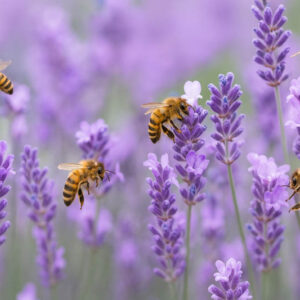
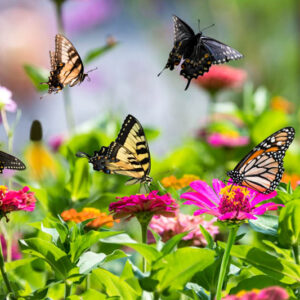
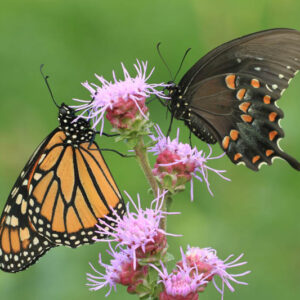
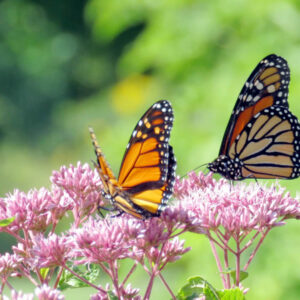
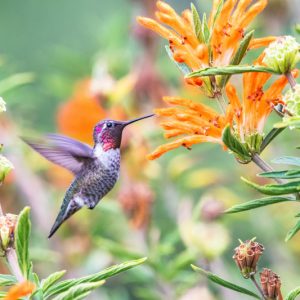
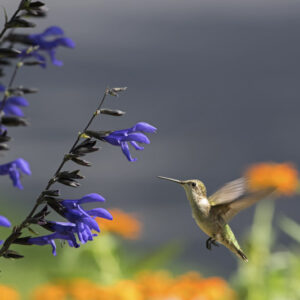
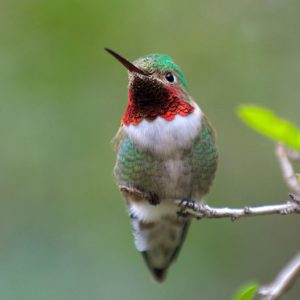
This plant earns its keep in pollinator gardens. Russian Sage flowers are nectar-rich and routinely draw bees, butterflies, and hummingbirds. In late summer, when pollinators are still active but some borders have slowed down, Salvia yangii keeps the buffet open.
Russian Sage is widely regarded as rabbit and deer-resistant. The aromatic foliage is not a preferred snack. That said, no plant is perfectly browse-proof when animals are hungry – but Russian Sage is rarely at the top of the menu.
Once established, Russian Sage is a classic drought tolerant perennial. It prefers deep, occasional watering over frequent shallow sprinkles. If you are gardening in sandy or gravelly soils, that deep watering habit is even more important during extended heat waves.
Salvia yangii is generally considered low risk in ornamental use. Still, it is not meant for eating, and it is best to discourage pets from chewing on any garden plant. If you need pet-specific certainty, treat it as “do not ingest” and place it out of reach.
Russian Sage is not considered invasive. It may self-seed lightly in some regions, but is easily managed.
Go easy on fertilizer. Too much feeding can push lush, weak growth. A light compost top-dressing in spring is usually plenty – and in very lean, gravelly gardens, you may not need to feed at all.
Russian Sage is generally trouble-free.
Yes. Once established, Salvia yangii is highly drought tolerant and thrives in dry to medium, well-drained soils. It is an excellent choice for xeriscaping and low-water gardens.
Full sun is essential for strong stems, compact growth, and abundant flowering. Plants grown in shade tend to flop and flower less.
Cut plants back almost to the ground in late winter or early spring, just as new growth begins to appear. Avoid cutting back in fall.
Yes. Salvia yangii is generally considered deer and rabbit resistant due to its aromatic foliage and woody stems.
Most varieties grow 3–4 feet tall and wide, though compact cultivars are available for smaller gardens.
Salvia yangii is a long-blooming, sun-loving, drought-tolerant perennial that delivers airy lavender-blue flowers, silvery foliage, and outstanding resilience in challenging garden conditions.
Royal Horticultural Society (RHS) – cultivation notes for Salvia yangii (formerly Perovskia atriplicifolia)
Missouri Botanical Garden Plant Finder – cultural guidance, pruning, and landscape use
Gardenia.net – Salvia care, drought tolerance, and pollinator value
Updated: January 2026 – Reviewed by Gardenia Editors
| Hardiness |
5 - 9 |
|---|---|
| Heat Zones |
6 - 9 |
| Climate Zones | 2, 3, 4, 5, 6, 7, 8, 9, 10, 11, 12, 13, 14, 15, 16, 17, 18, 19, 20, 21, 22, 23, 24 |
| Plant Type | Perennials, Shrubs |
| Plant Family | Lamiaceae |
| Genus | Perovskia, Salvia |
| Common names | Russian Sage |
| Exposure | Full Sun |
| Season of Interest | Summer (Mid, Late), Fall |
| Height | 3' - 4' (90cm - 120cm) |
| Spread | 3' - 4' (90cm - 120cm) |
| Spacing | 48" (120cm) |
| Maintenance | Low |
| Water Needs | Low |
| Soil Type | Chalk, Loam, Sand |
| Soil pH | Acid, Alkaline, Neutral |
| Soil Drainage | Well-Drained |
| Characteristics | Cut Flowers, Fragrant, Plant of Merit, Showy |
| Tolerances | Drought, Deer, Salt, Rabbit, Dry Soil, Clay Soil, Heat, Poor Soil, Fire |
| Attracts | Bees, Birds, Butterflies, Hummingbirds |
| Garden Uses | Beds And Borders |
| Garden Styles | City and Courtyard, Coastal Garden, Gravel and Rock Garden, Informal and Cottage, Mediterranean Garden |
| Toxic to Humans | No known toxicity |
| Toxic to Cats | No known toxicity |
| Toxic to Dogs | No known toxicity |
| Toxic to Horses | No known toxicity |


| Hardiness |
5 - 9 |
|---|---|
| Heat Zones |
6 - 9 |
| Climate Zones | 2, 3, 4, 5, 6, 7, 8, 9, 10, 11, 12, 13, 14, 15, 16, 17, 18, 19, 20, 21, 22, 23, 24 |
| Plant Type | Perennials, Shrubs |
| Plant Family | Lamiaceae |
| Genus | Perovskia, Salvia |
| Common names | Russian Sage |
| Exposure | Full Sun |
| Season of Interest | Summer (Mid, Late), Fall |
| Height | 3' - 4' (90cm - 120cm) |
| Spread | 3' - 4' (90cm - 120cm) |
| Spacing | 48" (120cm) |
| Maintenance | Low |
| Water Needs | Low |
| Soil Type | Chalk, Loam, Sand |
| Soil pH | Acid, Alkaline, Neutral |
| Soil Drainage | Well-Drained |
| Characteristics | Cut Flowers, Fragrant, Plant of Merit, Showy |
| Tolerances | Drought, Deer, Salt, Rabbit, Dry Soil, Clay Soil, Heat, Poor Soil, Fire |
| Attracts | Bees, Birds, Butterflies, Hummingbirds |
| Garden Uses | Beds And Borders |
| Garden Styles | City and Courtyard, Coastal Garden, Gravel and Rock Garden, Informal and Cottage, Mediterranean Garden |
| Toxic to Humans | No known toxicity |
| Toxic to Cats | No known toxicity |
| Toxic to Dogs | No known toxicity |
| Toxic to Horses | No known toxicity |
How many Salvia yangii (Russian Sage) do I need for my garden?
| Plant | Quantity | |
|---|---|---|
| Salvia yangii (Russian Sage) | N/A | Buy Plants |
Create a membership account to save your garden designs and to view them on any device.
Becoming a contributing member of Gardenia is easy and can be done in just a few minutes. If you provide us with your name, email address and the payment of a modest $25 annual membership fee, you will become a full member, enabling you to design and save up to 25 of your garden design ideas.
Join now and start creating your dream garden!
Create a membership account to save your garden designs and to view them on any device.
Becoming a contributing member of Gardenia is easy and can be done in just a few minutes. If you provide us with your name, email address and the payment of a modest $25 annual membership fee, you will become a full member, enabling you to design and save up to 25 of your garden design ideas.
Join now and start creating your dream garden!