Eastern Woodland Sedge, Common Woodland Sedge, Woodland Sedge, Bland Sedge, Carex laxiflora var. blanda
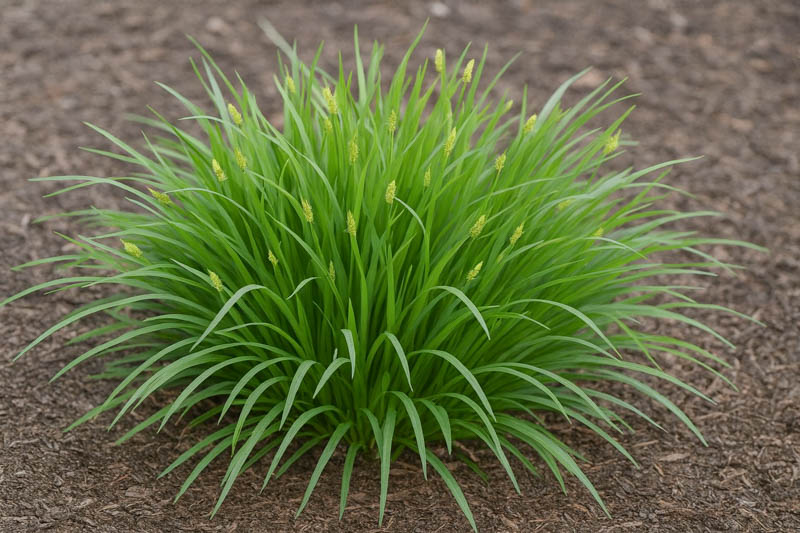


Looking for a graceful, native grass like plant that quietly fills shady spots, knits soil together, and still feeds birds and pollinators? Meet Carex blanda, commonly called common wood sedge, eastern woodland sedge, or simply woodland sedge. Carex blanda care is refreshingly simple: plant it once, water it through the first season, and let it settle in as a living mulch. This adaptable native perennial sedge forms soft, mounded clumps of arching green leaves that thrive in shade to part sun, clay soil, and moist to medium conditions with some tolerance of short dry spells once established. It is a workhorse for woodland gardens, shady borders, rain gardens, erosion control, and low mow lawn replacement in much of eastern and central North America.
Summary: Low, mounding native woodland sedge that forms graceful clumps and slowly spreads to make a soft green groundcover.
Use: Shade gardens, woodland edges, under trees, rain gardens, bioswales, slopes, and as a low input lawn alternative in light shade.
Highlight: Handles full shade to full sun in many sites, tolerates a wide range of soils, and offers evergreen to semi evergreen foliage plus seed for birds.
Note: Extremely adaptable, deer and rabbit resistant, and valuable for erosion control. Can slowly spread in open soil, especially in moist, rich sites.
| Botanical Name | Carex blanda Dewey |
|---|---|
| Family | Cyperaceae (sedge family) |
| Common Names | Common wood sedge, eastern woodland sedge, woodland sedge, wood sedge |
| Native Range | Widespread across eastern and central North America, in upland woods, woodland edges, thickets, prairies, and disturbed sites, and native across a wide band of the central and eastern United States and southern Canada. |
| Plant Type and Habit | Cool season perennial sedge, clump forming to slowly rhizomatous, creating low, mounded tufts that can knit into a soft groundcover. |
| Hardiness (USDA) | Zones 3 to 9 in most references. |
| Size | Typically 6 to 20 inches tall and about 12 to 24 inches wide, depending on site conditions. |
| Sun and Exposure | Part shade to shade is ideal, but it can tolerate full sun to full shade with adequate moisture. |
| Soil | Thrives in medium to moist, well drained to clay soils, tolerating semi dry conditions once established. Handles loam, clay, rocky, and compacted soils and is often used for rain garden edges and erosion control. |
| Seasonal Interest | Evergreen to semi evergreen foliage in many climates, with soft green flower and seed spikes in late spring to early summer. |
| Primary Uses | Shade groundcover, naturalized woodland plantings, rain gardens, bioswales, slopes and banks, under trees and shrubs, lawn alternative in light shade, and matrix plant in native plantings. |
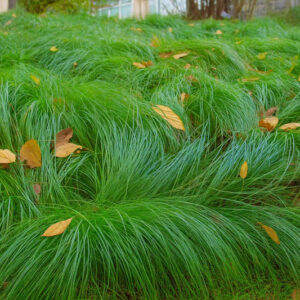
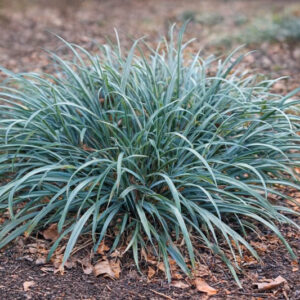
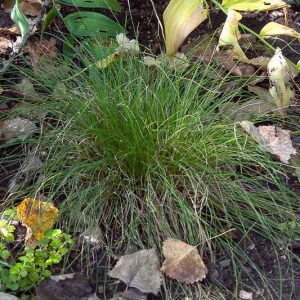
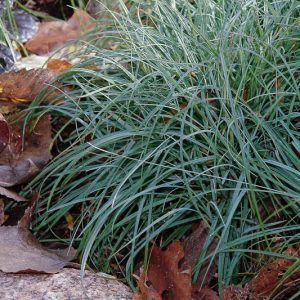
Carex blanda is a low, mounded woodland sedge with narrow, bright to medium green leaves and a soft, fountain like habit. Each clump sends up arching blades and short flower stalks that carry delicate, pale green to tan spikes in late spring. It reads like a fine textured grass but belongs to the sedge family.
This wood sedge is a classic example of a plant that quietly does the heavy lifting in a landscape. It is not about flashy flowers. Instead, it gives you a durable, living mulch that fills gaps, knits together tree roots, and creates a calm, natural woodland floor effect beneath taller perennials, shrubs, and canopy trees.
Common wood sedge is widely distributed across eastern and central North America. It is found from parts of the Great Plains and Midwest through the Ohio Valley, the Mid Atlantic, and into the Northeast and Southeast, with populations extending into adjacent regions of southern Canada. In the wild you will see it in:
This broad native range is the reason Carex blanda feels at home in many different garden soils and light levels. Best Shade Plants for Texas Yards (That Actually Thrive, Not Sulk)
Carex blanda starts as neat tufts, usually 6 to 20 inches tall (15-50 cm), and then slowly spreads to 12-24 inches (30-60 cm) by short rhizomes and self seeding, especially if there is bare, open soil. In average garden conditions it forms patterned drifts rather than an instant carpet. Over several seasons, clumps will gently knit into a continuous green groundcover, especially where mowing or foot traffic is light.
Growth rate is generally described as moderate to fast in moist, rich soil and moderate in drier, tougher spots.
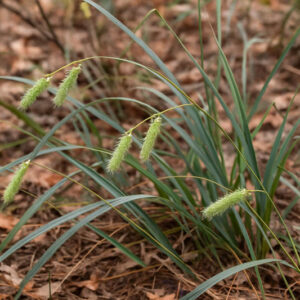
Flowering may be subtle, but it adds fine texture and ecological value. In late spring into early summer, slender stems rise just above the foliage and hold a few narrow spikes. These carry the plant’s tiny flowers, followed by small, three sided fruits known as achenes. As seeds ripen, they provide food for songbirds and small mammals.
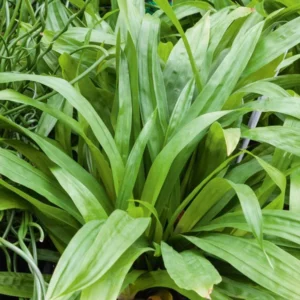
The foliage of common wood sedge is its main ornamental feature. Leaves are:
This fine, grassy texture blends easily with ferns, woodland wildflowers, small shrubs, and other native sedges. It softens hard edges along paths, rock walls, and tree trunks.
Carex blanda is hardy in roughly USDA Zones 3 to 9. It handles cold winters and summer heat when sited correctly. Like many cool season sedges, it does most of its active growing in the cooler parts of spring and fall, then quietly coasts through summer.
This sedge is one of the most versatile native groundcovers for shade and part shade. You can use common wood sedge in many ways:
Sedges are quietly powerful players in native ecosystems, and Carex blanda is no exception. Its foliage and seeds support a wide array of wildlife:
Because a sedge lawn or groundcover is rarely heavily fertilized or treated with pesticides, it can become a safe base layer for a larger wildlife friendly garden.
Carex blanda is usually listed as deer resistant and rabbit resistant. The tough, fibrous foliage is not a first choice snack, which makes wood sedge especially useful in landscapes where browsing pressure is high. As always, very hungry animals may occasionally sample new growth, but long term damage is uncommon.
Common wood sedge likes some moisture, especially as it establishes, but it is surprisingly tough once its roots are down. In deep shade and decent soil it can cope with short dry periods, one of the hardest conditions in gardening, especially under thirsty trees. In sunnier spots, it appreciates more consistent moisture or a soil with some organic matter.
Carex blanda is not commonly listed as a toxic plant for humans or pets in major references. Like most ornamental sedges and grasses, it is best treated as non edible. Casual contact while gardening is fine, but do not encourage pets or children to chew on leaves or seed heads. If significant ingestion occurs, reach out to a medical or veterinary professional for guidance.
Within its native and adapted range, common wood sedge is generally considered well behaved but vigorous. In open, rich, moist soil it can seed around and form broad patches. In tighter plantings and drier ground it acts more like a clumping grass. Seedlings are easy to thin or transplant, and light editing keeps it where you want it. In most gardens, its spreading habit is a benefit, helping to cover soil and deter weeds.
Overall, Carex blanda care is minimal: give it suitable light and medium moisture, water it well through the first growing season, and lightly tidy the foliage once a year.
Plant Carex blanda where it gets part shade to shade for the happiest plants.
One of the biggest selling points of common wood sedge is its willingness to grow in less than perfect soil.
Water needs are moderate.
As with most perennials, deep, infrequent soaking is better than frequent, shallow watering.
Carex blanda is adapted to natural woodland soils and does not need heavy feeding.
Mulch is helpful while plants fill in, but over time the sedge itself becomes a living mulch.
Maintenance on common wood sedge is low and flexible.
Because Carex blanda spreads naturally, you rarely need to propagate it on purpose, but it is easy if you want more plants.
In the right site, common wood sedge is typically a trouble free, low maintenance perennial. Problems are rare but may include:
Carex blanda, commonly called common wood sedge or eastern woodland sedge, is a low, clump-forming perennial sedge native to much of eastern and central North America. It looks like a fine-textured grass, thrives in part shade to shade, and is widely used as a tough, ecological groundcover in woodland gardens, rain gardens, and lawn-alternative plantings.
Carex blanda is a true sedge, not a grass. It belongs to the sedge family (Cyperaceae) and has the typical triangular stems and clustered flower spikes of sedges, even though it is often used in place of ornamental grasses or turf in shady areas.
Carex blanda is generally hardy in USDA Zones 3 to 9. It tolerates cold winters and summer heat when planted in suitable light and soil conditions, which makes it useful across a broad geographical range.
Carex blanda performs best in part shade to shade, especially in warmer regions. It can tolerate full sun in cooler climates or in consistently moist soil, but extended hot, dry sun can stress plants and cause foliage to brown.
Common wood sedge prefers moist to average, well-drained to mesic soils, but it is very adaptable and will grow in clay, loam, rocky, or compacted sites. It works well in rain gardens and on slopes where erosion control and root density are important.
Once established, Carex blanda offers good drought tolerance for a woodland sedge, especially in shade or part shade. It prefers some moisture but usually survives short dry periods without irrigation, although foliage may look fresher with occasional deep watering in prolonged drought.
Carex blanda is commonly described as deer and rabbit resistant. Its fibrous, narrow leaves are not a preferred food source, so browsing pressure is usually light compared to more tender perennials. However, no plant is completely deer proof, and very hungry animals may still nibble occasionally.
Yes. In light shade to part shade, closely spaced plantings of Carex blanda can be managed as a low-input lawn alternative. It typically needs far less water and fertilizer than turfgrass and can be left unmown for a natural meadow look or mown lightly once or twice a year for a tidier, turf-like appearance.
Updated: November 2025 • Reviewed by Gardenia Editors
| Hardiness |
3 - 9 |
|---|---|
| Plant Type | Ornamental Grasses |
| Plant Family | Cyperaceae |
| Genus | Carex |
| Common names | Sedge |
| Exposure | Full Sun, Partial Sun, Shade |
| Season of Interest | Spring (Late), Summer (Early, Mid, Late), Fall |
| Height | 6" - 2' (15cm - 60cm) |
| Spread | 1' - 2' (30cm - 60cm) |
| Spacing | 24" - 36" (60cm - 90cm) |
| Maintenance | Low |
| Water Needs | Low, Average |
| Soil Type | Clay, Loam, Sand |
| Soil pH | Acid, Alkaline, Neutral |
| Soil Drainage | Moist but Well-Drained, Well-Drained |
| Characteristics | Showy, Evergreen, Semi-Evergreen |
| Native Plants | United States, Northeast, Pennsylvania, Rhode Island, Vermont, Connecticut, Delaware, Maine, Massachusetts, Maryland, New Hampshire, New Jersey, New York, Illinois, Indiana, Iowa, Kansas, Michigan, Midwest, Minnesota, Missouri, Nebraska, North Dakota, Ohio, South Dakota, Wisconsin, Southeast, Louisiana, Mississippi, North Carolina, South Carolina, Tennessee, Virginia, West Virginia, Alabama, Arkansas, Florida, Georgia, Kentucky, Southwest, Texas, New Mexico, Oklahoma, Rocky Mountains, Wyoming |
| Tolerances | Full Shade, Drought, Deer, Rabbit, Dry Soil, Fire |
| Attracts | Bees, Butterflies, Birds |
| Garden Uses | Banks And Slopes, Ground Covers, Rain Gardens, Underplanting Roses And Shrubs |
| Toxic to Humans | No known toxicity |
| Toxic to Cats | No known toxicity |
| Toxic to Dogs | No known toxicity |
| Toxic to Horses | No known toxicity |


| Hardiness |
3 - 9 |
|---|---|
| Plant Type | Ornamental Grasses |
| Plant Family | Cyperaceae |
| Genus | Carex |
| Common names | Sedge |
| Exposure | Full Sun, Partial Sun, Shade |
| Season of Interest | Spring (Late), Summer (Early, Mid, Late), Fall |
| Height | 6" - 2' (15cm - 60cm) |
| Spread | 1' - 2' (30cm - 60cm) |
| Spacing | 24" - 36" (60cm - 90cm) |
| Maintenance | Low |
| Water Needs | Low, Average |
| Soil Type | Clay, Loam, Sand |
| Soil pH | Acid, Alkaline, Neutral |
| Soil Drainage | Moist but Well-Drained, Well-Drained |
| Characteristics | Showy, Evergreen, Semi-Evergreen |
| Native Plants | United States, Northeast, Pennsylvania, Rhode Island, Vermont, Connecticut, Delaware, Maine, Massachusetts, Maryland, New Hampshire, New Jersey, New York, Illinois, Indiana, Iowa, Kansas, Michigan, Midwest, Minnesota, Missouri, Nebraska, North Dakota, Ohio, South Dakota, Wisconsin, Southeast, Louisiana, Mississippi, North Carolina, South Carolina, Tennessee, Virginia, West Virginia, Alabama, Arkansas, Florida, Georgia, Kentucky, Southwest, Texas, New Mexico, Oklahoma, Rocky Mountains, Wyoming |
| Tolerances | Full Shade, Drought, Deer, Rabbit, Dry Soil, Fire |
| Attracts | Bees, Butterflies, Birds |
| Garden Uses | Banks And Slopes, Ground Covers, Rain Gardens, Underplanting Roses And Shrubs |
| Toxic to Humans | No known toxicity |
| Toxic to Cats | No known toxicity |
| Toxic to Dogs | No known toxicity |
| Toxic to Horses | No known toxicity |
How many Carex blanda (Common Wood Sedge) do I need for my garden?
| Plant | Quantity | |
|---|---|---|
| Carex blanda (Common Wood Sedge) | N/A | Buy Plants |
Create a membership account to save your garden designs and to view them on any device.
Becoming a contributing member of Gardenia is easy and can be done in just a few minutes. If you provide us with your name, email address and the payment of a modest $25 annual membership fee, you will become a full member, enabling you to design and save up to 25 of your garden design ideas.
Join now and start creating your dream garden!
Create a membership account to save your garden designs and to view them on any device.
Becoming a contributing member of Gardenia is easy and can be done in just a few minutes. If you provide us with your name, email address and the payment of a modest $25 annual membership fee, you will become a full member, enabling you to design and save up to 25 of your garden design ideas.
Join now and start creating your dream garden!