Southern Waxy Sedge, Blue Sedge, Clustered Sedge, Blue Wax Sedge, Waxy Sedge
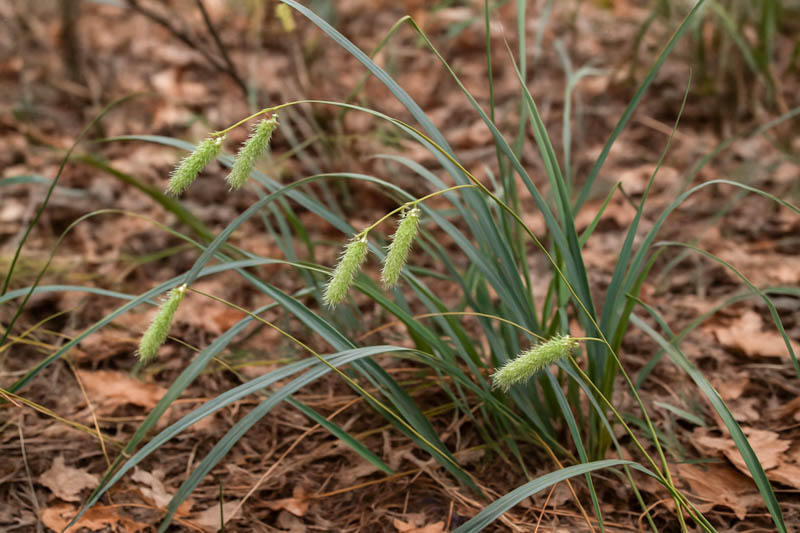


Looking for a tough, blue green, grass like plant that loves wet spots, laughs at heavy rain, and still supports wildlife? Say hello to Carex glaucescens, commonly known as southern waxy sedge, blue sedge, or clustered sedge. This native perennial sedge forms upright clumps of glaucous blue green blades topped with dangling, waxy seed spikes. Carex glaucescens care is simple: plant it in consistently moist to wet soil, give it full sun to light shade, and let it go to work stabilizing soil and feeding birds. It is an excellent choice for rain gardens, pond and stream edges, wet meadows, bioswales, ditches, and naturalized wetland plantings across much of the southeastern United States.
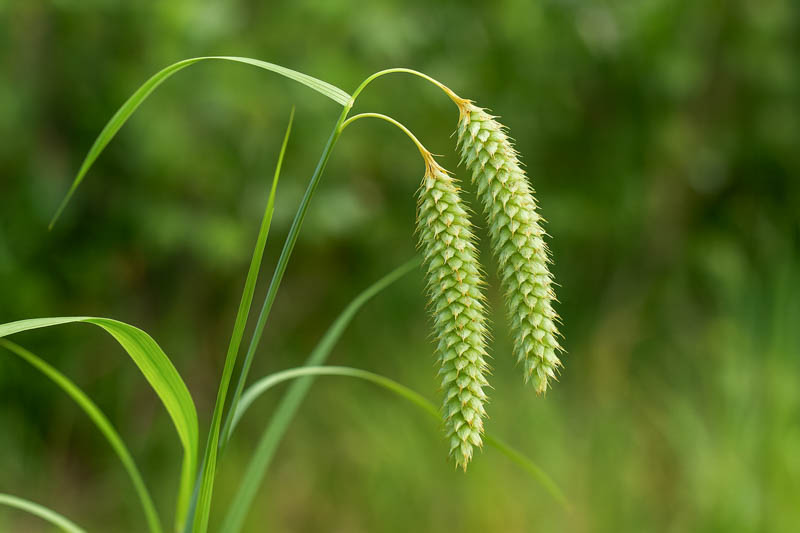
Summary: Upright, blue green native sedge with a waxy, glaucous look and graceful, drooping seed clusters that shine in wet, sunny to lightly shaded sites.
Use: Rain gardens, pond and stream margins, wet meadows, swales, ditches, low spots in lawns, naturalized wetland edges, and wildlife friendly plantings.
Highlight: Thrives in moist to wet soil, tolerates periodic flooding, and delivers striking blue gray seed heads that stand out in native meadow mixes and stormwater plantings.
Note: Deer resistant, low maintenance, and durable. Clump forming with short rhizomes and self seeding that can slowly create bold drifts in the right conditions.
| Botanical Name | Carex glaucescens Elliott |
|---|---|
| Family | Cyperaceae (sedge family) |
| Common Names | Southern waxy sedge, blue sedge, clustered sedge, pendulous sedge |
| Native Range | Native to the Atlantic and Gulf Coastal Plains and adjacent regions, from Maryland and Virginia south through the Southeast to Florida, and west to Texas and southeastern Oklahoma, extending inland into Arkansas and Tennessee. Found in swamps, bogs, wet pine savannas, pond margins, wet meadows, ditches, and other acidic, peaty, and seasonally wet habitats. |
| Plant Type and Habit | Perennial, clump forming sedge with fibrous roots and short rhizomes; upright, grass like foliage topped with drooping spikes of fruits. |
| Hardiness (USDA) | Zones 6 to 9 in most garden references, with some reports of success into warmer coastal climates when moisture is high. |
| Size | Typically 2 to 4 feet tall and about 1.5 to 2 feet wide, forming bold vertical clumps. In rich wet soils, flowering stalks may approach 5 feet. |
| Sun and Exposure | Full sun to part shade. In the wild, often grows in open wetlands and sunny pond margins; tolerates light shade in consistently moist soil. |
| Soil | Prefers moist to wet, acidic, organic, or sandy soils. Common in peaty bogs, wet pine savannas, blackwater swamps, wet meadows, and ditches. Adapts to a range of textures if moisture is reliable. |
| Seasonal Interest | Blue green foliage from spring through frost; dramatic, drooping, glaucous seed spikes in late spring to summer that age to tan and persist, adding texture into fall. |
| Primary Uses | Rain gardens, stormwater swales, pond and stream banks, wetland and meadow restorations, naturalistic borders, and Carex glaucescens planting strips in low, wet spots where turf fails. |
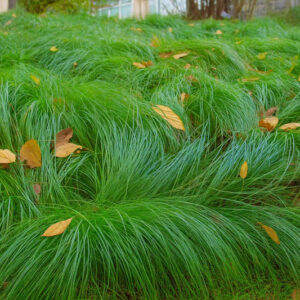
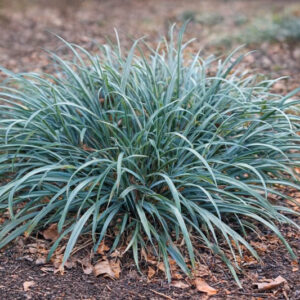
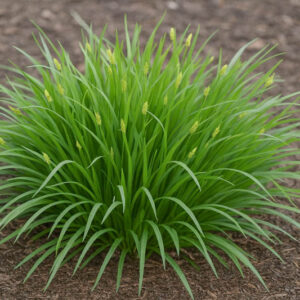
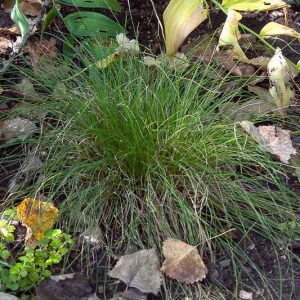
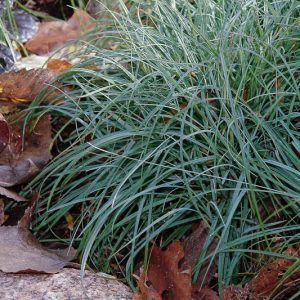
Carex glaucescens is a tall, clumping wetland sedge with blue green, waxy foliage and distinctive hanging seed clusters. It has solid, triangular stems and narrow leaves that rise in a fan from the base, then arch gently, creating bold, vertical tufts with a fine texture. The species epithet “glaucescens” refers to the glaucous, bluish coating on the sheaths and fruits, which gives this sedge its characteristic cool tone.
Above the foliage, slender stalks carry a terminal spike of male flowers with multiple drooping female spikes below. As fruits develop, these pendulous spikelets turn a soft blue gray and then tan, catching the light and adding movement in the breeze. In a mass, southern waxy sedge can be a real focal point in a wet border or basin.
Southern waxy sedge is native to the southeastern and south central United States. It occurs from Maryland south along the Atlantic Coastal Plain to peninsular Florida, and west through the Gulf Coastal Plain to Texas and southeastern Oklahoma, with inland populations in Arkansas and Tennessee.
In the wild, you are likely to find Carex glaucescens in:
These natural habitats explain why Carex glaucescens prefers wet soils and why it thrives in rain gardens, stormwater basins, and the constantly moist edges of ponds and creeks in home landscapes. Best Shade Plants for Texas Yards (That Actually Thrive, Not Sulk)
Carex glaucescens is an erect, clump forming sedge. Mature clumps usually stand 2 to 4 feet tall and about 2 feet wide, though fertile soils and full sun can push flowering stems even taller.
This sedge spreads slowly by short rhizomes and by seed. In a designed planting, it behaves more like a well mannered bunch grass than a runner. Over time, seedlings may appear nearby, especially in open, wet soil, gradually forming a loose colony that is easy to edit or thin.
Flowering typically begins in spring to early summer, with blooming ranges often noted from April into early summer depending on latitude. Slender stalks rise above the foliage, each bearing one staminate (male) spike at the tip and several pistillate (female) spikes below. The female spikes hang on short stalks and are densely packed with fruits enclosed in flask shaped sacs.
As the fruits mature in late spring and summer, those pendulous spikes take on a blue gray, glaucous look, making this sedge easy to recognize even from a distance. The seed heads eventually turn tan and can persist into fall, offering subtle structure and seed for wildlife.
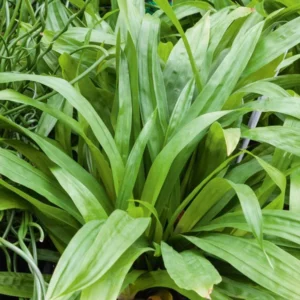
The foliage is where Carex glaucescens really shines as an ornamental blue sedge. Leaves are:
In a wet meadow or along a pond edge, this blue green foliage contrasts beautifully with bright green grasses, golden flowers, and dark water. It is equally at home in a contemporary rain garden or a more wild, naturalistic planting.
Most horticultural references place Carex glaucescens in roughly USDA Zones 6 to 9, though it is naturally distributed in many parts of the Southeast and lower Mid Atlantic. It tolerates heat and humidity very well as long as soil moisture is adequate. In milder winters it may hold foliage late into the season; in colder climates it often goes dormant and resprouts strongly in spring.
Because it loves water and builds strong, fibrous roots, Carex glaucescens is a workhorse sedge for wet sites. You can use it in many ways:
Like many native sedges, Carex glaucescens plays a quiet but important role in a wildlife friendly garden:
Because a Carex glaucescens matrix generally needs little fertilizer and no pesticides, it helps create safer habitat in and around water.
Southern waxy sedge is often noted as deer resistant to moderately deer resistant. Its narrow, fibrous leaves are not top choice forage compared to broad leaved perennials. In most gardens, browsing damage is occasional and cosmetic at worst.
Carex glaucescens prefers moist to wet soil, but established clumps can handle short dry spells, especially in heavier soils or where roots reach deeper moisture. It will not be happy in hot, dry, sandy soil without supplemental water, but in real life rain gardens and pond edges it usually bounces back well after dry periods.
This species is not widely reported as toxic to humans or pets in major native plant references. As with most ornamental sedges, treat it as non edible. Normal handling and gardening contact are fine, but it is wise to discourage pets or children from chewing on any ornamental plants.
Within its native and adapted range, Carex glaucescens is generally considered well behaved. It will slowly spread where conditions are ideal, both by short rhizomes and by self sown seedlings in bare, wet soil, but it does not act like an aggressive invasive. Seedlings are easy to recognize and move, making it straightforward to manage colony size.
Overall, Carex glaucescens care is low effort if you match it with the right site: sun to light shade, steady moisture, and soil that does not bake dry.
Plant Carex glaucescens where it gets:
One of the big advantages of southern waxy sedge is its adaptability across wet site soils:
This is a wetland sedge, so think “never bone dry” for best performance.
If you see foliage browning at the tips, it may be a sign that the site is staying too dry for this species.
Carex glaucescens is adapted to natural wetland soils and does not need high fertility.
Mulch can help during establishment, especially in exposed, sunny, wet sites.
Carex glaucescens maintenance is refreshingly low.
Southern waxy sedge spreads on its own by seed, but you can also propagate it by division.
In appropriate conditions, Carex glaucescens is generally a trouble free native sedge.
Updated: November 2025
Key sources for horticultural details: NCBG and UNC FSUS taxon notes on Carex glaucescens, USDA PLANTS, NC State wetland plant guide, Georgia native grasses and sedges bulletin, and other recent native sedge references.
| Hardiness |
6 - 9 |
|---|---|
| Plant Type | Ornamental Grasses |
| Plant Family | Cyperaceae |
| Genus | Carex |
| Common names | Sedge |
| Exposure | Full Sun, Partial Sun |
| Season of Interest | Spring (Late), Summer (Early, Mid, Late), Fall |
| Height | 2' - 4' (60cm - 120cm) |
| Spread | 1' - 2' (30cm - 60cm) |
| Spacing | 18" - 24" (50cm - 60cm) |
| Maintenance | Low |
| Water Needs | Average, High |
| Soil Type | Clay, Loam |
| Soil pH | Acid, Neutral |
| Soil Drainage | Moist but Well-Drained |
| Characteristics | Showy |
| Native Plants | United States, Southeast, Louisiana, Mississippi, North Carolina, South Carolina, Tennessee, Virginia, Alabama, Florida, Georgia, Southwest, Texas |
| Tolerances | Wet Soil, Fire |
| Attracts | Butterflies, Birds |
| Garden Uses | Banks And Slopes, Bog Gardens, Ground Covers, Ponds And Streams, Rain Gardens |
| Garden Styles | Informal and Cottage, Prairie and Meadow |
| Toxic to Humans | No known toxicity |
| Toxic to Cats | No known toxicity |
| Toxic to Dogs | No known toxicity |
| Toxic to Horses | No known toxicity |


| Hardiness |
6 - 9 |
|---|---|
| Plant Type | Ornamental Grasses |
| Plant Family | Cyperaceae |
| Genus | Carex |
| Common names | Sedge |
| Exposure | Full Sun, Partial Sun |
| Season of Interest | Spring (Late), Summer (Early, Mid, Late), Fall |
| Height | 2' - 4' (60cm - 120cm) |
| Spread | 1' - 2' (30cm - 60cm) |
| Spacing | 18" - 24" (50cm - 60cm) |
| Maintenance | Low |
| Water Needs | Average, High |
| Soil Type | Clay, Loam |
| Soil pH | Acid, Neutral |
| Soil Drainage | Moist but Well-Drained |
| Characteristics | Showy |
| Native Plants | United States, Southeast, Louisiana, Mississippi, North Carolina, South Carolina, Tennessee, Virginia, Alabama, Florida, Georgia, Southwest, Texas |
| Tolerances | Wet Soil, Fire |
| Attracts | Butterflies, Birds |
| Garden Uses | Banks And Slopes, Bog Gardens, Ground Covers, Ponds And Streams, Rain Gardens |
| Garden Styles | Informal and Cottage, Prairie and Meadow |
| Toxic to Humans | No known toxicity |
| Toxic to Cats | No known toxicity |
| Toxic to Dogs | No known toxicity |
| Toxic to Horses | No known toxicity |
How many Carex glaucescens (Southern Waxy Sedge) do I need for my garden?
| Plant | Quantity | |
|---|---|---|
| Carex glaucescens (Southern Waxy Sedge) | N/A | Buy Plants |
Create a membership account to save your garden designs and to view them on any device.
Becoming a contributing member of Gardenia is easy and can be done in just a few minutes. If you provide us with your name, email address and the payment of a modest $25 annual membership fee, you will become a full member, enabling you to design and save up to 25 of your garden design ideas.
Join now and start creating your dream garden!
Create a membership account to save your garden designs and to view them on any device.
Becoming a contributing member of Gardenia is easy and can be done in just a few minutes. If you provide us with your name, email address and the payment of a modest $25 annual membership fee, you will become a full member, enabling you to design and save up to 25 of your garden design ideas.
Join now and start creating your dream garden!