Blue Wood Sedge, Thinfruit Sedge, Thin-fruit Sedge, Meadow Sedge, Blue Sedge
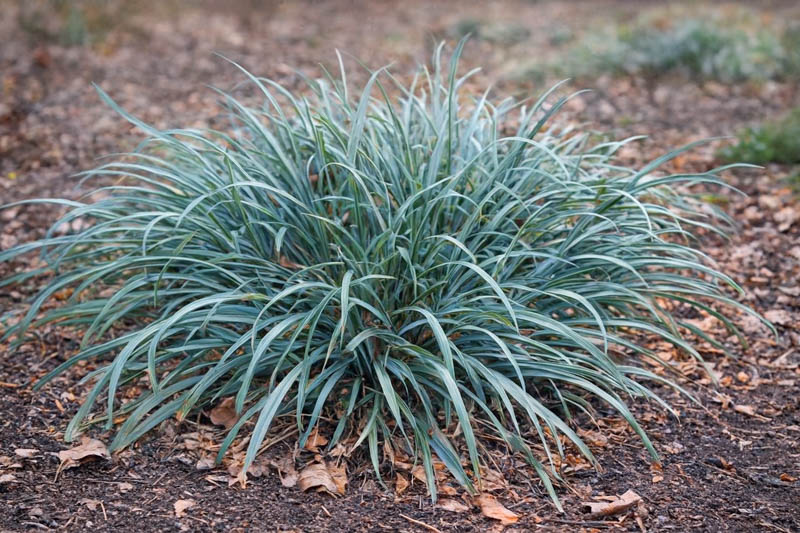


Want a graceful, blue green, grass like plant that actually enjoys shade, shrugs off heavy soil, and still supports wildlife? Meet Carex flaccosperma, widely known as blue wood sedge, meadow sedge, or thinfruit sedge. Carex flaccosperma care is delightfully low effort: plant it in moist shade, keep it watered the first season, and let it settle into a soft blue carpet. This adaptable native perennial sedge forms tidy clumps of arching, blue green blades that thrive in part shade to full shade and medium to moist soil. It is a standout choice for woodland gardens, rain gardens, shaded borders, stream and pond edges, slopes, and low mow lawn replacement in shade across much of the central and southeastern United States.
Summary: Compact, blue green native sedge that forms clumps and slowly spreads to make a soft, evergreen to semi evergreen groundcover in shade.
Use: Shade gardens, woodland borders, rain gardens, stream and pond edges, moist meadows, and low input lawn alternatives in part shade.
Highlight: Thrives in part shade to full shade, loves moist soil but handles average garden conditions, with elegant blue green foliage that brightens dark corners and looks good year round in many climates.
Note: Deer resistant, low maintenance, and well behaved. Spreads slowly by short rhizomes to form a durable living mulch in the right conditions.
| Botanical Name | Carex flaccosperma Dewey |
|---|---|
| Family | Cyperaceae (sedge family) |
| Common Names | Blue wood sedge, meadow sedge, thinfruit sedge, blue woodland sedge |
| Native Range | Native to the south-central and southeastern United States, from Virginia and the Carolinas south to the Florida Panhandle and west to Texas and Oklahoma, north to southern Missouri and Illinois, in moist woods, bottomlands, meadows, and floodplains. |
| Plant Type and Habit | Cool season perennial sedge, clump forming with short rhizomes, gradually creating low colonies of arching, blue green foliage. |
| Hardiness (USDA) | Zones 5 to 8 in most references. |
| Size | Typically 6 to 12 inches tall and about 8 to 12 inches wide, forming compact clumps that slowly knit together. |
| Sun and Exposure | Part shade to full shade is best. Tolerates some morning or dappled sun if soil stays moist; foliage may scorch in hot, dry full sun. |
| Soil | Thrives in medium to wet, well drained to heavy soils, including loam and clay. Prefers moist, rich woodland soil but adapts to average garden soil and can tolerate short dry periods once established. |
| Seasonal Interest | Evergreen to semi evergreen foliage in many climates; greenish white flowers and seed spikes in spring to early summer add subtle texture. |
| Primary Uses | Shade groundcover, woodland gardens, rain gardens, bioswales, stream and pond margins, shaded slopes and banks, path edging, and Carex flaccosperma lawn alternative in part shade. |
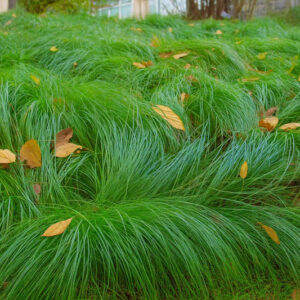
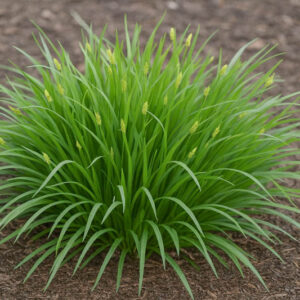
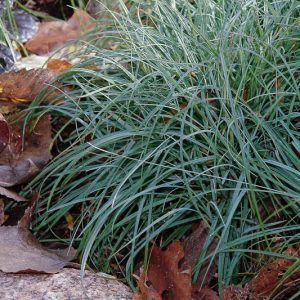
Carex flaccosperma is a low, clumping woodland sedge with narrow, blue green leaves and a relaxed, fountain like habit. Clumps send up arching blades about half an inch wide, creating soft hummocks of cool color that read almost like miniature ornamental grasses. In spring, the foliage emerges fresh green and often takes on a powdery blue or glaucous cast as the season progresses, especially in bright shade.
This blue wood sedge is the kind of plant that quietly makes a planting look finished. Instead of showy flowers, it gives you a durable, living mulch that ties together shrubs, perennials, and woodland trees. The blue green leaves are particularly effective at brightening shady corners and pairing with purple or silver foliage plants.
Blue wood sedge is native to the south-central and southeastern United States. Its natural distribution runs from Virginia and the Carolinas south through Georgia and the Florida Panhandle, and west into Alabama, Mississippi, Louisiana, Texas, Arkansas, southern Missouri, southern Illinois, and parts of Kansas and Oklahoma. In the wild, you are likely to find it in:
These natural habitats explain why Carex flaccosperma feels at home in moist, shady garden sites, and why it also copes surprisingly well with average soils once established. Best Shade Plants for Texas Yards (That Actually Thrive, Not Sulk)
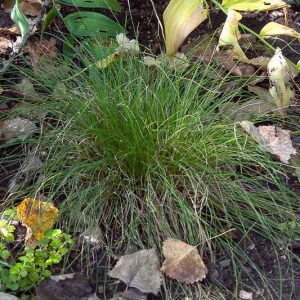
Carex flaccosperma starts as a neat tuft, usually 6 to 12 inches tall (15 to 30 cm) and 8 to 12 inches (20 to 30 cm) wide, and then slowly spreads via short rhizomes to form a loose colony. It is generally described as clump forming to slowly rhizomatous rather than aggressively running.
In rich, consistently moist soil, clumps will expand more quickly and begin to touch within a few seasons, creating a soft blue green groundcover. In drier or leaner soils, the growth rate is moderate, and the plant behaves more like a stable clump, especially if surrounded by other perennials.
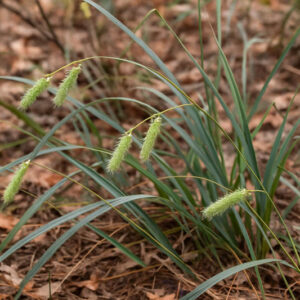
As with many sedges, the flowers of blue wood sedge are more about texture than show. In spring to early summer, slender stems rise slightly above the foliage and carry narrow, greenish white spikes. These are followed by small, thin fruits that give the species its common name “thinfruit sedge.”
While the flowers are not ornamental in a traditional sense, they add a light, airy quality over the foliage and contribute to the plant’s value as a native grass like species for wildlife friendly plantings.
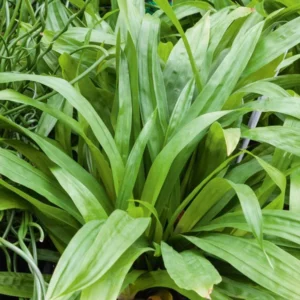
The real star feature of Carex flaccosperma is its foliage. Leaves are:
This combination of fine texture and cool color makes blue wood sedge ideal for mixing with broad leaved perennials like hostas and heucheras, feathery ferns, and woodland wildflowers. It softens hard edges along walks, steps, rocks, and water features.
Carex flaccosperma is generally hardy in USDA Zones 5 to 8. It tolerates winter cold typical of the Mid Atlantic and lower Midwest and appreciates summer heat when given moisture and shade. In warmer zones it is often fully evergreen, while in colder regions some foliage may burn or thin in winter and then rebound in spring with fresh growth.
Thanks to its combination of shade tolerance, moisture love, and attractive foliage, blue wood sedge is one of the most useful native sedges for shade gardens. You can use Carex flaccosperma in many ways:
Sedges may not look like typical pollinator plants, but they are crucial for many native insects and birds. Carex flaccosperma contributes to a wildlife friendly garden by providing:
Carex flaccosperma is commonly listed as deer resistant, and many growers also note relatively low damage from rabbits. The fibrous, narrow leaves are not a top choice food compared to more tender perennials. While no plant is completely deer proof, blue wood sedge generally experiences only light browsing, making it a smart choice for high deer pressure shade gardens.
Blue wood sedge prefers medium to moist soil, but once established it can endure short dry periods, especially in shade or dappled light. In richer, heavier soils it often coasts through normal summer dry spells without extra water. In brighter sites or sandy soil, occasional deep watering in extended drought will keep foliage looking its best.
Carex flaccosperma is not commonly listed as toxic to humans or pets in major references. As with most ornamental sedges, it is best treated as non edible. Normal gardening contact is fine, but children and pets should not be encouraged to chew on leaves or seed heads. If significant ingestion occurs, consult a medical or veterinary professional.
Within its native and adapted range, blue wood sedge is generally considered well behaved. It spreads slowly by short rhizomes and occasional self seeding, especially in moist, fertile soil with some bare ground, but it does not behave like a truly invasive species. Seedlings are easy to thin or transplant, and light editing keeps colonies exactly where you want them.
Overall, Carex flaccosperma care is straightforward: give it shade or dappled sun, consistent moisture as it establishes, and a quick tidy in late winter.
Plant Carex flaccosperma where it gets part shade to full shade for the best performance.
One of the big selling points of blue wood sedge is its willingness to grow in a range of soil types, as long as moisture is reasonable.
Water needs are moderate.
Deep, occasional soaking is better than frequent, shallow watering, which encourages weak surface roots.
Carex flaccosperma is adapted to natural woodland soils and does not need heavy feeding.
Mulch is useful while plantings are filling in, but the sedge itself becomes a living mulch over time.
Maintenance for Carex flaccosperma is refreshingly low.
Blue wood sedge spreads on its own over time, but it is easy to propagate if you want more plants quickly.
In the right site, Carex flaccosperma is typically a trouble free, low maintenance perennial sedge. Problems are uncommon but may include:
Carex flaccosperma, often called blue wood sedge or thinfruit sedge, is a low, clump-forming native perennial sedge in the Cyperaceae family. It has narrow, blue-green to glaucous leaves, forms small mounds, and is used as a shade-tolerant groundcover, rain-garden plant, and lawn alternative in much of the southeastern and central United States.
Carex flaccosperma is a true sedge, not a grass. Like other Carex species, it has triangular stems, clustered flower spikes, and belongs to the sedge family (Cyperaceae). It is often used in similar ways to ornamental grasses or turf but is botanically distinct from true grasses (Poaceae).
Carex flaccosperma is native to the south-central and southeastern United States, with its range extending from New Jersey south through the Southeast and west into states such as Texas, Arkansas, Missouri, and Illinois. It naturally occurs in moist woodlands, swampy areas, bottomlands, and other damp to seasonally wet habitats.
Most horticultural references place Carex flaccosperma in USDA Zones 5 to 8, where it is reliably hardy. Some growers note it performing well in parts of Zone 4 in protected sites, but 5–8 is the widely accepted range for long-term landscape use.
Blue wood sedge typically grows about 6 to 12 inches tall (15–30 cm) and spreads 6 to 12 inches wide, forming low, rounded clumps. Over time, it slowly expands via short rhizomes into a loose patch or groundcover, especially in moist, rich soils.
Carex flaccosperma performs best in part shade to full shade. It can tolerate some morning or filtered sun if the soil stays consistently moist, but prolonged hot, dry sun can stress the plant and cause foliage to brown. In woodland gardens and along shaded stream banks, it is especially at home.
This sedge prefers medium to wet, consistently moist soils that are rich in organic matter. It tolerates a range of textures, including fine and medium soils, loam, and clay, and is often recommended for moist woodlands, swampy sites, rain gardens, bioswales, and stream or pond edges. Once established, it can handle brief dry spells, but it does not like to be bone dry for long.
In warmer parts of its range (roughly Zones 7–8), Carex flaccosperma is often functionally evergreen, keeping much of its foliage through winter. In colder climates it tends to be semi-evergreen, with some winter burn and partial dieback that can be cleaned up in early spring.
Blue wood sedge spreads slowly by short rhizomes and modest self-seeding. Most nursery and native-plant sources describe it as a clumping sedge that gradually forms a sturdy groundcover, not a rampant spreader. It is not considered invasive; seedlings and edges are easy to manage with light editing.
Yes. In part shade to shade with moist soil, closely spaced clumps of Carex flaccosperma make an effective low-input lawn alternative. It typically needs far less fertilizer and irrigation than turfgrass, and many gardeners simply shear or mow it lightly once or twice a year if they want a tidier look.
Carex flaccosperma is widely listed as deer resistant and often rabbit resistant as well. Its narrow, fibrous foliage is not a preferred food, so browsing is usually minimal compared to more tender perennials. As with any plant, very hungry animals may still sample it occasionally, but significant damage is uncommon.
Updated: November 2025 • Reviewed by Gardenia Editors
| Hardiness |
5 - 8 |
|---|---|
| Plant Type | Ornamental Grasses |
| Plant Family | Cyperaceae |
| Genus | Carex |
| Common names | Sedge |
| Exposure | Partial Sun, Shade |
| Season of Interest | Spring (Late), Summer (Early, Mid, Late), Fall |
| Height | 6" - 1' (15cm - 30cm) |
| Spread | 8" - 1' (20cm - 30cm) |
| Spacing | 12" (30cm) |
| Maintenance | Low |
| Water Needs | Average |
| Soil Type | Clay, Loam, Sand |
| Soil pH | Acid, Alkaline, Neutral |
| Soil Drainage | Moist but Well-Drained |
| Characteristics | Showy, Evergreen, Semi-Evergreen |
| Native Plants | United States, Northeast, Pennsylvania, Delaware, Maryland, New Jersey, Illinois, Indiana, Kansas, Midwest, Missouri, Southeast, Louisiana, Mississippi, North Carolina, South Carolina, Virginia, Alabama, Arkansas, Florida, Georgia, Southwest, Texas |
| Tolerances | Full Shade, Deer, Fire |
| Attracts | Bees, Butterflies, Birds |
| Garden Uses | Pathways, Banks And Slopes, Ground Covers, Ponds And Streams, Rain Gardens |
| Toxic to Humans | No known toxicity |
| Toxic to Cats | No known toxicity |
| Toxic to Dogs | No known toxicity |
| Toxic to Horses | No known toxicity |


| Hardiness |
5 - 8 |
|---|---|
| Plant Type | Ornamental Grasses |
| Plant Family | Cyperaceae |
| Genus | Carex |
| Common names | Sedge |
| Exposure | Partial Sun, Shade |
| Season of Interest | Spring (Late), Summer (Early, Mid, Late), Fall |
| Height | 6" - 1' (15cm - 30cm) |
| Spread | 8" - 1' (20cm - 30cm) |
| Spacing | 12" (30cm) |
| Maintenance | Low |
| Water Needs | Average |
| Soil Type | Clay, Loam, Sand |
| Soil pH | Acid, Alkaline, Neutral |
| Soil Drainage | Moist but Well-Drained |
| Characteristics | Showy, Evergreen, Semi-Evergreen |
| Native Plants | United States, Northeast, Pennsylvania, Delaware, Maryland, New Jersey, Illinois, Indiana, Kansas, Midwest, Missouri, Southeast, Louisiana, Mississippi, North Carolina, South Carolina, Virginia, Alabama, Arkansas, Florida, Georgia, Southwest, Texas |
| Tolerances | Full Shade, Deer, Fire |
| Attracts | Bees, Butterflies, Birds |
| Garden Uses | Pathways, Banks And Slopes, Ground Covers, Ponds And Streams, Rain Gardens |
| Toxic to Humans | No known toxicity |
| Toxic to Cats | No known toxicity |
| Toxic to Dogs | No known toxicity |
| Toxic to Horses | No known toxicity |
How many Carex flaccosperma (Blue Wood Sedge) do I need for my garden?
| Plant | Quantity | |
|---|---|---|
| Carex flaccosperma (Blue Wood Sedge) | N/A | Buy Plants |
Create a membership account to save your garden designs and to view them on any device.
Becoming a contributing member of Gardenia is easy and can be done in just a few minutes. If you provide us with your name, email address and the payment of a modest $25 annual membership fee, you will become a full member, enabling you to design and save up to 25 of your garden design ideas.
Join now and start creating your dream garden!
Create a membership account to save your garden designs and to view them on any device.
Becoming a contributing member of Gardenia is easy and can be done in just a few minutes. If you provide us with your name, email address and the payment of a modest $25 annual membership fee, you will become a full member, enabling you to design and save up to 25 of your garden design ideas.
Join now and start creating your dream garden!