Chinese Gooseberry, Golden Kiwi, Kiwi, Kiwi Fruit, Actinidia chinensis var. latifolia, Actinidia chinensis var. rufopulpa, Actinidia chinensis var. jinggangshanensis, Actinidia multipetaloides
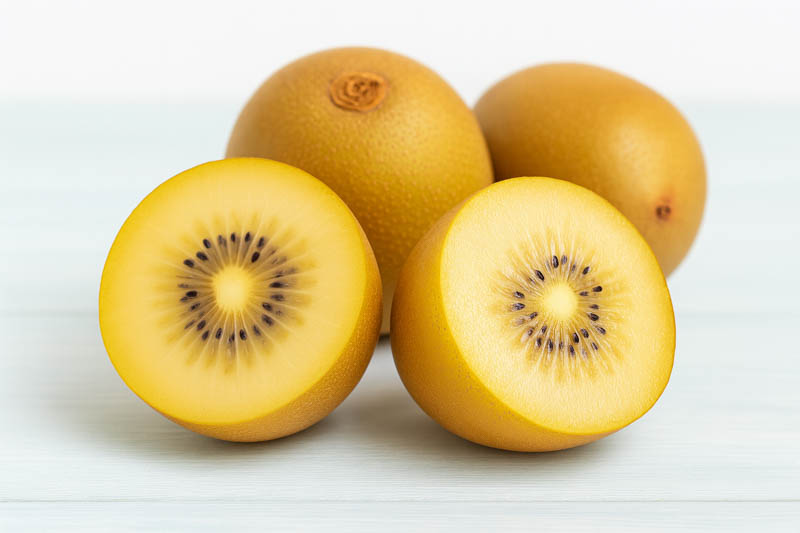
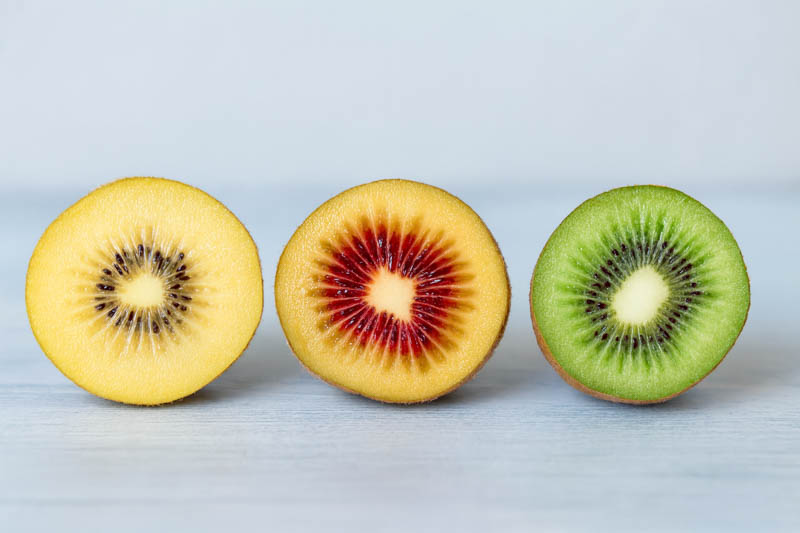
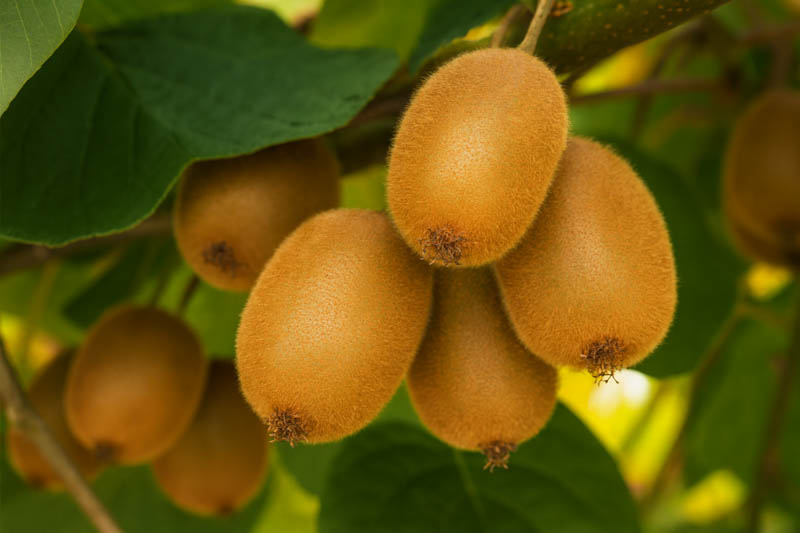
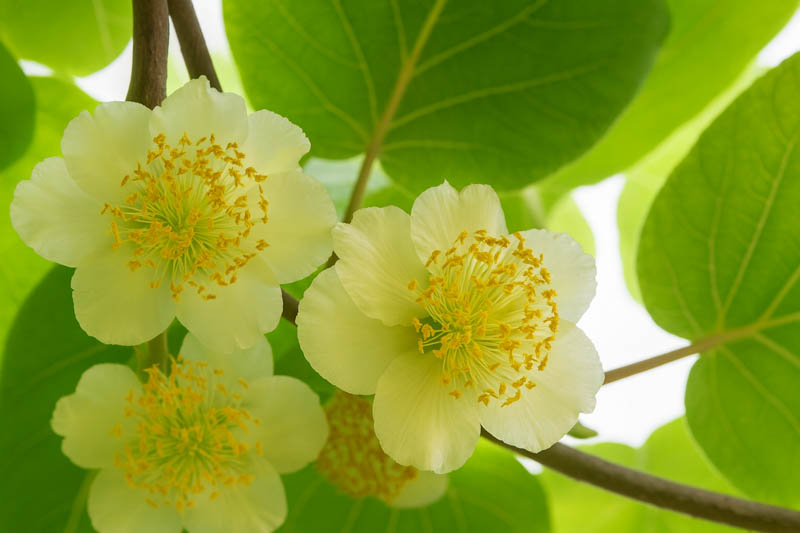
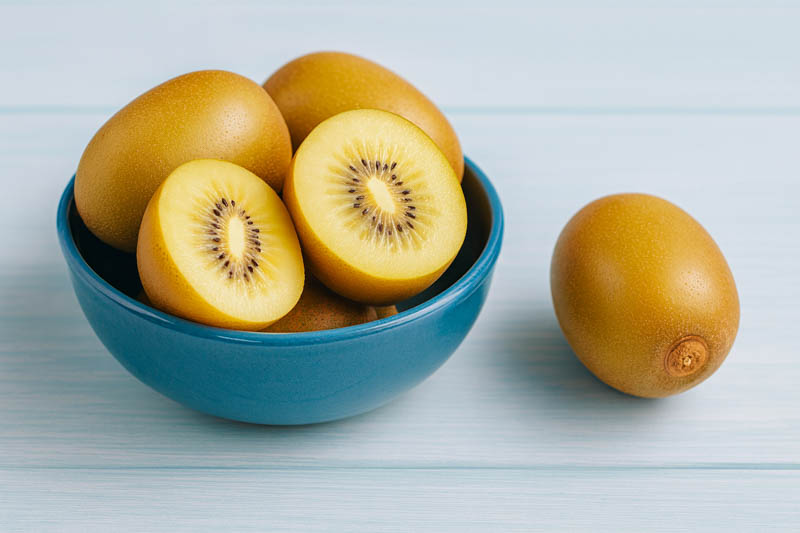


Summary: Sun-bright, tropical-sweet kiwifruit on a vigorous twining vine for pergolas and trellises. Golden flesh, smooth to lightly fuzzy bronze skin, and excellent off-vine ripening.
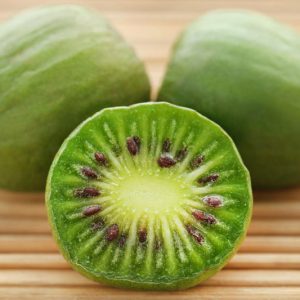
Taste: Sweet, low-acid — mango-pear with citrus notes.
Best for: Fresh eating, smoothies & desserts, drying, jam, edible shade/screens.
| Botanical & Common Names | Actinidia chinensis — golden kiwi, yellow kiwi, Chinese gooseberry |
|---|---|
| Plant Type & Habit | Deciduous, twining/climbing woody vine; vigorous |
| Best Zones (USDA) | 8–10 (7 in warm, sheltered sites with a long season) |
| Chill Requirement | ~600–850 hours (cultivar-dependent; generally lower than green kiwi) |
| Size / Spread with Support | ~15–30 ft (4.5–9 m) long × 8–12 ft (2.4–3.6 m) wide (can be larger) |
| Sun / Exposure | Full sun; shelter from strong winds and protect spring shoots from late frost |
| Soil & pH | Fertile, well-drained loam; pH ~6.0–7.5; avoid waterlogging/saline irrigation |
| Pollination | Dioecious. Plant ~1 diploid male for 6–8 females; match bloom time (e.g., CK3 ‘Meteor’). Hexaploid green kiwi males are not effective for golden females. |
| Harvest Window | Late summer to early fall; picks firm and finishes ripening off the vine |
| Primary Uses | Fresh eating, smoothies/desserts, drying, jam; edible arbors/screens |
Slice into a golden kiwi and you’ll see why it’s adored: sunshine-yellow flesh, tropical sweetness, and a silky bite. As the glamorous cousin of the classic green kiwi (Actinidia deliciosa), A. chinensis delivers luscious flavor and an elegant vine for arbors and pergolas. Use this guide to choose varieties, plant with confidence, and harvest golden bowls of fruit.
Actinidia chinensis, the golden kiwi, is a vigorous woody vine prized for its luscious fruit and ornamental appeal. With heart-shaped, mid-green leaves and a twining growth habit, it readily cloaks arbors, trellises, and sturdy fences.
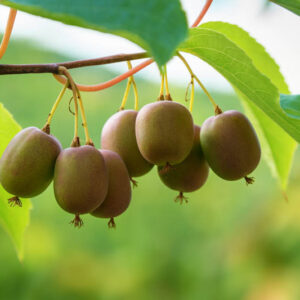
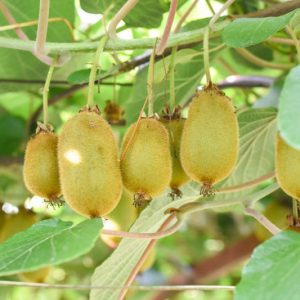
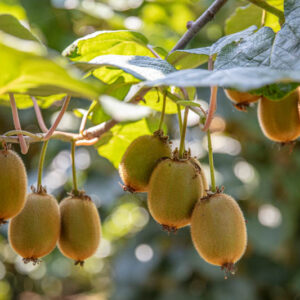
In late spring, vines carry clusters of creamy-white, lightly fragrant flowers. By late summer to early autumn, these mature into smooth to lightly fuzzy, bronze-skinned fruits with rich yellow to golden flesh packed with tiny edible seeds.
The flavor is sweet, low-acid, and tropical—often described as mango–pear with citrus notes.
Native to central–southern China, Actinidia chinensis was later developed for global markets by breeders (notably in New Zealand). Today major producers include China, New Zealand, Italy, and Chile.
Mature vines climb vigorously and can reach 30 feet (9 m) or more with support. Rapid annual growth makes them excellent for vertical gardening, shade arbors, and edible screens. Large, softly textured leaves provide bold summer foliage; pendant fruit clusters add autumn interest.
In fertile soil and full sun, young vines can extend 8–12 feet (2.4–3.6 m) per year. Grafted plants typically bear in 2–4 (sometimes 3–5) years; seed-grown vines take longer and are variable. Regular training and pruning control size and maximize light and fruiting wood.
With proper care, vines remain productive for decades—often 40–50+ years—while requiring only seasonal pruning and a sturdy support system.
Bloom is in late spring. Female flowers set fruit when pollinated by a compatible male vine (most golden kiwis are dioecious). Fruits are oval, 2–3 inches (5–7.5 cm), bronze-skinned with golden flesh, ripening from late summer into early fall depending on climate and cultivar. Fruit finishes ripening well off the vine.
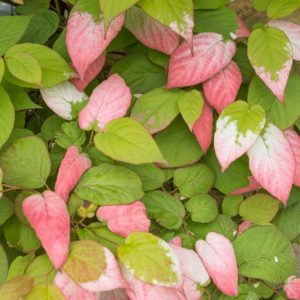
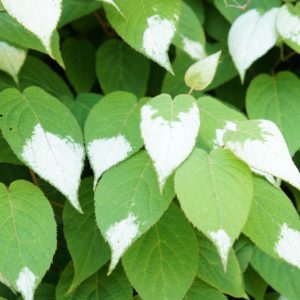
Dense foliage creates natural summer shade, while leaf drop in autumn reveals decorative fruit. Related species offer striking foliage, such as pink-variegated A. kolomikta and white-washed A. polygama.
Actinidia chinensis is generally hardy in USDA zones 8–10 (zone 7 in warm, sheltered sites with a long season) and is less cold-hardy than A. deliciosa.
Flowers attract bees and other pollinators. Ripe fruit can be targeted by birds, squirrels, raccoons, and deer; netting or timely harvest may be needed.
Fruits are edible when ripe; the smooth skin is commonly eaten on golden cultivars. Large quantities may cause mild gastrointestinal upset in some people. Kiwifruit allergy is not uncommon and may cross-react with latex and certain pollens.
Kiwifruit is generally safe and non-toxic for most pets (dogs/cats) in small, ripe portions. Can dogs eat kiwi? Benefits, risks, and easy treats ideas
A. chinensis is vigorous but not typically invasive when managed with pruning and training. Note: Actinidia arguta can be invasive in parts of the Northeastern U.S.—check local guidance.
Grower Quote:
“Our golden kiwi turned the pergola into living shade—and the late-summer harvest tastes like sunshine with a hint of mango. It’s a showpiece that feeds us, too.”
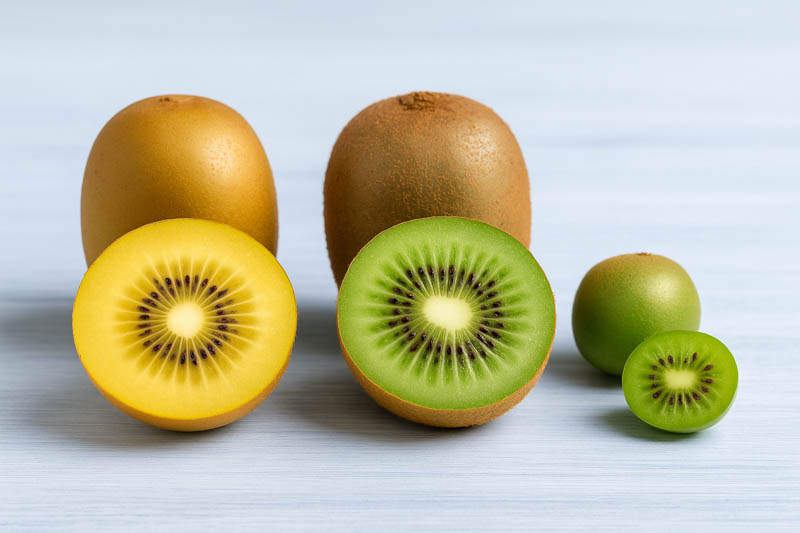
| Type | Species | Flesh & Skin | Fruit Size | Chill / Hardiness | Best Zones | Notes |
|---|---|---|---|---|---|---|
| Golden Kiwi | Actinidia chinensis | Sweet, low-acid yellow/gold flesh; smooth to lightly fuzzy bronze skin | ~2–3 in (5–7.5 cm) long; oval to egg-shaped | ~600–850 chill hrs; less cold-hardy | 8–10 (7 in warm microclimates) | Blooms late; needs warm, long season; dioecious (use compatible male) |
| Green Kiwi | Actinidia deliciosa | Tangy green flesh; fuzzy brown skin | ~2–3 in (5–7.5 cm) long; large oval | ~600–1100 chill hrs; more cold-tolerant than golden | 7–9 | Classic “green kiwi”; widely grown; dioecious |
| Hardy Kiwi | Actinidia arguta | Smooth, bite-size fruit; green to red flesh (cultivar-dependent) | ~0.8–1.6 in (2–4 cm) long; grape-sized, thin skin | Variable chill; very cold-hardy vines | 3–8 | Great for cold climates; most cultivars dioecious |
Think mango-meets-pear sweetness, bright vitamin-C levels, and a vine that turns a hot patio into a leafy retreat. Golden kiwifruit ripens off the vine (handy for sudden frosts), stores well, and the vines make beautiful edible screens.
| Nutrient | Amount |
|---|---|
| Calories | ~60–65 kcal |
| Vitamin C | ~110–160 mg |
| Fiber | ~3 g |
| Potassium | ~315 mg |
| Season | What to Do |
|---|---|
| Late Winter (Dormant) | Structural pruning; renew fruiting laterals; install/repair wires; apply balanced fertilizer if recommended in your region. |
| Early Spring | Protect young shoots from frost; ensure good bee access; check male vine bloom timing vs. females. |
| Late Spring (Bloom) | Encourage pollinators; hand-pollinate if needed (soft brush) for better set; irrigate consistently. |
| Early–Mid Summer | Train/tie new canes; light summer tipping; maintain mulch; monitor mites/scale; avoid water stress. |
| Late Summer | Support heavy crops; thin crowded fruit if needed; cease nitrogen in cold-winter climates. |
| Early Fall | Harvest when full-sized with black seeds; pick slightly firm and finish ripening indoors. |
| Late Fall | Store fruit cool; remove damaged canes; sanitize tools; check ties and trellis after winds. |
Southern Hemisphere: shift by ~6 months.
Yes—most are dioecious. Plant one compatible male for ~6–8 females and match bloom timing/ploidy (e.g., CK3 ‘Meteor’ for diploid golden cultivars).
Use a diploid male that overlaps in bloom, such as CK3 ‘Meteor’. Hexaploid green kiwi males do not effectively pollinate golden females.
They’re sweeter and lower in acid but generally less cold-hardy and need a warmer, longer growing season than green kiwifruit.
Grafted vines may fruit in 2–4 years; seed-grown plants take longer and vary in quality.
Yes—use a large (20–30 gal) container, sturdy trellis, consistent water/feeding, and protect roots from winter freezes.
| Hardiness |
8 - 10 |
|---|---|
| Plant Type | Climbers, Fruits |
| Plant Family | Actinidiaceae |
| Genus | Actinidia |
| Common names | Chinese Gooseberry, Golden Kiwi, Kiwi |
| Exposure | Full Sun |
| Season of Interest | Spring (Mid, Late), Summer (Early, Mid, Late), Fall |
| Height | 15' - 30' (4.6m - 9.1m) |
| Spread | 8' - 12' (240cm - 3.7m) |
| Maintenance | Average |
| Water Needs | Average |
| Soil Type | Clay, Loam, Sand |
| Soil pH | Acid, Alkaline, Neutral |
| Soil Drainage | Moist but Well-Drained |
| Characteristics | Fragrant, Showy, Fruit & Berries |
| Attracts | Bees |
| Garden Uses | Arbors, Pergolas, Trellises, Wall-Side Borders, Walls And Fences |
| Toxic to Humans | No known toxicity |
| Toxic to Cats | No known toxicity |
| Toxic to Dogs | No known toxicity |
| Toxic to Horses | No known toxicity |


| Hardiness |
8 - 10 |
|---|---|
| Plant Type | Climbers, Fruits |
| Plant Family | Actinidiaceae |
| Genus | Actinidia |
| Common names | Chinese Gooseberry, Golden Kiwi, Kiwi |
| Exposure | Full Sun |
| Season of Interest | Spring (Mid, Late), Summer (Early, Mid, Late), Fall |
| Height | 15' - 30' (4.6m - 9.1m) |
| Spread | 8' - 12' (240cm - 3.7m) |
| Maintenance | Average |
| Water Needs | Average |
| Soil Type | Clay, Loam, Sand |
| Soil pH | Acid, Alkaline, Neutral |
| Soil Drainage | Moist but Well-Drained |
| Characteristics | Fragrant, Showy, Fruit & Berries |
| Attracts | Bees |
| Garden Uses | Arbors, Pergolas, Trellises, Wall-Side Borders, Walls And Fences |
| Toxic to Humans | No known toxicity |
| Toxic to Cats | No known toxicity |
| Toxic to Dogs | No known toxicity |
| Toxic to Horses | No known toxicity |
How many Actinidia chinensis (Golden Kiwi) do I need for my garden?
| Plant | Quantity | |
|---|---|---|
| Actinidia chinensis (Golden Kiwi) | N/A | Buy Plants |
Create a membership account to save your garden designs and to view them on any device.
Becoming a contributing member of Gardenia is easy and can be done in just a few minutes. If you provide us with your name, email address and the payment of a modest $25 annual membership fee, you will become a full member, enabling you to design and save up to 25 of your garden design ideas.
Join now and start creating your dream garden!
Create a membership account to save your garden designs and to view them on any device.
Becoming a contributing member of Gardenia is easy and can be done in just a few minutes. If you provide us with your name, email address and the payment of a modest $25 annual membership fee, you will become a full member, enabling you to design and save up to 25 of your garden design ideas.
Join now and start creating your dream garden!