Wondering if dogs can eat kiwi? Yes—when served in tiny, peeled pieces. Our vet-savvy guide covers safe portions, prep, benefits, and risks, plus green vs golden kiwi and kiwi berries.



Short answer: yes, most healthy dogs can eat a little kiwi. The sweet-tart flesh of kiwi fruit makes a refreshing, low-fat snack that’s naturally rich in water, fiber, vitamin C, and helpful plant compounds. The longer answer is where good pet care lives: portion control, smart prep, and knowing when kiwi is a no-go. Let’s dig in so you can share safely and confidently.
“Kiwi” refers to several species in the Actinidia genus. The green, fuzzy supermarket classic is usually Actinidia deliciosa. Golden kiwi with bronzy, smoother skin and honeyed flavor is Actinidia chinensis. Bite-size, smooth-skinned “kiwi berries” are typically Actinidia arguta.
Garden fans may also know two showy relatives: Actinidia kolomikta, with pink-and-white splashed leaves, and Actinidia polygama, the “silver vine.” These are gorgeous climbing plants, but we’re not feeding leaves or stems to dogs—just the ripe fruit, in moderation.
Curious about human nutrition for context? Check out this friendly primer on kiwi fruit benefits before we translate what matters for dogs.
In small amounts, kiwi can be a wholesome add-on for many dogs. Here’s what it offers:
Kiwi’s “pros” are most meaningful when it replaces higher-calorie, ultra-processed treats. But as with any new food, go slow and watch your dog’s individual response.
Bottom line: if your dog has a medical condition or is on a therapeutic diet, clear new treats with your veterinarian first.
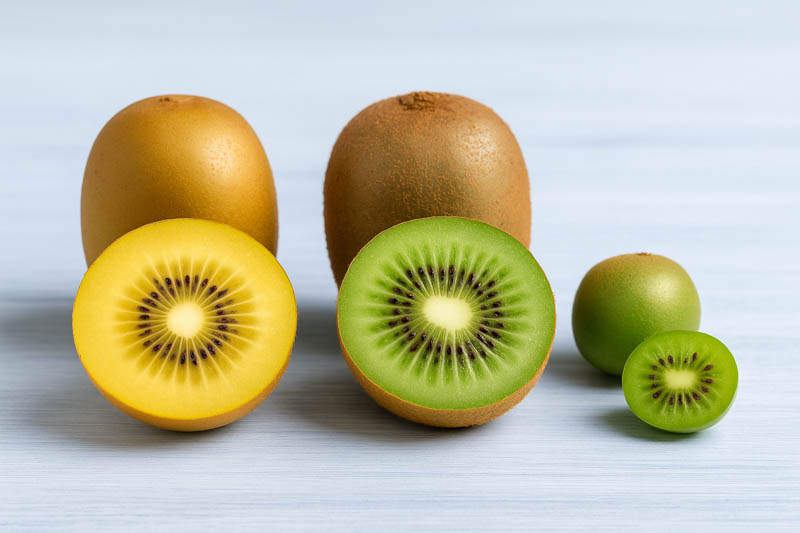
| Type | What owners notice | Notes for dogs | Learn more |
|---|---|---|---|
| Green, fuzzy | Tangy-sweet, classic supermarket kiwi | Peel to reduce choking and GI irritation from fuzz; dice small | A. deliciosa |
| Golden | Smoother skin, honeyed flavor, lower acidity | Often gentler on sensitive stomachs; still dice and serve sparingly | A. chinensis |
| Kiwi berries | Grape-sized, smooth skin, very snackable | Slice lengthwise to prevent gulping and choking | A. arguta |
Plant people: if you’re growing vines for fruit or beauty, explore A. kolomikta and A. polygama too. Keep dogs from chewing canes, leaves, or twine; we’re only sharing ripe fruit as a treat.
| Dog size | Occasional portion | Notes |
|---|---|---|
| Toy (up to 10 lb) | 1–2 teaspoons diced | Start with a few cubes; monitor stool |
| Small (10–20 lb) | 1–2 tablespoons diced | Use as training jackpot or topper |
| Medium (20–50 lb) | 2–4 tablespoons diced | Rotate with lower-sugar produce |
| Large (50+ lb) | Up to ½ small kiwi | Still a treat, not a side dish |
Keep fruit treats under roughly 10 percent of daily calories, and much less if your dog is dieting or carb-sensitive. Every dog is different—err on the small side.
For kiwi berries, slice lengthwise so they cannot be swallowed whole. For seniors or dogs with few teeth, mash with a fork and mix a teaspoon into their regular food.
Avoid baked kiwi cookies, fruit leathers with added sugar, or store-bought dried kiwi, which can be very high in sugar and sometimes preservatives.
Can puppies have kiwi? Tiny tastes only, and not daily. Young guts can be fussy. Focus on a complete, balanced puppy diet and use vet-approved training treats.
Can dogs eat kiwi seeds? The small, soft seeds inside the flesh are generally fine when you dice the fruit. Skip the tough stem ends and any very firm bits.
Is the skin safe? It can be tough and, on green fruit, fuzzy—both raise the odds of irritation or vomiting. For most dogs, peeling is the better call.
What about canned or dried kiwi? No. Canned fruit often brings syrup; dried fruit concentrates sugars. Choose fresh or frozen, unsweetened kiwi only.
Golden kiwi vs. green kiwi for sensitive stomachs? Many dogs tolerate golden kiwi a little better because it’s typically less acidic and smoother-skinned, but results vary by dog.
What if my dog ate a lot of kiwi at once? Expect a soft stool. With vomiting, diarrhea, or lethargy, call your veterinarian, especially for small breeds or if dehydration is a risk.
If you grow kiwi, you already know the vines are vigorous and beautiful. Explore the species here for planting ideas and fruit types: A. arguta, A. chinensis, A. deliciosa, A. kolomikta, and A. polygama.
Pet safety tips outdoors:
Here’s a light framework for a healthy, adult dog with no dietary restrictions. Adjust portions to your dog’s size from the table above.
That’s it—three small kiwi moments all week, leaving plenty of room for your dog’s regular balanced diet and other vet-approved treats.
Quick action is kindness. When in doubt, phone the clinic.
Kiwi can be a bright, hydrating, lower-calorie treat for many dogs when you offer it thoughtfully: peel when prudent, dice small, serve plain, and keep portions modest. Choose the type your dog digests best—green, golden, or carefully sliced kiwi berries—and rotate kiwi with other vet-approved produce so snacks stay balanced.
Want to go deeper on fruit types and gardening? Explore green kiwi, golden kiwi, and kiwi berries, plus ornamental kin A. kolomikta and A. polygama. For human-focused nutrition reading, see kiwi health benefits, then circle back and share a tiny, tail-wagging taste with your best friend.
| Hardiness |
3 - 10 |
|---|---|
| Plant Type | Climbers, Fruits |
| Plant Family | Actinidiaceae |
| Genus | Actinidia |
| Toxic to Humans | No known toxicity |
| Toxic to Cats | No known toxicity |
| Toxic to Dogs | No known toxicity |
| Toxic to Horses | No known toxicity |
| Hardiness |
3 - 10 |
|---|---|
| Plant Type | Climbers, Fruits |
| Plant Family | Actinidiaceae |
| Genus | Actinidia |
| Toxic to Humans | No known toxicity |
| Toxic to Cats | No known toxicity |
| Toxic to Dogs | No known toxicity |
| Toxic to Horses | No known toxicity |
Create a membership account to save your garden designs and to view them on any device.
Becoming a contributing member of Gardenia is easy and can be done in just a few minutes. If you provide us with your name, email address and the payment of a modest $25 annual membership fee, you will become a full member, enabling you to design and save up to 25 of your garden design ideas.
Join now and start creating your dream garden!
Create a membership account to save your garden designs and to view them on any device.
Becoming a contributing member of Gardenia is easy and can be done in just a few minutes. If you provide us with your name, email address and the payment of a modest $25 annual membership fee, you will become a full member, enabling you to design and save up to 25 of your garden design ideas.
Join now and start creating your dream garden!