Arctic Beauty Kiwi, Kolomikta, Variegated Kiwi Vine, Super-hardy Kiwi, Variegated-leaf Hardy Kiwi, Kolomikta Vine, Manchurian Gooseberry, Miyamatatabi, Arctic Kiwi,

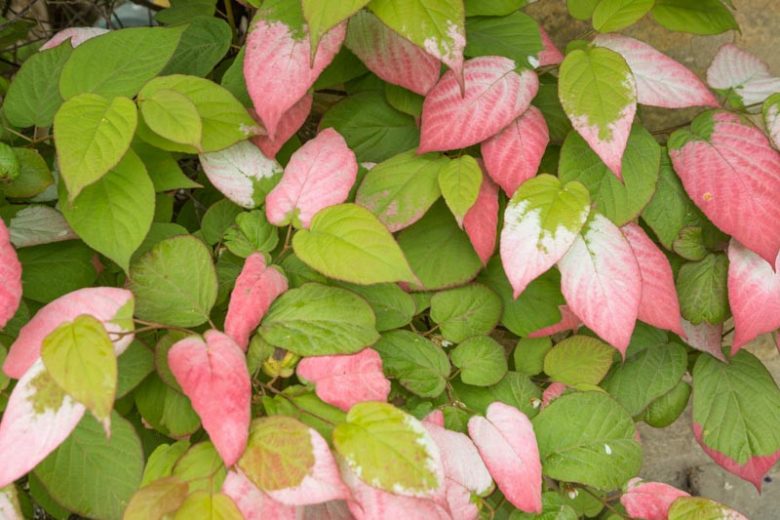


If you’ve ever wanted a vine that turns heads in spring, perfumes the air in early summer, shrugs off bitter winters, and may even reward you with tangy-sweet, bite-size fruit, meet Arctic kiwi (Actinidia kolomikta). Famous for its painterly leaves—splashed in creamy white and cotton-candy pink—this cold-hardy, twining climber brings instant drama to arbors, trellises, and pergolas. Unlike its bigger-fruited cousins, it’s grown primarily for show-stopping foliage, yet many selections will set small, delicious fruit when properly pollinated. Below you’ll find everything you need: fast facts, how to site and plant, pruning and training, best cultivars, and a seasonal care calendar, plus helpful comparisons with green, golden, and hardy kiwiberry species.
| Item | Details |
|---|---|
| Botanical Name | Actinidia kolomikta |
| Common Names | Arctic Kiwi, Variegated Kiwi Vine, Kolomikta Kiwi |
| Plant Type | Deciduous, twining woody vine; ornamental foliage with edible, small fruit on female or self-fertile selections |
| USDA Hardiness Zones | 4–8 (best), with protection from hot afternoon sun in warm zones |
| Mature Size | 15–20 ft long × 6–10 ft wide (4.5–6 m × 1.8–3 m), sometimes larger in ideal conditions |
| Foliage Show | Spring to early summer variegation: green leaves splashed white and pink (often strongest on male vines) |
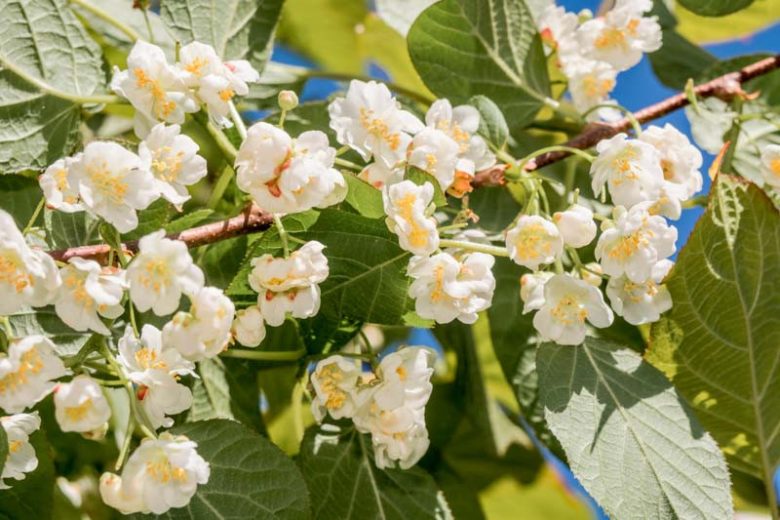
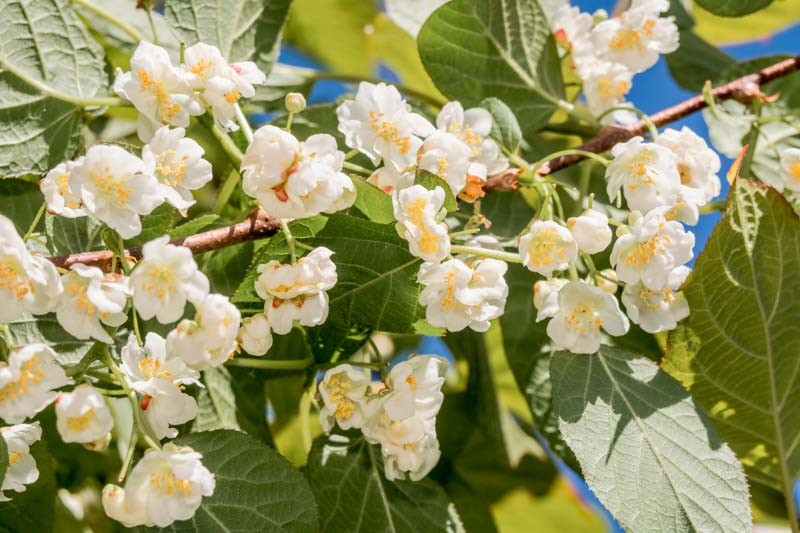
| Bloom & Fragrance | Late spring to early summer; small white, often sweetly fragrant flowers attract pollinators |
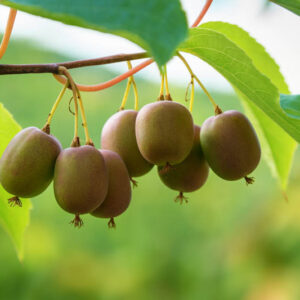
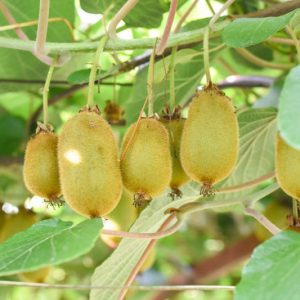
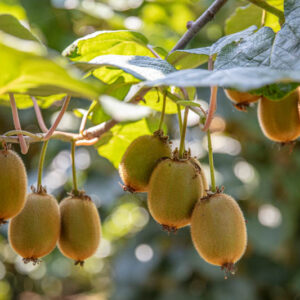
| Fruit | Grape-sized, smooth-skinned, typically green; sweet-tart and aromatic when fully ripe (female or self-fertile cultivars) |
| Sun & Exposure | Morning sun with dappled afternoon shade is ideal; too much hot sun can scorch variegation |
| Soil & pH | Fertile, well-drained loam; slightly acidic to neutral (about pH 5.5–7.0) |
| Water | Even moisture; avoid waterlogging; mulch to keep roots cool |
| Pollination | Mostly dioecious; one male can pollinate 6–8 females. Some cultivars are partially self-fertile, but yields improve with a male nearby. |
| Main Uses | Ornamental foliage for shade structures and trellises; screening; edible fruit on female/self-fertile selections |
Actinidia kolomikta—often sold as “Arctic kiwi” or “Arctic Beauty”—is a remarkably cold-hardy kiwi species prized as much for its eye-catching foliage as for its snackable fruit. Male vines in particular can splash their leaves with creamy white and rosy pink, creating a living confetti effect on trellises, fences, and pergolas. The fruit is smaller than supermarket kiwis, smooth-skinned, and sweet-tart, so you can eat it whole without peeling.
Arctic kiwi hails from cool, forested regions of Northeast Asia—the Russian Far East, northeastern China, Korea, and northern Japan—where long, frigid winters and mild summers forged a vine that shrugs off deep cold but dislikes soggy soil.
A twining climber, A. kolomikta is noticeably less rampant than hardy kiwiberry (A. arguta). Expect roughly 15–20 ft (4.5–6 m) of growth on a sturdy support, making it a great fit for smaller arbors, T-bars, and pergolas. The canopy is airy, with handsome, heart-shaped leaves that may develop dramatic white-to-pink variegation—strongest on well-grown male vines in good light.
With sun, moisture, and fertile soil, first-year shoots typically extend 3–8 ft (0.9–2.4 m). Grafted or well-established plants often begin fruiting in 2–4 years. Most selections are dioecious (separate male and female plants), though a few garden forms such as ‘Dr. Szymanowski’ are reported as partially self-fertile—yields still improve markedly with a dedicated male nearby.
Plant once, enjoy for decades. With routine pruning and solid infrastructure, an Arctic kiwi can be a long-lived, low-maintenance feature in temperate gardens.
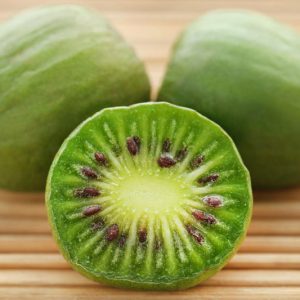
Fragrant, creamy-white blossoms open in late spring (often a bit earlier than A. arguta) and invite pollinators. Fruit follows on female vines: smooth, grape-to-olive-sized kiwiberries, typically green with emerald flesh and tiny edible seeds. Ripening is generally early for kiwis—often mid- to late-summer in suitable climates—so you can be snacking before many other kiwis come in.
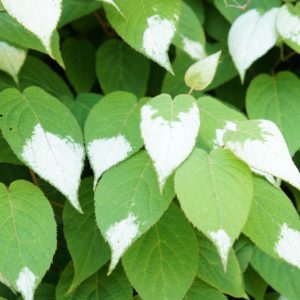
Foliage is the show: emerging leaves can flush green, then develop striking white and blush-pink tips through the growing season, especially on male vines. Female vines are usually less flamboyantly variegated but still attractive. For a silver-washed look (and notorious feline fascination), see close cousin A. polygama.
Among the hardiest kiwis, A. kolomikta is commonly grown in USDA Zones 4–7 (sometimes into 8 with summer protection). Once dormant, it tolerates very low temperatures; however, its early spring leaf-out can be nipped by late frosts. Site to avoid frost pockets, and consider light protection on cold spring nights. Compared to the classic fuzzy green kiwi A. deliciosa and the golden kiwi A. chinensis, Arctic kiwi handles far colder winters.
bees and other pollinators visit the lightly scented flowers. Birds and small mammals will sample ripe fruit—timely picking (or netting in high-pressure areas) helps. While cats often go wild for “silver vine” (A. polygama), curious felines may still paw or rub young Arctic kiwi stems; protect new trunks until plants are established.
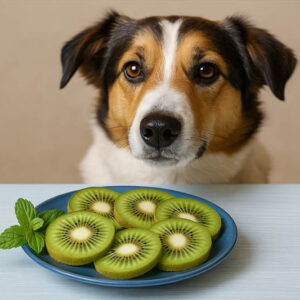
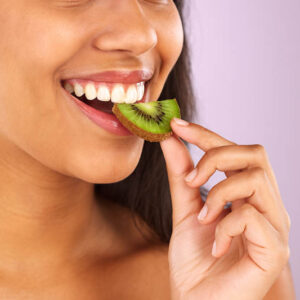
Fruit is edible when ripe, and the smooth skin is typically eaten. As with other kiwis, some people experience oral itching due to sensitivity or allergy. For pets, small amounts of ripe fruit are generally considered safe as an occasional treat; avoid offering vines or leaves as feed. For dog-specific guidance, see Can Dogs Eat Kiwi?
A. kolomikta is vigorous but typically less aggressive than A. arguta. Even so, good garden hygiene is smart: harvest fruit promptly, dispose of prunings responsibly, and check local guidance if you garden in regions where hardy kiwis are monitored. Thoughtful training and regular pruning keep vines beautifully in bounds.
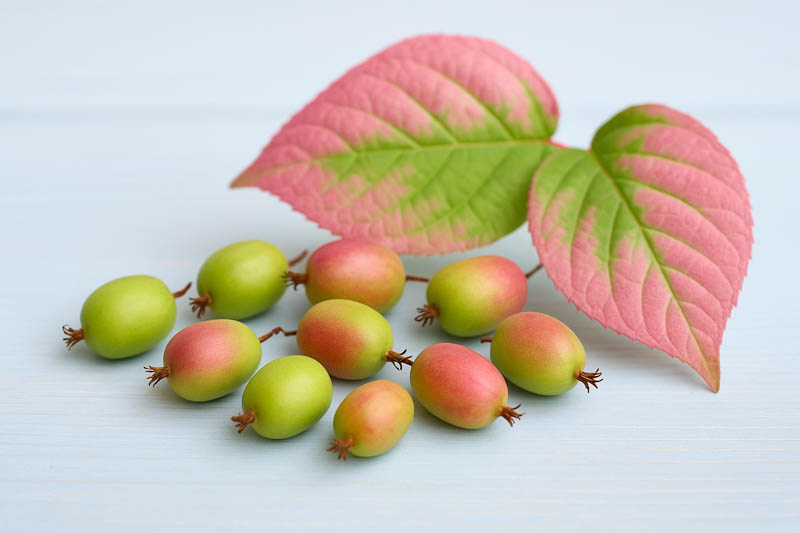
Actinidia kolomikta earns its keep the moment new growth unfurls: leaves emerge green, then develop ivory splashes that blush to soft pink as temperatures warm. The effect is painterly—a variegated, living confetti that reads from across the garden. In late spring, clusters of small, white, often sweetly scented blossoms draw pollinators. By late summer in cool to temperate climates, female or self-fertile vines can produce small, smooth-skinned fruit that you can eat whole—no peeling required.
Compared with its relatives, Arctic kiwi is the foliage diva of the genus. If bold fruit crops are your goal, you’ll usually look to hardy kiwiberry (Actinidia arguta) for abundant snack-size berries, or to green fuzzy kiwi (Actinidia deliciosa) and golden kiwi (Actinidia chinensis) for large, dessert-style fruit in longer, warmer seasons. But if you dream of a vine that shines even before fruit forms, A. kolomikta is your star.
Actinidia kolomikta is the recipient of the prestigious Award of Garden Merit of the Royal Horticultural Society.
| Species | Claim to Fame | Typical Zones | Fruit | Best Fit |
|---|---|---|---|---|
| A. kolomikta | Spectacular pink-white variegation; very cold hardy; fragrant bloom | 4–8 | Small, smooth-skinned, sweet-tart when ripe | Ornamental shade structures; cool-summer fruit nibbles |
| A. arguta | Heavy crops of bite-size kiwiberries; vigorous | 3–8 | Grape-sized, smooth; eat whole | Edible arbors, cold-climate harvests |
| A. deliciosa | Classic store kiwi; large fuzzy fruit | 7–9 | 2–3 in, tart-sweet green flesh | Temperate gardens with long frost-free seasons |
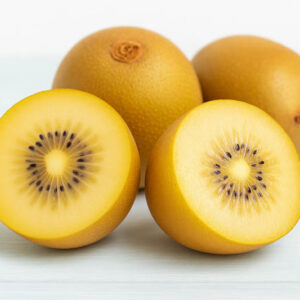
| A. chinensis | Golden flesh, honeyed flavor, lower acidity | 8–10 | 2–3 in, smooth to lightly fuzzy bronze skin | Warm, long-season climates |
Want to geek out on kiwi nutrition, calories, and quick “how-to-eat” ideas? See our kiwi wellness deep dive here.
| Cultivar | Type | What Stands Out | Notes |
|---|---|---|---|
| ‘Arctic Beauty’ (group) | Often male | Iconic pink-white variegation; spectacular on pergolas | Plant near females for pollination if fruit is desired |
| ‘Dr. Szymanowski’ | Female, partially self-fertile | Attractive variegation plus small, aromatic fruit | Heavier crops with a male; great for small arbors |
| Variegated Male (sold as ‘Arctic Beauty’, ‘Adam’) | Male pollinizer | Strongest pink-white leaf color; compact habit | One male serves multiple females |
| Large-fruited Russian selections | Female | Marketed for bigger berries and good flavor | Availability varies; confirm chill and ripening times locally |
Tip: For the most dramatic variegation, site males where morning sun lights the foliage. For fruit, tuck a male upwind of your female vines for reliable pollen drift.
Think “framework first.” In year one, tie a single leader to your stake. At the top wire, form two permanent cordons in opposite directions. Each year, fruiting or display laterals arise from these arms.
Most Arctic kiwis are dioecious: males produce pollen, females make fruit. For fruit, match bloom time and use roughly one male for six to eight females. A breeze-and-bee partnership usually does the job, but in poor weather you can hand-pollinate by lightly brushing male blossoms and tickling female flowers.
You’ll often see the strongest pink-white variegation on male vines—great news if you’re planting for looks. Some selections (such as the widely sold ‘Dr. Szymanowski’) are reported to be partially self-fertile; still, pairing with a male typically boosts yields and seed set.
| Season | Tasks |
|---|---|
| Late Winter (Dormant) | Structural pruning; remove dead or crossing wood; repair wires; add compost; plan male–female placement if adding vines. |
| Early Spring | Protect from surprise frosts; start irrigation if dry; watch for first flush to enjoy emerging variegation. |
| Late Spring (Bloom) | Encourage pollinators; avoid heavy overhead watering during peak bloom; hand-pollinate if cool, windy weather persists. |
| Early–Mid Summer | Tip-prune whips to keep foliage dense; maintain mulch; scout for mites/scale; provide extra water during heat events. |
| Late Summer | Harvest fruit as it softens slightly and tastes sweet; provide light shade cloth if leaves show sun scorch in hot spells. |
| Fall | Tidy vines; remove damaged growth; reduce water as plants approach dormancy; check ties after windstorms. |
Arctic kiwi fruit is modest in size—think plump grapes rather than supermarket kiwis—but big on aroma. When ripe, the berries turn juicy-sweet with a bright, tangy edge. In cool summers, wait for a slight give and a fragrant scent; you can harvest a bit firm and finish ripening on the counter. Handle gently; like kiwiberries, they bruise easily.
If heavy fruit production is your priority, consider adding a dedicated edible workhorse like A. arguta nearby. Keep A. kolomikta as the eye-catching lead in your design and let A. arguta fill the bowls.
While Arctic kiwi is planted primarily for beauty, the berries (from female or self-fertile selections) offer the same “kiwi benefits” you love: modest calories, vitamin C, fiber, and polyphenols. Curious about kiwi nutrition, calories, and creative ways to eat a kiwi? Explore our guide to the health benefits of kiwi fruit.
Is Arctic kiwi truly hardy in Zone 3?
Yes, when established and fully dormant. Reports of survival to around −40°F (−40°C) exist, though local conditions matter. Shelter from winter wind and avoid late-frost pockets for best results.
Will I get fruit from A. kolomikta?
Yes, if you grow a female or partially self-fertile cultivar and provide a compatible male (unless your selection sets solo). Fruit is small, smooth-skinned, and delicious when ripe.
Does the variegation fade?
It can in high heat or harsh afternoon sun. Give morning sun with dappled shade later, and don’t overfertilize with nitrogen. New spring growth is typically the showiest.
How is it different from hardy kiwiberry (A. arguta)?
A. kolomikta is less vigorous, far showier in foliage, and ripens earlier in cool climates. A. arguta focuses on heavy edible yields and takes more space.
Is it invasive?
It’s not commonly listed as invasive, but any vigorous vine can escape if neglected. Train thoughtfully, harvest fruit promptly, and never dump prunings in natural areas.
Any pruning “don’ts”?
Avoid heavy cuts in late winter or early spring when sap is rising; bleeding can be excessive. Prune either in midwinter dormancy or after bloom with light summer tipping.
Can I mix species on one structure?
Yes, with planning. Use A. kolomikta at the “front” for color and a separate span for A. deliciosa, A. chinensis, or A. arguta so you can prune and harvest each cleanly.
Is the fruit nutritious?
Yes—like other kiwis, it’s modest in calories with vitamin C, fiber, potassium, and polyphenols. See our kiwi nutrition overview here.
Will cats destroy my plant?
Most cats are far more captivated by silver vine (A. polygama), but curious felines may scratch young A. kolomikta trunks. Use guards until vines bulk up.
Can I grow it in a large pot?
Absolutely. Choose a 15–20+ gallon container, a compact trellis, and consistent water. Morning sun with afternoon shade keeps foliage pristine.
Explore species pages and deep-dive guides for choosing companions, comparing fruit types, and dialing in care:
Actinidia kolomikta (Arctic Kiwi) • Actinidia arguta (Hardy Kiwi / Kiwiberry) • Actinidia deliciosa (Green Kiwi) • Actinidia chinensis (Golden Kiwi) • Actinidia polygama (Silver Vine) • The Health Benefits of Eating Kiwi Fruit
| Hardiness |
4 - 8 |
|---|---|
| Heat Zones |
1 - 11 |
| Climate Zones | 1, 1A, 1B, 2, 2A, 2B, 3, 3A, 3B, 4, 5, 6, 7, 8, 9, 14, 15, 16, 17, A1, A2, A3 |
| Plant Type | Climbers, Fruits |
| Plant Family | Actinidiaceae |
| Genus | Actinidia |
| Common names | Kiwi |
| Exposure | Full Sun, Partial Sun |
| Season of Interest | Spring (Mid, Late), Summer (Early, Mid, Late), Fall |
| Height | 15' - 20' (4.6m - 6.1m) |
| Spread | 6' - 10' (180cm - 3m) |
| Maintenance | Low |
| Water Needs | Average |
| Soil Type | Chalk, Clay, Loam, Sand |
| Soil pH | Acid, Alkaline, Neutral |
| Soil Drainage | Moist but Well-Drained, Well-Drained |
| Characteristics | Fragrant, Plant of Merit, Showy, Fruit & Berries |
| Tolerances | Heat |
| Garden Uses | Arbors, Pergolas, Trellises, Wall-Side Borders, Walls And Fences |
| Garden Styles | Informal and Cottage |
| Toxic to Humans | No known toxicity |
| Toxic to Cats | No known toxicity |
| Toxic to Dogs | No known toxicity |
| Toxic to Horses | No known toxicity |


| Hardiness |
4 - 8 |
|---|---|
| Heat Zones |
1 - 11 |
| Climate Zones | 1, 1A, 1B, 2, 2A, 2B, 3, 3A, 3B, 4, 5, 6, 7, 8, 9, 14, 15, 16, 17, A1, A2, A3 |
| Plant Type | Climbers, Fruits |
| Plant Family | Actinidiaceae |
| Genus | Actinidia |
| Common names | Kiwi |
| Exposure | Full Sun, Partial Sun |
| Season of Interest | Spring (Mid, Late), Summer (Early, Mid, Late), Fall |
| Height | 15' - 20' (4.6m - 6.1m) |
| Spread | 6' - 10' (180cm - 3m) |
| Maintenance | Low |
| Water Needs | Average |
| Soil Type | Chalk, Clay, Loam, Sand |
| Soil pH | Acid, Alkaline, Neutral |
| Soil Drainage | Moist but Well-Drained, Well-Drained |
| Characteristics | Fragrant, Plant of Merit, Showy, Fruit & Berries |
| Tolerances | Heat |
| Garden Uses | Arbors, Pergolas, Trellises, Wall-Side Borders, Walls And Fences |
| Garden Styles | Informal and Cottage |
| Toxic to Humans | No known toxicity |
| Toxic to Cats | No known toxicity |
| Toxic to Dogs | No known toxicity |
| Toxic to Horses | No known toxicity |
How many Actinidia kolomikta (Arctic Kiwi) do I need for my garden?
| Plant | Quantity | |
|---|---|---|
| Actinidia kolomikta (Arctic Kiwi) | N/A | Buy Plants |
Create a membership account to save your garden designs and to view them on any device.
Becoming a contributing member of Gardenia is easy and can be done in just a few minutes. If you provide us with your name, email address and the payment of a modest $25 annual membership fee, you will become a full member, enabling you to design and save up to 25 of your garden design ideas.
Join now and start creating your dream garden!
Create a membership account to save your garden designs and to view them on any device.
Becoming a contributing member of Gardenia is easy and can be done in just a few minutes. If you provide us with your name, email address and the payment of a modest $25 annual membership fee, you will become a full member, enabling you to design and save up to 25 of your garden design ideas.
Join now and start creating your dream garden!