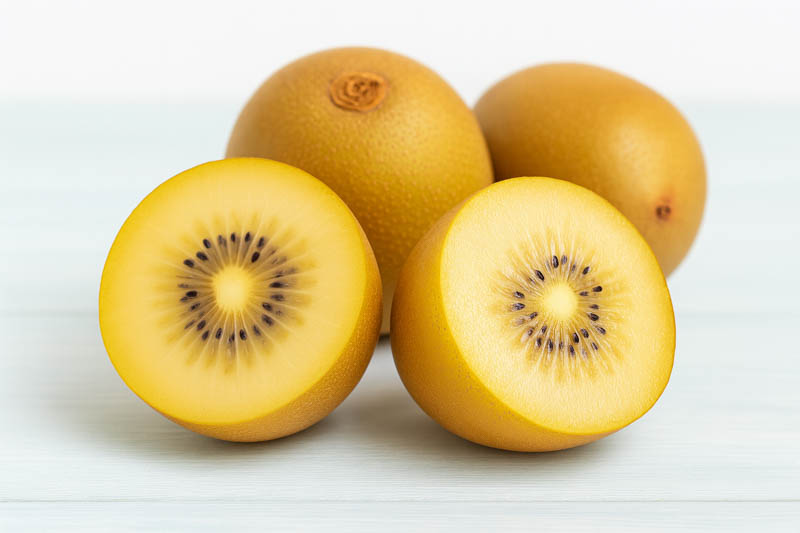
Golden Kiwi
Crack open a golden kiwi and it practically beams back at you. Silky bronze skin, sunshine-yellow flesh, and a mellow, honeyed sweetness make Actinidia chinensis the glam cousin of the classic store kiwi. Here are fast, juicy facts to wow your garden club and your fruit bowl.
Low acid, high joy. Golden kiwis are naturally less tart than green types, with tropical notes that nudge mango and pear. Many people eat the smooth skin, too, for extra fiber.
From Chinese gooseberry to golden star. Native to central China, the fruit was rebranded for export decades ago and now shines in orchards from China and New Zealand to Italy and Chile.
Vitamin C powerhouse. A single golden kiwi can meet or exceed a day’s vitamin C needs, along with vitamin E, potassium, and helpful polyphenols.
Kitchen super helper. The natural enzyme actinidin tenderizes meat in marinades. It also loves to tangle with gelatin, so desserts may need a little workaround.
Late to the party, safer from frost. Golden kiwi blooms later in spring, often dodging cold snaps that can nip new shoots.
Pollination matters. Most golden kiwis are dioecious. Plant one compatible male for about six to eight females and match bloom timing for a bumper crop.
Ripens off the vine. Pick slightly firm fruit before a hard frost and finish ripening on the counter. Speed it up by bagging with an apple or banana.
How it differs from green. The familiar fuzzy kiwi is Actinidia deliciosa, tangier and more cold tolerant than golden types in many regions.
Chilly garden or small berries more your style. Try smooth, pop-in-your-mouth kiwiberries on hardy vines with Actinidia arguta.
Foliage fireworks, just for fun. For pink and white splashes, meet Actinidia kolomikta. For shimmering silver leaves and a plant that fascinates some cats, explore Actinidia polygama.
Growing, snacking, or simply admiring, the kiwi clan has a perfect fit for your garden and your palate. Start with golden, then collect the rest.