Hardy Kiwi, Kiwiberry, Baby Kiwi, Dessert Kiwi, Cocktail Kiwi, Tara Vine, Arctic Kiwi, Grape Kiwi, Northern Kiwi, Siberian Gooseberry, Siberian Kiwi, Bower Vine, Yang Tao, Kokuwa, Chamdarae, Bower Actinidia.
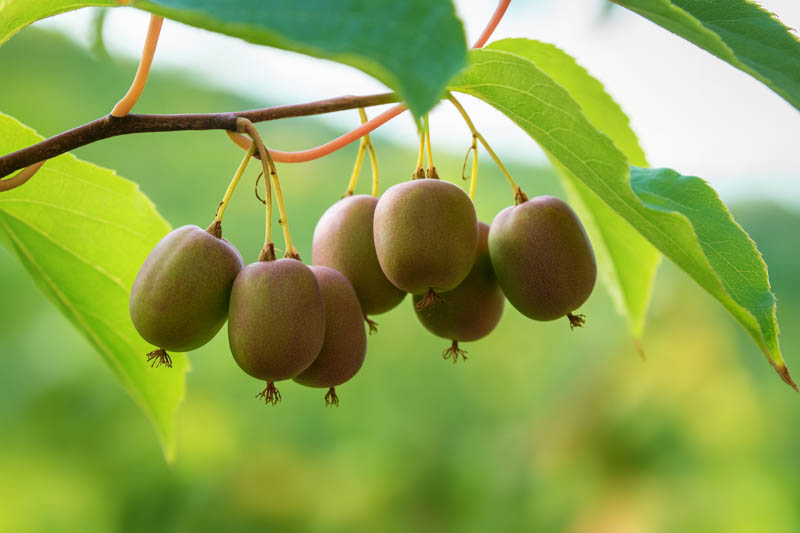


Summary: Vigorous, cold-hardy vine producing smooth, bite-size “kiwiberries” you eat whole—no peeling, no fuzz. Great for arbors, fences, and trellises.
Taste: Sweet-tart, aromatic; green to blush-red by cultivar.
Best for: Fresh snacking, salads, jam/drying, smoothies, and leafy privacy screens.
| Botanical Name & Common Names | Actinidia arguta — hardy kiwi, kiwiberry, baby/grape/cocktail kiwi |
|---|---|
| Plant Type & Habit | Deciduous, twining woody vine; very vigorous |
| Hardiness (USDA) | Zones 4–8 (occasionally 3 with protection) |
| Size / Spread | Vines ~25–30 ft (7.5–9 m) long × 7–20 ft (2.1–6 m) wide on strong support |
| Sun & Exposure | Full sun; in hot summers, light afternoon shade helps |
| Soil & pH | Fertile, well-drained loam; pH ~5.5–6.8; salt-sensitive, hates waterlogging |
| Bloom & Fruit Season | Blooms late spring; fruit ripens late summer into fall (often Sept–Oct) |
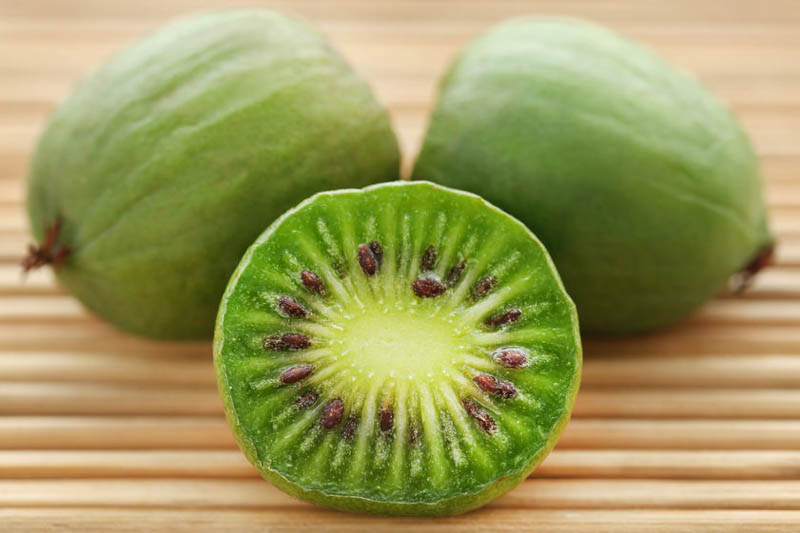
| Fruit & Size | Smooth, grape-size kiwiberries ~0.8–1.6 in (2–4 cm); skin eaten whole |
| Chill Requirement | ~400–800 hours (cultivar & climate dependent) |
| Pollination | Mostly dioecious — plant ~1 male for 6–8 females; place males upwind. ‘Issai’ is partially self-fertile but bears better with a male. |
| Primary Uses | Fresh snacking, salads, smoothies, jam/drying; edible arbors/screens |
If you’ve ever wished you could pop kiwis like grapes—no peeling, no fuzz—meet hardy kiwi (Actinidia arguta). These smooth-skinned, bite-size “kiwiberries” pack all the sweet-tart flavor of their bigger cousins in a cold-tough vine that thrives where traditional kiwifruit falter. Whether you’re building a leafy shade tunnel, filling lunch boxes with garden candy, or chasing a new edible-landscape star, hardy kiwi brings the fun. Below you’ll find everything you need— how to grow, pruning and training, top cultivars, a seasonal care calendar, and more.
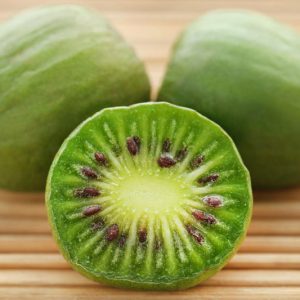
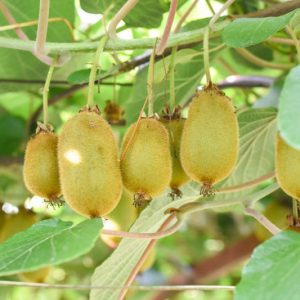
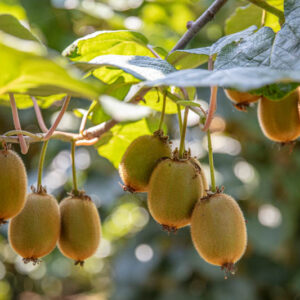
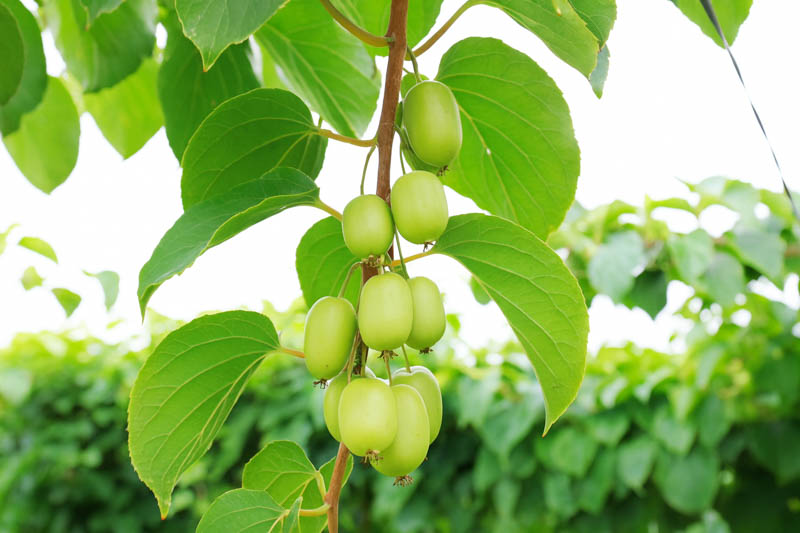
Actinidia arguta is a cold-hardy species of kiwi best known for its grape-sized, smooth-skinned fruit you can eat whole—no peeling required. The vigorous vines twine and climb, quickly clothing trellises, fences, and pergolas with handsome, heart-shaped leaves. In late spring, clusters of small, creamy white flowers invite pollinators; by late summer to fall, they ripen into glossy green or blushed-red kiwiberries with emerald flesh and tiny edible seeds.
Hardy kiwi is native to cool, forested regions of East Asia—Japan, Korea, northern China, and the Russian Far East—where cold winters and mild summers shaped a vine that shrugs off deep freezes but dislikes soggy feet. That natural toughness makes it a superb choice for temperate gardens.
This is a vigorous climber. On a strong support, expect 25–30 feet of growth and a dense, leafy canopy. The foliage is large and softly textured; petioles and new growth may flush reddish on some selections. Use a multi-wire trellis, sturdy T-bar, or pergola—the vines and fruit get heavy.
With sun, moisture, and fertile soil, first-year shoots can run 6–12 feet (1.8–3.6 m). Grafted or well-grown container plants often begin fruiting in 2–4 years (sometimes sooner for ‘Issai’), while seedlings take longer and vary in quality. Yields ramp up as the cordon framework fills and spur wood matures.
Plant once, enjoy for decades. Productive life commonly exceeds 30–40 years with routine pruning and sturdy infrastructure.
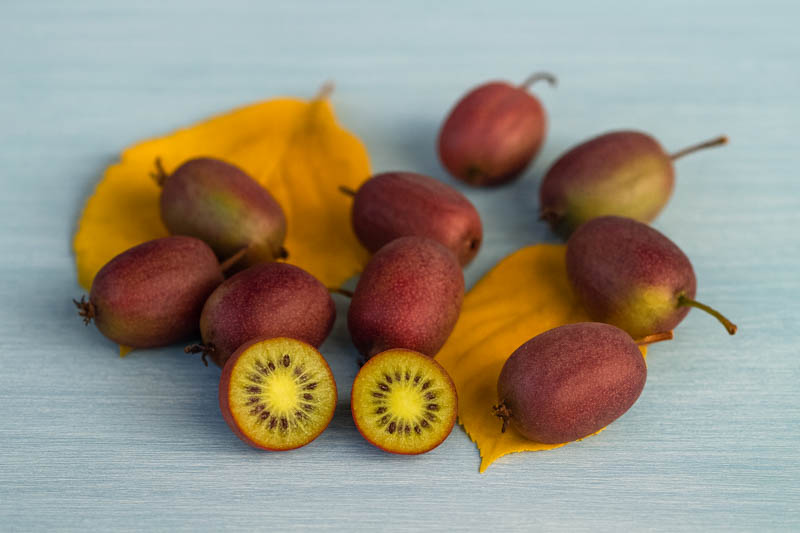
Hardy kiwi blooms in late spring after the worst frosts, which helps protect the crop. Most cultivars are dioecious: male vines produce pollen; female vines bear fruit. Fruits are typically 0.8–1.6 in (2–4 cm) long—sweet, aromatic, and less acidic than many green kiwifruit. Colors range from bright green to crimson-blushed (‘Ken’s Red’ and purple forms of A. arguta var. purpurea).
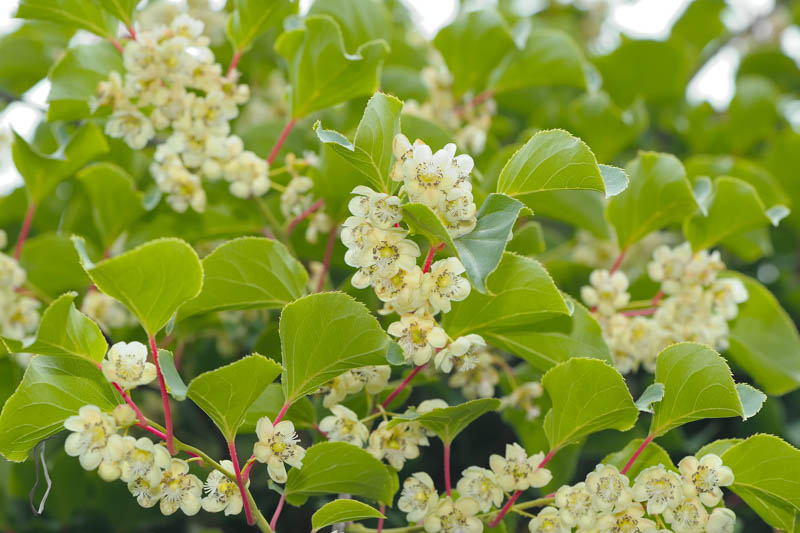
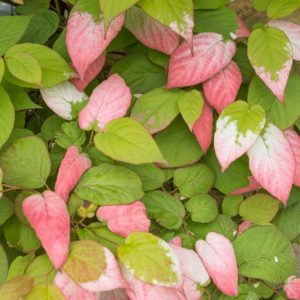
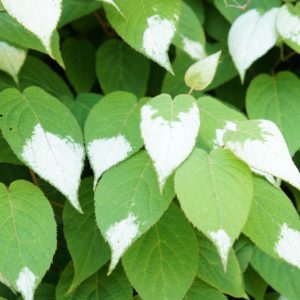
Leaves provide lush shade all summer and often turn butter-yellow in fall. For dramatic variegation, consider close relatives: A. kolomikta (pink-white splashed foliage) and A. polygama (silvered leaves). They’re gorgeous companions (but not cross-pollinizers for A. arguta).
Once dormant, hardy kiwi tolerates deep cold (often to about −25 °F / −32 °C, cultivar-dependent). Spring shoots are tender, so site selection to avoid frost pockets is key. Compared to A. deliciosa (green, fuzzy kiwi), A. arguta handles colder winters but prefers moderate summers.
Flowers attract bees and other pollinators. Ripe fruits appeal to birds and small mammals—netting or timely picking helps. A quirky note: some cats find young vines irresistible (akin to “silver vine”); guard trunks until plants are established.
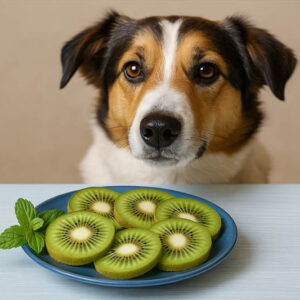
Fruits are edible when ripe; the smooth skin is typically eaten. Large quantities may cause mild GI upset in sensitive people, and kiwi allergy (oral itching/tingling) is not uncommon. For pets, ripe fruit in small amounts is generally considered safe; leaves/stems are not used as feed. Can Dogs Eat Kiwi? Benefits, Risks, and Easy Treats Ideas
A. arguta is very vigorous and may naturalize if neglected. In parts of the Northeastern U.S., it’s flagged as potentially invasive—always check your state’s list and practice good garden hygiene (harvest promptly; don’t dump prunings in natural areas).
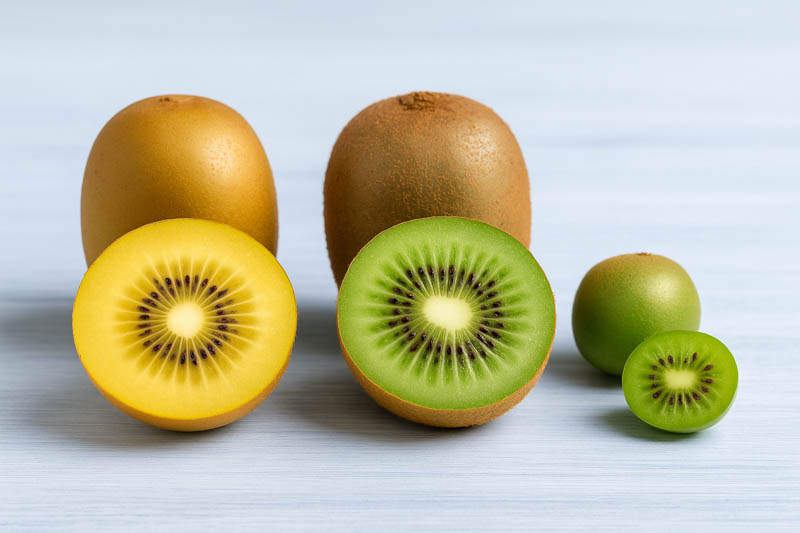
| Type | Species | Flesh & Skin | Fruit Size | Chill / Hardiness | Best Zones | Notes |
|---|---|---|---|---|---|---|
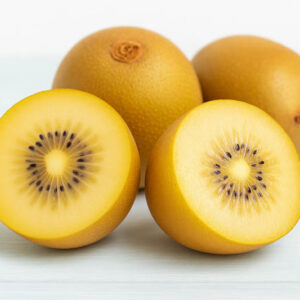
| Golden Kiwi | Actinidia chinensis | Sweet, low-acid yellow/gold flesh; smooth to lightly fuzzy bronze skin | ~2–3 in (5–7.5 cm) long; oval to egg-shaped | ~600–850 chill hrs; less cold-hardy | 8–10 (7 in warm microclimates) | Blooms late; needs warm, long season; dioecious (use compatible male) |
| Green Kiwi | Actinidia deliciosa | Tangy green flesh; fuzzy brown skin | ~2–3 in (5–7.5 cm) long; large oval | ~600–1100 chill hrs; more cold-tolerant than golden | 7–9 | Classic “green kiwi”; widely grown; dioecious |
| Hardy Kiwi | Actinidia arguta | Smooth, bite-size fruit; green to red flesh (cultivar-dependent) | ~0.8–1.6 in (2–4 cm) long; grape-sized, thin skin | Variable chill; very cold-hardy vines | 3–8 | Great for cold climates; most cultivars dioecious |
| Cultivar | Sex / Type | Fruit & Flavor | Ripening Season | Growth & Notes | Pollination |
|---|---|---|---|---|---|
| ‘Ananasnaya’ (“Anna”) | Female (A. arguta) | Sweet, aromatic green fruit with pineapple note; blushes in sun | Mid-season | Vigorous, heavy crops; the benchmark kiwiberry | Needs a male (e.g., ‘Meader’, ‘Weiki’ male, ‘Flowercloud’) |
| ‘Geneva’ | Female (A. arguta) | Medium fruit; very flavorful | Early (great for short seasons) | Thin for size; consistent producer | Requires a male pollinizer |
| ‘MSU’ / ‘Michigan State’ | Female (A. arguta) | Larger-than-average berries; excellent flavor | Mid to late | Strong, productive grower | Requires a male pollinizer |
| ‘Weiki’ (female) | Female (German selection) | Reliable crops; classic sweet taste | Mid-season | Pairs well with ‘Weiki’ male | Best with ‘Weiki’ (male) for synced bloom |
| ‘Ken’s Red’ (hybrid) | Female (A. arguta × A. melanandra) | Burgundy skin; reddish flesh when fully ripe; dessert quality | Slightly later | Needs summer heat to color well | Requires a male with overlapping bloom |
| ‘Issai’ (partially self-fertile) | Female / partially self-fertile (hybrid) | Sweet bite-size berries; earlier bearing than most | Early to mid | Compact; great for containers/small spaces | Sets without a male, but crops improve with one |
| ‘Meader’ | Male pollinizer | No fruit (pollen only) | — | Heavy pollen producer; widely compatible | Use ~1 male per 6–8 females; plant upwind |
| ‘Weiki’ (male) | Male pollinizer | No fruit (pollen only) | — | Perfect bloom overlap with ‘Weiki’ female | Excellent match for many mid-season females |
| ‘Flowercloud’ | Male pollinizer | No fruit (pollen only) | — | Abundant, often extended bloom | Good general male for mixed plantings |
Tip: Position the male vine upwind of females for better pollen drift and ensure bloom overlap for the best fruit set.
| Season | What to Do |
|---|---|
| Late Winter (Dormant) | Structural pruning; renew fruiting laterals; repair wires; remove dead/diseased wood; add compost around the dripline. |
| Early Spring | Protect emerging shoots from late frosts (row cover on cold nights). Check male bloom timing vs. females. Begin irrigation schedule if dry. |
| Late Spring (Bloom) | Encourage pollinators; avoid overhead watering during peak bloom; hand-pollinate if weather is windy/cool. Keep soil evenly moist. |
| Early–Mid Summer | Tie in new growth; summer-tip long laterals; maintain mulch; scout for mites/scale/leafrollers; thin crowded fruit on heavy-bearing cultivars. |
| Late Summer | Support heavily loaded canes; stop nitrogen in cold-winter climates; monitor ripening and bird pressure—net if needed. |
| Early Fall | Harvest when fruit softens slightly and tastes sweet; pick slightly firm and finish ripening indoors if frost threatens. |
| Late Fall | Clean up fallen fruit; check ties; remove damaged canes; store fruit cool. Prepare protection for young vines if arctic blasts are expected. |
Southern Hemisphere: shift by ~6 months.
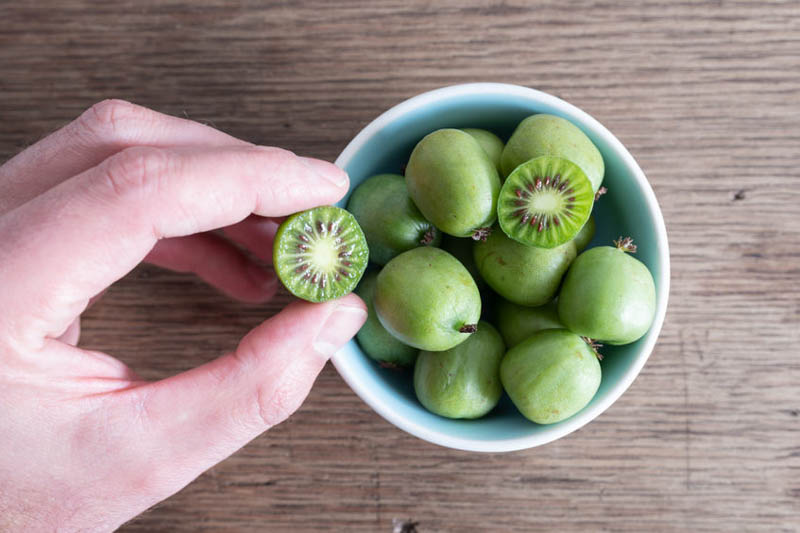
Like other kiwifruit, hardy kiwiberries are naturally low in calories and rich in vitamin C, fiber, potassium, and antioxidants (including lutein and polyphenols). They’re a lively add-on for immune support, gut health, and colorful plates. As with all nutrition claims, your mileage varies—enjoy them as part of a balanced diet.
Yes, most do. Plant one male for ~6–8 females and match bloom timing. ‘Issai’ is partially self-fertile but usually crops better with a male nearby.
Grafted plants: often 2–4 years. Seedlings: longer and variable. ‘Issai’ sometimes fruits the first or second year after planting.
In zones 4–7, yes—once established and dormant. Young spring shoots are frost-tender, so protect them on cold nights.
Mature vines can be very productive—commonly 10–50+ lb per vine depending on training, pruning, pollination, and weather.
Yes—choose a large (20–30 gal) container, train on a stout trellis, water/feed consistently, and winter-protect the pot in cold climates. ‘Issai’ is the easiest choice.
| Hardiness |
3 - 8 |
|---|---|
| Heat Zones |
1 - 8 |
| Climate Zones | 1, 1A, 1B, 2, 2A, 2B, 3, 3A, 3B, 4, 5, 6, 7, 8, 9, 14, 15, 16, 17, A1, A2, A3 |
| Plant Type | Climbers, Fruits |
| Plant Family | Actinidiaceae |
| Genus | Actinidia |
| Common names | Hardy Kiwi, Kiwi |
| Exposure | Full Sun, Partial Sun |
| Season of Interest | Spring (Mid, Late), Summer (Early, Mid, Late), Fall |
| Height | 25' - 30' (7.6m - 9.1m) |
| Spread | 7' - 20' (210cm - 6.1m) |
| Maintenance | Average |
| Water Needs | Average |
| Soil Type | Clay, Loam, Sand |
| Soil pH | Acid, Neutral |
| Soil Drainage | Moist but Well-Drained |
| Characteristics | Fragrant, Showy, Fruit & Berries |
| Tolerances | Clay Soil, Heat |
| Garden Uses | Arbors, Pergolas, Trellises, Wall-Side Borders, Walls And Fences |
| Garden Styles | City and Courtyard, Informal and Cottage |
| Toxic to Humans | No known toxicity |
| Toxic to Cats | No known toxicity |
| Toxic to Dogs | No known toxicity |
| Toxic to Horses | No known toxicity |


| Hardiness |
3 - 8 |
|---|---|
| Heat Zones |
1 - 8 |
| Climate Zones | 1, 1A, 1B, 2, 2A, 2B, 3, 3A, 3B, 4, 5, 6, 7, 8, 9, 14, 15, 16, 17, A1, A2, A3 |
| Plant Type | Climbers, Fruits |
| Plant Family | Actinidiaceae |
| Genus | Actinidia |
| Common names | Hardy Kiwi, Kiwi |
| Exposure | Full Sun, Partial Sun |
| Season of Interest | Spring (Mid, Late), Summer (Early, Mid, Late), Fall |
| Height | 25' - 30' (7.6m - 9.1m) |
| Spread | 7' - 20' (210cm - 6.1m) |
| Maintenance | Average |
| Water Needs | Average |
| Soil Type | Clay, Loam, Sand |
| Soil pH | Acid, Neutral |
| Soil Drainage | Moist but Well-Drained |
| Characteristics | Fragrant, Showy, Fruit & Berries |
| Tolerances | Clay Soil, Heat |
| Garden Uses | Arbors, Pergolas, Trellises, Wall-Side Borders, Walls And Fences |
| Garden Styles | City and Courtyard, Informal and Cottage |
| Toxic to Humans | No known toxicity |
| Toxic to Cats | No known toxicity |
| Toxic to Dogs | No known toxicity |
| Toxic to Horses | No known toxicity |
How many Actinidia arguta (Hardy Kiwi) do I need for my garden?
| Plant | Quantity | |
|---|---|---|
| Actinidia arguta (Hardy Kiwi) | N/A | Buy Plants |
Create a membership account to save your garden designs and to view them on any device.
Becoming a contributing member of Gardenia is easy and can be done in just a few minutes. If you provide us with your name, email address and the payment of a modest $25 annual membership fee, you will become a full member, enabling you to design and save up to 25 of your garden design ideas.
Join now and start creating your dream garden!
Create a membership account to save your garden designs and to view them on any device.
Becoming a contributing member of Gardenia is easy and can be done in just a few minutes. If you provide us with your name, email address and the payment of a modest $25 annual membership fee, you will become a full member, enabling you to design and save up to 25 of your garden design ideas.
Join now and start creating your dream garden!