Kiwifruit, Kiwi, Chinese Gooseberry, Fuzzy Kiwifruit, Smooth-Skinned Kiwifruit, Yangtao, Mihoutao, Vine Pear, Actinidia chinensis var. deliciosa, Actinidia chinensis var. hispida, Actinidia latifolia deliciosa.
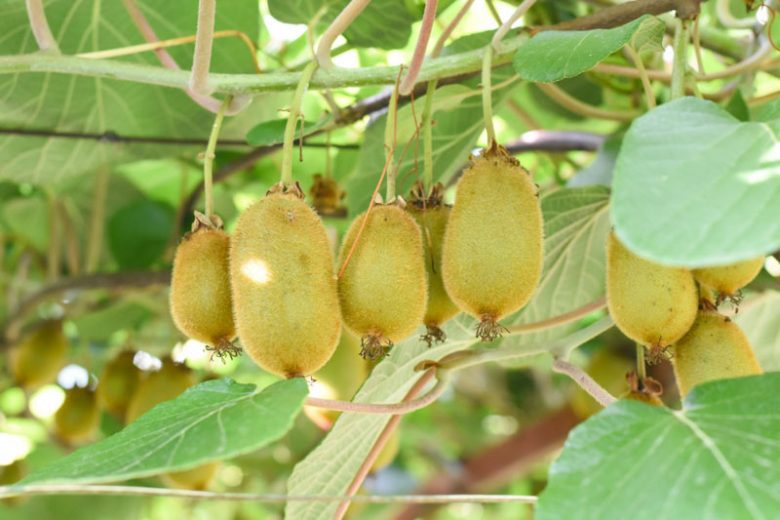
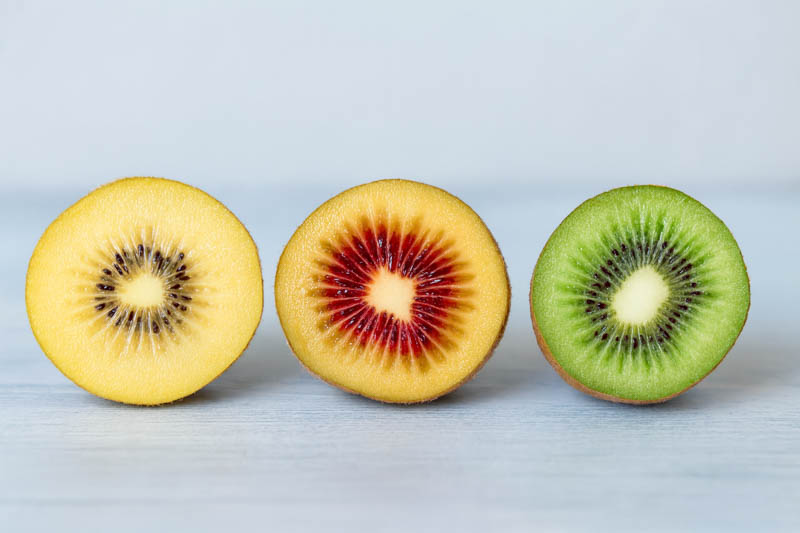


If you’ve ever seen clusters of fuzzy brown fruit hanging from vines or been captivated by the tangy-sweet taste of kiwi fruit in your fruit salad, you’ve already discovered the magic of the kiwi plant (Actinidia deliciosa). As a beloved edible, ornamental, and “superfruit,” kiwi is both a garden delight and a kitchen staple. Here’s everything you need to know to enjoy, grow, and benefit from this extraordinary fruit—from quick facts and history to nutrition, uses, cultivars, and more.
| Botanical Name | Actinidia deliciosa |
| Common Names | Kiwi, Kiwifruit, Chinese Gooseberry, Fuzzy Kiwi |
| Plant Type | Deciduous vine |
| Hardiness Zones | USDA 7–9 |
| Height & Spread | 15–30 ft long × 6–10 ft wide (with trellis/support) |
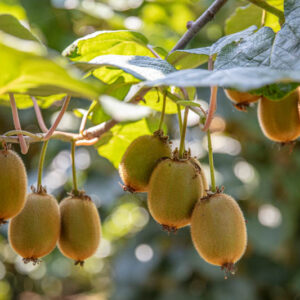
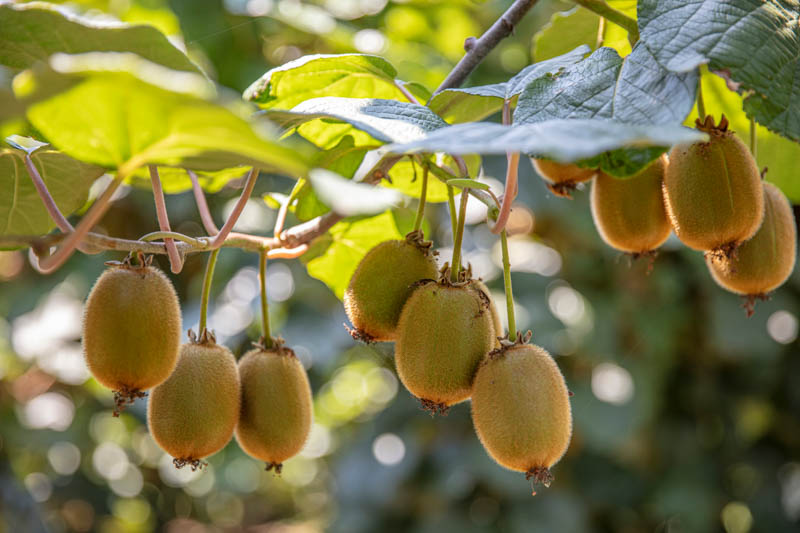
| Fruit Size | 2–3 in long; oval; fuzzy brown skin; green flesh (most A. deliciosa) |
| Fruit Season | Late fall |
| Sun Requirements | Full sun (light afternoon shade in very hot climates) |
| Soil pH | 5.5–7.0 (fertile, well-drained loam) |
| Chill Requirement | ~600–1100 hours (cultivar-dependent) |
| Pollination | Dioecious; plant 1 male for 6–8 females. Common pollinizers for ‘Hayward’: ‘Matua’ (early/mid), ‘Tomuri’ (late). Self-fertile ‘Jenny’ sets better with a male nearby. |
| Main Uses | Fresh eating, salads, desserts, jams, smoothies, dried fruit, garnishing, marinade tenderizer |
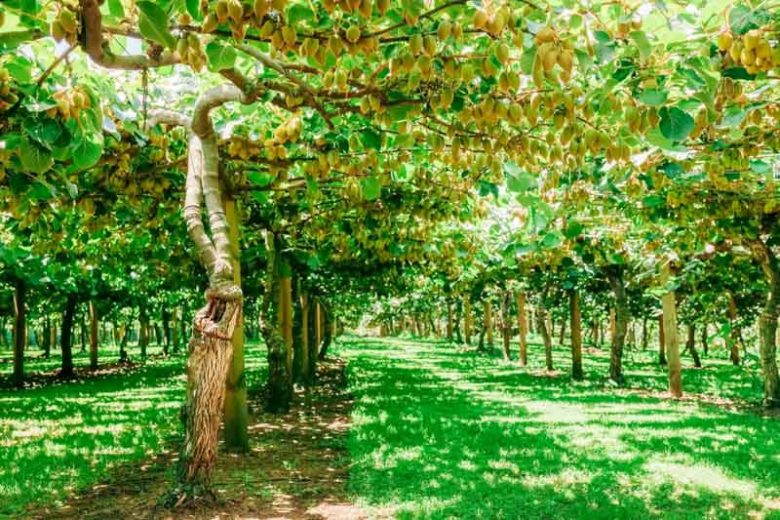
The kiwi plant is a robust woody vine prized both for its unique fruit and garden appeal. With heart-shaped, mid-green leaves and vigorous twining growth habit, kiwi easily covers arbors, trellises, and sturdy fences.
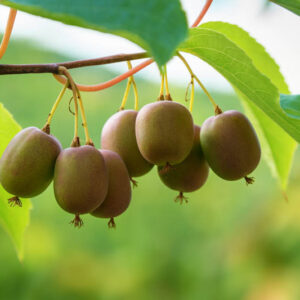
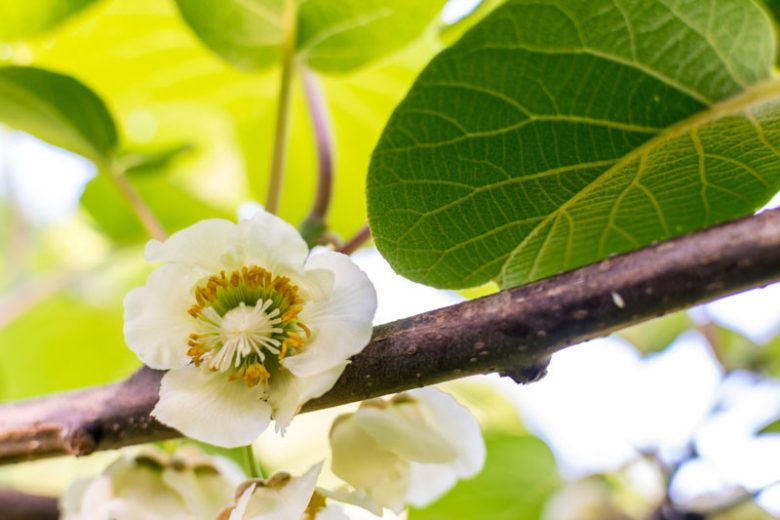
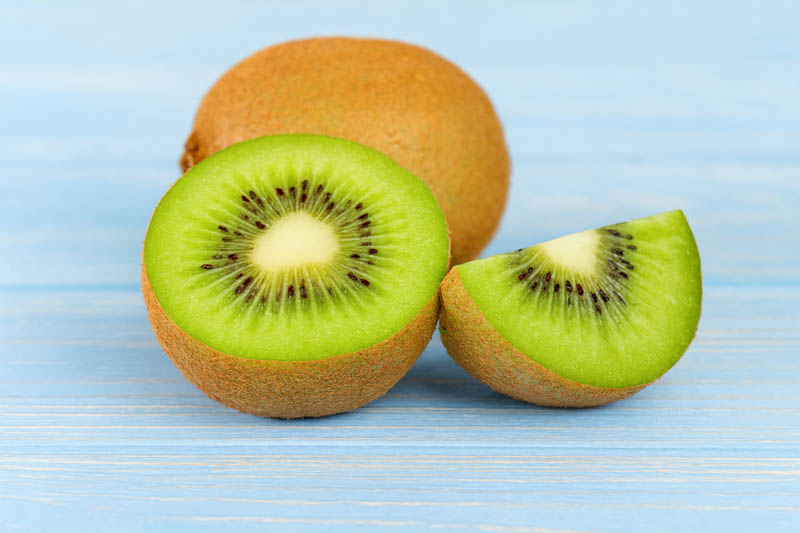
In late spring, vines bear clusters of creamy white, subtly fragrant flowers. By late summer to early autumn, these become iconic brown-yellow, fuzzy-skinned fruits filled with emerald green pulp and hundreds of tiny black edible seeds.
The fruit’s flavor is tangy, sweet, and refreshing—equal parts tropical, citrus, and berry.
Native to central and eastern China, Actinidia deliciosa was later developed and popularized as a commercial crop in New Zealand, earning its “kiwifruit” moniker in the mid-20th century. Today, major producers include Italy, New Zealand, China, Greece, and the U.S. (California).
Mature kiwi vines vigorously climb and can reach 30 feet (9 m) or more if unsupported. Their rapid annual growth makes them excellent for vertical gardening, arbors, and shaded patios. Soft, deeply veined leaves provide bold summer foliage, and late-season fruit clusters add ornamental value in autumn.
When provided with fertile soil and full sun, young kiwi vines can grow up to 6–12 feet (1.8–3.6 m) per year. Fruiting typically begins 3–5 years after planting a grafted vine (8+ years from seed), and harvests become abundant as plants reach maturity. Regular pruning controls size and maximizes sunlight exposure and fruit production year after year.
Healthy, established kiwi vines can remain productive for 40–50 years or more. Their longevity and reliability in the landscape are matched by relatively low maintenance when grown on suitable supports.
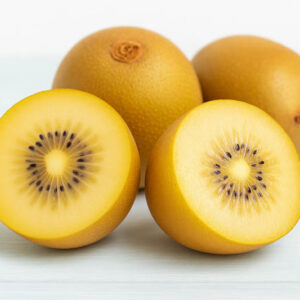
Kiwi vines bloom in late spring. Female flowers develop into fruits—oval, fuzzy-skinned “true berries” measuring 2–3 inches long. Flesh is bright green in classic A. deliciosa cultivars and yellow in A. chinensis (“golden kiwi”) types. Kiwi fruit ripens in autumn, typically from September to November, depending on climate and variety.
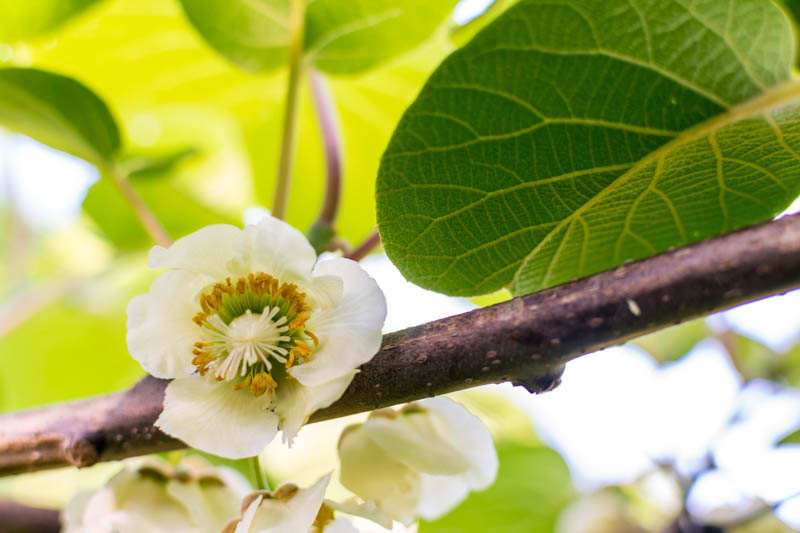
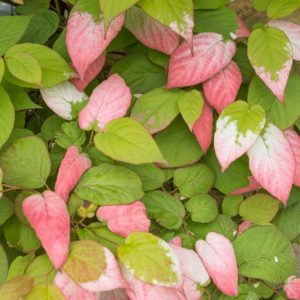
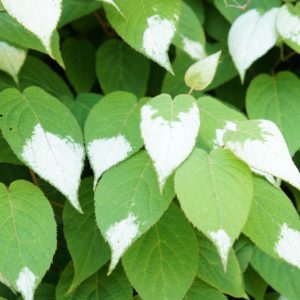
Vigorous foliage creates natural summer shade, while annual leaf drop in autumn reveals vines ornamented with ripening fruit. Related Actinidia species can have variegated pink or white leaves, prized for ornamental gardens.
Actinidia deliciosa is hardy through USDA zones 7–9.
Kiwi flowers attract bees and pollinating insects in spring. Autumn fruits are sought-after by birds, squirrels, raccoons, and even deer—protect ripening fruit clusters if wildlife competition is an issue in your landscape!
Kiwifruits are edible when ripe. The fuzzy skin is technically edible but less often consumed for green varieties. Large quantities may cause mild gastrointestinal upset; kiwifruit allergy is not uncommon and can cross-react with latex and some pollens.
Kiwifruit is generally safe and non-toxic for most pets such as dogs and cats when offered ripe and in moderation. Can dogs eat kiwi? Benefits, risks, and easy treats ideas
In managed gardens, kiwi vines are not invasive but must be pruned regularly to avoid smothering adjacent plantings. Note: Actinidia arguta can be invasive in parts of the Northeastern U.S.—check local guidance.
Grower Quote:
“The first time I harvested a basket of sun-warmed, homegrown kiwis, I was amazed at their flavor—like a burst of sunshine and citrus. The vines add so much character to my trellis all summer, and the fruit keeps our kitchen lively through the autumn months.”
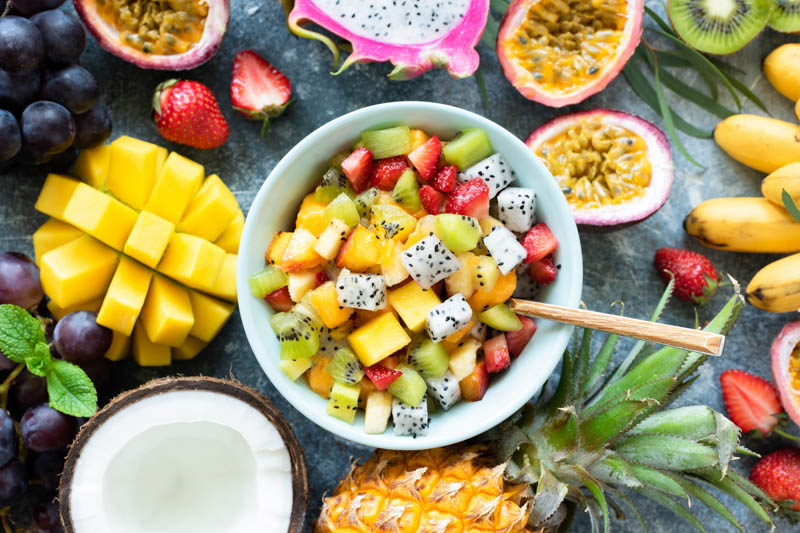
The kiwi fruit is celebrated as a “superfruit” for good reason. It’s loaded with vitamin C, potassium, antioxidants, and unique health compounds—all for very few calories.
| Nutrient | Amount |
|---|---|
| Calories | 61 kcal |
| Protein | 1.1 g |
| Carbohydrates | 15 g |
| Fiber | 3 g |
| Fat | 0.5 g |
| Vitamin C | 92.7 mg (>100% DV) |
| Vitamin K | 40.3 µg (34% DV) |
| Vitamin E | 1.5 mg |
| Potassium | 312 mg |
| Folate | 25 µg |
| Magnesium | 17 mg |
| Manganese | 0.098 mg |
Kiwi fruit stands out for vitamin C (higher per gram than many citrus), and is rich in vitamin K, potassium, vitamin E, lutein, zeaxanthin, and polyphenols—all supporting eye, skin, immune, and heart health. Soluble and insoluble fiber support digestion and gut bacteria.
Eating ripe fruit in moderation is safe for most people.
| Variety | Flavor & Appearance | Best Uses |
|---|---|---|
| Hayward | Large, oval fruit; classic tart-sweet flavor; vivid green flesh | Fresh eating, desserts, salads |
| Bruno | Medium, elongated fruit; mildly tart; vigorous vines (often used as rootstock) | Juicing, preserves, drying |
| Monty | Medium-large, oblong fruit; sweet-tart; productive, late ripening | Fresh eating, jam/jelly |
| Saanichton 12 | Similar to ‘Hayward’; good quality fruit; noted for better cold tolerance in some regions | Fresh eating, cool-summer gardens |
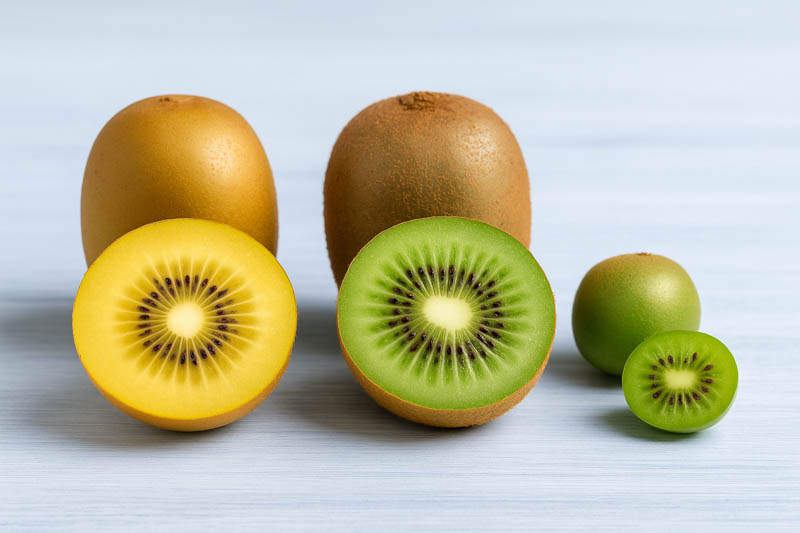
| Type | Species | Flesh & Skin | Fruit Size | Chill / Hardiness | Best Zones | Notes |
|---|---|---|---|---|---|---|
| Golden Kiwi | Actinidia chinensis | Sweet, low-acid yellow/gold flesh; smooth to lightly fuzzy bronze skin | ~2–3 in (5–7.5 cm) long; oval to egg-shaped | ~600–850 chill hrs; less cold-hardy | 8–10 (7 in warm microclimates) | Blooms late; needs warm, long season; dioecious (use compatible male) |
| Green Kiwi | Actinidia deliciosa | Tangy green flesh; fuzzy brown skin | ~2–3 in (5–7.5 cm) long; large oval | ~600–1100 chill hrs; more cold-tolerant than golden | 7–9 | Classic “green kiwi”; widely grown; dioecious |
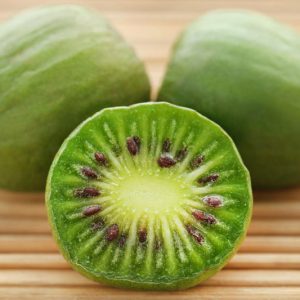
| Hardy Kiwi | Actinidia arguta | Smooth, bite-size fruit; green to red flesh (cultivar-dependent) | ~0.8–1.6 in (2–4 cm) long; grape-sized, thin skin | Variable chill; very cold-hardy vines | 3–8 | Great for cold climates; most cultivars dioecious |
Try different types to discover your taste preferences—there’s a kiwi for every palate!
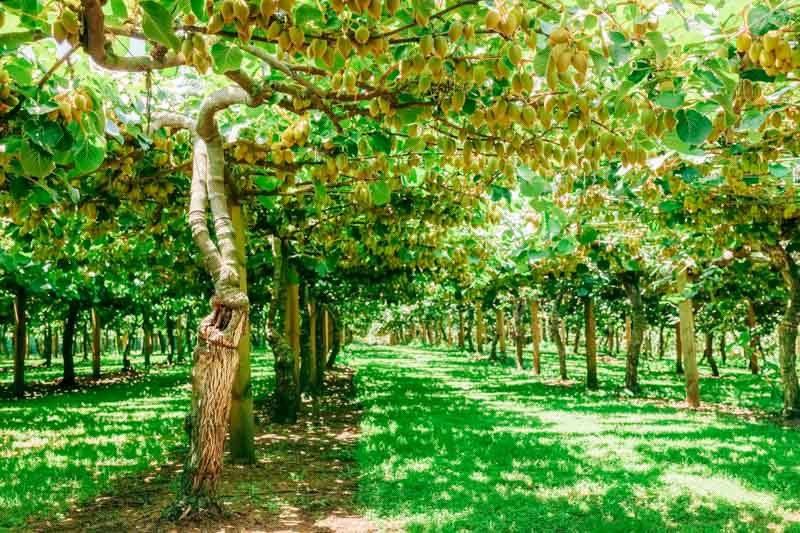
Kiwi vines become more fruitful each year after establishment. Patience is rewarded with decades of generous harvests!
Yes, kiwi skin is edible and packed with fiber and vitamins—though green kiwifruit skin is fuzzy and gold kiwifruit skin is smoother.
Green kiwifruit (A. deliciosa) has fuzzy brown skin and tangy green flesh; gold kiwifruit (A. chinensis) has smooth bronze skin and sweeter yellow flesh.
Kiwi fruit is native to China and was originally called “Chinese gooseberry.” It spread and was commercialized in New Zealand, now grown globally.
Male vines produce only pollen; female vines bear fruit. Flowers are different: female flowers have a central stigma, males have prominent pollen-rich anthers.
Grafted vines can bear fruit in about 2–3 years; seed-grown plants need 4–6+ years to mature.
Kiwifruit thrives in temperate, frost-free regions (USDA zones 7–9 for green kiwi; gold is less cold-hardy).
Yes! Kiwi (especially gold types) is one of nature’s best sources of vitamin C, as well as fiber, potassium, vitamin E, and antioxidants.
Kiwi is high in fiber and contains actinidin, an enzyme that supports protein digestion and can help relieve constipation.
Plant in full sun with a strong trellis and plenty of space. Use grafted plants for faster fruiting and allow for male and female plants for pollination.
| Hardiness |
7 - 9 |
|---|---|
| Heat Zones |
7 - 9 |
| Climate Zones | 1, 1A, 1B, 2, 2A, 2B, 3, 3A, 3B, 4, 5, 6, 7, 8, 9, 14, 15, 16, 17, A1, A2, A3 |
| Plant Type | Climbers, Fruits |
| Plant Family | Actinidiaceae |
| Genus | Actinidia |
| Common names | Chinese Gooseberry, Kiwi |
| Exposure | Full Sun |
| Season of Interest | Spring (Mid, Late), Summer (Early, Mid, Late), Fall |
| Height | 15' - 30' (4.6m - 9.1m) |
| Spread | 6' - 10' (180cm - 3m) |
| Maintenance | Average |
| Water Needs | Average |
| Soil Type | Loam, Sand |
| Soil pH | Acid, Alkaline, Neutral |
| Soil Drainage | Well-Drained |
| Characteristics | Fragrant, Showy, Fruit & Berries |
| Tolerances | Heat |
| Garden Uses | Arbors, Pergolas, Trellises, Wall-Side Borders, Walls And Fences |
| Toxic to Humans | No known toxicity |
| Toxic to Cats | No known toxicity |
| Toxic to Dogs | No known toxicity |
| Toxic to Horses | No known toxicity |


| Hardiness |
7 - 9 |
|---|---|
| Heat Zones |
7 - 9 |
| Climate Zones | 1, 1A, 1B, 2, 2A, 2B, 3, 3A, 3B, 4, 5, 6, 7, 8, 9, 14, 15, 16, 17, A1, A2, A3 |
| Plant Type | Climbers, Fruits |
| Plant Family | Actinidiaceae |
| Genus | Actinidia |
| Common names | Chinese Gooseberry, Kiwi |
| Exposure | Full Sun |
| Season of Interest | Spring (Mid, Late), Summer (Early, Mid, Late), Fall |
| Height | 15' - 30' (4.6m - 9.1m) |
| Spread | 6' - 10' (180cm - 3m) |
| Maintenance | Average |
| Water Needs | Average |
| Soil Type | Loam, Sand |
| Soil pH | Acid, Alkaline, Neutral |
| Soil Drainage | Well-Drained |
| Characteristics | Fragrant, Showy, Fruit & Berries |
| Tolerances | Heat |
| Garden Uses | Arbors, Pergolas, Trellises, Wall-Side Borders, Walls And Fences |
| Toxic to Humans | No known toxicity |
| Toxic to Cats | No known toxicity |
| Toxic to Dogs | No known toxicity |
| Toxic to Horses | No known toxicity |
How many Actinidia deliciosa (Kiwi fruit) do I need for my garden?
| Plant | Quantity | |
|---|---|---|
| Actinidia deliciosa (Kiwi fruit) | N/A | Buy Plants |
Create a membership account to save your garden designs and to view them on any device.
Becoming a contributing member of Gardenia is easy and can be done in just a few minutes. If you provide us with your name, email address and the payment of a modest $25 annual membership fee, you will become a full member, enabling you to design and save up to 25 of your garden design ideas.
Join now and start creating your dream garden!
Create a membership account to save your garden designs and to view them on any device.
Becoming a contributing member of Gardenia is easy and can be done in just a few minutes. If you provide us with your name, email address and the payment of a modest $25 annual membership fee, you will become a full member, enabling you to design and save up to 25 of your garden design ideas.
Join now and start creating your dream garden!