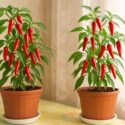
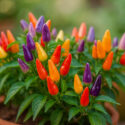
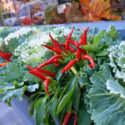
Why do chili peppers burn? Capsaicin triggers pain receptors, fooling your brain into thinking it’s on fire—then rewarding you with endorphins. From mild jalapeños to fiery habaneros and the blazing Carolina Reaper, that addictive rush keeps spice lovers coming back for more heat.
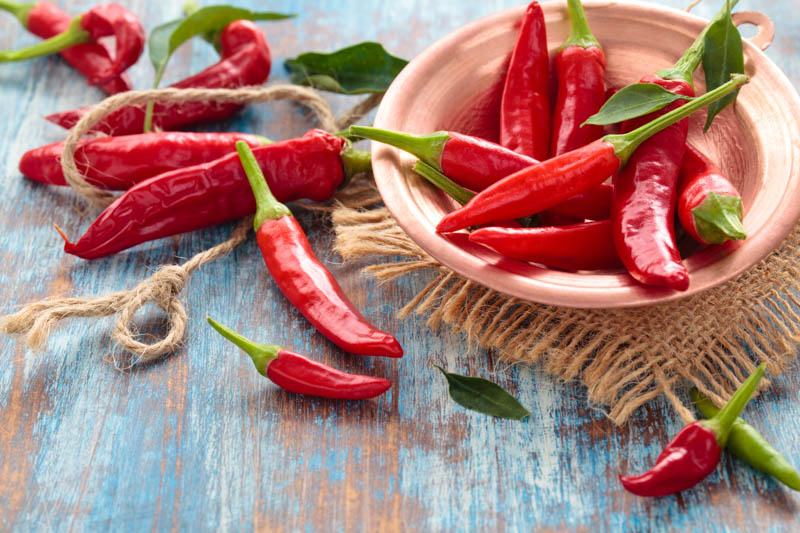


Ever wondered why biting into a fresh chili pepper sets your mouth ablaze—and why, against all reason, so many of us keep coming back for more?
Welcome to the spicy, swirling world of chili peppers, where fiery sensations, plant chemistry, and brain science blend to create one of the strangest culinary phenomena: a love for pain—on our tongues. If you’ve ever chased the scorch of a jalapeño with a cold drink (or, more bravely, craved ever-hotter sauces despite the “warning”), you’re not alone.
In this guide, we’ll peel back the layers on why chilis burn, how plants evolved to unleash this unique defense, and, most fascinatingly, why that burn feels so good and addictive.
Botanically, chili peppers are the fruits of plants in the genus
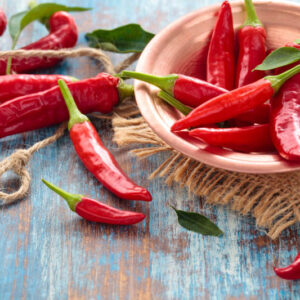
Capsicum, members of the nightshade family (Solanaceae). Unlike sweet peppers, chili peppers synthesize capsaicinoids — the compounds responsible for their signature “heat” or pungency. Varieties range from mild, grassy shishito and poblano to searingly hot habanero, ghost pepper (Bhut Jolokia), and the notorious Carolina Reaper. Native to the Americas but now cultivated worldwide, chili peppers are prized for both their culinary fire and ornamental appeal.
The magic — and sometimes madness — of chili peppers lies in their burn. All hot peppers contain
capsaicinoids, the spicy compounds that trigger taste buds, nerves, and even a bit of euphoria. The main player,
capsaicin, is what sets them apart from sweet peppers and gives them that unmistakable fire.
Let’s bust a common myth: chili “heat” isn’t a flavor — it’s pain.
Fun Fact: Birds can happily snack on the spiciest peppers without feeling a thing — their capsaicin receptors are different, so they don’t experience the burn.
Capsaicin is a waxy, hydrophobic (water-repelling) compound uniquely crafted by Capsicum species as a defense mechanism. Here’s how it works:
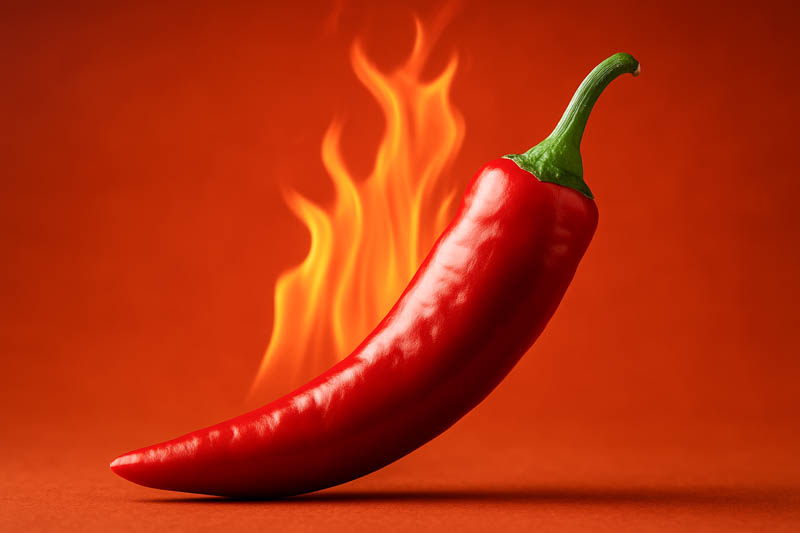
Peppers are measured in Scoville Heat Units (SHU)—the higher the number, the hotter the burn. Bell pepper: 0 SHU. Jalapeño: 2,500–8,000 SHU. Habanero: 100,000–350,000 SHU. Carolina Reaper and Pepper X: over 2 million SHU!
| Pepper/Variety | Scoville Heat Units (SHU) | Sensation |
|---|---|---|
| Sweet Bell Pepper | 0–100 | Sweet, no heat |
| Shishito Pepper | 50–200 | Mild, rare tingle |
| Jalapeño | 2,500–8,000 | Warm, stinging |
| Serrano | 10,000–25,000 | Clear “zap”, sharper burn |
| Habanero | 100,000–350,000 | Intense heat, fruity notes |
| Ghost Pepper (Bhut Jolokia) | 855,000–1,463,000 | “Delayed fuse”, very strong |
| Carolina Reaper | 1,400,000–2,200,000 | Insanely hot, lingering pain |
| Pepper X | 2,693,000 | Super Hot |
| Pure Capsaicin | 15,000,000–16,000,000 | Super Hot |
Your body’s ability to sense heat is controlled by special proteins called TRPV1 receptors. Here’s what happens when you eat a chili pepper:
So, why did peppers evolve capsaicin? The answer: to survive and spread.
“Without spicy chemistry, wild chilies would likely be devoured at the source. Instead, their relationship with birds and humans ensures global fame and survival.”
This is where the story gets wonderfully weird. By all logic, animals (including humans) should avoid pain sources. Yet, people around the world seek out spicy food, compete in hot pepper challenges, and add heat to everything from wings to chocolate. What’s happening?
When you eat chilies, your brain’s pain response triggers a flood of endorphins (natural opioids) and dopamine (feel-good neurotransmitter). It’s a “hurt so good” effect—after the initial sting, you get:
Over time, regular chili eaters become less sensitive, requiring hotter and hotter peppers to feel that thrill—a classic symptom of mild physical adaptation or “tolerance.” That, folks, is as close as food gets to addiction.
Science Backs It Up: Brain scans and studies confirm: spicy food lights up both pain and reward centers, making chilies uniquely “craveable.”
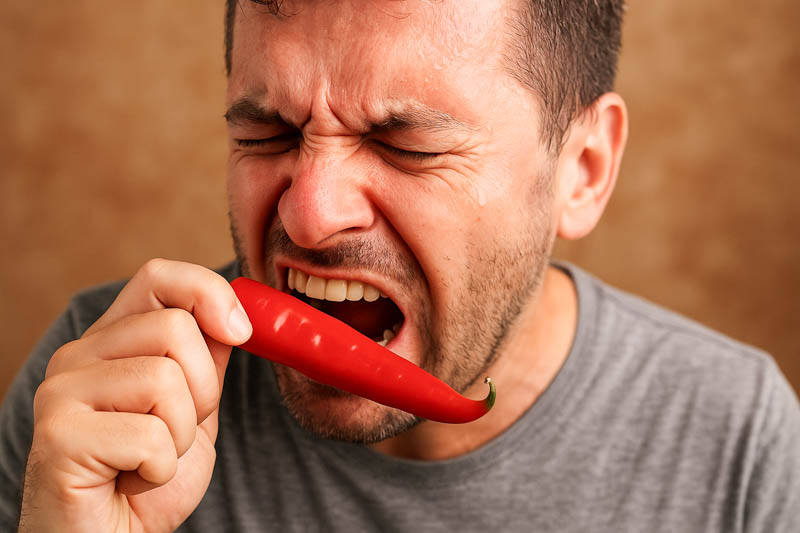
Tip For the Brave: If the burn is too much, don’t reach for water. Try full-fat dairy (yogurt, milk), sugar, or bread—these bind capsaicin much better than H2O!
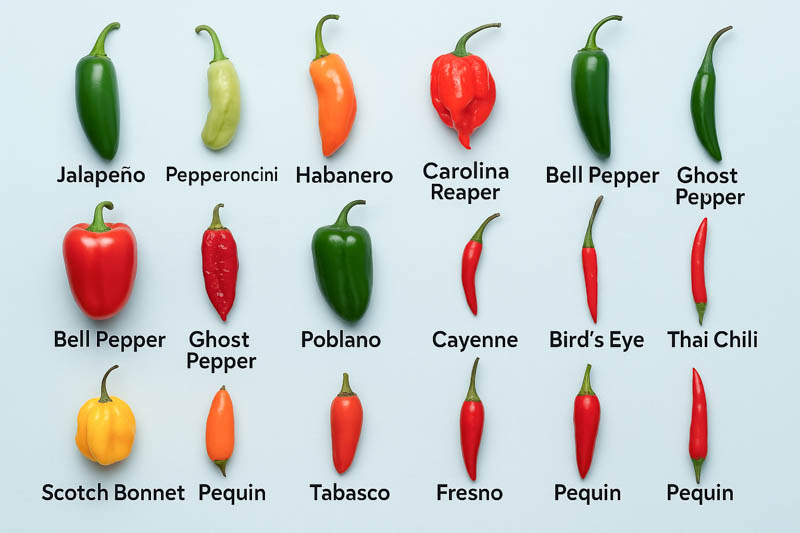
The “addiction” to chili isn’t just biological—it’s cultural. After Columbus “discovered” peppers in the Americas, they swept through Africa, India, Southeast Asia, and beyond at lightning speed, revolutionizing traditional cuisines.
In Mexico, moles, salsas, and stews are defined by the heat. In Thailand, a chili kick is the hallmark of authenticity. In Hungary, Spain, Ethiopia, and Korea, there are distinct pepper flavors, none surviving without capsaicin’s magic.
“The hottest cuisines often come from the warmest climates. Capsaicin not only thrills taste buds—it preserves food and repels spoilage!”
Capsaicin content varies even within the same pepper variety! Stress (heat, drought), maturity (ripe = hotter), and genetics can affect SHU.
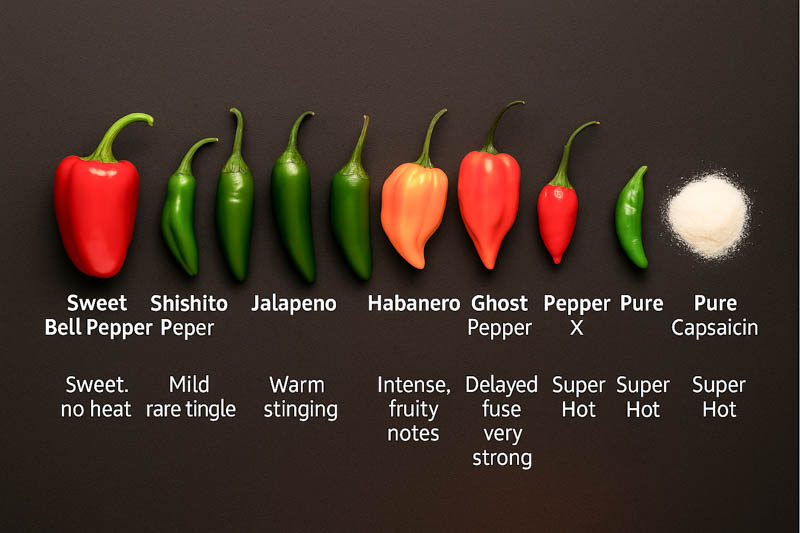
As chili mania sweeps the globe, the race is on for hotter, weirder, and rarer varieties. Breeders keep setting new world records for heat—while at the same time, chefs and home cooks are discovering subtler “flavor-forward” peppers that deliver unique taste experiences without mouth-melting fire.
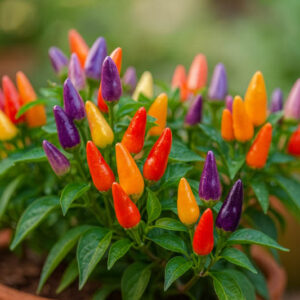
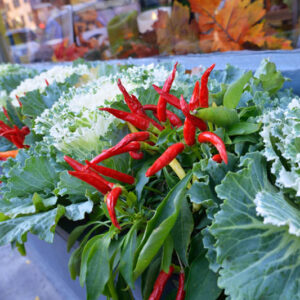
For gardeners, the spectrum of Capsicum—annuum, chinense, frutescens, baccatum, and more—offers an endless playground of flavor, color, and heat. Whether your pepper journey starts with a sweet cherry or rockets toward the ghost pepper, the science of capsaicin and the pleasure of controlled burn mean you’ll never look at a mild salsa the same way again.
| Pepper/Variety | Scoville Heat Units (SHU) | Typical Uses |
|---|---|---|
| Sweet Bell Pepper | 0–100 | Salads, roasting, stuffing |
| Banana Pepper | 0–500 | Pickling, salads |
| Shishito | 50–200 | Blistering, grilling |
| Pepperoncini | 100–1,000 | Pickling, salads |
| Jalapeño | 2,500–8,000 | Salsas, nachos, grilling |
| Serrano | 10,000–25,000 | Salsas, sauces |
| Cayenne | 30,000–50,000 | Powder, hot sauce |
| Thai Chili | 50,000–100,000 | Curries, stir-fries |
| Habanero | 100,000–350,000 | Hot sauces, salsas |
| Ghost Pepper | 855,000–1,463,000 | Hot sauce, spice challenges |
| Carolina Reaper | 1,400,000–2,200,000 | Super-hot sauce, competitions |
In chili peppers, nature crafted a puzzle for our taste buds—a fruit that hurts, thrills, and rewards, sometimes all at once. A single compound, capsaicin, drives off most predators but, in a delightful twist, has made humans its greatest allies and champions.
So next time you pop a pepper and wince at the burn, remember: there’s real science—and a bit of evolutionary magic—behind your cravings. You’re not just eating food; you’re experiencing a botanical adventure, taming primal pain for the pleasure of flavor, culture, and the sheer rush of spice.
🌶️ Happy Growing, Cooking, and Tasting! 🌶️
Want to grow your own peppers? Check out our Edible Ornamentals: Peppers That Look as Good as They Taste for gardeners of every skill level.
| Hardiness |
9 - 12 |
|---|---|
| Plant Type | Annuals, Perennials |
| Plant Family | Solanaceae |
| Genus | Capsicum |
| Exposure | Full Sun |
| Season of Interest | Spring (Late), Summer (Early, Mid, Late) |
| Height | 1' - 5' (30cm - 150cm) |
| Spread | 1' - 2' (30cm - 60cm) |
| Maintenance | Low |
| Water Needs | Average |
| Soil Type | Loam, Sand |
| Soil pH | Acid, Neutral |
| Soil Drainage | Moist but Well-Drained, Well-Drained |
| Characteristics | Showy |
| Tolerances | Deer, Drought |
| Attracts | Birds |
| Landscaping Ideas | Beds And Borders, Patio And Containers |
| Garden Styles | Informal and Cottage, Mediterranean Garden |
| Toxic to Humans | No known toxicity |
| Toxic to Cats | No known toxicity |
| Toxic to Dogs | No known toxicity |
| Toxic to Horses | No known toxicity |
| Hardiness |
9 - 12 |
|---|---|
| Plant Type | Annuals, Perennials |
| Plant Family | Solanaceae |
| Genus | Capsicum |
| Exposure | Full Sun |
| Season of Interest | Spring (Late), Summer (Early, Mid, Late) |
| Height | 1' - 5' (30cm - 150cm) |
| Spread | 1' - 2' (30cm - 60cm) |
| Maintenance | Low |
| Water Needs | Average |
| Soil Type | Loam, Sand |
| Soil pH | Acid, Neutral |
| Soil Drainage | Moist but Well-Drained, Well-Drained |
| Characteristics | Showy |
| Tolerances | Deer, Drought |
| Attracts | Birds |
| Landscaping Ideas | Beds And Borders, Patio And Containers |
| Garden Styles | Informal and Cottage, Mediterranean Garden |
| Toxic to Humans | No known toxicity |
| Toxic to Cats | No known toxicity |
| Toxic to Dogs | No known toxicity |
| Toxic to Horses | No known toxicity |
Create a membership account to save your garden designs and to view them on any device.
Becoming a contributing member of Gardenia is easy and can be done in just a few minutes. If you provide us with your name, email address and the payment of a modest $25 annual membership fee, you will become a full member, enabling you to design and save up to 25 of your garden design ideas.
Join now and start creating your dream garden!
Create a membership account to save your garden designs and to view them on any device.
Becoming a contributing member of Gardenia is easy and can be done in just a few minutes. If you provide us with your name, email address and the payment of a modest $25 annual membership fee, you will become a full member, enabling you to design and save up to 25 of your garden design ideas.
Join now and start creating your dream garden!